Wedding Crashers and Uninvited Guests: How to Handle Social Surprises Like a Pro
By Ariel Artiaga
You’ve meticulously counted every seat. You’ve balanced the budget to the last centavo. Then, out of nowhere, your Tita mentions she’s bringing her neighbor’s daughter, or a high school friend you haven't seen in a decade DMs you asking for the "details." It’s enough to make any couple break into a cold sweat. Honestly, dealing with uninvited guests is one of the most awkward parts of the entire journey. It feels like a tug-of-war between being a gracious host and protecting your peace (and your wallet).
You’ve meticulously counted every seat. You’ve balanced the budget to the last centavo. Then, out of nowhere, your Tita mentions she’s bringing her neighbor’s daughter, or a high school friend you haven't seen in a decade DMs you asking for the "details." It’s enough to make any couple break into a cold sweat. Honestly, dealing with uninvited guests is one of the most awkward parts of the entire journey. It feels like a tug-of-war between being a gracious host and protecting your peace (and your wallet).
In the Philippines, our "plus-one" culture is basically on steroids. We are naturally hospitable, and the idea of "the more, the merrier" is practically woven into our DNA. But when you’re paying several thousand pesos per plate at a beautiful venue in Tagaytay or BGC, "the merrier" can quickly turn into "the more expensive." Let’s talk about how to navigate these tricky waters without losing your sanity or your friendships.

The "But We’re Family" Dilemma
Here’s the thing: Filipino weddings are often treated as community reunions. While you might want an intimate fifty-person dinner, your parents might see it as the perfect time to invite their entire Baranggay council. It's a classic conflict. You want to honor your elders, but you also have a strict budget tracker to follow. How do you say no without starting a family feud?
Communication is your best friend here. Sit down with your parents early—ideally right after the Pamamanhikan—and explain the vision. Use your guest management tools to show them the hard numbers. Sometimes, seeing a digital seating chart that is physically full helps people understand that "just one more" actually means "someone else has to stand."
You know what? It’s okay to be firm. You can say, "We’d love to have everyone, but the venue has a strict capacity limit for safety." It shifts the blame from you to the "rules," which is a classic social life hack. If they insist, suggest a smaller post-wedding lunch or a casual get-together later. It softens the blow while keeping your wedding day exactly how you envisioned it.

Setting Boundaries Before the Big Day
Prevention is better than a cure, right? The way you word your invitations can save you a ton of headaches later. Instead of a vague "And Family," be specific. Write the names of exactly who is invited on the envelope. Better yet, use a response card that says, "We have reserved 2 seats in your honor." It leaves very little room for "creative" interpretations of your guest list.
Using a digital RSVP system through a comprehensive wedding platform is a total game-changer. When guests have to select their names from a pre-set list to confirm their attendance, it subtly reinforces that the event is by-invitation only. If someone tries to add a name in the "notes" section, you can catch it early and address it privately before the wedding day arrives.
Let me explain why this matters. It’s not just about the food. It’s about the seating arrangements, the giveaway counts, and the overall flow of the program. Every uninvited guest is a potential "musical chairs" moment during the reception. And nobody wants that kind of stress when they should be enjoying their first dance.
The Day-Of Strategy: What Happens If They Just Show Up?
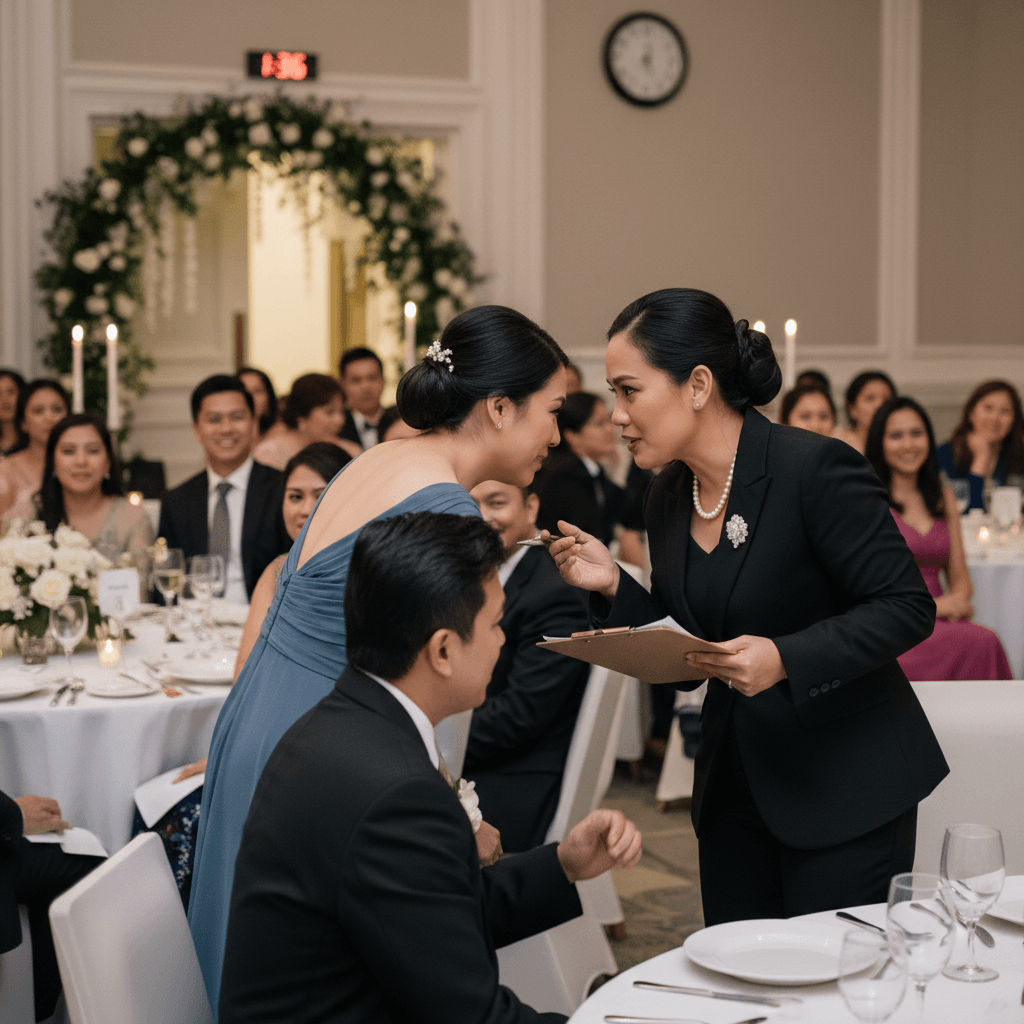
Despite your best efforts, someone might still show up unannounced. Maybe it’s a distant relative who "happened to be in town" or a friend who didn’t understand that an RSVP isn't a suggestion. First rule: Do not deal with this yourself. You are the stars of the show; you shouldn't be playing bouncer in a gown or a Barong.
This is where your wedding coordinator or a trusted, "stern-but-sweet" cousin comes in. Give them a copy of your finalized seating arrangement and a clear mandate. Most professional coordinators have a "buffer" table or a few extra chairs tucked away for these exact scenarios. They can discreetly handle the situation, finding a spot for the guest without interrupting your flow.

Managing the "Social Media" Invitees
Honestly, social media has made wedding planning so much harder. You post a "Save the Date" photo, and suddenly people you haven't spoken to since elementary school are commenting "Congrats! Can't wait!" It’s awkward. Do you ignore them? Do you heart the comment?
Here’s a tip: keep the specific details off public posts. Share your wedding updates in private groups or through direct links to your wedding website. If someone asks directly and you can't invite them, a simple, "We're keeping things very small due to venue constraints, but we’d love to catch up after the honeymoon!" usually does the trick. Most people will understand—or at least, they’ll pretend to.
Remember, your wedding is a celebration of your union, not a public performance. You owe it to yourselves to surround yourselves with the people who truly support your journey.
It’s easy to feel guilty, but remember that your guests are there to celebrate you, not to be catered to at the expense of your happiness. If you’re feeling overwhelmed, take a breath. Lean on your planning templates to stay organized. When you have a clear plan, these social hiccups feel much less like disasters and more like minor detours.

Refining Your Approach
At the end of the day, a few extra faces won't ruin your marriage, but they might stress your wedding day. Focus on the people who are there. If a "crasher" makes it through the gates, just smile and keep moving. Don't let it steal your joy. Your wedding day is a blink-and-you'll-miss-it experience; don't spend it worrying about an extra plate of caldereta.
Handling the uninvited is really just a crash course in boundary-setting—a skill that will actually serve you well throughout your married life. Think of it as your first joint project in diplomacy. You’ve got this!
Would you like me to help you draft a polite but firm "regrets" message template for guests you can't accommodate?