Filipino Wedding Traditions That Make Every Ceremony Unforgettable
By Shopify API
Filipino Wedding Traditions That Make Every Ceremony Unforgettable
You know what makes a Filipino wedding different from just about any other ceremony on the planet? It's not just the sheer number of guests — though that 300-person guest list is practically a minimum requirement. It's the rituals. The ones that have been passed down through generations, quietly carrying centuries of meaning into a single afternoon of tears, laughter, and way too much food.
Whether you're a couple planning your wedding in the Philippines or a Filipino abroad trying to weave homeland traditions into your overseas celebration, understanding these customs matters. They're not just "nice to have" — for many families, they're non-negotiable. And honestly? They're beautiful.

The Four Pillars: Candle, Veil, Cord, and Arrhae
Walk into any Catholic wedding in the Philippines and you'll witness four core ceremonies woven into the nuptial mass. Each one carries distinct symbolism, and together they form what might be the most visually moving part of the entire day.
The Unity Candle — Two Flames, One Light
Two sponsors (ninongs or ninangs — godparents, essentially) each light a candle for the couple. The bride and groom then use those candles to light a single, shared candle together. It's straightforward symbolism: two lives becoming one. But there's a quiet power in that flickering moment that hits harder than you'd expect. I've seen the most stoic uncles wipe their eyes during this part.

The Veil — Clothed in Unity
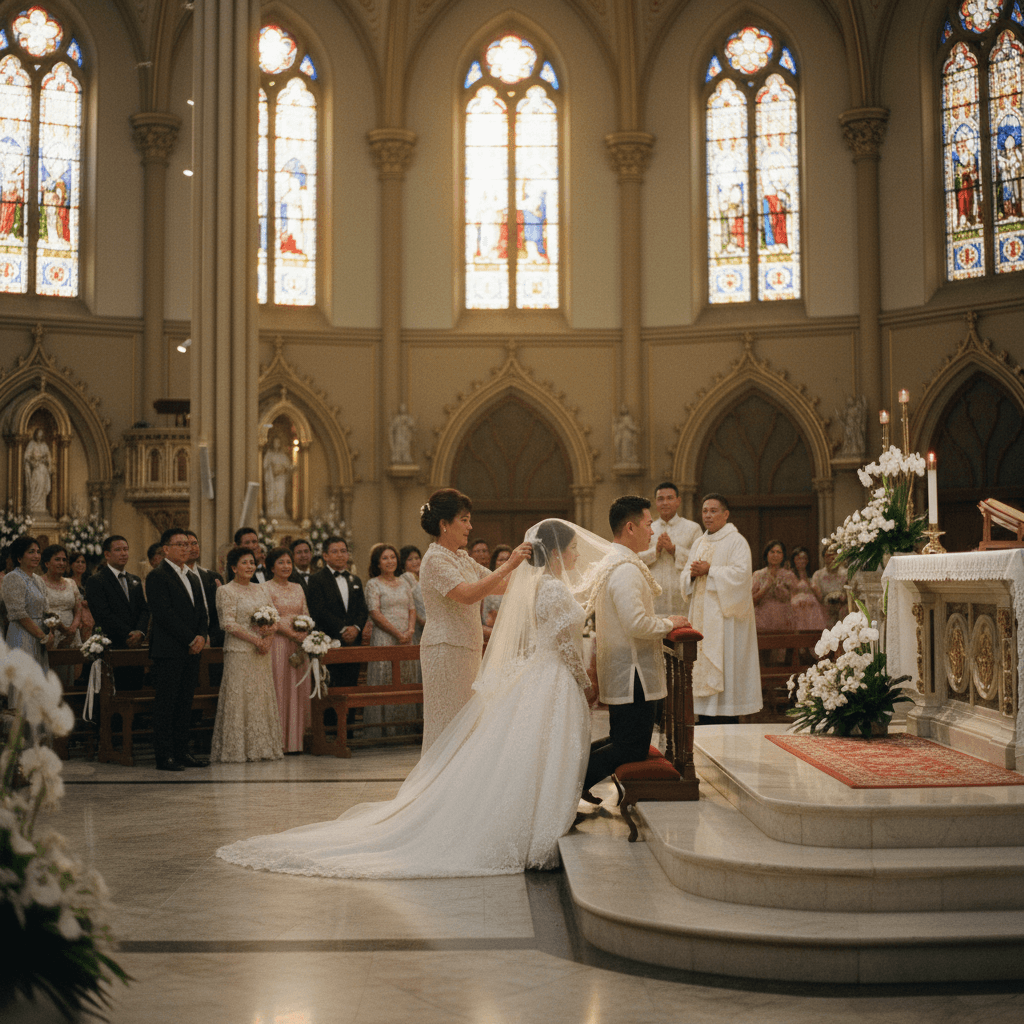
Right after the candle lighting, sponsors drape a long white veil over the groom's shoulder and the bride's head. This isn't just decorative. The veil represents two people now walking through life under the same covering — sharing burdens, joys, and everything in between. It's one of those traditions that sounds simple when explained but feels profoundly moving when you're standing there, watching it happen.
The Cord — Bound Together
A figure-eight cord — called the yugal — is looped around the couple's necks in an infinity symbol. The shape isn't accidental. It represents endless unity, a bond that doesn't break. Traditionally made from woven flowers, silk, or even simple rope, modern cords now come in pearls, crystals, and custom designs. Couples who plan with tools like WedPlanner's timeline builder often coordinate their cord design with their overall wedding aesthetic.
The Arrhae — Thirteen Coins of Promise
The groom presents thirteen gold or silver coins (the arrhae or arras) to the bride, dropping them into her cupped hands. She then passes them back. This exchange — back and forth — symbolizes mutual commitment to sharing worldly goods. The number thirteen carries meaning too: it represents Christ and his twelve apostles. It's prosperity, faith, and partnership in one compact ritual.

Where These Traditions Come From
Here's the thing — Filipino wedding customs didn't appear out of thin air. They're a blend. Pre-colonial Philippine societies already had elaborate marriage rituals, but 333 years of Spanish colonization layered Catholic sacraments on top. The candle, veil, cord, and arrhae? Those are Spanish Catholic imports, adapted and embraced so thoroughly that most Filipinos now consider them inherently Filipino.
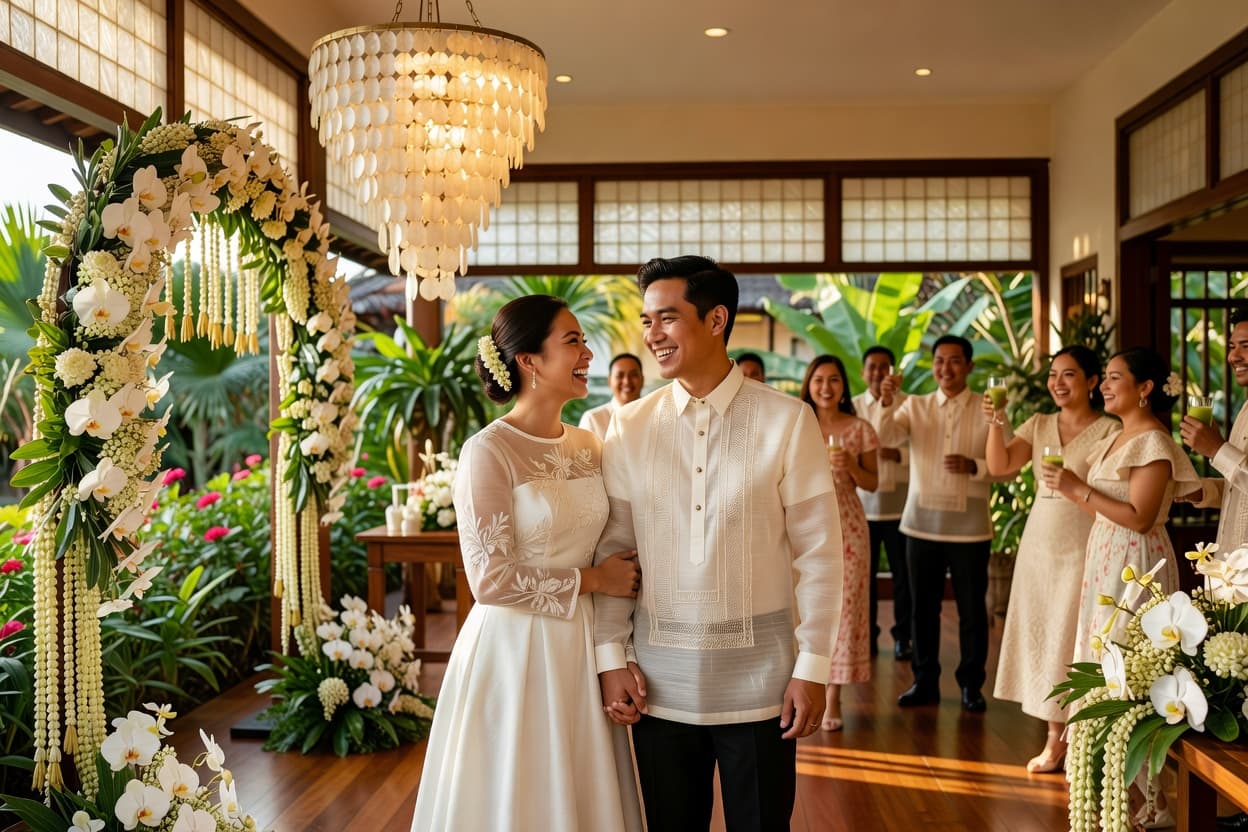
Before the Spaniards arrived, indigenous communities practiced their own forms of union. The pamamanhikan — where the groom's family formally visits the bride's family to ask for her hand — predates colonial influence. It still happens today, though it's evolved from a formal negotiation into more of a celebratory dinner where both families get to know each other. Think of it as the original "meeting the parents," except with more lechon.
Old Traditions, New Twists
Modern Filipino couples aren't abandoning tradition — they're remixing it. And that remix is honestly where things get interesting.
The pamamanhikan might now happen over a restaurant dinner rather than in the bride's family home. The cord might be a custom-designed piece from an artisan rather than a simple woven rope. Some couples skip the arrhae coins entirely and instead exchange symbolic items that reflect their shared values — though traditionalists might side-eye that choice.
- Intimate weddings are on the rise, with couples trimming guest lists from 300 to 50-80 close family and friends — a shift accelerated by the pandemic
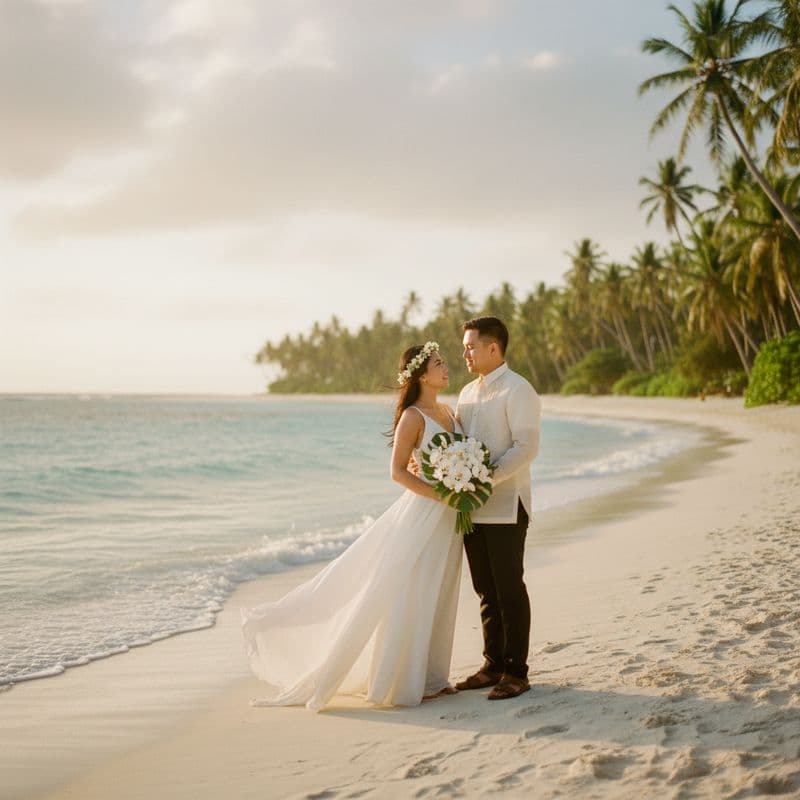
- Destination ceremonies in places like Palawan, Bohol, or Cebu blend tradition with breathtaking backdrops
- Digital planning has replaced the old binder-and-notebook approach, with platforms like WedPlanner helping couples coordinate everything from RSVPs to seating charts
- Personalized rituals — writing your own vows, adding non-religious unity ceremonies, or blending traditions from both families' backgrounds

But here's what hasn't changed: the core values behind every ritual. Unity. Prosperity. Family. Faith. Whether you're having a 500-person cathedral wedding or a 30-person garden ceremony, those pillars remain.
The Real Secret: It's Always About Family
Strip away the candles, coins, and cords, and what you're left with is this — Filipino weddings are fundamentally about family. Not just the couple, but the extended network of relatives, godparents, and friends who become secondary sponsors. These aren't passive observers. They're active participants who hold the candles, place the veil, drape the cord, and present the coins. The community literally builds the marriage.
That's why managing a Filipino wedding guest list feels like diplomacy. Cutting someone from the list? Practically an act of war. But that's also what makes these celebrations so alive — every person in that room has a role, a connection, a reason for being there.
Planning Your Traditional Filipino Wedding
If you're weaving these traditions into your own ceremony, start with a solid planning foundation. Map out which rituals matter most to you and your families. Talk to your officiant about how to integrate them into the ceremony flow. Coordinate with your sponsors early — they'll need to rehearse their parts.
And don't forget the practical stuff. Budget tracking in Philippine Peso, guest management for those 300+ RSVPs, and a timeline that accounts for every ritual moment — these logistics can make or break your day. That's exactly why tools built for Filipino weddings exist. Because generic wedding apps don't understand why you need a separate line item for arrhae coins or why your guest list includes third cousins you've never met.
Frequently Asked Questions
What order do the Filipino wedding rituals happen during the ceremony?
Typically: Unity Candle first, then Veil, then Cord, then Arrhae. These all happen during the nuptial mass, after the exchange of vows and rings. Your priest or officiant can adjust the order based on your parish's customs.
Can non-Catholic couples include Filipino wedding traditions?
Absolutely. While the candle, veil, cord, and arrhae originated in Catholic ceremonies, many couples adapt these rituals for non-religious or interfaith weddings. The symbolism of unity, prosperity, and partnership transcends any single faith.
Who chooses the secondary sponsors for the veil, cord, and candle?
The couple chooses, but it's common to select close family members — often the groom's parents for the candle, and respected elders or godparents for the veil and cord. Think of it as honoring the people who've guided you both.
What are the thirteen arrhae coins made of?
Traditionally gold, but modern arrhae can be silver, gold-plated, or even symbolic tokens. What matters is the meaning, not the metal. Many couples buy or rent arrhae sets from wedding specialty shops in the Philippines.
How is a Filipino wedding different from a Western wedding?
Beyond the four core rituals, Filipino weddings tend to have larger guest counts, a pamamanhikan or formal family introduction, a money dance where guests pin cash to the couple's clothes, and a reception that runs hours longer than typical Western receptions. It's a marathon, not a sprint.
Carrying Tradition Forward
Filipino wedding traditions endure because they work. Not because they're old — but because they say something true about what marriage means. Two flames. One shared covering. An unbroken loop. Thirteen promises. These aren't just ceremonies. They're the community's way of saying, "We've got you."
So whether you're planning a grand cathedral wedding in Manila or an intimate garden ceremony in Cebu, lean into these rituals. Make them yours. Adapt them, personalize them, but don't lose the thread that connects your celebration to every Filipino couple who came before you.
Ready to start planning? WedPlanner was built specifically for Filipino couples — with tools for budgeting, guest management, timelines, and vendor coordination that actually understand what a Filipino wedding requires. Your dream wedding starts here.