Pamamanhikan Explained: A Step-by-Step Guide to the Filipino Family Formal Visit
By WedPlanner Team
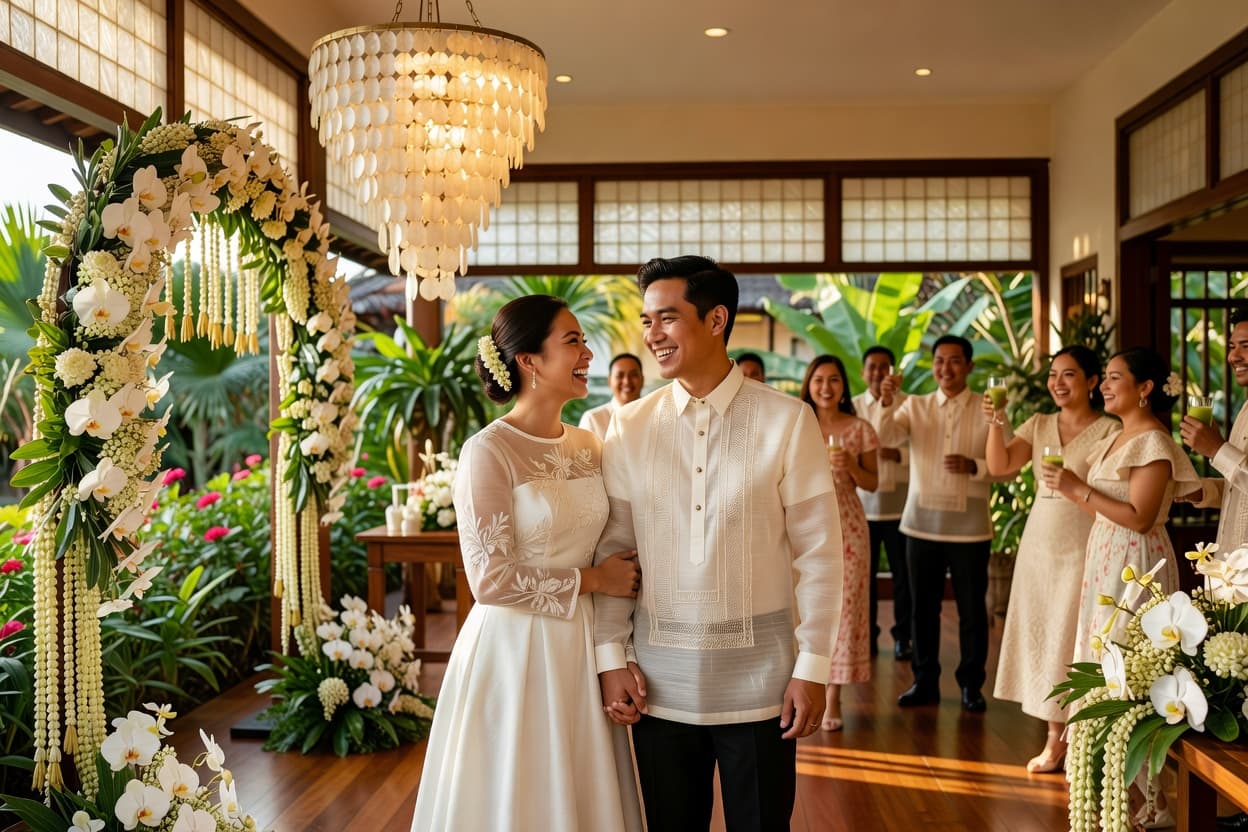
Pamamanhikan is the traditional Filipino custom where the groom's family formally visits the bride's family to ask for her hand in marriage. This comprehensive guide covers its historical roots, exact steps (from choosing attendees to gift-giving), regional variations, modern adaptations, and practical tips for couples in the Philippines and abroad.
Pamamanhikan is the Filipino tradition where the groom's family formally visits the bride's family to ask for her hand in marriage. This guide covers who goes, what to bring with PHP price ranges, sample Taglish scripts, and modern adaptations for today's couples.
", "body_html": "Pamamanhikan is one of those Filipino wedding traditions that feels intimidating until you've done it — and then you realize it's really just two families sitting down, sharing food, and getting to know each other before the kasal. But if you've never been part of one, the questions pile up fast: Who goes? What do you bring? What do you actually say? Whether you're planning your wedding in Manila or coordinating from abroad, this guide walks you through every step of the pamamanhikan — from the traditional visit to modern Zoom versions that work for OFW couples.
\n\nWhat Is Pamamanhikan, Really?
\n\nPamamanhikan (from the root word panhik, meaning \"to go up\" or \"to visit\") is the Filipino tradition where the groom and his family formally visit the bride's family to ask for her hand in marriage. Think of it as the Filipino version of asking for a blessing — but with food, parents, and more people involved.
\n\nIt's not just a formality. For many Filipino families, the pamamanhikan sets the tone for the entire wedding planning journey. It's where both families first sit down as one unit, where expectations are gently laid on the table, and where the couple's intention to marry is made official. If you want a deeper read on the term, WedPlanner's pamamanhikan glossary entry breaks down its origin and cultural weight.
\n\nThis is one of those Filipino wedding traditions that hasn't disappeared — it's just evolved. Knowing how it works today can save you a lot of awkward moments.
\n\nWho Goes to the Pamamanhikan?
\n\nTraditionally, it's the man's side that goes to the woman's home. Here's who typically makes the trip:
\n\n- \n
- The groom — he's the one asking, so he has to be there. No exceptions. \n
- His parents — ideally both. If one parent is abroad or passed away, a close elder (an aunt, uncle, or grandparent) can step in. \n
- Siblings of the groom — especially unmarried ones close in age. Married siblings are welcome but optional. \n
- A close elder or family friend — sometimes called the lakambini or simply a respected relative who can help steer the conversation. Not required, but helpful if the families haven't met before. \n
How Many People Should Go?
\n\nKeep it intimate. A group of 4 to 8 from the man's side is the sweet spot. Showing up with 15 relatives can overwhelm the bride's family, especially if they're hosting at home. If both families are large (and in the Philippines, they usually are), save the big introductions for the wedding itself.
\n\nKasal barkada tip: If the groom's parents are separated or not on speaking terms, assign one trusted elder to do the talking. The pamamanhikan is not the place to air family tension — keep the energy warm and focused on the couple.\n\n
What to Bring: A Practical Checklist
\n\nYou're not showing up empty-handed — that's a universal rule of Filipino etiquette, and it goes double for the pamamanhikan. Here's a practical list of what the groom's family typically brings, with realistic 2026 PHP price ranges:
\n\n- \n
- Fruit baskets or fresh fruits — ₱500 to ₱1,500 for a nicely arranged basket from the market or grocery. Apples, grapes, and oranges are classic choices. \n
- Sweets or pastries — ₱300 to ₱800. Think boxes of polvoron, pastillas, or a cake from a local bakery. Sweetness symbolizes a sweet relationship ahead. \n
- A practical gift for the bride's parents — ₱1,000 to ₱3,000. Common choices: a bottle of wine or brandy for the father, a set of scented candles or a pashmina for the mother. \n
- Food for the visit itself — if the man's family is bringing dinner, budget ₱3,000 to ₱8,000 depending on family size. Lechon is a splurge option (₱6,000 to ₱8,000 for a small one), but many families now opt for catered trays or a simple home-cooked spread. \n
- Flowers for the bride's mother — ₱500 to ₱1,500. A simple bouquet goes a long way in setting a respectful tone. \n
The total budget for the visit itself typically ranges from ₱5,000 to ₱15,000 — and that's perfectly reasonable for most Filipino families. You don't need to go overboard. The gesture matters more than the price tag.
\n\nSample Scripts: What to Say During the Pamamanhikan
\n\nOne of the biggest sources of anxiety is not knowing what to actually say. Here's a short sample dialogue in Taglish — the way it naturally happens in most Filipino homes.
\n\nThe Groom's Side (Opening)
\n\n\"Tito, Tita, maraming salamat po sa pagtanggap sa amin. Ang aming pagpasok po dito ay dahil talagang gusto naming mag-usap tungkol sa hinaharap nina [bride's name] at [groom's name]. Gusto po namin sanang humingi ng basbas ninyo para sa kanilang kasal. Sinisiguro po namin na aalagaan siya ni [groom's name] at magiging mabuting asawa siya.\"
\n\nThe Bride's Family (Response)
\n\n\"Salamat din sa inyong pagdating. Kilala namin si [groom's name] at nakita namin kung paano niya tinatrato ang anak namin. Bago kami magbigay ng aming basbas, gusto rin po namin malaman ang inyong plano para sa kasal — kailan, saan, at paano.\"
\n\nThe Groom's Father (Closing the Formal Part)
\n\n\"Papaano, ang aming pamilya ay buong pusong sumusuporta sa kasal. Kami po ay handa sa anumang tulong na maitutulong namin sa planning, sa abot ng aming makakaya. Sana po magtulungan tayo para maging maganda ang araw na iyon.\"
\n\nDon't memorize this word for word — let it flow naturally. The key is respect (using po and opo), sincerity, and a collaborative tone rather than a transactional one. The conversation usually shifts from pleasantries to practical wedding talk — budget, date, venue — within the first 30 minutes.
\n\nModern Adaptations of Pamamanhikan
\n\nNot every pamamanhikan happens in a living room in Quezon City with lechon on the table. Here's how Filipino couples are adapting the tradition today:
\n\n1. Virtual Pamamanhikan for OFW Couples
\n\nIf the groom or his parents are working abroad — a common reality for many Filipino families — the pamamanhikan can happen over Zoom or Google Meet. The bride's family hosts at home, the groom's family joins via video call, and someone on-site helps facilitate. It's not the same as being there in person, but it keeps the tradition's spirit alive. For more on this, see planning a wedding in the Philippines from abroad.
\n\n2. Simplified One-Meeting Version
\n\nSome families skip the multi-visit tradition and consolidate everything into one meeting — the formal ask, the wedding discussion, and dinner, all in one afternoon. This works well for busy families or those living in different cities. The key is making sure both sides feel respected, even if the format is compressed.
\n\n3. Interfaith or Intercultural Context
\n\nIf one partner isn't Filipino, frame the pamamanhikan as a \"family introduction meeting\" rather than a strict cultural ritual. The essentials — respect, food, and a clear intention to marry — translate across cultures. It becomes a beautiful merging of traditions rather than an awkward obligation. For more, this guide to planning a mixed marriage in the Philippines covers the logistics in depth.
\n\nWhere Pamamanhikan Fits in Your Kasal Planning Guide
\n\nThe pamamanhikan usually happens 6 to 12 months before the wedding — after the proposal but before you book your venue or finalize your guest list. It's one of the first major milestones in a Filipino wedding timeline, and it sets the emotional foundation for everything that follows. Good wedding etiquette Philippines families practice means showing up prepared, respectful, and ready to collaborate.
\n\nIf you're mapping out your full timeline, the 12-month Filipino wedding planning timeline walks you through each stage — from this visit to the big day. Filipino wedding planning doesn't have to be chaotic — it just needs structure.
\n\nThe Bottom Line
\n\nPamamanhikan doesn't have to be nerve-wracking. At its core, it's about two families coming together to support a couple's decision to get married — and that's a beautiful thing. Whether you're doing it the traditional way with lechon and barong, or over Zoom with a cake delivered via GCash, what matters is the respect, the sincerity, and the willingness to start your kasal