Wedding Tent Rental Philippines: How to Choose, Size and Book Yours
By WedPlanner Team
Planning a garden, beach or backyard reception? Learn what to prepare first for a wedding tent rental in the Philippines, how to size it for your guest count, a step-by-step booking plan, and the common mistake of renting a tent without a rain and wind plan.
An open-air reception under the stars sounds dreamy until you remember the Philippine sun at 2 PM and the surprise ulan at 6 PM. That's why a wedding tent rental in the Philippines is one of the smartest bookings for garden, beach, farm and backyard weddings. The right tent keeps your guests cool and dry, makes your styling shine, and saves you from a last-minute scramble. This guide covers what to prepare first, how to size your tent, and a step-by-step plan so your wedding tent rental Philippines booking goes smoothly.
Common Tent Types You'll Find from PH Suppliers
- Frame or marquee tents. Sturdy aluminum frames with white or clear roofing. Popular for big garden and resort receptions because they don't need center poles.
- Clear-span or transparent tents. Great for night receptions with string lights, but they can get warm under direct daytime sun.
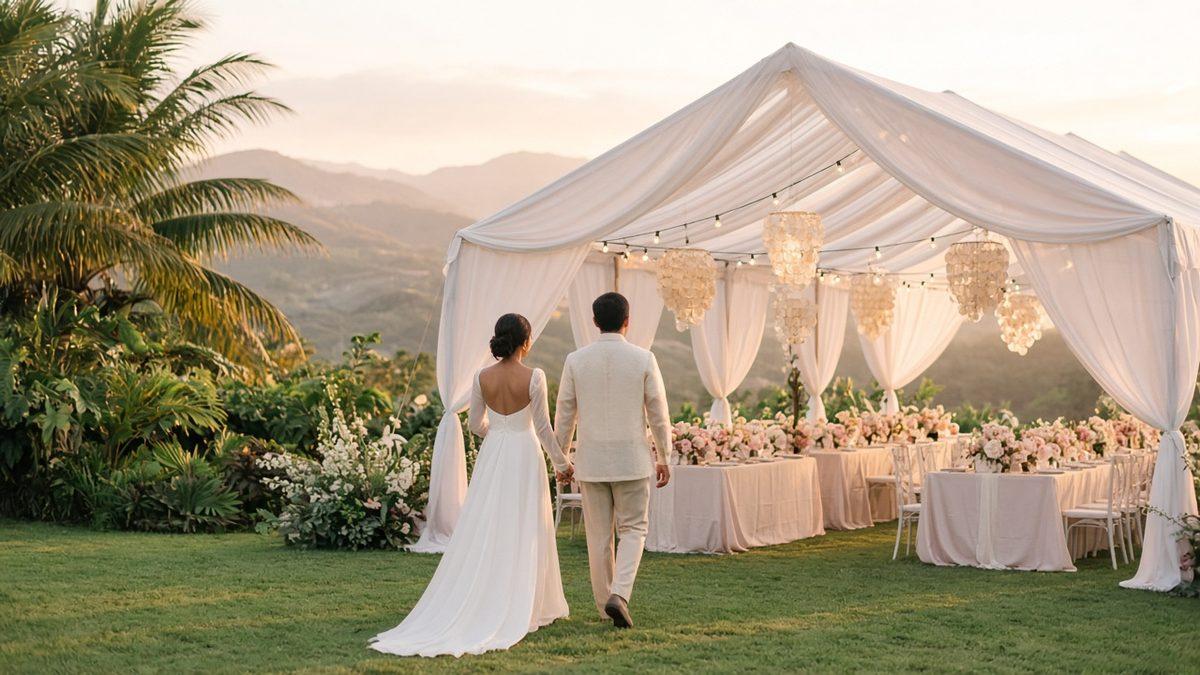
- Sailcloth or stretch tents. Soft, flowy shapes that photograph beautifully at beach and farm venues. Check how they hold up to strong wind.
- Pole tents and canopies. Simpler and more budget-friendly, often used for cocktail areas, buffet lines, food carts or the photo booth corner.
- Add-ons. Side walls or drapes, flooring or carpet, ceiling draping, lighting, industrial fans or air-cooler units, and tables and chairs. Rates vary a lot by size, city and inclusions, so compare at least three quotes.
What to Prepare First
- Your venue's rules and ground conditions. Ask if outside tent suppliers are allowed, if they can stake into the lawn or must use weights, and whether there's an ingress or supplier fee. Sand, grass and slopes all need different setups.
- Your final guest count and layout. Seated dinner, buffet, stage, dance floor, host table, band or DJ, photo booth and food carts all need floor space. Know roughly how many round or long tables you need.
- Your reception time and season. A noon lunch in April needs shade and airflow; an August evening reception needs side walls and drainage for the rain.
- Your ingress and egress window. Bigger tents can take several hours to install. Confirm when the supplier can start and when everything must be cleared.
- Your budget cap. Decide whether the tent covers the whole reception or only key areas like the dining space and dance floor.
How to Size Your Wedding Tent in the Philippines
As a rough starting point, plan around 10 to 12 square feet per guest for a seated dinner with round tables, then add extra room for the stage, dance floor, buffet line and bar. Ask your supplier for a floor plan based on your exact table count instead of guessing. A tent that's too tight feels hot and crowded fast in humid weather.
Step-by-Step Plan to Book Your Tent
- Do an ocular visit with your coordinator. Walk the venue together, check the ground, slopes, trees, power points and where rainwater flows.
- Book 4 to 6 months ahead. Tent suppliers serving Tagaytay, Batangas, Laguna, Cebu and Davao get booked fast for the December holiday season and summer months.
- Request a floor plan and quote. Share your guest count, table type, program elements and styling peg so the supplier can recommend the right size and type.
- Compare inclusions line by line. Check side walls, flooring, lighting, fans, delivery and setup fees, out-of-town charges and overtime rates.
- Coordinate with your stylist and lights-and-sounds team. Make sure ceiling draping, chandeliers and speakers can be safely mounted on the frame.
- Sign a clear contract. List your date, ingress time, tent size and type, inclusions, down payment and balance schedule, and the policy for typhoon signals or force majeure.
- Confirm one week before. Recheck the weather forecast, the ingress schedule, who on your team receives the supplier, and where generator or power lines will run.
PH Realities to Plan Around
- Rainy and typhoon season. From roughly June to November, plan for side walls, raised flooring and drainage. Check PAGASA forecasts the week of your wedding and ask your supplier what wind strength or typhoon signal means they will take the tent down for safety.
- Heat and humidity. White roofing, open sides during daytime and plenty of industrial fans help a lot. Clear tents can feel like a greenhouse at lunch.
- Beach venues. Sand needs anchors or weights, and sea breeze can be stronger than expected in the afternoon. Some resorts have their own preferred tent suppliers.
- Church to reception timing. If your church wedding ends at 4 PM and traffic to the venue is heavy, make sure the tent is fully set and lit before guests arrive.
Common Mistake to Avoid
Booking a tent without a rain and wind plan. Some couples rent an open canopy for the "aesthetic," then get caught by a downpour with no side walls, wet flooring and soaked guests. Always ask for side walls on standby and a clear plan for bad weather.
Another one: forgetting power and lighting. A beautiful tent becomes a dark tent at 6:30 PM. Confirm lighting, generator backup and outlets for your band, caterer and photo booth.
Note: Venue rules, LGU or barangay permits for large temporary structures, and safety guidelines can differ by location. Confirm locally with your venue, LGU and supplier before you pay a deposit.
Keep Your Headcount and Suppliers Organized
Your tent size depends on an accurate guest count. With WedPlanner you can build a free wedding website with online RSVP synced to your guest list, track your suppliers and payments in one place, and give your tent supplier final numbers with confidence.
Quick Takeaway
The best wedding tent rental in the Philippines fits your venue, your real guest count and the season. Check the ground and rules first, size it with a floor plan, and always have a rain plan, then celebrate under the lights worry-free.