Filipino Wedding Vendors: How to Find, Vet, and Book the Best Suppliers
By WedPlanner Team

Finding the right Filipino wedding vendors makes or breaks your big day. Learn where to find suppliers, vetting questions, red flags, and contract tips.
Finding the right Filipino wedding vendors can make or break your big day. Whether you're planning an intimate Tagaytay garden wedding or a grand Manila ballroom reception, your suppliers are the people who bring your vision to life — from the photographer who captures every tear and laugh, to the caterer whose food your titas will talk about for years.
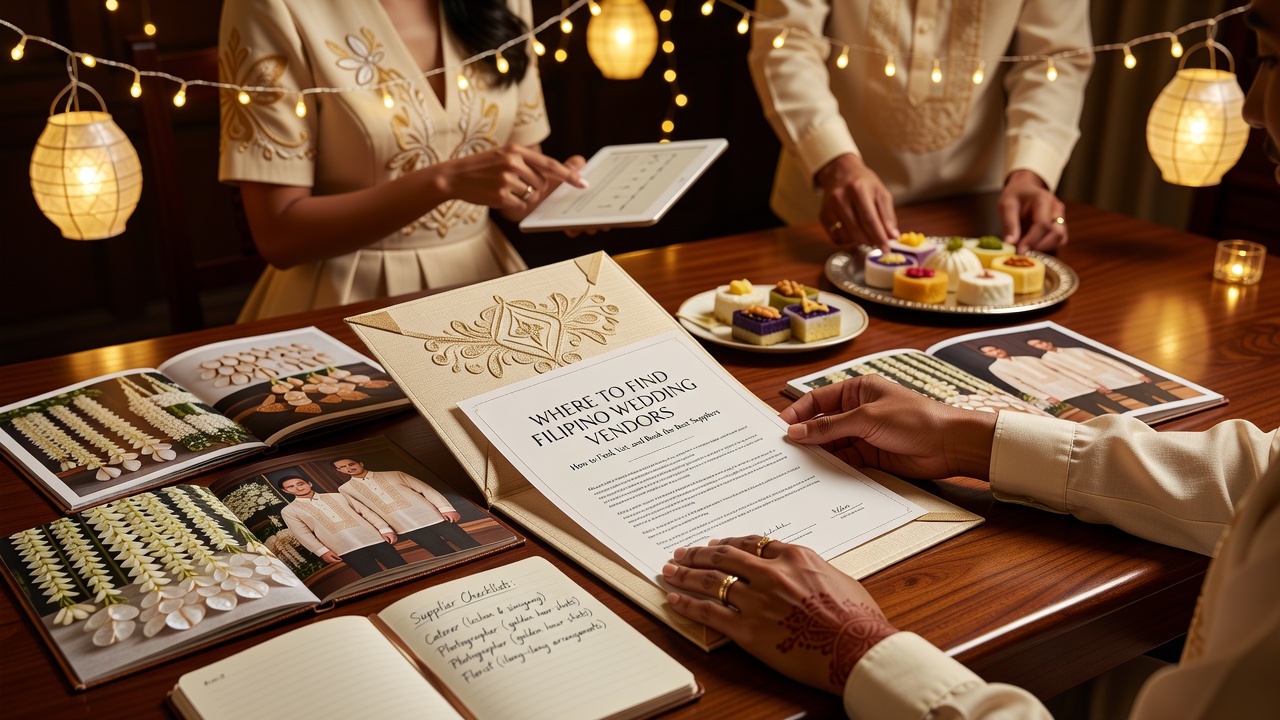
But here's the thing: the Philippine wedding supplier landscape is massive. There are over 1,000 vendors listed on WedPlanner alone, spanning photographers, videographers, caterers, HMUAs, coordinators, florists, and more. How do you separate the professionals from the ones who'll ghost you a week before the wedding? How do you know if a quote is fair or if you're being charged the "wedding premium"?
This guide walks you through exactly how to find, vet, and book the best Filipino wedding vendors — with real PHP pricing ranges, red flags to watch for, contract tips, and why having a backup plan isn't just smart, it's essential.
Where to Find Filipino Wedding Vendors
Before you can vet suppliers, you need to know where to look. The Philippines has a rich ecosystem of wedding supplier platforms, communities, and events — but not all sources are created equal.
Online Wedding Platforms and Directories
The easiest starting point is a curated directory. WedPlanner's vendor directory lists over 1,000 suppliers across the Philippines, filterable by category (photographer, caterer, HMUA, coordinator, florist, etc.) and city. Each listing includes service details, pricing ranges, and direct contact information — no middleman, no referral fees.
Other platforms worth checking include Kasal.com, one of the oldest Filipino wedding directories, and BridesMaidPH on Instagram, which regularly features supplier spotlights. WeddingForward PH also maintains a searchable database with reviews from real couples.
Facebook Groups and Communities
Some of the best Filipino wedding vendors are discovered through word-of-mouth in Facebook communities. Groups like WAWIES (Weddings At Work) — with over 100,000 members — are goldmines for honest supplier reviews, budget breakdowns, and recommendations. Other active groups include Filipino Wedding Suppliers, Budgetarian Brides Philippines, and city-specific groups like Tagaytay Wedding Suppliers or Cebu Wedding Vendors.
The key to using these groups effectively: search before posting. Chances are, someone has already asked about the exact caterer or photographer you're considering. Read through the comments — both the glowing reviews and the complaints — to get a balanced picture.
Bridal Fairs and Wedding Expos
Nothing beats seeing a supplier's work in person. Major bridal fairs like The Wedding Library Bridal Fair, Themes & Motifs Wedding Expo, and Kasalang Tagaytay bring together hundreds of vendors under one roof. You can taste caterers' food samples, flip through photographers' albums, and talk to coordinators face-to-face.
Pro tip: bring a separate email address and phone number for wedding fairs. You will get follow-up messages — lots of them. Also, many suppliers offer bridal fair discounts (5–15% off) if you book on the spot. Don't feel pressured to sign immediately, but do collect brochures, price lists, and business cards for comparison later.
Referrals from Recently Married Friends
Your barkada who just got married last year? They're your best resource. Ask them: Who did they love working with? Who caused them stress? Would they book the same suppliers again? Personal referrals come with unfiltered feedback that no brochure or Facebook ad can match.
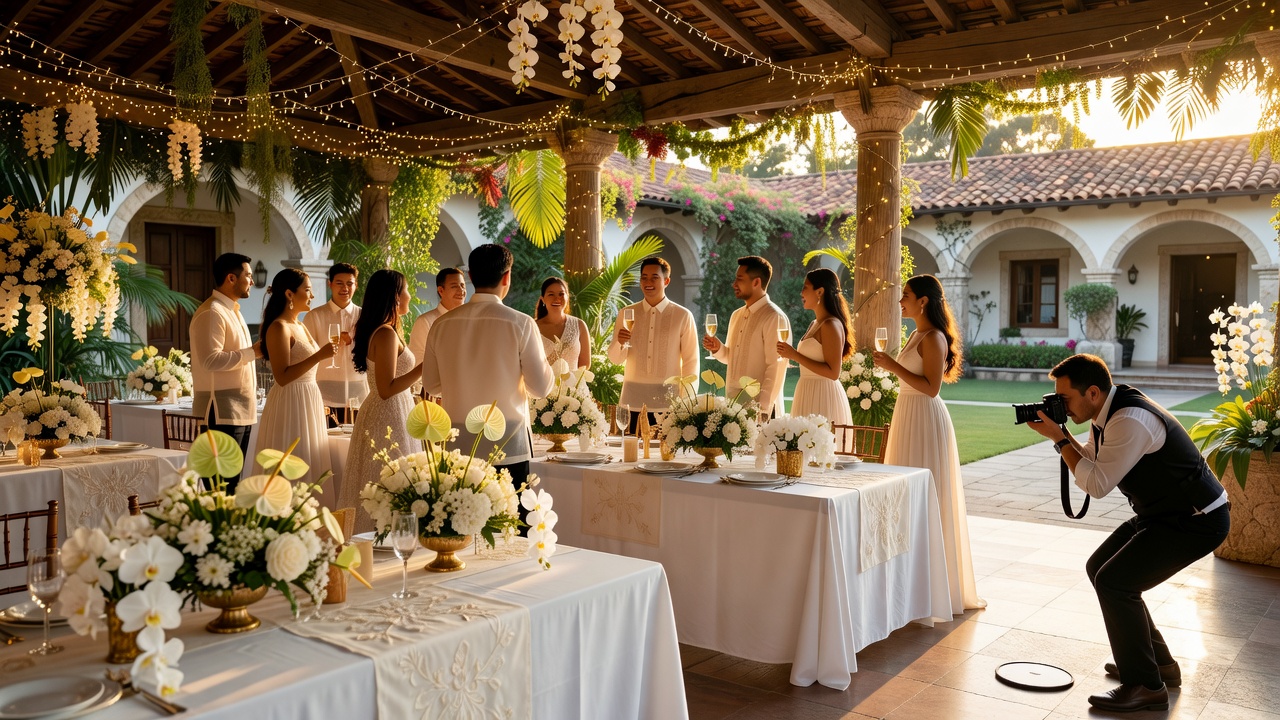
How to Vet Filipino Wedding Vendors: Questions to Ask by Category
Once you've built a shortlist, the real work begins. Vetting Filipino wedding vendors isn't just about comparing prices — it's about assessing reliability, communication style, and whether they understand your vision. Here are the essential questions to ask, broken down by supplier category.
Photographer and Videographer
- Can we see 2–3 full wedding galleries (not just highlight reels)? Highlight reels show the best 5% of their work. Full galleries reveal consistency.
- Who will actually shoot our wedding? Some studios book multiple events per day and send associate photographers. Make sure the person whose portfolio you love is the person showing up.
- What's your backup equipment plan? Cameras fail. Memory cards corrupt. A professional has redundancies for everything.
- How many hours of coverage? What's the overtime rate? Filipino weddings famously run late — know the cost per extra hour before you sign.
- When do we receive the final edited photos/video? Typical turnaround is 4–12 weeks. Get it in writing.
Caterer
- Can we schedule a food tasting before booking? Most reputable caterers offer this — some include it in the package, others charge a minimal fee (₱1,000–₱3,000).
- What's included in the per-head rate? Does it cover waitstaff, tables, chairs, linens, and tableware? Or are those separate line items?
- How do you handle dietary restrictions (halal, vegetarian, allergies)?
- What's your staff-to-guest ratio? For a plated dinner, aim for at least 1 server per 10–15 guests. For buffets, 1 per 20–25 guests.
- Do you provide a backup kitchen or contingency for power outages? Outdoor Tagaytay weddings are beautiful — until the generator fails.
Hair and Makeup Artist (HMUA)
- Do you offer a trial session? How much does it cost? Trials typically range from ₱1,500–₱5,000 depending on the artist's tier.
- What products do you use? If you have sensitive skin, ask about brands and whether they're hypoallergenic.
- How many faces can you handle on the day? If you have 8 bridesmaids plus mothers, one artist may not be enough. Ask about their team size and whether they bring assistants.
- What's your touch-up policy? Will they stay through the ceremony and reception for retouches, or leave after the initial application?
Wedding Coordinator
- Are you offering full coordination, partial coordination, or on-the-day coordination? Full coordination (₱30,000–₱80,000+) covers planning from start to finish. On-the-day (₱8,000–₱25,000) handles only the wedding day logistics. Learn why every Filipino couple needs a wedding coordinator.
- How many weddings do you handle per weekend? A coordinator juggling 3 weddings in one day can't give you full attention.
- Can you provide a detailed timeline sample from a past wedding? This shows how organized they are.
- What's your backup plan if you get sick or have an emergency?
Florist and Event Stylist
- Can you show photos of actual weddings you've styled (not just styled shoots)? Styled shoots are controlled environments. Real weddings show how their work holds up in actual conditions.
- What flowers are in season during our wedding month? Imported peonies in April will cost significantly more than local roses or orchids.
- Do you handle setup and teardown? What time will you arrive and leave?
Red Flags When Hiring Filipino Wedding Vendors
Some warning signs are universal. Others are specific to the Philippine wedding industry. Here's what should make you pause — or walk away entirely.
They Won't Provide a Written Contract
In the Philippines, verbal agreements and paki-usap arrangements are common in many industries — but your wedding is not the place for them. Any supplier who resists putting terms in writing is a major red flag. A proper contract protects both you and the vendor. If they won't sign one, move on.
They Ask for 100% Payment Upfront
The standard payment structure for Filipino wedding vendors is a deposit (30–50%) to reserve the date, with the balance due closer to the wedding day — typically 1–2 weeks before, or on the day itself. A supplier demanding full payment months in advance is either financially unstable or planning to disappear. Either way, it's not a risk worth taking.
No-Show Track Record or Vague References
Search their business name on Facebook groups and wedding forums. If you find multiple complaints about no-shows, last-minute cancellations, or "iba yung dumating" (a different team showed up than what was promised), take those seriously. One complaint might be a misunderstanding. Three or more is a pattern.
Hidden Fees and "Surprise" Charges
Watch for these common hidden costs in Philippine wedding contracts:
- Overtime fees not disclosed upfront (photographers, coordinators, and HMUAs are the usual culprits)
- Out-of-town charges — a Tagaytay wedding from a Manila-based supplier often carries a 10–20% surcharge or transportation fee
- Corkage fees if you bring your own alcohol or lechon (venues can charge ₱500–₱1,500 per bottle or per lechon)
- "Service charge" or "admin fee" tacked on at the final invoice without prior mention
Overpromising and Under-Delivering
If a supplier says yes to everything without asking questions, be cautious. A good vendor pushes back when something isn't realistic. The caterer who promises a 5-course plated dinner for 200 guests at ₱500/head? That math doesn't work. The photographer who guarantees 1,000 edited photos delivered in 2 weeks? That timeline isn't realistic for quality work.
Contract Tips: What to Review Before You Sign
A contract is only as good as the clauses it contains. Here are the key sections to scrutinize before booking any Filipino wedding vendors.
| Contract Clause | What to Look For | Red Flag |
|---|---|---|
| Payment Schedule | Clear breakdown: deposit %, progress payments, final balance due date | 100% upfront or vague "as agreed" terms |
| Cancellation Policy | Refund terms if you cancel (e.g., 50% refund 90+ days out, non-refundable within 30 days) | No refund under any circumstances, even if they cancel |
| Force Majeure | Covers typhoons, earthquakes, government restrictions, and other unforeseen events | No force majeure clause at all — you're fully liable if a typhoon hits |
| Substitution Clause | Who replaces them if they can't make it? Must be of equal or better quality | They can send "any available team member" without your approval |
| Deliverables Timeline | Specific dates: "Edited photos delivered within 8 weeks of wedding date" | "Within a reasonable time" or no deadline at all |
| Liability and Damages | What happens if they damage the venue, lose your photos, or serve food that causes illness | No liability clause — you bear all risk |
If a contract is missing any of these clauses, ask for them to be added. A professional supplier won't hesitate — they've seen these terms before. If they push back hard, that tells you something about how they handle problems.
Why Backup Suppliers Matter
Even the most carefully vetted Filipino wedding vendors can encounter problems. A coordinator gets sick. A florist's delivery truck breaks down on the SLEX. A makeup artist's flight from Cebu gets cancelled. These things happen — and when they do, having a contingency plan is the difference between a minor hiccup and a wedding-day disaster.
Common Scenarios Where Backups Save the Day
- No-show suppliers: It's rare but real. A photographer who double-books, a caterer who overcommits, an HMUA who simply doesn't arrive. A backup list of 2–3 alternative suppliers per category means you're not scrambling at 6 AM on your wedding day.
- Quality misses: The florist delivers wilted arrangements. The cake arrives looking nothing like the reference photo. A backup supplier — or at minimum, a contingency budget — lets you fix the problem without derailing the entire event.
- Last-minute cancellations: A supplier's family emergency, a vehicle breakdown, a team member testing positive for illness. These aren't anyone's fault, but they're your problem if you don't have a Plan B.
How to Build Your Backup Plan
- Identify 2–3 alternative suppliers for each critical category: photographer, caterer, HMUA, coordinator, and florist. Keep their contact details saved on your phone and shared with your coordinator.
- Set aside a contingency budget of 5–10% of your total wedding budget. This covers last-minute replacements, rush fees, or emergency purchases. Use WedPlanner's budget tracker to allocate and monitor your contingency fund alongside your main budget.
- Ask your primary suppliers about their backup plans. A professional photographer should have a network of colleagues they can call. A good caterer has relationships with other kitchens. If they can't answer this question, that's a red flag in itself.
- Brief your coordinator. Your on-the-day coordinator should have the full backup list and the authority to make calls if something goes wrong — so you don't have to.
Filipino Wedding Vendors: A Quick Vetting Checklist
| Step | Action | Done? |
|---|---|---|
| 1 | Search supplier on Facebook wedding groups for reviews and complaints | ☐ |
| 2 | Request and review 2–3 full galleries or past event portfolios | ☐ |
| 3 | Ask category-specific vetting questions (see section above) | ☐ |
| 4 | Get a detailed written quotation with all inclusions and exclusions | ☐ |
| 5 | Review contract for payment schedule, cancellation, force majeure, and substitution clauses | ☐ |
| 6 | Confirm who will actually be on-site on your wedding day (not just the owner/salesperson) | ☐ |
| 7 | Prepare backup supplier list and contingency budget | ☐ |
| 8 | Pay deposit only (30–50%), never 100% upfront | ☐ |
Frequently Asked Questions
How much do Filipino wedding vendors typically cost?
Costs vary widely by tier and location. Here are typical 2026 ranges for mid-range suppliers in Metro Manila and nearby areas: photographer ₱30,000–₱80,000, videographer ₱35,000–₱90,000, caterer ₱800–₱2,500 per head, HMUA ₱5,000–₱25,000, coordinator ₱8,000–₱80,000 (depending on full vs on-the-day), florist/stylist ₱20,000–₱150,000+. Premium and celebrity-tier suppliers can cost 2–3x these ranges.
When should I start booking Filipino wedding vendors?
Start 12–18 months before your wedding date for high-demand suppliers — especially photographers, videographers, and coordinators who book up fast during peak season (December–May). Caterers and HMUAs can typically be booked 6–9 months out. For Tagaytay and other destination wedding hubs, add 2–3 months to these timelines because supplier availability is tighter.
Is it safe to book suppliers through Facebook or Instagram?
It can be, but verify thoroughly. Check for a business registration (DTI or SEC), a physical office address, multiple tagged client photos (not just portfolio shots), and reviews from real couples in wedding groups. Be especially cautious with suppliers who only communicate through social media DMs and have no website, contract template, or professional email address.
The Bottom Line
Your Filipino wedding vendors are the team that executes your vision. Choose them carefully — not just for their portfolio, but for their professionalism, communication, and reliability. Ask the hard questions. Read the contract. Build your backup plan. The peace of mind you'll have on your wedding day, knowing you're surrounded by suppliers you can trust, is worth every minute of vetting you do now.
Ready to start building your dream team? Create your free WedPlanner account and explore our vendor directory of 1,000+ Philippine wedding suppliers — organized by category, city, and budget range. Your kasal deserves nothing less.