The Wedding Money Dance: Where Culture, Celebration, and a Little Cash Collide
By Shopify API
The Wedding Money Dance: Where Culture, Celebration, and a Little Cash Collide
You're at a reception. The cake's been cut, the toasts are winding down, and suddenly guests start lining up — not for the buffet, but for a dance. They're pinning cash onto the newlyweds. If you've never seen it, it might look a little strange. But honestly? It's one of the most heartfelt, joyous wedding traditions you'll ever witness.
The wedding money dance goes by many names — dollar dance, apron dance, money waltz, the pin dance — and it shows up in more cultures than you'd think. From Polish villages to Filipino fiestas, from Greek island celebrations to Mexican boda receptions, this tradition has been bringing communities together for generations. Let's unpack where it started, how it works, and why it still matters today.
So, Where Did the Money Dance Actually Come From?
Here's the thing — nobody can pin down one single origin. (Pun absolutely intended.) The money dance has roots in multiple cultures, and each one claims it a little differently.
One of the earliest documented versions traces back to Polish weddings in the early 20th century, where guests would pay for a spin with the bride, sometimes placing money in an apron held by the bride's father. The idea was practical: young couples needed a financial boost, and the community chipped in without making it feel like a handout. It was a gift wrapped in celebration.
But the tradition isn't exclusively European. Similar customs appear in Greek weddings, where guests pin money on the couple during the kalamatianos circle dance. In Mexican culture, guests form a chain around the newlyweds, creating a vibriosa — a lively, laughing human chain — while tucking bills into the bride's dress or the groom's pocket. And in the Philippines, well, the money dance is practically a staple.

The Filipino Money Dance: A Beloved Tradition
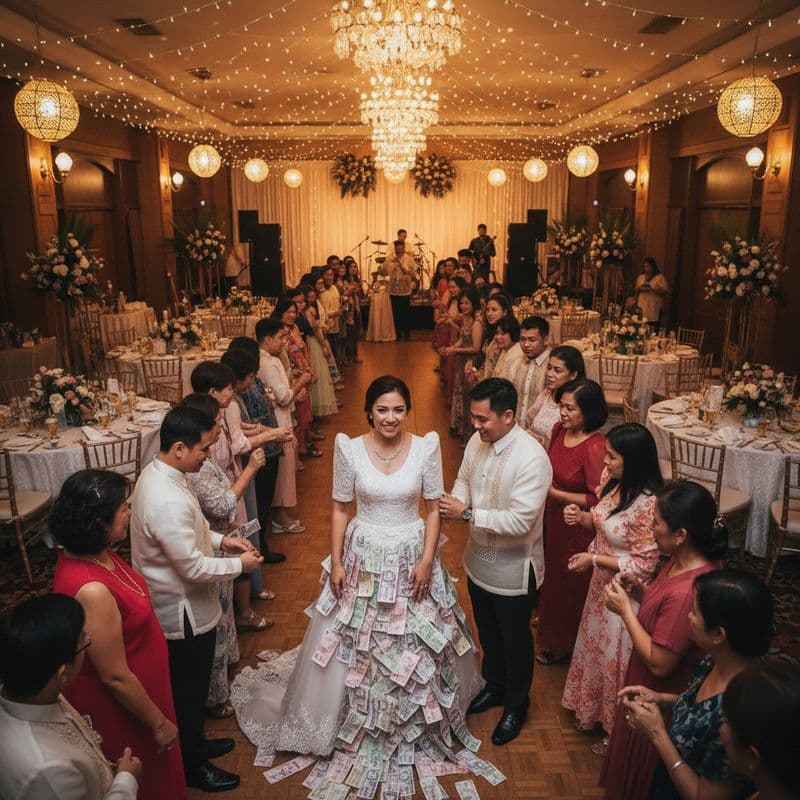
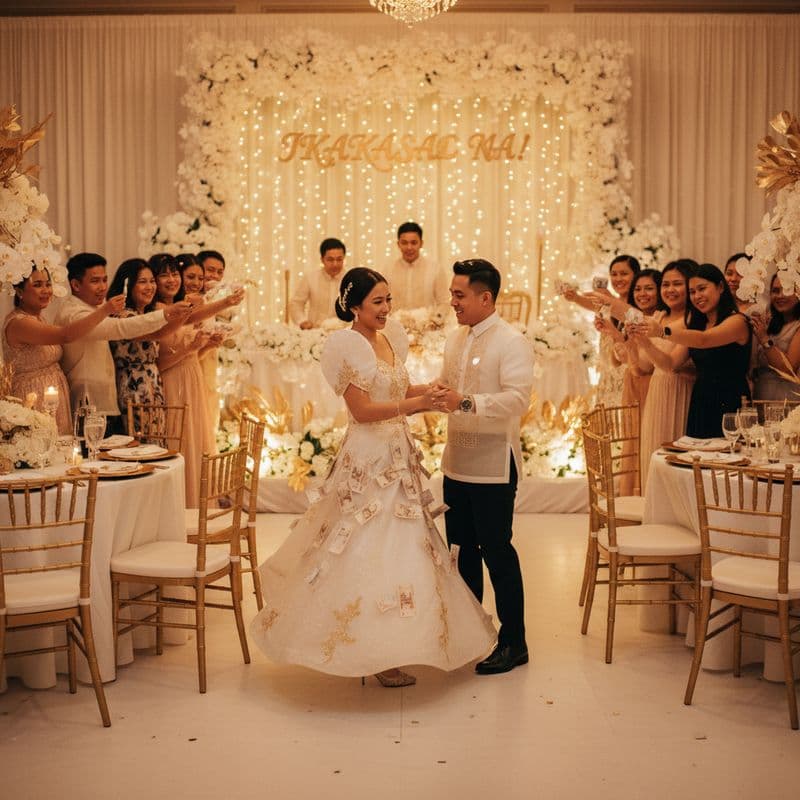
At Filipino weddings, the money dance — often called the "prosperity dance" — is more than just a fun moment. It carries real cultural weight. Guests step up to dance with the bride or groom for a few seconds, pinning cash onto their attire. Sometimes it's pinned directly onto the gown or barong. Other times, the bride's mother or a designated aunt holds an apron or bag to collect the bills.
What makes the Filipino version special is the spirit behind it. It's not transactional. It's the community saying, "We're here for you. We're investing in your future." In a culture where family ties run deep and bayanihan — the spirit of communal unity — is a way of life, the money dance is just an extension of that philosophy. You don't just attend a Filipino wedding. You participate in it. You contribute to it. You become part of the couple's story.
Planning a Filipino wedding and want to make sure traditions like this are woven in seamlessly? Tools like WedPlanner help couples organize every detail — from the reception timeline to the budget tracking — so you can focus on what matters most: celebrating with the people you love.
How It Works: The Mechanics of the Money Dance
Alright, let's get practical. If you've never been to a wedding with a money dance, here's the general flow:
- The DJ or emcee announces it. Usually after dinner, during the reception party phase.
- Guests line up. They approach the dance floor with bills ready — sometimes pinned, sometimes folded, sometimes in an envelope.
- Each guest dances briefly with the bride or groom — maybe 15 to 30 seconds — while pinning the money on or handing it over.
- The next guest steps in. The line keeps moving, the music keeps playing, and the cash keeps collecting.
Simple, right? But the details vary wildly depending on the culture. At some weddings, only the bride receives the money. At others, both the bride and groom get their own lines. Some families use decorative pins. Others use aprons, sashes, or even little satin bags. The amount varies too — from small denominations to surprisingly generous bills, depending on the guest's closeness to the couple.

Is the Money Dance Still… a Thing?
Honestly? Yes. And also — it depends on who you ask.
Some modern couples feel a little awkward about it. There's that voice in the back of your head whispering, "Is this tacky? Are we basically asking for cash?" It's a valid concern. Wedding etiquette has shifted, and some guests — especially those unfamiliar with the tradition — might not know what to make of it.
But here's the counterpoint: context matters. In cultures where the money dance is expected, skipping it might actually disappoint guests. It's part of the celebration. It's part of the joy. And when it's done right — with humor, warmth, and zero pressure — it becomes one of the most memorable moments of the night.
The key is intention. If the money dance feels like a shakedown, that's a problem. If it feels like a community wrapping its arms around a new couple? That's beautiful.
Tips for Couples Considering a Money Dance
Thinking about including one at your wedding? A few things to keep in mind:
- Know your crowd. If most of your guests come from cultures where the money dance is normal, go for it. If your guest list is mixed, a brief explanation from the emcee goes a long way.
- Make it fun, not forced. The best money dances feel spontaneous and joyful. Play upbeat music. Let the emcee set a lighthearted tone. Nobody should feel pressured to participate.
- Set a time limit. 10 to 15 minutes is plenty. You don't want the dance floor turning into a queue at the DMV.
- Have a plan for the money. Some couples designate someone to collect and secure the cash. Others use decorative aprons or bags that make it part of the visual.
- Be culturally respectful. If you're adopting a tradition from a culture that isn't your own, take time to understand its significance. Don't just borrow the fun parts — honor the meaning behind it.
And if you're building your wedding checklist and wondering where the money dance fits, WedPlanner's timeline builder makes it easy to slot in cultural moments like this right alongside your first dance and cake cutting.

What Guests Should Know, Too
If you're attending a wedding with a money dance, don't panic. You don't need to bring a stack of hundred-dollar bills. A small, thoughtful amount is perfectly fine. The gesture matters more than the number. And if you're not comfortable dancing? You can usually hand your contribution to a family member or the emcee. No awkward moves required.
The money dance isn't about getting rich. It's about getting loved. It's about a community showing up — with their feet, their wallets, and their whole hearts — for two people starting a life together. And in a world that often feels disconnected, that kind of collective generosity? It's worth celebrating.
So whether you're planning your own wedding or just attending one this season, embrace the moment. Pin that bill. Take that spin. And remember — every peso on that dress is someone saying, "We believe in you."
Ready to plan a wedding that honors your culture and your budget? Start with WedPlanner — built for Filipino couples, by people who get it.