Wedding Budget Philippines: How to Feed 300 Guests Affordably
By WedPlanner Team
Discover practical strategies for feeding 300 wedding guests on a budget in the Philippines, including 2026 cost-per-head pricing, buffet versus plated comparisons, lechon logistics, and negotiating tips with Filipino caterers.
Wedding Budget Philippines: How to Feed 300 Guests Affordably
Quick Answer: Feeding 300 guests at a Filipino wedding on a budget costs roughly ₱350–₱800 per head in 2026, depending on service style and menu choices. Buffet service, strategic negotiation, and alternatives like lechon and cassava cake can cut costs by 30–40% without sacrificing the celebratory experience.
Introduction
Feeding 300 guests sounds daunting, especially when you're working within a wedding budget in the Philippines. But here's the truth: Filipino weddings are inherently communal, generous, and joyful — and with the right strategy, you can deliver a memorable feast without draining your savings.
Whether you're planning a provincial celebration in Cebu or a metro Manila reception, this guide covers everything you need: 2026 cost-per-head pricing, buffet versus plated comparisons, lechon logistics, dessert alternatives, and insider negotiating tactics. Let's build a catering plan that honors tradition and respects your budget.
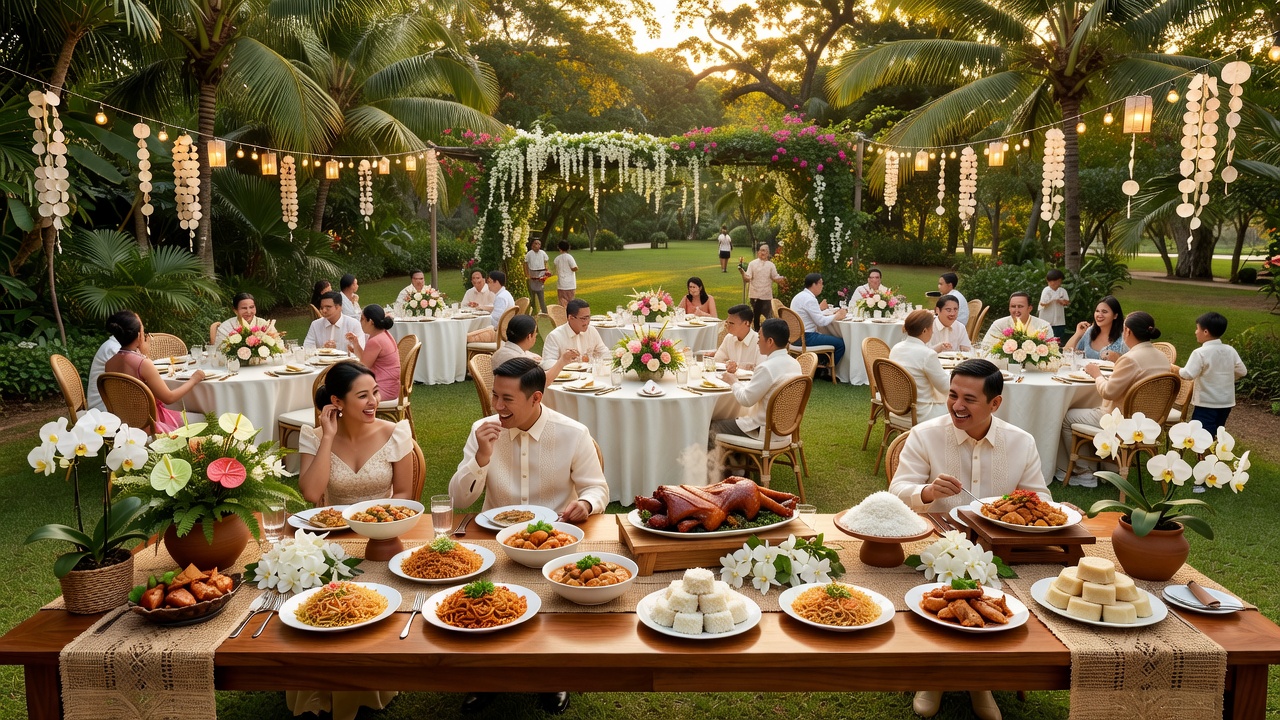
Filipino Wedding Catering Cost Per Head in 2026 (PHP)
Understanding current market rates helps you negotiate from a position of knowledge. Here's what Filipino couples are paying in 2026:
| Tier | Price Per Head (PHP) | What It Includes | Best For |
|---|---|---|---|
| Budget-Friendly | ₱350 – ₱500 | Basic buffet (pasta, chicken, rice, veggies), simple setup, limited service staff | Provincial weddings, barangay halls, daytime receptions |
| Mid-Range | ₱500 – ₱750 | Standard buffet or family-style, lechon option, dessert station, full service staff | Hotel function rooms, garden venues, typical urban weddings |
| Premium | ₱750 – ₱1,200+ | Plated service, customized menu, premium proteins (salmon, beef), elegant presentation | High-end hotels, destination weddings, formal evening affairs |
Pro tip: These prices assume metro Manila and major cities like Cebu or Davao. Provincial rates can be 15–25% lower, while exclusive venues may charge premiums for corkage or mandatory in-house catering.
What's Driving 2026 Prices?
Inflation in food commodities, fuel costs for transportation, and post-pandemic labor shortages have pushed catering prices up 8–12% since 2023. Pork prices remain volatile, directly impacting lechon costs. Book early and consider off-peak dates (January–March, July–September) for better rates.
Buffet vs. Plated Service: Which Saves More?
Your service style dramatically affects both cost and guest experience. Here's the breakdown for a wedding budget in the Philippines:
Buffet Service
Cost: ₱350–₱750 per head
Pros:
- Lower labor costs (fewer servers needed)
- Guests choose portions and preferences
- Reduces food waste compared to pre-portioned plates
- Encourages social mingling — very Filipino!
- More menu variety for the same budget
Cons:
- Requires more space for buffet lines
- Can create bottlenecks during peak serving times
- Food temperature consistency challenges
- Less "elegant" visually for formal affairs
Plated Service
Cost: ₱750–₱1,200+ per head
Pros:
- Premium, refined presentation
- Precise portion control and food costing
- Faster service once kitchen is organized
- Ideal for intimate, upscale receptions
Cons:
- Higher staffing costs (servers, runners, kitchen crew)
- Limited menu choices per guest
- Higher risk of food waste from uneaten plates
- Longer overall service time for 300 guests
Verdict for budget-conscious Filipino weddings: Buffet wins for value and flexibility. At 300 guests, the ₱200–₱400 per head savings translates to ₱60,000–₱120,000 — enough to cover your photographer, venue deposit, or honeymoon fund.
Smart Negotiating Tips with Filipino Caterers
Caterers expect negotiation. Here's how to do it respectfully and effectively:
1. Leverage Quantity Minimums
At 300 guests, you're already in the "bulk order" territory. Ask for volume discounts: "Since we're booking for 300, can you offer a 10% reduction on the per-head rate?" Most caterers build in 15–20% margin specifically for negotiation.
2. Bundle Services
Caterers often provide tables, chairs, linens, and basic decor. Bundling these can save ₱20,000–₱50,000 versus renting separately. Ask: "What's your all-inclusive package price?"
3. Target Off-Peak Dates
Saturdays in December and June are premium. Shift to:
- Friday or Sunday receptions (10–15% savings)
- January–March or July–September (15–20% savings)
- Lunch versus dinner service (20–25% savings)
4. Simplify the Menu
Instead of 8 courses, propose 5–6. Replace expensive proteins with crowd-pleasing Filipino favorites:
- Swap individual salmon portions to a communal ginataang tilapia
- Use chicken adobo instead of beef steak
- Offer pancit palabok as a filling, affordable noodle option
5. Negotiate Payment Terms
Request staggered payments: 30% deposit, 40% two weeks before, 30% on the day. Some caterers offer 3–5% discounts for full upfront payment — weigh this against your cash flow needs.
6. Get Everything in Writing
Filipino business culture values pakikisama (harmonious relationships), but verbal agreements won't protect your wedding budget in the Philippines. Insist on a detailed contract covering:
- Exact menu items and quantities
- Service staff count and attire
- Equipment included (chafing dishes, utensils, glassware)
- Cancellation and rescheduling policies
- Overtime charges and penalties
Lechon Logistics for 300 Guests
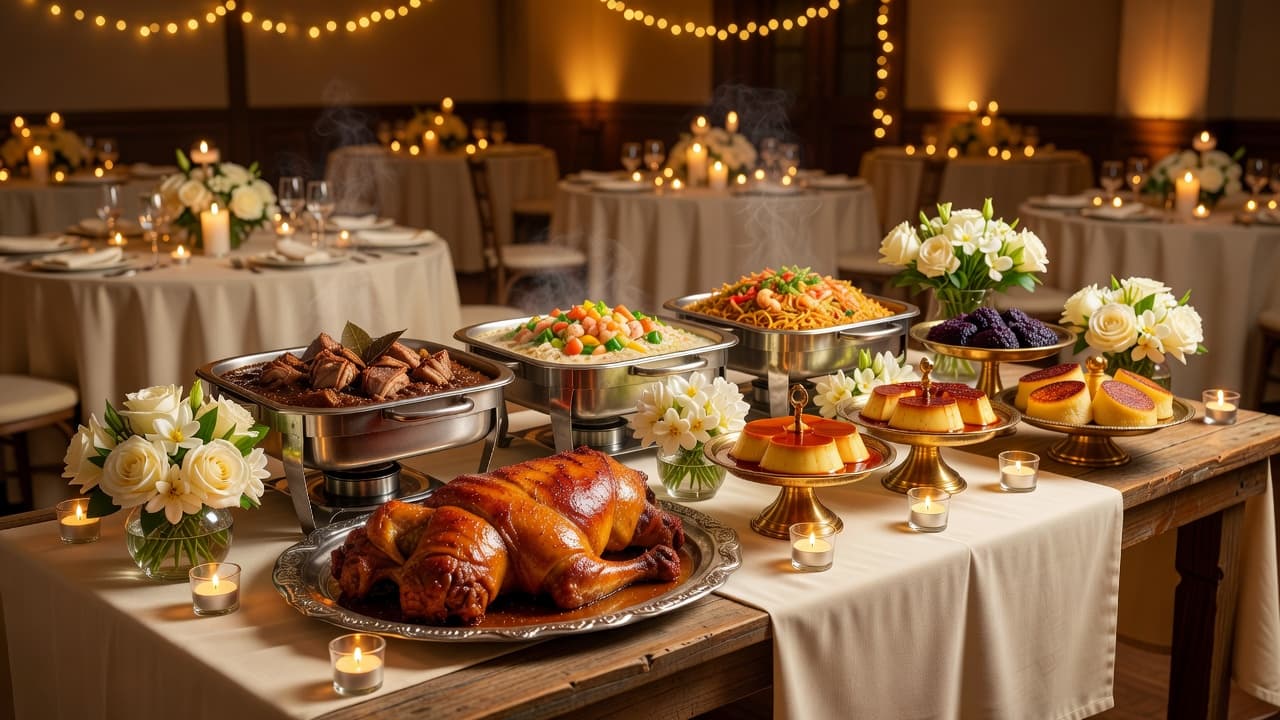
No Filipino wedding feels complete without lechon — the star of any celebration. Here's how to handle it logistically and affordably:
Sourcing Options
Local Lechon Vendors: ₱5,500–₱8,000 per whole pig (20–25kg live weight). Best for provincial weddings where vendors are accessible.
Catering Package Add-On: ₱7,000–₱12,000 per pig. Convenient but pricier. Verify if they source fresh or frozen.
Specialty Lechon Shops: Cebu lechon (₱8,000–₱15,000) ships frozen to Manila. Factor in ₱2,000–₱3,000 shipping.
Serving Size Math
A 20kg live weight pig yields roughly 8–10kg of edible meat and crispy skin. For 300 guests:
- Conservative estimate: 3 whole pigs (allows 80–100g per person)
- Generous estimate: 4 whole pigs (120–150g per person, plus leftovers)
- With other mains: 2 pigs may suffice if you have chicken, fish, and pasta alternatives
Lead Time and Storage
- Book 2–4 weeks ahead for local vendors; 4–6 weeks for Cebu specialty shipping
- Storage: Lechon is best served within 4 hours of roasting. If your reception starts at 6 PM, schedule roasting completion for 5:30 PM
- Reheating contingency: Ask your caterer about chafing dish setups. Lechon loses crispiness when reheated — plan for fresh service
- Leftover protocol: Coordinate with ninongs/ninangs to take home pabalot (take-home packs). It's a Filipino tradition!
Cost-Saving Lechon Alternatives
If whole lechon strains your wedding budget in the Philippines:
- Lechon belly roll: ₱1,500–₱2,500 for 3kg, serves 15–20. Order 15–20 rolls instead of whole pigs.
- Lechon paksiw station: Use leftover lechon meat for a creative, crowd-pleasing addition.
- Crispy pata station: ₱800–₱1,200 per piece, serves 8–10. More affordable with similar "wow" factor.
Dessert Alternatives That Balance Your Budget
Wedding cakes in the Philippines cost ₱8,000–₱25,000 for 300 guests. Here are smarter alternatives:
Budget-Friendly Dessert Stations (₱50–₱120 per head)
| Dessert Option | Cost per Head | Serves 300 For | Notes |
|---|---|---|---|
| Cassava cake + Leche flan | ₱40–₱60 | ₱12,000–₱18,000 | Classic Filipino, easy to portion |
| Halo-halo station | ₱60–₱90 | ₱18,000–₱27,000 | Interactive, Instagram-worthy |
| Fruit platters (seasonal) | ₱30–₱50 | ₱9,000–₱15,000 | Health-conscious, refreshing |
| Puto + Kutsinta platter | ₱25–₱40 | ₱7,500–₱12,000 | Very Filipino, ultra-budget |
| Small wedding cake + dessert buffet | ₱80–₱120 | ₱24,000–₱36,000 | Best of both worlds |
Pro Dessert Tips
Skip the towering cake: A small 2-tier ceremonial cake (₱3,000–₱5,000) for photos, plus a dessert buffet, saves ₱10,000–₱15,000.
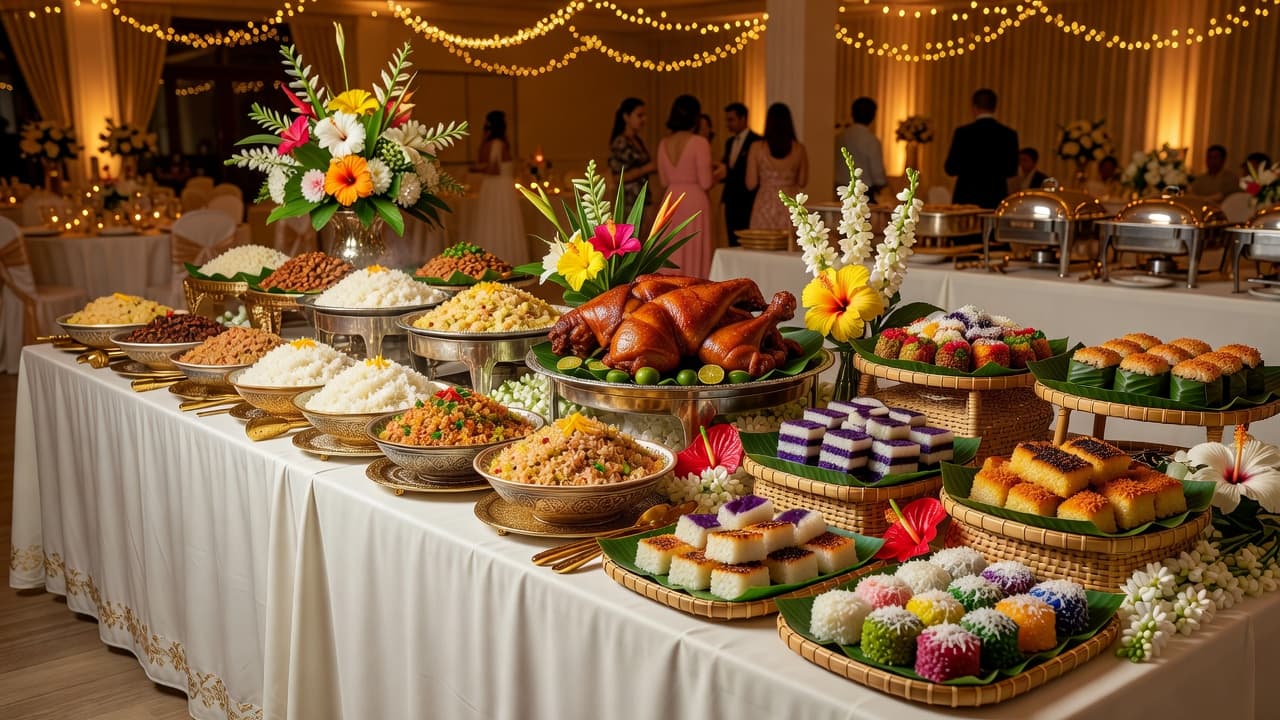
Embrace kakanin: Filipino rice cakes are nostalgic, filling, and cost 60–70% less than Western desserts. Guests often prefer them.
DIY fruit station: Buy seasonal fruits (mango, watermelon, pineapple) from local markets. Arrange on tiered stands with toothpicks. Costs ₱15,000–₱20,000 versus ₱30,000+ from caterers.
Filipino Cultural Considerations
Understanding local customs prevents awkward surprises and helps you budget accurately:
Ninong and Ninang Headcount Impact
Filipino weddings typically have 6–12 pairs of sponsors. These aren't just ceremonial — they're often seated with family and included in full catering counts. Budget for 12–24 additional plates beyond your core guest list.
Family-Style Service Norms
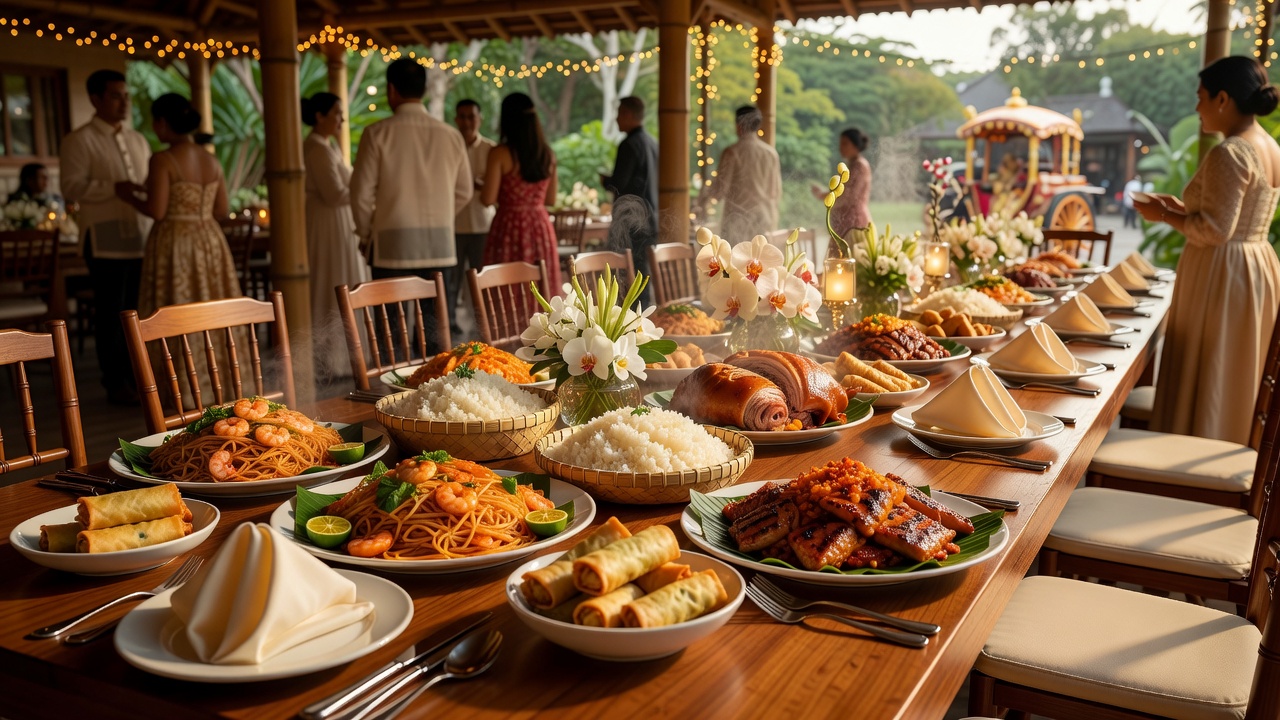
Filipino receptions often blend buffet with bila-bila (family-style platters on tables). This reduces buffet line congestion and encourages sharing. Ask your caterer if they offer hybrid service — it may cost slightly more but improves guest experience significantly.
Venue-Catering Coordination
Many venues require "accredited" caterers or charge corkage (₱100–₱300 per head) for outside food. Before signing venue contracts:
- Ask for the accredited caterer list
- Compare their rates versus corkage + outside caterer
- Verify kitchen access, power capacity, and loading dock logistics
- Check if lechon setup is permitted (some venues prohibit open-flame roasting)
Pabaon and Take-Home Culture
Filipino guests expect take-home containers. Order 100–150 extra disposable containers (₱500–₱1,000 total). It's a small cost that leaves a big impression of generosity.
Key Takeaways
- Target ₱350–₱500 per head for budget-friendly Filipino wedding catering in 2026
- Buffet service saves ₱60,000–₱120,000 for 300 guests compared to plated
- Book 2–4 weeks ahead for lechon; 3–4 whole pigs feed 300 generously
- Negotiate confidently — volume discounts, off-peak dates, and menu simplification all reduce costs
- Replace expensive wedding cakes with Filipino dessert stations (cassava cake, halo-halo, kakanin) for 60–70% savings
- Factor in ninong/ninang plates, pabaon containers, and venue corkage when budgeting
- Get everything in writing — contracts protect both your budget and your peace of mind
Frequently Asked Questions
How much should I budget for a 300-guest Filipino wedding?
For 300 guests, allocate ₱105,000–₱225,000 for catering alone (₱350–₱750 per head). Add 15–20% for lechon, desserts, and beverages. Total realistic budget: ₱120,000–₱270,000.
Is buffet or plated cheaper for large Filipino weddings?
Buffet is significantly cheaper — typically ₱200–₱400 less per head. For 300 guests, that's ₱60,000–₱120,000 in savings, plus buffet encourages the social, communal dining style Filipinos prefer.
How many lechon do I need for 300 guests?
Order 3–4 whole pigs (20–25kg live weight each) depending on your other mains. Two pigs may suffice if you have substantial chicken, fish, and pasta options. Always confirm serving yields with your vendor.
What's the cheapest way to serve dessert at a Filipino wedding?
Filipino kakanin stations (cassava cake, leche flan, puto, kutsinta) cost ₱25–₱60 per head versus ₱80–₱150 for Western-style cakes. They're nostalgic, filling, and guests often prefer them.
Can I negotiate with wedding caterers in the Philippines?
Absolutely. Caterers expect it. Leverage your 300-guest volume, ask for off-peak discounts, simplify the menu, and request bundled pricing. Most caterers build in 15–20% negotiation margin.
When should I book my wedding caterer?
Book 3–6 months ahead for peak season (December, June). For off-peak dates, 2–3 months is usually sufficient. Lechon vendors need 2–4 weeks notice; Cebu specialty lechon requires 4–6 weeks.
How do venue corkage fees affect my catering budget?
Corkage ranges from ₱100–₱300 per head for outside caterers. For 300 guests, that's ₱30,000–₱90,000 extra. Always compare accredited caterer rates versus corkage + your preferred caterer before deciding.
What's included in a typical Filipino wedding catering package?
Most packages include food, service staff, basic equipment (chafing dishes, plates, utensils), and setup/breakdown. Premium packages add linens, tables, chairs, and dessert stations. Always request an itemized list.
Are lunch receptions cheaper than dinner?
Yes — lunch catering typically costs 20–25% less than dinner. Guests also consume less alcohol at lunch, reducing your beverage budget. Consider a Saturday lunch or Sunday brunch for maximum savings.
How do I handle dietary restrictions for 300 guests?
Include 5–10% vegetarian options in your buffet. Label dishes clearly. Most Filipino caterers can adjust adobo and gulay dishes to be vegetarian-friendly with advance notice.
Conclusion
Feeding 300 guests on a wedding budget in the Philippines isn't just possible — it's an opportunity to celebrate Filipino hospitality at its finest. By choosing buffet service, negotiating strategically, planning lechon logistics early, and embracing local dessert traditions, you can create a feast that feels abundant without being extravagant.
Remember: the best weddings aren't defined by how much you spent, but by how welcome your guests feel. A well-fed guest is a happy guest — and in Filipino culture, that's the true measure of a successful celebration.
Ready to find your caterer? Browse WedPlanner's curated catering vendor directory to compare accredited caterers, read real couple reviews, and request quotes tailored to your guest count and budget. [Internal link: WedPlanner catering vendor directory]