Final Week Wedding Game Plan (Philippines Checklist)
By WedPlanner Team
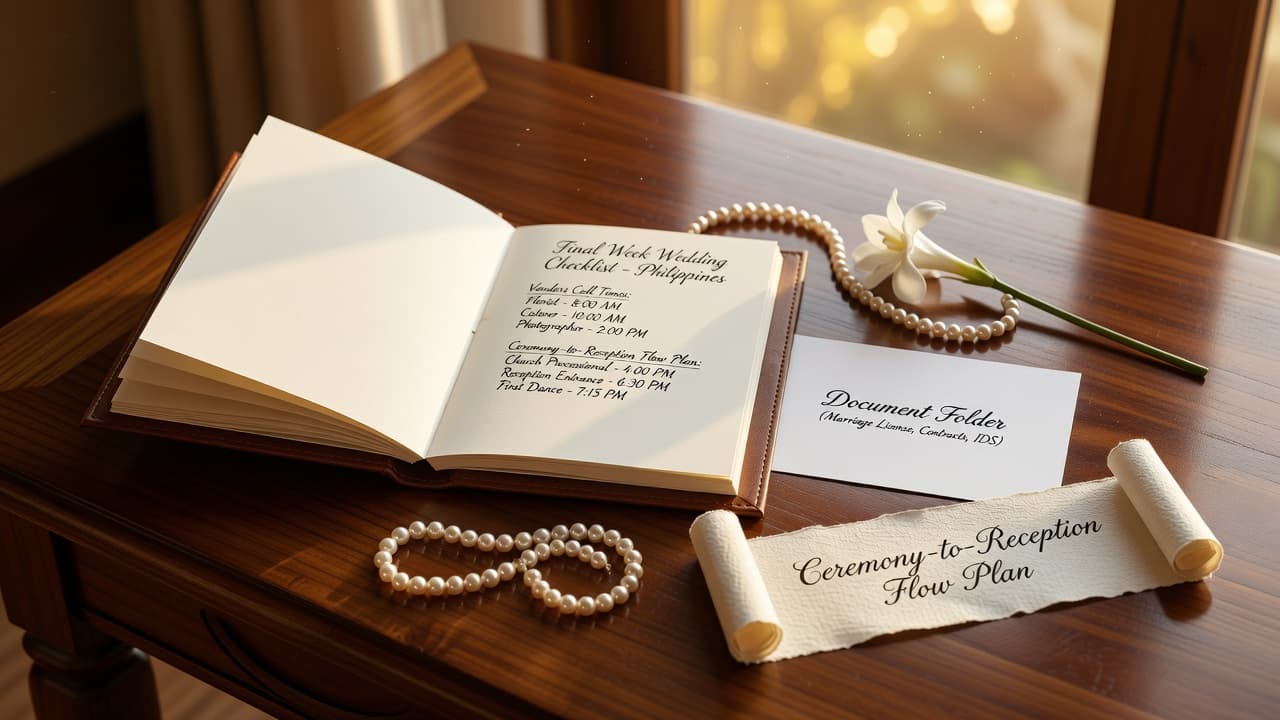
Your final week should be about confirmation, not chaos. This Philippines-focused checklist covers vendor call times, document checks, and a calm ceremony & reception run-through so you can enjoy the day.
Final Week Wedding Checklist Philippines: Your Calm Game Plan
Quick Answer: In your final week, shift from planning to confirming. Lock vendor call times, confirm backups, and verify paperwork (especially marriage license and IDs). Then run one structured ceremony + reception walkthrough—so every cue, handoff, and deliverable has a name, time, and place. This reduces last-minute stress for couples across the Philippines.
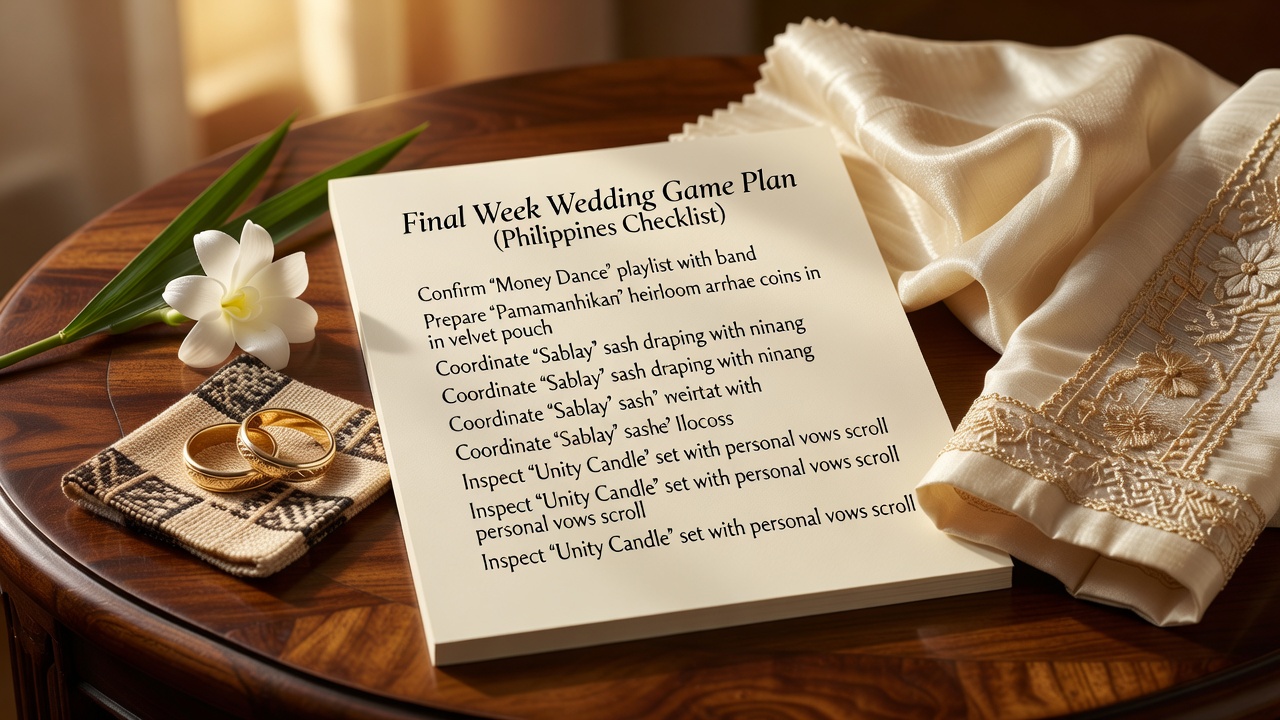
Introduction
The final week before a wedding can feel like a countdown plus a thousand moving parts—vendors texting for final details, venues asking for headcounts, and paperwork that suddenly seems “urgent.” The good news: you don’t need more effort—you need better confirmations.
This guide is built for couples planning wedding logistics in the Philippines. Use it as a checklist-style game plan to lock dates, times, documents, and the ceremony/reception flow. Think “calm coordination,” not “last-minute scrambling.”
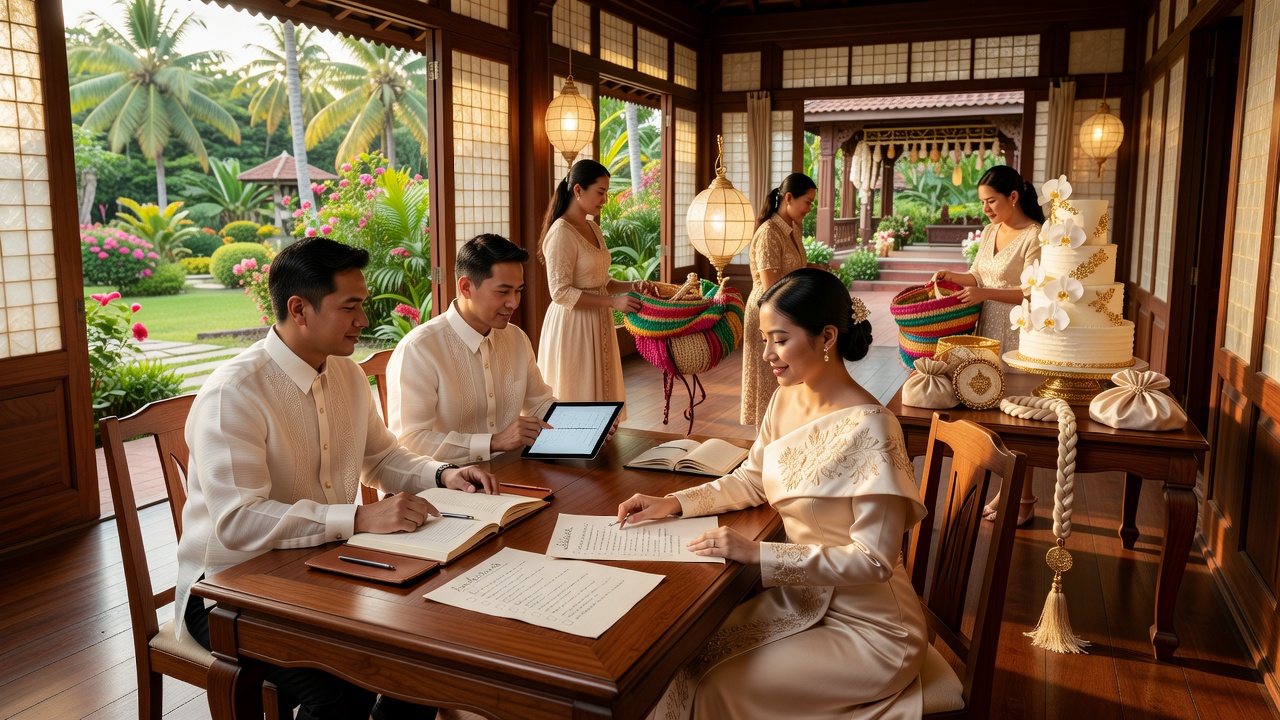
What should you do in the final week to avoid wedding-day chaos?
Quick Answer: Confirm everything that others must deliver: vendor arrival/call times, sound/light needs, food timing, program order, transport routes, and what you must bring (documents, IDs, printed materials). Then do one calm run-through of the ceremony and reception cues with your key contacts—planner/coordinator, emcee, photographer, and church/venue representative.
To make this easy, we’ll follow a confirmation system you can copy into a phone note. Start with a simple snapshot first:
Copy/paste: the “15 Confirmations” snapshot
- Vendor call times (photo/video, HMUA, lights/sound, entourage, caterer, florist, cake, transport)
- Venue access times + loading/unloading rules
- Ceremony start time + expected procession timing
- Reception program order (and who cues each segment)
- Marriage license + required documents ready in the “Day-of folder”
- Final guest count and seating plan status
- Final payments status (or payment schedule with receipts/OR)
- Backup contacts for every critical vendor
- Rain plan / alternative photo spots (if applicable)
- Sound system check (mic count, playback device, cue person)
- Food timeline: cocktail timing, main meal time, dessert/cake cutting time
- Transport plan: pick-up windows + contingency if traffic delays
- Deliveries schedule (flowers, cake, signage, giveaways)
- Printed materials ready (programs, vows, signage, emergency contact list)
- Who holds the documents on the day (one responsible person)
Final week wedding checklist Philippines: your 7-day confirmation system
Instead of trying to “finish everything,” treat each day as a confirmation round. The goal is clarity: every vendor and every key person knows the time, location, and deliverable.
Day -7 to -5: Lock vendor call times and confirm backups
Why this matters: Your risk in the final week isn’t effort—it’s misalignment. Vendor call times should be confirmed in writing so there’s no confusion when phones get busy.
- Send a “call-time confirmation” message to each vendor with: (1) date, (2) exact call time, (3) venue/meeting point, (4) parking/loading instructions, (5) key items they bring.
- Confirm who is the decision-maker if the vendor arrives late or an issue happens (name + mobile number).
- Request an arrival plan for setup (e.g., “lights/sound arrives 2 hours early for mic + sound check”).
- Confirm weather-impact steps for outdoor ceremonies or photo moments. Ask: “What’s your rain plan? Do you have a backup backdrop/shelter?”
- Confirm transport routes and timing for entourage and couples’ transfers. In the Philippines, traffic and venue security checkpoints can affect arrival—so add buffer time.
Day -4 to -3: Paperwork, payments, and final details
Why this matters: Paperwork and payments often move slower than vendors. By day -3, you want everything that can “stall” to already be handled.
- Marriage documents check (civil + church, if applicable): verify you have originals where required, plus photocopies.
- IDs: ensure IDs of both parties are valid and available for the day.
- Receipts/ORs: if you paid for services that require official receipts, keep copies in the Day-of folder.
- Finalize your guest count and seating plan with your coordinator/caterer. Confirm the deadline they need for final counts.
- Confirm the emcee’s or coordinator’s program order: the sequence, cue words, and who calls each segment.
- Confirm music and playback: list all songs (procession, entrance, first dance, special numbers). Specify the exact playback device each person will use.
Day -2: Final measurements, deliveries, and venue walkthrough
Why this matters: This is where “small” details become real: how far from the altar the flowers sit, how many mics are needed, where signage is placed.
- Venue walkthrough with your key contacts (coordinator/planner, photographer, lights/sound lead, and emcee if possible).
- Confirm staging zones: bridal prep area, groom’s holding area, holding points for entourage, and where deliveries can be offloaded.
- Confirm signage placement: direction boards, welcome signage, table numbers, and any sponsor walls.
- Delivery schedule for flowers, cake, giveaways, and printed materials. Ask: “What time should these arrive? Who receives them?”
- Confirm a “sound check” time and who controls the console.
Day -1: Ceremony & reception run-through (calm, not frantic)
Why this matters: A short, structured walkthrough prevents confusion on the day. You’re not memorizing everything—you’re aligning cues and handoffs.
- Do a 20–40 minute rehearsal walkthrough with your coordinator, emcee, photographer/videographer lead (or main contact), and whoever is cueing transitions.
- Map the procession flow: who enters first, where each person stands, and who gives the “go” cue.
- Confirm ceremony logistics: microphone placement, readings/vows order, and any special moments (cord, candle, etc.).
- Confirm reception cues: prayer/grace, welcome remarks, dinner start time, speeches, cake cutting, dances, and final program segment.
- Lock the emergency contact list: one printed page + one shared note in your phones.
Wedding-eve packing: build a “Day-of folder”
Day-of folder purpose: One responsible person knows exactly where your critical paperwork and printed items are—so you don’t chase files while people are waiting.
- Marriage license and required documents (originals where needed + photocopies)
- Valid IDs (both parties)
- Backup contact sheet (vendors + planner/coordinator + emcee)
- Printed timeline (ceremony start time, reception program order, key cue times)
- Vows and readings (printed copies, plus digital backup)
- Payment records/receipts (where applicable)
- Small “day emergency” kit: pens, tape, safety pins, stain remover wipe, blister patches, and basic meds if you use them
Vendor call times and final coordination checks
Quick Answer: Confirm vendor call times in writing, then verify the handoffs: who receives deliveries, who cues sound checks, who coordinates transport arrivals, and who owns the timeline. Use a simple table so every vendor gets the same “truth” and you don’t rely on memory.
Here’s a practical table you can tailor for your wedding in the Philippines:
| Vendor/Team | Confirm by | What to confirm | Key risk if unclear |
|---|---|---|---|
| Photo/Video | Day -7 to -5 | Call time, prep coverage start, ceremony start, scenic/portrait windows | Missing golden moments or procession coverage |
| HMUA | Day -7 to -5 | Exact start time, number of assistants, makeup/styling sequence | Hair/makeup running long and stress spikes |
| Lights/Sound | Day -4 to -2 | Sound check window, mic count, playback device, cue person | No audio during vows/speeches |
| Emcee/Coordinator | Day -4 to -2 | Full program order, cue timing, who calls each transition | Skipped segments or rushed announcements |
| Caterer/Events Team | Day -4 to -3 | Final headcount deadline, service timeline, special meals | Food timing mismatch with program |
| Florist | Day -4 to -2 | Delivery/installation schedule, placement map, setup duration | Arrangements arriving late or in wrong areas |
| Cake | Day -3 to -1 | Delivery time, storage, cutting moment, serving plan | Melting/temperature issues or missed cutting time |
| Transport/Entourage | Day -4 to -2 | Pick-up windows, staging points, drivers’ contact person | Delayed arrivals for procession |
Best practice: confirm in one “shared truth” document
Whether you use Google Docs, a shared Notes app, or a printed page, your coordinator should maintain a single updated timeline. Then every vendor confirmation message should reference the same key times (especially ceremony start and reception program start).
Document checks: what to verify before you walk down the aisle
Quick Answer: Your document checklist should focus on what authorities and ceremony locations need: marriage license requirements for civil ceremonies, ID validity, and any church-specific requirements. Pack originals and photocopies in one folder, and confirm the “who holds it” decision in writing.
In the Philippines, the exact document list can vary depending on whether you’re doing a civil wedding, church wedding, or both. Treat this as a verification framework:
Core paperwork you should double-check
- Marriage license details: confirm it’s ready for the ceremony requirements and accessible when needed.
- Valid government-issued IDs for both parties: keep them accessible.
- Civil ceremony requirements (if applicable): confirm what your Local Civil Registrar or assigned officiant expects.
- Church requirements (if applicable): ask your church coordinator about any needed certificates (and their timing for submission).
- Special circumstances documents (if applicable): e.g., changes in last name processing, delegated arrangements, or any additional documents your case requires.
How to organize documents so nobody panics
- One folder, two copies: originals in one section, photocopies in another, plus a digital scan.
- Digital backup: store scanned PDFs offline (downloaded) on your phones or a secure offline drive.
- One responsible holder: one coordinator/person should hold the folder. Avoid “everyone has a copy” chaos.
- Receipt/OR copies for major services if you need them for post-wedding processing or record-keeping.
Helpful external references (placeholders):
- [External link: Philippine Statistics Authority (PSA) guidance on marriage records/certificates]
- [External link: Local Civil Registrar / LGU guidance for marriage license and civil wedding requirements]
Ceremony and reception run-through: a calm walkthrough you can actually follow
Quick Answer: Run a short walkthrough that covers procession order, cue timing, microphone/playback checks, and who gives the “go” signal for each segment. For receptions, align dinner timing with program beats (speeches, dances, cake cutting) so nothing battles with food service.
Ceremony flow: confirm the cue chain
Different venues and traditions vary, but this “cue chain” helps you avoid delays:
- Before entry: venue/altar readiness confirmed; microphones tested; seating and entourage staging confirmed.
- Processional: who enters first, where they pause, and when the officiant signals start.
- Key moments: readings/vows, special rituals (if any), and any music transitions.
- Exit: confirmation of where the couple exits and where the photographer/videographer needs them for immediate photos.
Practical Philippines tip: If you’re using a church, confirm whether there are restrictions on sound levels, photography/video rules, or entry timing for the entourage. Ask your coordinator to align with the church staff—not just your schedule.
Reception flow: align program and food service
Receivers in the Philippines often prefer a full reception program with structured segments. The biggest preventable issue is a mismatch between program timing and food service.
- Welcome moment: who announces, when guests are seated, and when the first cue starts.
- Prayer / opening (if part of your tradition): confirm mic readiness and seating.
- Dinner timing: confirm when service starts and whether there’s a hard stop for speeches.
- Speeches: confirm the order of sponsors/parents and how long each segment should last.
- Cake cutting: confirm the exact cue time so the cake is ready and stable.
- Special dances / entertainment: confirm when music playback begins and who triggers it.
- Last segment: closing remarks, raffle/giveaway moment (if any), and exit logistics.
Make a simple “who cues what” list
Assign cues to people—don’t let cues sit in your head.
- Emcee cues announcements
- Sound tech cues audio playback
- Coordinator cues transitions
- Photographer/videographer cues photo moments
- Transport contact cues entourage movement
Common final-week mistakes (and how to avoid them)
Most last-minute chaos comes from a predictable set of issues. Here’s how to preempt them:
- Assuming “they’ll arrive on time”: Confirm call times and arrival/setup windows in writing.
- Having paperwork in multiple places: Put originals + copies into one folder and assign one holder.
- Not rehearsing transitions: A 20–40 minute walkthrough with your key contacts prevents “where do we stand?” moments.
- Changing the program late: If changes happen, update the shared timeline and inform emcee + sound tech immediately.
- Unclear sound responsibilities: Decide who controls playback and who tests mics for speeches/vows.
- Food timing mismatch: Align program beats around dinner service so speeches don’t interrupt guests waiting for food.
- No backup plan for rain/traffic: Build contingency time buffers and confirm who decides when to shift plans.
- Overpacking the timeline: Leave breathing room between major cues. Faster is rarely calmer.
Costs and budgeting in the last week (how to keep it under control)
The last week can introduce “surprise costs” if you discover missing items too late (extra rush delivery, overtime setup, or last-minute additions). Instead, confirm and clarify.
What to confirm to prevent late fees
- Overtime rates for venue/caterer or setup teams
- Rush delivery assumptions for flowers/cake and who pays for extra logistics
- Allowance for additional speakers/mics (if speeches increase)
- Transport buffer expectations: whether drivers wait and for how long
Tip: Keep a short “decision budget” note for yourselves—money you can use if something breaks that’s truly necessary. But only after you’ve asked the vendor what the fix requires.
Wedding planner vs DIY in the final week: what’s different?
If you have a wedding planner/coordinator, great—you still need to do confirmations. If you’re doing it yourself, the checklist below becomes your “planner brain.”
| Approach | Pros | Watch-outs in the final week |
|---|---|---|
| With planner/coordinator | Centralized timeline, vendor management, cue coordination | Still confirm document readiness and keep one holder for originals |
| DIY (no planner) | More direct control and fewer intermediaries | Assign roles clearly: one person manages sound, one manages documents, one manages emcee cues |
Internal link opportunities (placeholders):
- [Internal link: Wedding Day Timeline Template for Philippines couples]
- [Internal link: Vendor call time message templates (copy/paste)]
- [Internal link: Day-of emergency contact & logistics checklist]
Key Takeaways
- Your final week is about confirmation, not new tasks—lock times, responsibilities, and deliverables.
- Use the 7-day confirmation system to prevent misalignment between vendors, venue, and program cues.
- Do a structured document check: marriage license (if applicable), valid IDs, and any church/civil requirements—pack originals + copies in one folder.
- Run a calm ceremony and reception walkthrough with your coordinator/emcee/sound lead to align transitions and cue timing.
- Reduce last-minute risk by confirming sound, food timing, transport buffers, and backups in writing.
Frequently Asked Questions
How many days before the wedding should we start confirming vendors?
For most couples, start vendor call-time confirmations 5–7 days before. By day -3, confirm any items tied to logistics (headcount deadlines, sound check windows, delivery schedules). This gives you time to correct misunderstandings before everyone is busy on the final stretch.
What documents should we prepare for a wedding in the Philippines?
Exact requirements vary by civil versus church wedding and your circumstances. Common priorities include the marriage license (if applicable), valid government-issued IDs, and any church or officiant instructions. Keep originals and photocopies together, and store digital scans offline as a backup.
Should we do a rehearsal if our venue says we can arrive on the wedding day only?
Yes—if full rehearsal isn’t possible, do a short walkthrough. Even 15–30 minutes with the coordinator, emcee, and sound lead can confirm procession flow, microphone usage, and cue timing. The goal is alignment, not memorization.
How do we confirm vendor call times without overwhelming them?
Send a single message per vendor (or a grouped message via your coordinator) with the key points: call time, meeting point, setup window, and what they need to bring. Avoid long chat threads—clarity beats volume. Keep responses in your shared timeline.
What’s the best way to prevent sound issues during vows and speeches?
Schedule a sound check with the lights/sound lead and confirm mic count before guests arrive. Decide who controls playback and who gives the “go” cue for each segment. Test both the microphone and any music playback device—then write it down in the cue list.
How can we keep the final week calm, especially if family is involved?
Assign roles. Give family members specific tasks with clear timing (e.g., “handle welcome signage setup by 3:00 PM”). Centralize decisions through one coordinator/emcee contact. Keep a single shared timeline and reduce “group changes” by updating everyone through that source.
What if a vendor is late on the wedding day?
Have backups and decision rules. Your coordinator should know which tasks are time-critical (sound check, ceremony readiness) and what can shift slightly (photo portraits). Keep vendor contact numbers and alternative plans ready—so you don’t improvise under stress.
Do we really need both physical and digital copies of wedding documents?
Yes. Physical copies prevent device issues and last-minute access problems. Digital scans help if originals are temporarily unavailable or if someone needs a quick reference. Save offline and consider a second backup location so you’re not dependent on one phone.
Is a wedding planner still helpful even in the final week?
Often, yes. Even if you don’t hire end-to-end planning, a coordinator or day-of assistant can manage call times, cue timing, and vendor handoffs. However, you’ll still need to do the document readiness check and confirm where originals are stored.
Conclusion
Your final week can be genuinely calm—if you switch your mindset from “planning” to “confirmation.” Lock vendor call times, verify documents, align ceremony and reception cues, and assign responsibilities clearly. That’s how couples in the Philippines protect the day from chaos without adding more stress.
CTA: Want a smoother final-week run-through? [Internal link: Download our Wedding Day Timeline Checklist] and share it with your coordinator/emcee. If you’re coordinating multiple vendors, we can help you turn this into a personalized, confirmation-ready plan for your venue and program.