Sustainable Wedding Ideas Philippines (Still Chic)
By WedPlanner Team
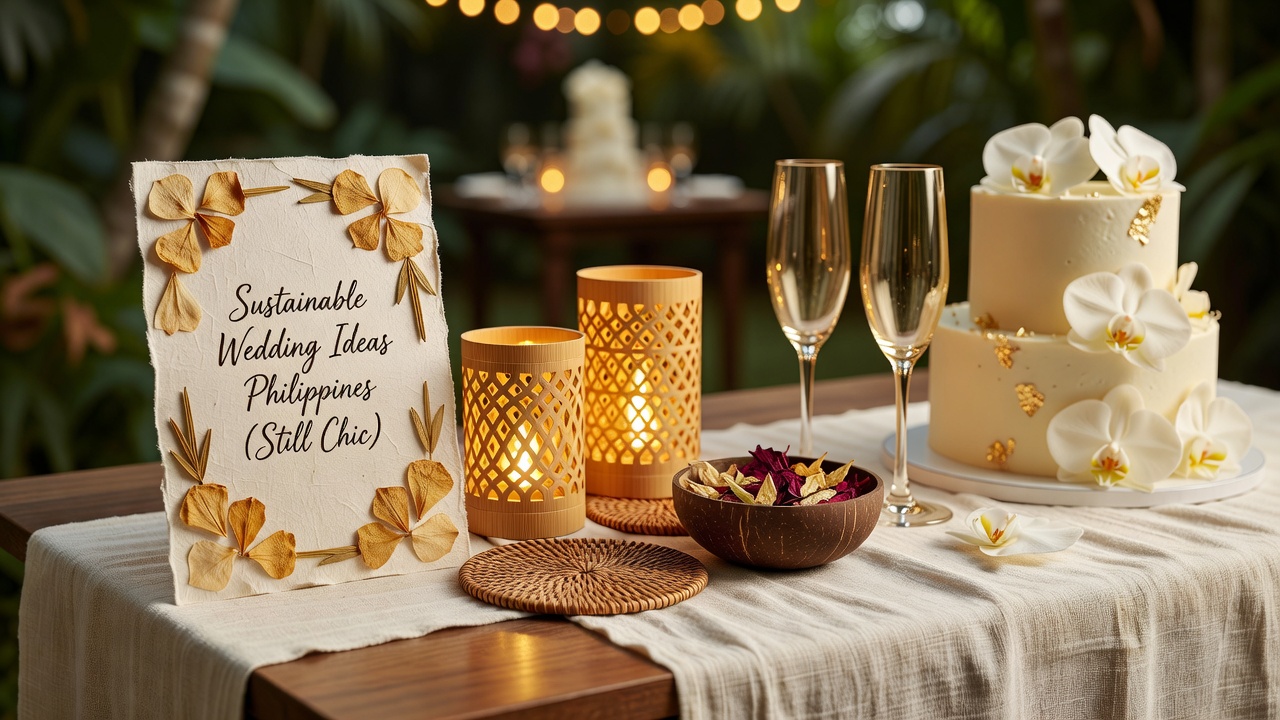
Sustainable wedding ideas Philippines can still feel luxurious and romantic—especially when you plan ahead. Here are polished eco-friendly swaps for decor, invitations, and giveaways that fit Filipino wedding culture.
Sustainable Wedding Ideas Philippines: Still Chic, Still Romantic
Quick Answer: You can host a sustainable, “still chic” wedding in the Philippines by planning early: choose rental and reusable decor, print fewer (and smarter) invitations, and give favors guests can actually use—like plants, edible local treats, or items made with recycled materials. The key is vendor coordination and thoughtful sourcing.
Introduction
Planning a wedding in the Philippines is already a love story: family-centered traditions, beautiful venues (gardens, churches, beaches, event halls), and details that make the day feel unmistakably yours. The only problem? “Eco-friendly” sometimes sounds like it means less glam.
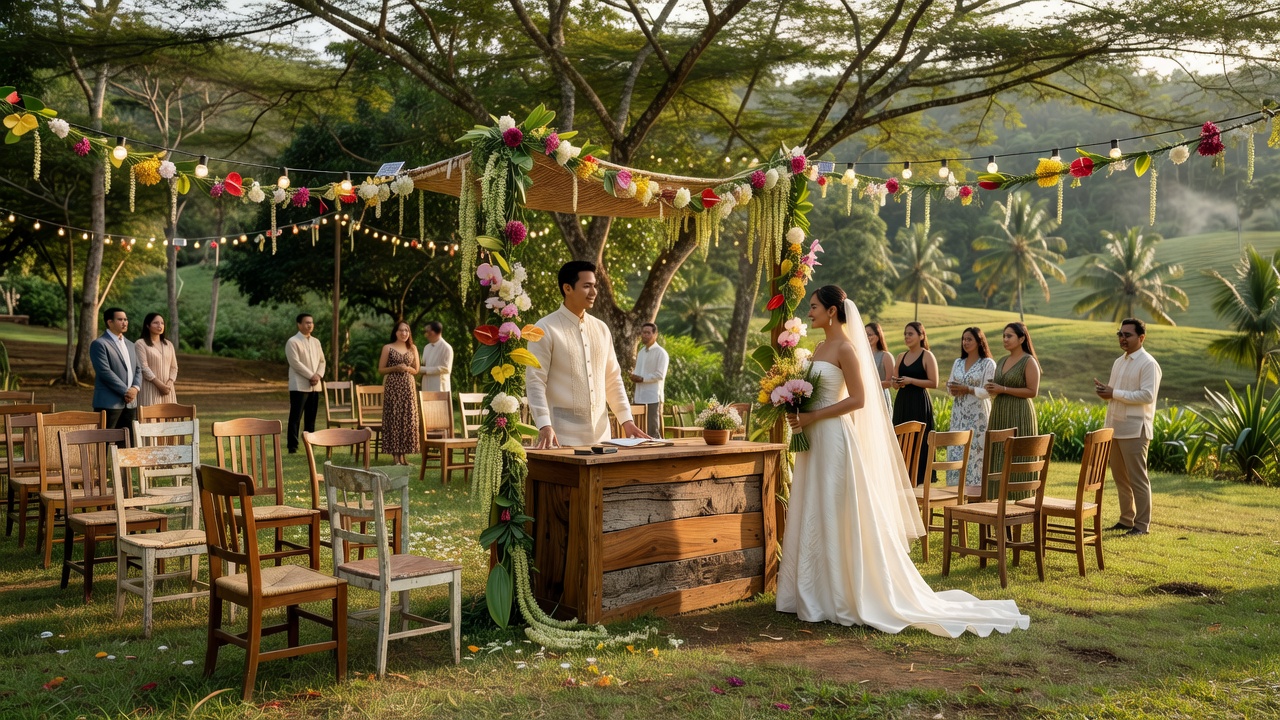
Here’s the good news: sustainable wedding ideas Philippines can be polished, romantic, and photo-ready—when you choose the right swaps and coordinate them with your local suppliers. Below, you’ll find actionable, Philippines-specific ideas for decor, invitations, and wedding giveaways that match common planning realities (busy schedules, multiple households to coordinate, and vendor lead times).
sustainable wedding ideas Philippines: polished, romantic, and practical
If you want sustainability without sacrificing elegance, focus on three high-impact areas: (1) reduce waste with rental/reuse systems, (2) choose low-waste materials for invitations and signage, and (3) give favors that guests keep or use (not “trash by the end of the night”). Plan early so vendors can source the materials you want.
What “sustainable” means (in wedding terms)
In weddings, sustainability usually means lowering environmental impact across four areas:
- Waste reduction: print fewer items, avoid single-use decor, and choose reusable or biodegradable options.
- Material choices: prefer recycled/recyclable, compostable, or natural materials over hard-to-dispose plastics.
- Lower-impact energy & logistics: rentals and local sourcing can reduce shipping and short-lived purchases.
- Longevity: favors and decor that keep giving (plants that survive, keepsakes that aren’t trash) matter most.
Philippines wedding planning reality check
Many Filipino weddings involve:
- Family participation: ninongs/ninangs, family decisions on traditions and aesthetics.
- Multiple formats of the event: church ceremony plus reception styling, sometimes with rehearsal or family dinners.
- Vendor timelines: invitation printing, florist lead times, and signage production often need deadlines.
So sustainability works best when it’s built into the plan early—not added at the last minute.
Eco-friendly decor swaps that still look luxury
Decor is where “green” can quickly become “downgraded”—unless you approach it like an elevated styling problem. The chic strategy is to prioritize shape, texture, and reuse rather than adding more items.
1) Choose rentals (and reuse plans) for the big visual elements
Instead of purchasing everything for a one-day look, rent pieces that matter visually and photograph well:
- Chair covers, sashes, and table linens: rental sets create a cohesive look and reduce waste.
- Staging, arch frames, and backdrops: rent sturdy frames and reuse them across events.
- LED uplights and battery-powered candles: look romantic while reducing fire risk and waste.
Pro planning tip: Ask your stylist or rental supplier for a “reuse map”—which items are reusable, which can be returned immediately, and what can be stored for future use (e.g., church reception upgrades or future celebrations).
2) Go for natural texture: local foliage, dried blooms, and potted greens
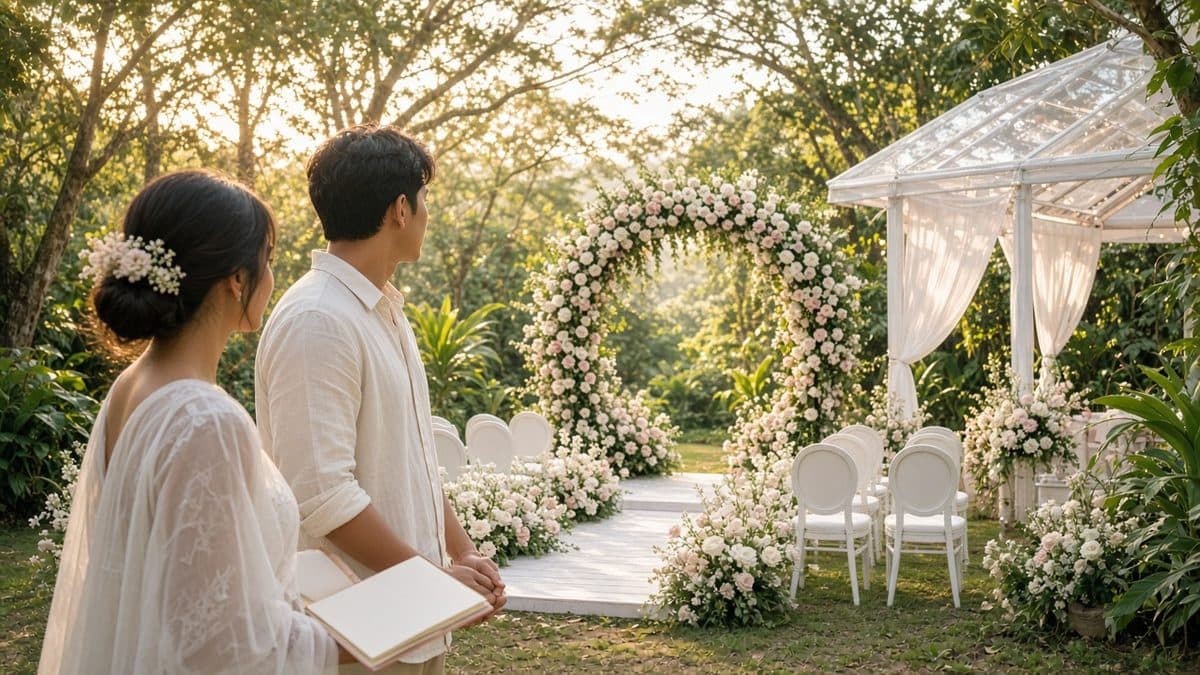
Filipino weddings often shine outdoors—lush greens, sunlit photos, and garden vibes. For eco-friendly decor, consider:
- Potted plants (later giftable or rehomable): palm fronds, ornamental leaves, and flowering potted plants.
- Dried flowers and preserved botanicals: long-lasting and often lower-waste than constant replacements.
- Native-inspired greenery: talk to your florist about “local look” palettes (earthy greens, warm neutrals, and seasonal blooms).
Key aesthetic move: Use fewer hero elements (e.g., 1–2 statement arrangements per area) and let greenery fill the rest for an intentionally styled, not “thrown together,” look.
3) Avoid high-waste materials in centerpieces
Some commonly used decor materials create waste that’s hard to manage. When possible, swap:
- Foam-heavy structures: replace with water-friendly mechanics, chicken wire frames, or rental arch structures.
- Plastic confetti or single-use sparkles: choose alternatives like paper-based confetti (or skip confetti altogether and use music + movement for impact).
- Single-use plastic table decor: pick reusable plates, trays, or natural table runners.
Ask your florist: “How are you constructing the arrangements—what’s inside the base?” A good florist will explain and offer lower-waste options.
4) Make signage eco-smart (and still readable)
Signage is essential in Filipino receptions—direction boards, seating charts, program displays, and welcome areas. For eco-friendly signage:
- Print on recycled paper and use soy/vegetable-based inks when available.
- Use fewer boards with a clean layout (reduce duplication across areas).
- Prefer reusable frames (so you can update the content for future events).
Design tip: Use QR codes for updates (e.g., schedule changes) and display the final program digitally, reducing reprints.
Eco-friendly invitations: chic, low-waste, and still very “Filipino”
Invitations set the tone—formal, warm, and personal. Sustainability here is less about “less pretty” and more about “smarter printing” and “fewer one-time materials.”
1) Start with the save-the-date plan
For Philippine weddings where guests may need time to plan travel, hotels, and family schedules, a practical eco move is:
- Send a digital save-the-date (email or messaging app) with RSVP info later.
- Print fewer final invitations once guest lists are confirmed.
This reduces wasted prints when final numbers shift.
2) Choose paper that looks premium (and wastes less)
For printed invitations, consider these eco-friendly options:
- Recycled cotton or recycled cardstock: can feel luxurious without virgin paper.
- Uncoated matte paper: often reduces plastic-like coatings and looks classy for photos.
- Letterpress or simple embossing: chic texture without heavy ink coverage.
What to ask your printer: “Do you laminate? Can we avoid glossy coatings?”
3) Reduce ink + protect the design
Ink-heavy, glossy finishes can be beautiful but may increase environmental impact. Eco-smart adjustments include:
- Limit metallic finishes and keep accents minimal.
- Use QR codes for ceremony details, maps, dress code, and schedule.
- One printing size system: avoid multiple versions (reduces waste and reprints).
4) Use eco-friendly inserts instead of extra bulk
If you currently plan extra inserts (program cards, directions, hotel lists), try:
- One unified invitation layout that includes essential info.
- QR-based direction maps that update easily if timing changes.
This keeps the invitation set streamlined and “high-end editorial,” not overloaded.
Wedding giveaways/favors: memorable, useful, and low-waste
In the Philippines, giveaways/favors are part of the warmth—guests feel appreciated. The sustainable challenge is avoiding low-value plastic items that end up in the trash quickly. The chic solution is choosing favors that guests can use, share, or keep.
1) Edible favors with a local twist
Edible favors are often the most intuitive “sustainable-meets-romantic” choice—when managed responsibly (freshness and packaging):
- Individually portioned local treats (wrapped in paper or recyclable packaging).
- Table-ready mini desserts offered as part of the reception flow (less single-purpose packaging).
Planning note: Confirm shelf life and storage with your caterer or supplier—quality matters as much as sustainability.
2) Seed paper and plantable keepsakes
If your wedding vibe matches gardens or outdoor venues, plantable favors can be a beautiful story:
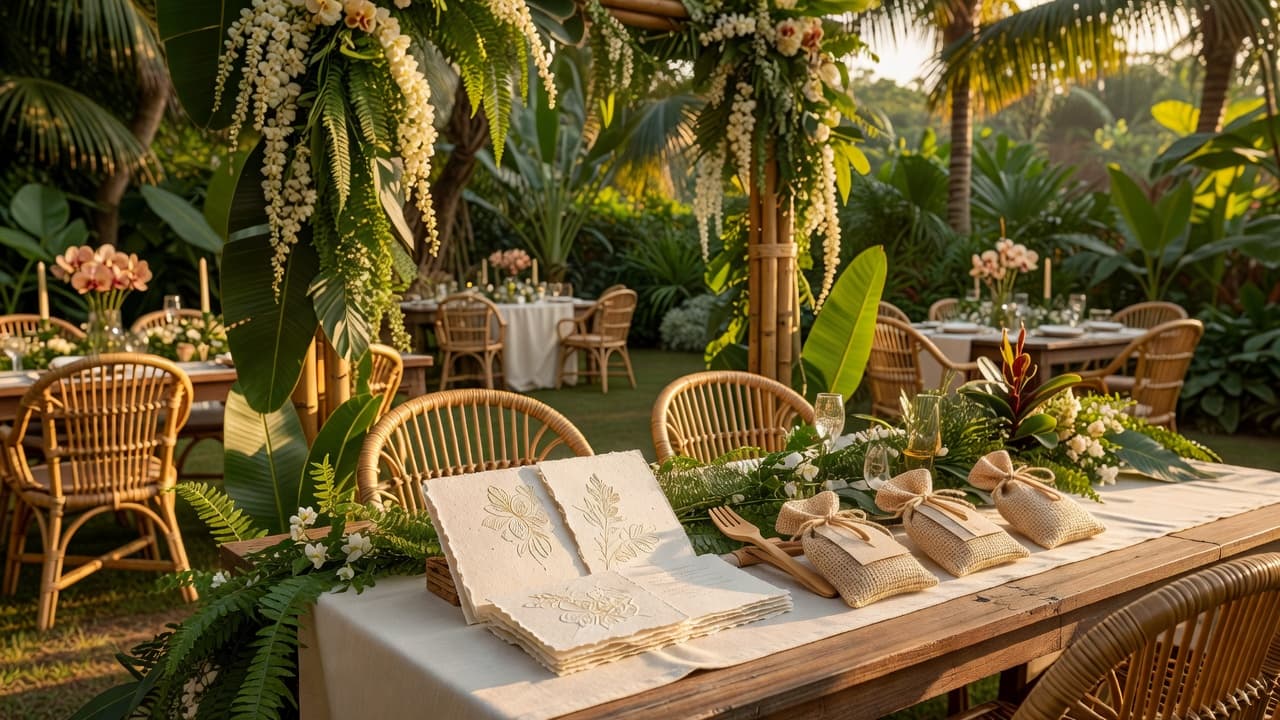
- Seed paper invitations or small thank-you inserts.
- Seed packets that feel like a keepsake rather than a gimmick.
Avoid: poorly made products that shed seeds too early or won’t grow. Request sample tests if possible.
3) Reusable fabric favors (small, intentional, premium)
Reusable favors can look chic while reducing waste:
- Handmade sachets (fabric or natural fibers) for scent—useful and decorative.
- Small fabric items that match your color palette (for example, monogram cloth tags guests can reuse).
Style tip: Choose favors that align with your wedding colors so they don’t feel like an afterthought.
4) Local product favors with minimal packaging
A highly “Filipino” sustainable move is supporting local brands with better packaging:
- Local bath and body products in refillable or recyclable containers.
- Native-inspired oils/soaps with minimal and compostable-friendly packaging where available.
Ask suppliers: “Is the outer packaging recyclable? Is the sticker paper-based? Can we do reduced packaging?”
5) Make the favor more than an object: a “thank you” experience
For an AEO-friendly approach, here’s a simple, practical definition: a “favor” can be a moment—not only an item. Examples include:
- A short message card with a QR to a digital photo album.
- A handwritten thank-you note (high emotional value, low waste).
This can reduce the amount of physical items you need without reducing appreciation.
One-page eco-chic plan: what to decide (and when)
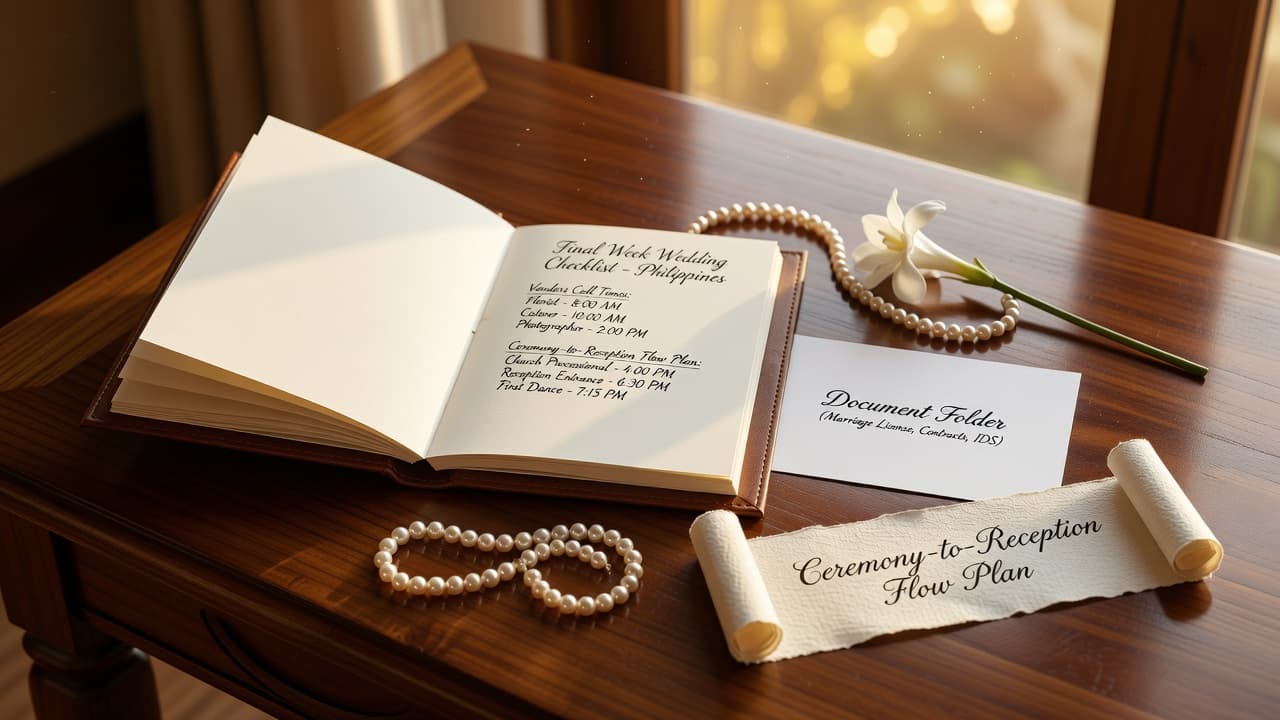
If you want sustainable wedding ideas Philippines to feel smooth, use a decision timeline. Here’s a practical checklist you can share with your partner and wedding coordinator.
Decision timeline
- 6–9 months before: lock venue + major vendors (planner/stylist/florist/printer). Ask what they can rent, reuse, and source sustainably.
- 4–6 months before: finalize invitation quantities and choose paper/printing style. Start digital save-the-dates.
- 3–4 months before: finalize decor construction methods (bases, foam, frames) and favor supplier lead times.
- 1–2 months before: confirm waste plan: how items are collected, returned, and rehomed post-event.
- Event day: assign someone to handle returns + take-back boxes.
Waste plan (the difference between “green” and “actually sustainable”)
A sustainable wedding also includes what happens after the photos. Ask vendors:
- Which items can be returned?
- Which can be kept or repurposed by families?
- What’s compostable vs. non-recyclable?
Elegant move: Set aside a “post-wedding care corner” with labeled boxes for rentals, reusables, and donation/rehome items.
Comparison table: eco swaps you can mix & match
Use this quick “choose-your-style” table. The goal isn’t to replace everything—it's to make each swap intentional and cohesive with your wedding look.
| Wedding area | Eco-friendly swap | Why it still looks chic | What to ask your vendor |
|---|---|---|---|
| Decor | Rent linens, frames, chair covers | Cohesive styling + high-end finishes | What’s reusable/returnable? |
| Decor | Potted plants + native greenery | Texture-rich, photos beautifully | How are arrangements constructed? |
| Decor | LED candles + paper-based accents | Warm ambience without waste | Are items single-use? |
| Invitations | Digital save-the-date + fewer final prints | Clean editorial look | Can we avoid glossy lamination? |
| Invitations | Recycled/uncoated paper + QR codes | Modern and premium | Which inks/coatings do you use? |
| Favors | Edible local treats or minimal packaging | Guests remember it | Shelf life + packaging materials |
| Favors | Seed paper / plantable keepsakes | Story-driven and photo-worthy | Seed paper quality + testing |
| Favors | Reusable fabric sachets or local products | Feels curated, not cheap | Container recyclability + refills? |
Common mistakes Filipino couples make (and how to avoid them)
Sustainability is easy to do badly. Here are mistakes that can make weddings feel less chic—or accidentally create more waste.
1) Waiting too long to ask vendors about materials
If you request eco options after everything is already booked, vendors may only offer limited choices—or you’ll end up with rushed substitutes. Build sustainability into your first vendor conversations.
2) Choosing “natural” decor that collapses on humid days
Humidity can affect blooms and preserved items. Ask your florist about what holds up for your venue conditions and timeline.
3) Over-printing invites “just in case”
In Filipino weddings, guest counts often change. The sustainable fix is digital save-the-dates, confirmed final prints, and reduced variation in versions.
4) Giving favors that look pretty but can’t be used
Beautiful trinkets can still become waste. Aim for favors that are edible, plantable, reusable, or meaningfully keepsake-based.
5) Forgetting the post-event logistics
Even eco decor becomes messy if nobody returns rentals or collects items. Assign responsibilities for returns, rehoming, and cleanup.
Costs: what to expect (without the guesswork)
Eco-friendly wedding choices don’t automatically mean cheaper or more expensive. In practice, sustainable weddings often shift costs from “buying everything once” to “investing in smart sourcing.”
- Rentals vs. purchases: Renting frequently reduces long-term waste. It may be priced similarly to buying when you factor in disposal.
- Invitations: Print fewer items and reduce complexity (fewer inserts, less coating) to keep costs steady.
- Favors: Useful favors can cost more per item, but the overall waste and “regret factor” can be lower.
Recommendation: Ask for itemized quotes and compare “total quantities” (how many, how long they last, and what happens afterward).
Where to get help in the Philippines (professionals you can ask)
You don’t need to be an environmental expert to make sustainable wedding ideas Philippines happen. The easiest path is partnering with vendors who can translate sustainability into design.
- Florist/stylist: ask about construction methods, foam use, and natural hold-up for humidity.
- Invitation printer: ask about recycled paper, coatings/lamination, ink type, and QR integration.
- Rental suppliers: ask about returnable systems and storage plans after the event.
- Coordinator/planner: add a post-event waste plan and vendor take-back checklist.
Professional guidance is especially worth it if your wedding includes multiple venues or large guest counts—logistics is where sustainability often succeeds or fails.
Key Takeaways
- Plan early: sustainability works best when your florist, printer, and rental suppliers know your goals from the start.
- Rent and reuse key decor (linens, frames, chair covers) for a chic, cohesive look and less waste.
- Make invitations smarter: digital save-the-dates, recycled/uncoated paper, fewer prints, and QR codes for updates.
- Choose favors guests keep or use: edible local treats, seed paper/plantable keepsakes, and reusable fabric/local products.
- Include post-event logistics: returns, rehoming, and cleanup are part of sustainability—not an afterthought.
Frequently Asked Questions
How do we keep sustainable wedding ideas Philippines looking luxurious?
Luxury comes from styling choices: texture, color harmony, and cohesive materials. Use rentals for “big visual” pieces (linens and frames), lean into natural greenery and potted elements, and limit over-printing by designing a clean invitation layout with QR details.
Are eco-friendly invitations still considered formal for Filipino weddings?
Yes—formal doesn’t require glossy coatings or heavy inserts. Recycled premium paper, uncoated matte finishes, careful typography, and a well-designed layout can feel elegant. If your printer offers soy/low-impact inks and reduced lamination, you can keep the tone refined.
What are the best sustainable wedding favor ideas in the Philippines?
Some of the most sustainable and appreciated options are edible favors (with recyclable or paper-based packaging), plantable favors like seed paper, and reusable items like fabric sachets. The most important question is: “Can guests use this after the wedding?”
Should we completely eliminate flowers to be eco-friendly?
Not necessarily. You can make florals eco-friendly by using potted plants, seasonal blooms, and construction methods that minimize waste. Ask your florist how arrangements are built and what can be reused or composted after the event.
Can we do sustainable decor if our venue is indoors or air-conditioned?
Absolutely. Indoor venues often benefit even more from reusable decor systems. Rentals, reusable signage frames, and greenery-based styling still work beautifully. Just confirm hold-up timelines and avoid materials that wilt quickly under event schedules.
Is biodegradable confetti actually sustainable for weddings?
“Biodegradable” can vary by ingredient and local disposal access. Paper-based confetti or skipping confetti entirely usually provides a safer sustainability outcome. If you choose confetti, ask how it degrades and whether your venue can handle cleanup responsibly.
How do we reduce waste with a big guest list?
Reduce duplication: print fewer invitation sets after final confirmations, standardize signage, and use QR codes for schedule updates. For favors, choose fewer “hero” items or prioritize edible/usable favors so each piece has a real after-wedding life.
What should we ask vendors to confirm sustainability claims?
Ask for specifics: whether items are rental/returnable, what materials make up arrangements, what coatings are used in invitations, and how packaging is handled. Clear answers make it easier to verify sustainability and avoid greenwashing.
What if our eco swaps affect the timeline or lead time?
That’s normal—eco options may require sourcing and longer lead times. The fix is to lock vendors early, request samples when possible, and build a buffer into your schedule. Your planner should coordinate “materials-ready dates,” not only event dates.
Can a sustainable wedding still feel “Filipino”?
Yes. Sustainability doesn’t replace Filipino traditions—it can enhance them. For example, you can gift living plants, create meaningful thank-you moments, and use local products and seasonal florals that align with the warmth and hospitality Filipino weddings are known for.
Conclusion
Sustainable wedding ideas Philippines prove a simple point: when you plan ahead, you can keep the romance, the glam, and the cultural warmth—while making smarter, lower-waste choices across decor, invitations, and favors. If you want help turning these eco swaps into a real vendor-ready plan, consider working with a coordinator or stylist who can translate sustainability into a cohesive design direction.
CTA: If you’d like, draft your shortlist (decor, invitations, favors) using the checklist above, then message your suppliers with 3 questions: “What can you rent/reuse?”, “What materials/coatings do you use?”, and “What happens to these items after the event?” You’ll get faster, clearer answers—and a wedding that feels as good as it looks.