Lechon for Wedding Philippines: How to Order, Size and Serve It
By WedPlanner Team
Ordering lechon for your wedding in the Philippines? Here's what to prepare first, whole lechon vs belly vs cochinillo, a step-by-step plan to size, book and time delivery, and the common corkage mistake couples regret.
No Filipino handaan feels complete until the lechon arrives, and your wedding is no exception. Ordering lechon for a wedding in the Philippines sounds simple, but timing, size, delivery and serving can make or break that big "wow" moment at your reception. Whether you're feeding 80 guests at a garden venue in Tagaytay or 250 in a hotel ballroom in Cebu, this guide walks you through how to plan lechon for wedding Philippines celebrations the smart way, so it arrives hot, crisp and right on cue.
What to Prepare First
- Your final venue and its food rules. Many hotels and venues charge corkage or an outside food fee for lechon, and some only allow accredited suppliers. Ask your venue coordinator before you order anything.
- Your caterer's package. Check if your catering package already includes lechon or a lechon add-on. Some caterers offer it at a better rate than an outside supplier, while others charge a fee if you bring your own.
- A realistic guest count. Lechon is usually one of several viands, not the whole meal. Your RSVP numbers decide whether you need one whole lechon, two, or a mix of lechon and lechon belly.
- Your reception timeline. Know when dinner is served, because lechon is best within a few hours of roasting. Your delivery time should work backward from that.
- Guest dietary needs. Note Muslim guests, guests who avoid pork for health or religious reasons, and kids, so your caterer can prepare enough non-pork dishes.
Whole Lechon, Lechon Belly or Cochinillo?
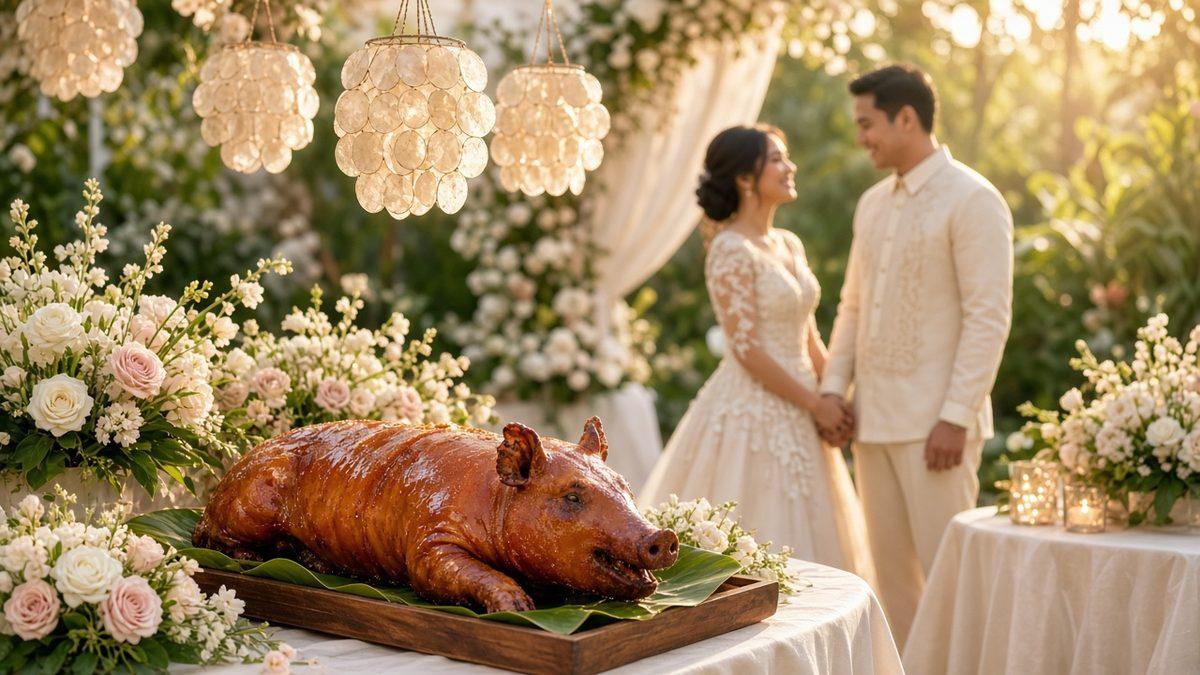
- Whole lechon. The classic showstopper, great for photos and the traditional "lechon parade." Best for bigger receptions.
- Lechon belly (rolled). Boneless, stuffed with lemongrass and aromatics, easier to slice and serve evenly. A smart choice for plated dinners or smaller guest lists.
- Cochinillo (roasted suckling pig). Smaller and more tender, often presented and sliced with a plate for a dramatic touch. Better as a presidential-table feature than the main source of pork for a big crowd.
- Regional styles. Cebu lechon is known for its herb-stuffed, flavorful meat that needs no sauce, while Luzon-style lechon is typically served with liver sauce. Pick the style your families love.
Step-by-Step Plan to Order Lechon for Your Wedding
- Confirm the rules with your venue and caterer. Get the outside food fee, accredited supplier list and any serving restrictions in writing.
- Shortlist 2 to 3 lechon suppliers. Ask friends, your coordinator and local Facebook groups. Look for suppliers with recent reviews, clear pricing per size, and experience delivering to events, not just walk-in orders.
- Size it to your guest count. Tell the supplier your number of guests and the other viands on the menu. Ask them to recommend the right size or number of pieces instead of guessing.
- Book early, especially for peak dates. December, wedding season and fiesta weeks fill up fast. Reserve as soon as your date and venue are locked, and ask about their downpayment and cancellation terms.
- Plan the delivery window. Agree on an exact arrival time, usually shortly before dinner, plus a contact person at the venue. Include travel time for traffic, rain and venue ingress rules.
- Arrange the chopping and serving. Ask if the supplier provides a chopper (tagatadtad), chopping board, sauce, and serving trays, or if your caterer's team will handle it. Decide who keeps the head and leftovers.
- Plan the presentation moment. If you want a lechon parade or a photo with the lechon, tell your emcee and photographer so it fits the reception program.
- Reconfirm one week before. Send the final count, address, landmark, time and contact numbers, and settle the balance as agreed.
PH Realities to Plan Around
- Weather and travel. Rainy-season downpours and holiday traffic can delay delivery. Build in a buffer, and keep the lechon covered from rain and flies during transport.
- Heat and crispiness. Lechon skin softens as it sits, especially in humid air. Time the delivery close to serving and avoid covering it tightly with plastic after it arrives.
- Destination weddings. For Batangas, Palawan or island venues, ask about local suppliers near the venue rather than shipping one in. Some resorts also have their own lechon partners.
- Food safety. Ask the caterer to set it out in a shaded area of the buffet and keep leftovers properly stored if you plan to take them home.
Common Mistake to Avoid
Ordering lechon without checking the venue's outside food fee. Many couples find out on the wedding week that their venue charges a corkage fee per piece, or doesn't allow outside lechon at all. That surprise can wipe out the savings you planned. Always confirm the fee and accreditation rules first, then compare the total cost (lechon plus fee) against your caterer's lechon add-on.
Another one: forgetting the chopper. A whole lechon with no one to slice it can hold up the buffet line, so make sure someone is assigned before the day.
Note: Venue corkage fees, accreditation rules and local food permits for events differ by venue and city and can change. Confirm locally with your venue coordinator, caterer and supplier before finalizing your order.
Keep Your Headcount and Suppliers in Sync
Your lechon order is only as good as your guest count. With WedPlanner you can build a free wedding website with online RSVP synced to your guest list, track supplier payments and keep your reception timeline in one place, so your lechon supplier and caterer always work with the latest numbers.
Quick Takeaway
Planning lechon for a wedding in the Philippines comes down to three things: confirm your venue's rules first, size the order to your real RSVP count, and lock in a delivery time close to dinner. Get those right, and your lechon will be the crispy, crowd-pleasing highlight it's meant to be.