Veil, Cord and Arrhae Philippines: Meaning, Sponsors and How to Prepare
By WedPlanner Team
Planning the veil, cord and arrhae for your church wedding in the Philippines? Learn what each symbol means, what to prepare first, a step-by-step plan for your secondary sponsors, and the common mistake that makes this moment look rushed.
In a Filipino Catholic wedding, some of the most photographed moments happen when your secondary sponsors step up with the veil, the cord and the coins. Planning your veil, cord and arrhae in the Philippines looks simple on paper, yet couples often scramble on the wedding week for a lost set of coins, a cord that's too short or sponsors who don't know when to walk up. This guide explains what each symbol means, what to prepare first, and a step-by-step plan so your veil, cord and arrhae Philippines moment flows beautifully at the altar.
What the Veil, Cord and Arrhae Mean
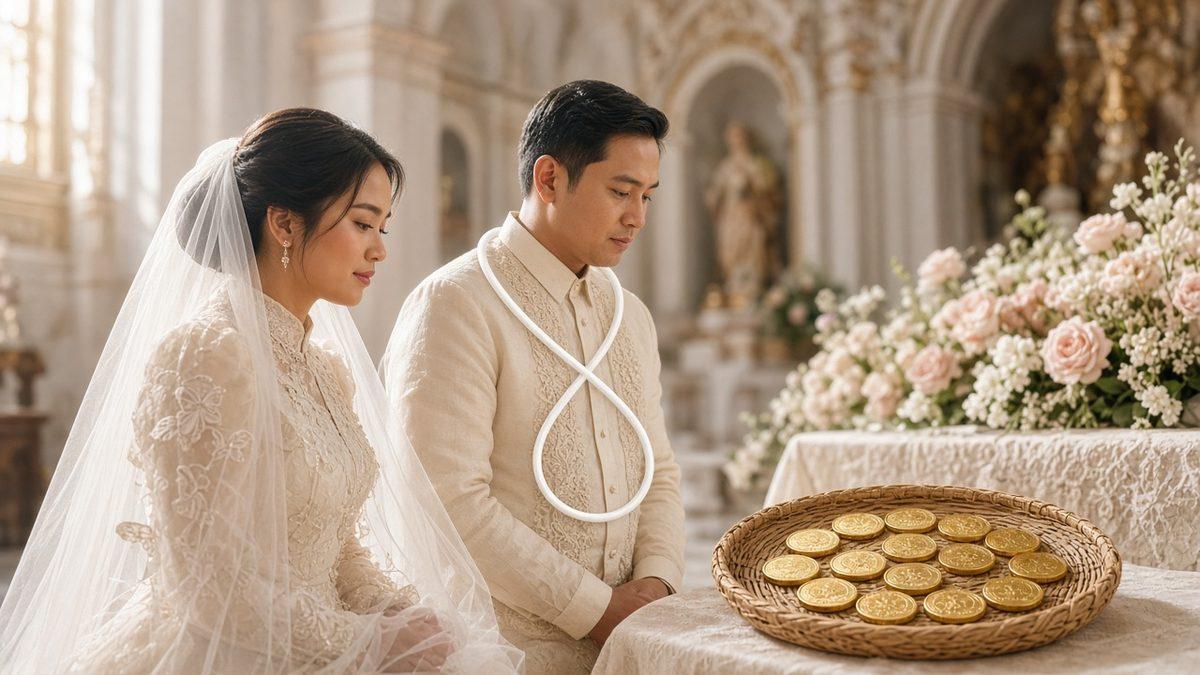
- Arrhae (arras). Usually 13 coins, blessed by the priest and given by the groom to the bride. They stand for his promise to provide for the family, and her acceptance means she will care for what they build together. Many couples see the 13 coins as a symbol of Christ and the 12 apostles.
- Veil (velo). A long veil is pinned over the bride's head and draped on the groom's shoulder, symbolizing being clothed as one and the couple's unity under God's protection.
- Cord (yugal or lazo). A cord, often shaped like a figure eight or infinity loop, is placed over both your shoulders to show an everlasting bond.
- Candle sponsors. Many parishes pair these with candle sponsors who light candles on each side of the couple, symbolizing Christ as the light of your marriage.
What to Prepare First
- Your parish's guidelines. Before buying anything, ask the parish office whether they allow the veil, cord and coins, when in the rite they happen, and if they have rules on length, material or number of secondary sponsors.
- Your secondary sponsors. Usually one pair each for candle, veil and cord (often married couples, siblings or close friends). Choose them early and tell them what they'll do.
- The items themselves. A veil long enough to cover the bride's head and reach the groom's shoulder, a cord long enough to loop around both of you comfortably, 13 coins with a small pouch or box, and a tray or bible to carry the coins.
- Your bearers. Decide who carries what. The coin bearer usually carries the arrhae, while the ring bearer has the rings. The bible bearer sometimes carries the coins too.
- Your ceremony timeline. Know where these rites fall in your mass so your coordinator, photographer and videographer are in position.
Step-by-Step Plan for Your Veil, Cord and Coin Ceremony
- Check with the parish 3 to 6 months ahead. Include it in your church interview or canonical interview questions. Ask about the order of rites and anything the priest prefers.
- Ask your secondary sponsors. Invite them personally, ideally with a short note or a small asking gift. Share the dress code and the rehearsal schedule.
- Buy or borrow the set. You'll find ready-made sets at bridal shops, Divisoria and Tutuban stalls, Catholic stores near big churches and online shops. Some families pass down heirloom coins or a lola's veil, which makes the moment extra meaningful.
- Test the length and fit. Kneel side by side at home and try placing the veil and cord. Make sure the veil won't slide off a slippery gown and the cord sits comfortably on a barong collar. Bring small pins or clips.
- Prepare the coins. Count all 13, put them in a pouch or box, and label it. If you're using heirloom coins, assign one trusted person to keep them until the ceremony.
- Brief the sponsors during rehearsal. Walk through when they stand up, which side they approach from, how to pin the veil and loop the cord, and when to remove them. Most parishes guide this, but a quick practice saves awkward pauses.
- Coordinate with your photo and video team. Tell them this is a must-capture moment, so they can get close-up shots of the coins being poured and the cord being placed.
- Pack an emergency kit. Spare safety pins, a lint roller and wipes for the veil, plus an extra pouch in case one gets misplaced.
PH Realities to Plan Around
- Heat and humidity. Old Spanish-era churches can get warm, especially in April and May. Choose a light tulle veil and avoid heavy synthetic cords that feel hot on the neck.
- Wind and garden ceremonies. For outdoor or garden chapel ceremonies in Tagaytay or beach venues in Batangas, the veil can fly off easily. Use clips or a slightly weighted lace trim.
- Civil and non-Catholic weddings. These symbols are part of the Catholic rite, but some Christian churches and civil wedding officiants welcome them as a personal touch. Ask your officiant first.
- Peak season rush. In December and the summer wedding months, bridal shops sell out of nicer sets. Buy early or order online with enough lead time for shipping.
Common Mistake to Avoid
Not briefing your secondary sponsors. Many couples assume their sponsors already know the routine. On the day, sponsors stand up too early, pin the veil on the wrong side or hold the cord like a scarf, and the whole moment looks rushed in photos. Invite them to the rehearsal, or send a short video or diagram showing exactly what they'll do.
Another one: leaving the coins with someone who isn't at the church on time. Assign the arrhae to a family member who arrives early, not to a bearer still getting dressed at the hotel.
Note: Ceremony order, allowed symbols and sponsor rules differ by parish and diocese, and can change. Confirm locally with your parish office and priest before finalizing your veil, cord and coin plans.
Keep Your Sponsors and Ceremony Details Organized
Juggling principal and secondary sponsors, bearers and rehearsal schedules is easier in one place. With WedPlanner you can build a free wedding website with online RSVP synced to your guest list, keep your entourage and ceremony timeline organized, and share key details with your sponsors in one link.
Quick Takeaway
Planning your veil, cord and arrhae in the Philippines comes down to three things: check your parish rules first, pick and brief your secondary sponsors early, and test your set before the big day. Do that, and this beautiful tradition will be one of the calmest, most meaningful moments of your ceremony.