Wedding Rehearsal Philippines: How to Plan, Schedule and Run It
By WedPlanner Team
Planning your kasal rehearsal? Learn what to prepare first for a wedding rehearsal in the Philippines, church vs civil differences, a step-by-step plan for the march and sponsor rites, rough costs, and common mistakes like skipping the secondary sponsors.
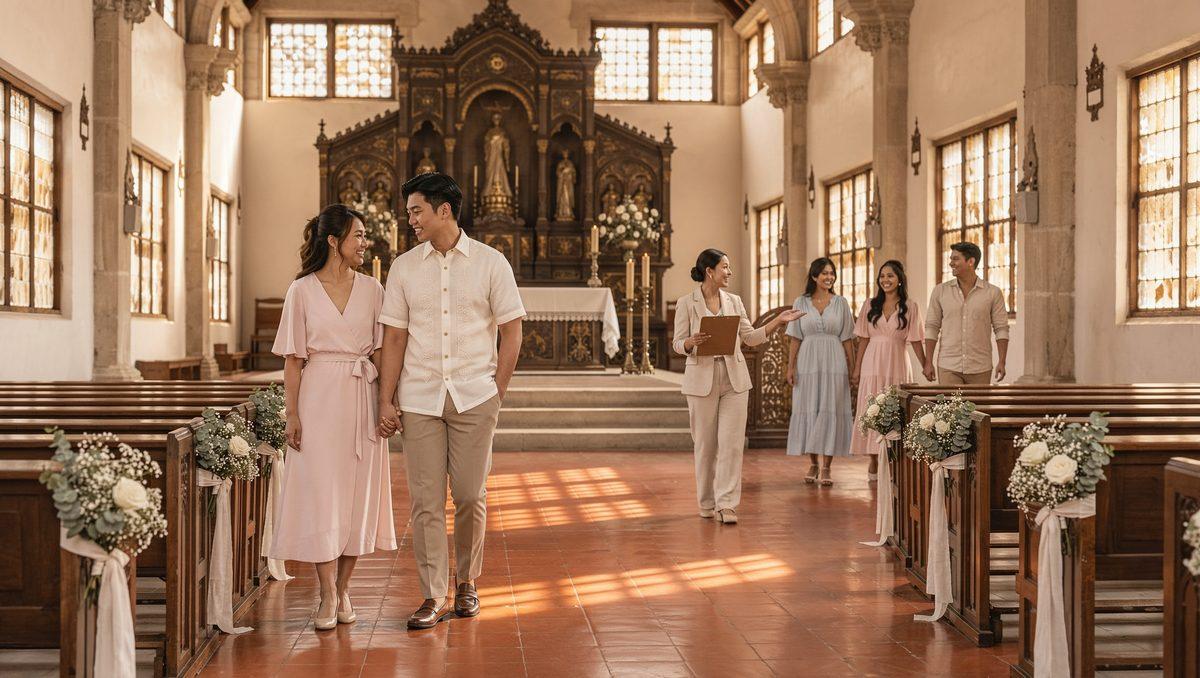
Kinakabahan sa march? Worried your flower girl will freeze halfway down the aisle, or that your Ninong won't know when to stand for the veil and cord? That's exactly what a wedding rehearsal is for. A short, well-run practice a day or two before the kasal turns a nervous entourage into a confident one and keeps your program on time. This guide covers what to prepare first, a step-by-step plan, church vs civil nuances and the common mistakes to avoid, so your wedding rehearsal in the Philippines feels calm instead of chaotic.
Do You Really Need a Wedding Rehearsal?
For most Filipino weddings, yes. You'll especially benefit from one if:
- You have a big entourage: principal sponsors, secondary sponsors (veil, cord, candle, coin or arrhae), bridesmaids, groomsmen, bearers and flower girls.
- It's a church wedding with a Mass, where timing of the readings, offertory and the veil-and-cord rites matters.
- Your venue is new to most guests, like a heritage church, garden or destination venue with an unusual layout.
- You have young kids in the entourage. A quick walk-through helps them a lot on the actual day.
Even a small civil wedding with a judge or mayor benefits from a 20-minute walk-through of where everyone stands and who signs the marriage certificate as witnesses.
What to Prepare First
Before you schedule anything, have these ready. A rehearsal is only as good as the information you bring to it:
- Church or venue rules on rehearsals. Some parishes hold rehearsals only on specific days or times, some don't hold them at all for busy weekend schedules, and some charge a separate fee. Ask the parish office early.
- Your final entourage list with names, roles and pairings, plus mobile numbers for everyone.
- The order of the processional (who walks first, who walks with whom) and the recessional.
- Your ceremony script or Mass guide, including who does the readings, prayers of the faithful and offertory.
- Your coordinator's timeline for the wedding day, so the rehearsal matches the real call times.
Church vs Civil Wedding Rehearsal: What's Different
- Catholic church wedding: rehearsals are usually led by the parish coordinator or your own wedding coordinator. Expect practice on the entrance march, where sponsors sit, the timing of the veil, cord, candle and coin or arrhae, and signing of the marriage contract. Parish rules vary, so follow what the church office says.
- Christian or other religious ceremonies: the officiating pastor or minister often runs the flow. Confirm if music, worship team and readings are included in the rehearsal.
- Civil wedding (judge, mayor or garden officiant): often shorter and less formal. Focus on entrance, the order of vows and ring exchange, and who signs as witnesses.
Step-by-Step Plan for Your Wedding Rehearsal in the Philippines
- Book the slot early (2–3 months before). Ask the parish or venue for available rehearsal dates. Most couples hold it 1–2 days before the wedding, often on a weekday evening.
- Pick a time that beats traffic. In Metro Manila, a 6 PM call time on a Friday can easily become 7:30 PM. Choose a time when most of your entourage can realistically arrive, and add buffer for rain from June to November.
- Send invites with clear details. Message the entourage at least 2 weeks before with date, time, exact address, parking notes and what to bring (comfortable shoes, the actual shoes for brides and bridesmaids if possible).
- Assign a rehearsal lead. Usually your coordinator. If you don't have one, choose a calm, organized friend or relative who isn't in the entourage.
- Walk the processional twice. First slowly with explanations, then at real pace with the actual music cue or a phone playing your march song.
- Practice the key rites. Veil, cord, candle lighting, coin or arrhae, ring exchange and the kiss. Make sure secondary sponsors know exactly when to stand and where to go.
- Run the recessional and photo exits. Confirm where the entourage gathers after the ceremony for family photos so the photographer isn't chasing titos.
- Hand out a printed or digital cheat sheet. One page with call times, pairings and the order of rites helps everyone remember.
- Close with a quick merienda or dinner (optional). Many Filipino couples host a simple rehearsal dinner for family and entourage. It can be a casual meal at a nearby restaurant or at home.
How Long and How Much?
A typical rehearsal takes about 45 minutes to 1.5 hours, depending on entourage size and how many rites you practice. Costs vary widely. Some parishes include the rehearsal in the wedding fee, while others ask for a separate rehearsal or venue fee, so always ask. A rehearsal dinner can range from a few thousand pesos for a small home-cooked or restaurant merienda to tens of thousands for a sit-down dinner with a larger group. Treat these as rough planning ranges and get exact quotes from your venue and restaurant.
Common Mistakes to Avoid
- Scheduling the rehearsal the night before a long-distance wedding. If your reception is in Tagaytay, Batangas or a province, a late rehearsal in Manila plus an early call time the next day exhausts everyone. Move it earlier in the week if needed.
- Assuming the church will allow it. Not every parish holds rehearsals for every couple. Confirm in writing or with the parish office before inviting your entourage.
- Not inviting secondary sponsors. The veil, cord and candle sponsors are often the most unsure of their role. Make sure they attend, or at least get a call or video walk-through.
- Skipping the kids. Ring bearers and flower girls need the practice most. Bring their parents too.
- No backup for absentees. OFW relatives or busy sponsors may not make it. Assign a stand-in and share a short video of the walk-through with them.
Real PH Scenarios to Plan Around
- Heritage church in Intramuros or a provincial town: schedules can be tight because of back-to-back weddings. Ask if a shorter walk-through right before your ceremony is the only option.
- Destination wedding (Boracay, Bohol, Palawan, La Union): hold the rehearsal the day guests arrive, often near sunset, and pair it with a welcome dinner.
- Rainy-season garden wedding: rehearse both the outdoor setup and your rain plan so everyone knows where to go if the ceremony moves indoors.
Confirm locally: parish rules, rehearsal schedules, fees and documentary requirements differ per church, diocese and LGU. Check directly with your parish office, officiant or venue before your wedding date.
Final Takeaway
A wedding rehearsal is a small time investment that pays off in a smooth march, confident sponsors and a ceremony that starts on time. Book it early, bring a clear entourage list and practice the rites that matter most.
Want an easier way to share call times and keep your entourage in the loop? Create your free wedding website with WedPlanner PH, collect online RSVPs that sync to your guest list, and manage your whole plan in one place.