Philippines Wedding Catering Tips: Choose the Right Caterer
By WedPlanner Team
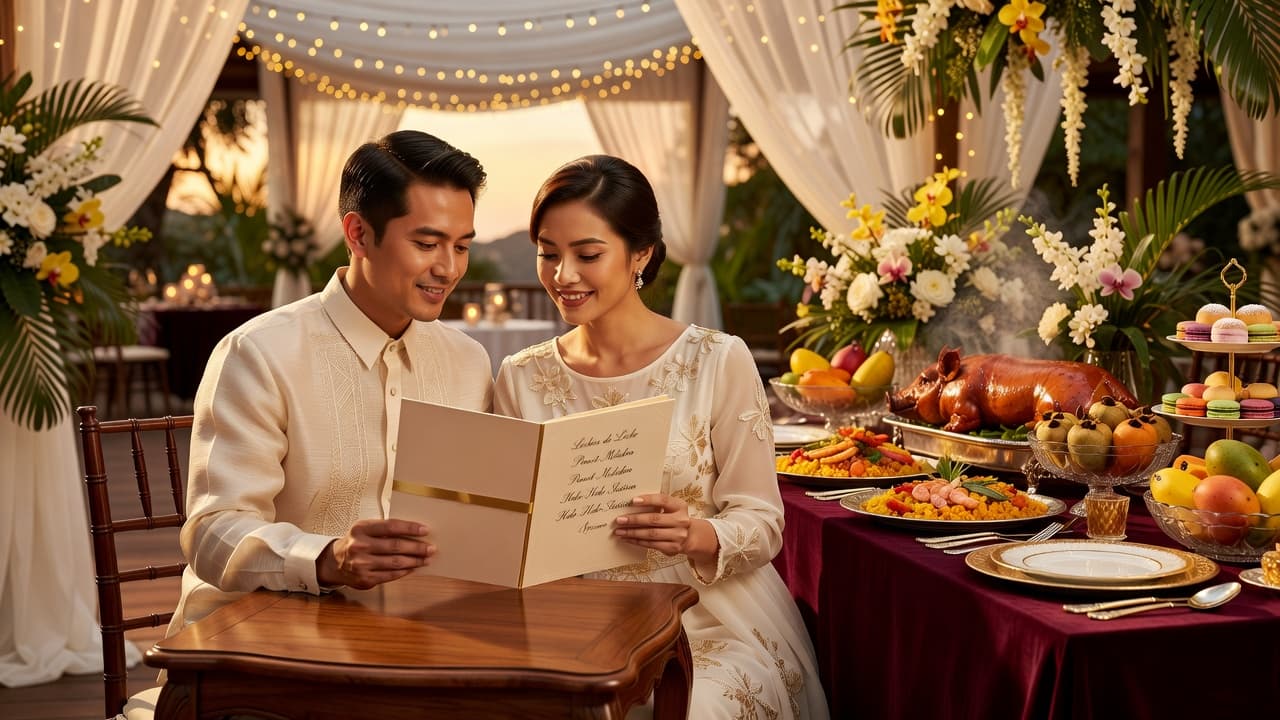
Catering can make or break a Philippines wedding reception. Learn how to evaluate caterers through tastings, plan balanced menus (including rice and desserts), and pace service so guests stay satisfied.
Philippines wedding catering tips: How to choose a caterer for a Philippines reception
Quick Answer: To choose the right caterer, start with a tasting, score flavors and portion control, then ask how they handle rice, desserts, and service timing. A great Philippines wedding caterer delivers consistent food quality, an organized menu flow, and guest-friendly pacing—so nobody waits too long or runs out.
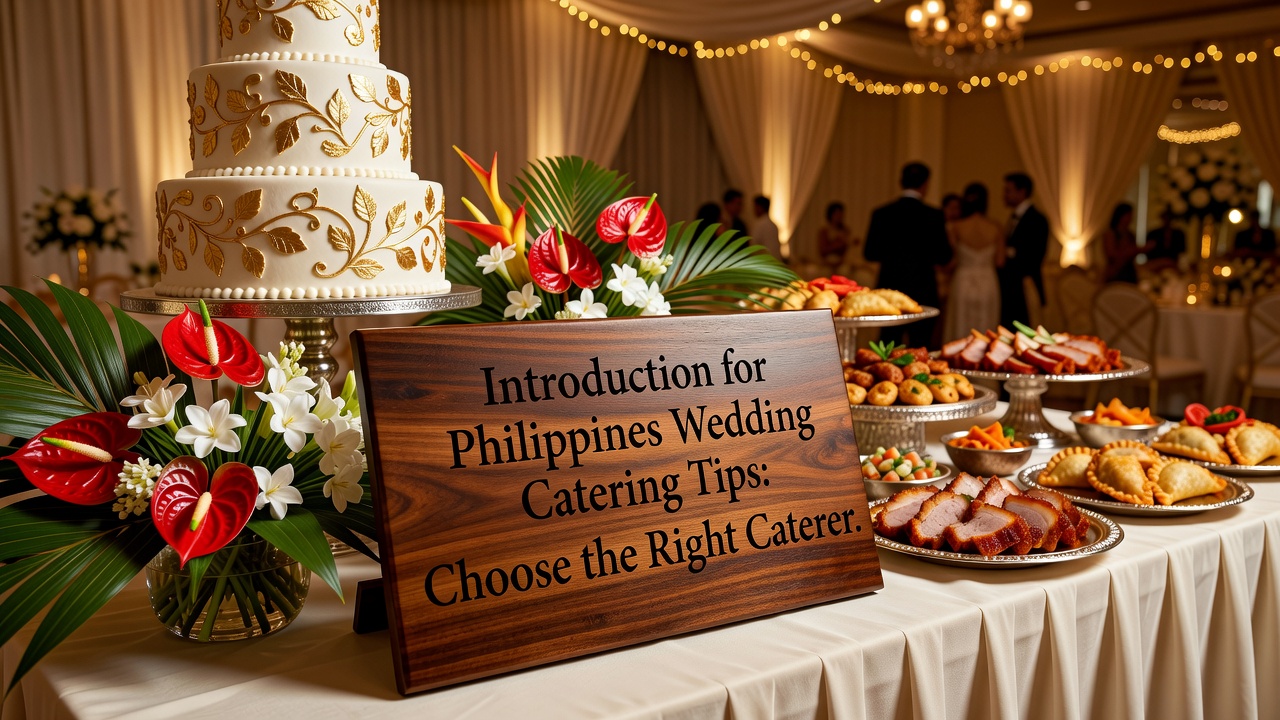
Introduction
A wedding reception is a full experience—sound, flow, seating, and especially food. In the Philippines, where guests often come hungry and expect classic comfort flavors, catering can truly make or break how the celebration feels. If the menu is unbalanced, rice and desserts aren’t planned well, or service pacing drags, even a beautiful venue can fall flat.
In this guide, you’ll learn Philippines wedding catering tips you can use immediately: how to evaluate caterers through tastings, how to build a well-rounded menu, what to plan for rice and desserts, and how to structure pacing so guests stay engaged from first bite to last dessert.
At a glance (featured-snippet style):
- Book tastings early: taste the exact items and portion sizes, not “similar” samples.
- Balance the menu: mix savory mains, a starch plan (rice), and a dessert finish.
- Plan rice like a guest demand problem: cover seconds and different appetites.
- Pace service: reduce waiting with staging, refills, and clear timing.
- Get an itemized quote: understand what’s included (staff, rentals, service charge, extras).
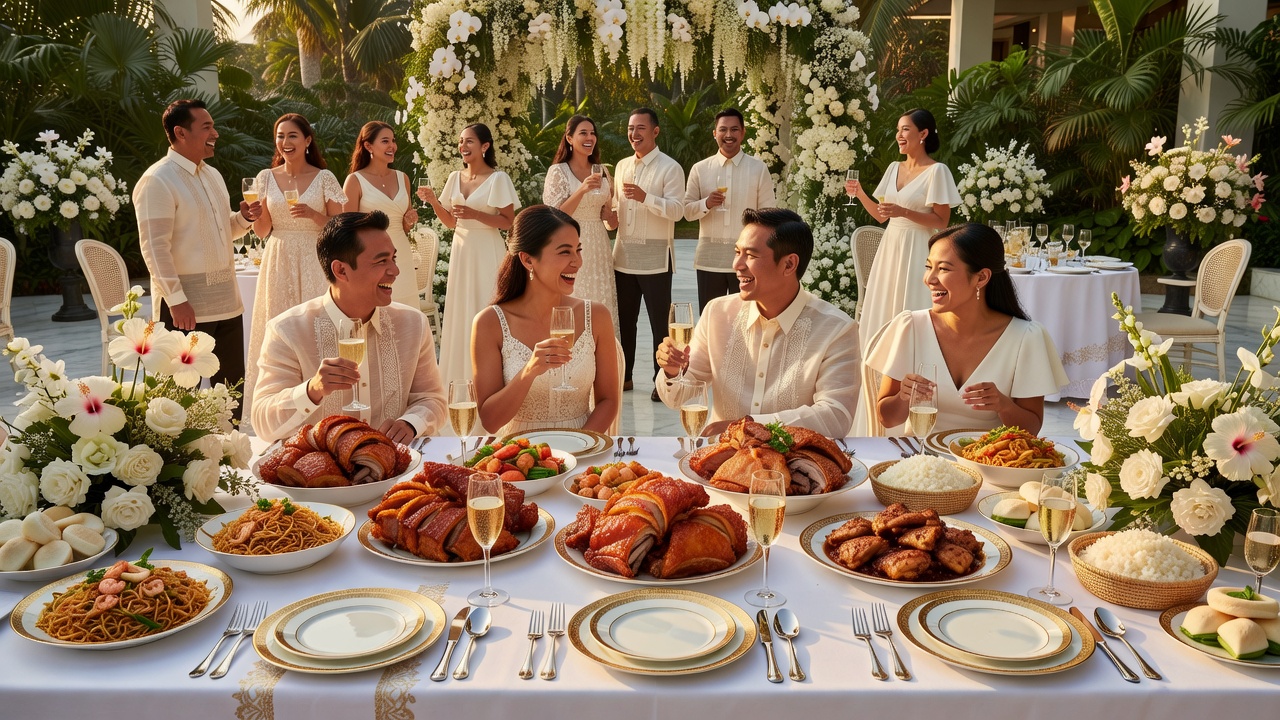
How does catering affect guest experience (and why you should choose strategically)?
In a Philippines reception, food isn’t just “part of the program”—it’s the moment guests gather, talk, and relax. Catering impacts three things that guests notice instantly:
- Food satisfaction: Are flavors crowd-pleasers? Are portions enough? Is food served at the right temperature?
- Service rhythm: Does the meal move smoothly, or do guests wait while trays stall or stations run dry?
- End-of-meal memory: Do desserts feel like a fun payoff, or like an afterthought that arrives late or disappears fast?
Strategic choice means asking the right questions up front—before you sign—so you can match the caterer’s strengths to your reception style (buffet vs. plated, family-style vs. served, evening pacing, guest demographics).
What should you ask before you even book a tasting?
Concise answer (40–60 words): Before tasting, confirm logistics and consistency. Ask whether they’ve catered weddings in your area, what’s included in their package, how they handle dietary needs, and how they keep food quality stable from batch to batch. Then request a tasting plan that mirrors your final menu.
Key questions that protect you from surprises
- Experience with wedding pacing: “Do you have a standard service flow for receptions?”
- Exact menu sampling: “Can we taste the same dishes we’ll serve?”
- Rice and starch strategy: “How do you plan rice volumes per head and for seconds?”
- Dietary accommodations: “How do you handle vegetarian, halal, allergy-safe options, and clearly labeled food?”
- Weather and timing: “How do you keep food safe and at correct temperature during a multi-hour event?”
- Staffing and service: “Do you provide servers, refilling, and cleanup? Who manages buffet replenishment?”
- Included rentals: “Chafers, utensils, serving trays, linens, welcome table, dessert setup?”
- Pricing structure: “What’s per head vs. flat package? Any service charge and overtime terms?”
Internal link opportunity: [Internal link: Wedding reception timeline for Philippine ceremonies (sample schedule)].
How do you evaluate caterers through food sampling?
For tastings, treat it like quality control—not a casual snack. You’re not just checking taste; you’re checking consistency, portion behavior, and service readiness. A caterer might create great flavors but fail at batch timing, rice refills, or temperature management.
Use a tasting scorecard (simple, practical)
| Category | What to test | What “good” looks like | Red flags |
|---|---|---|---|
| Flavor | Salt balance, aroma, spice level | Clean, repeatable taste | One-note saltiness; uneven seasoning |
| Texture | Meat tenderness, noodle bite, fried crunch | Stays appealing—not soggy | Soggy fried items; overcooked noodles |
| Portion realism | Amount per plate/serving | Matches a wedding’s appetite | “Sample portions” only; stingy serving sizes |
| Rice quality | Rice aroma + fluffiness + consistency | Feels freshly prepared | Dry or inconsistent batches |
| Temperature | Time from cooking to serving | Appropriate warmth | Cold mains or overly hot sauces |
| Dessert finish | Flavor + presentation + sweetness balance | Fun finale, not overly heavy | Cloying or melting too fast |
How to test “real wedding” behavior in a tasting
- Ask for two rounds: one “fresh out” and one “after holding” if possible.
- Request the rice method: steamed/garlic/fried—then taste the exact style you’ll serve.
- Bring your menu list: score every item, not just your favorites.
- Check sauces separately: some dishes look great but become heavy when served at scale.
Pro tip: If you’re considering popular Filipino dishes like lechon-style options, pancit variants, chicken adobo styles, or a beef/seafood main, ask how they maintain quality across batches—especially if the reception runs longer than expected.
How do you build a well-rounded reception menu?
A balanced reception menu is the difference between “wow, great food” and “we ate… but we weren’t satisfied.” A good menu considers variety (protein + carbs), crowd preferences (familiar comfort flavors), and pacing (what arrives first vs. last).
Menu balance framework (use this to plan)
- Start with crowd-friendly foundations: typically one to two appetizer-style items or soup/salad that feel light.
- Choose 2–3 main categories: one chicken/poultry option, one pork or beef/other red option, and optionally a seafood or vegetarian-friendly main.
- Include a reliable starch: rice plan is non-negotiable in most Philippine receptions—also consider a second starch only if your menu is light.
- Add variety in texture: pair braised/comfort mains with something crisp or lightly sauced.
- Plan a dessert that “finishes cleanly”: desserts should feel like a celebration, not a sugar overload.
Example menu structures (Philippine reception-friendly)
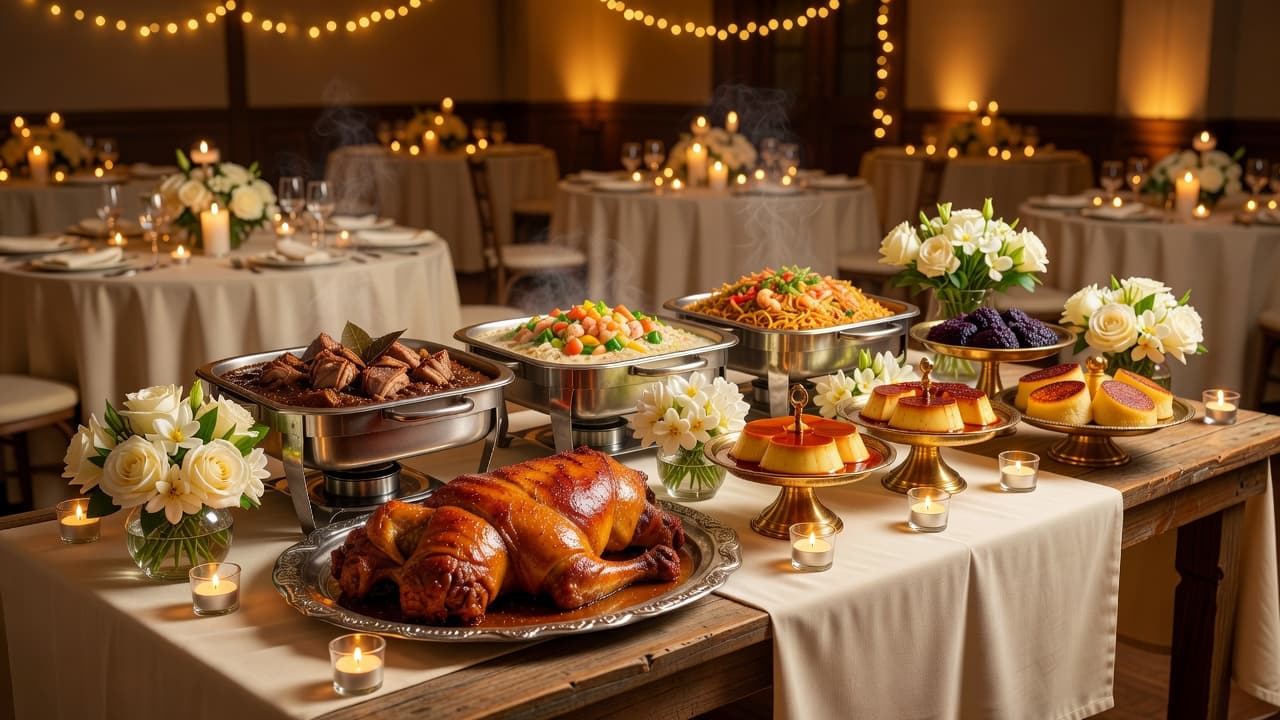
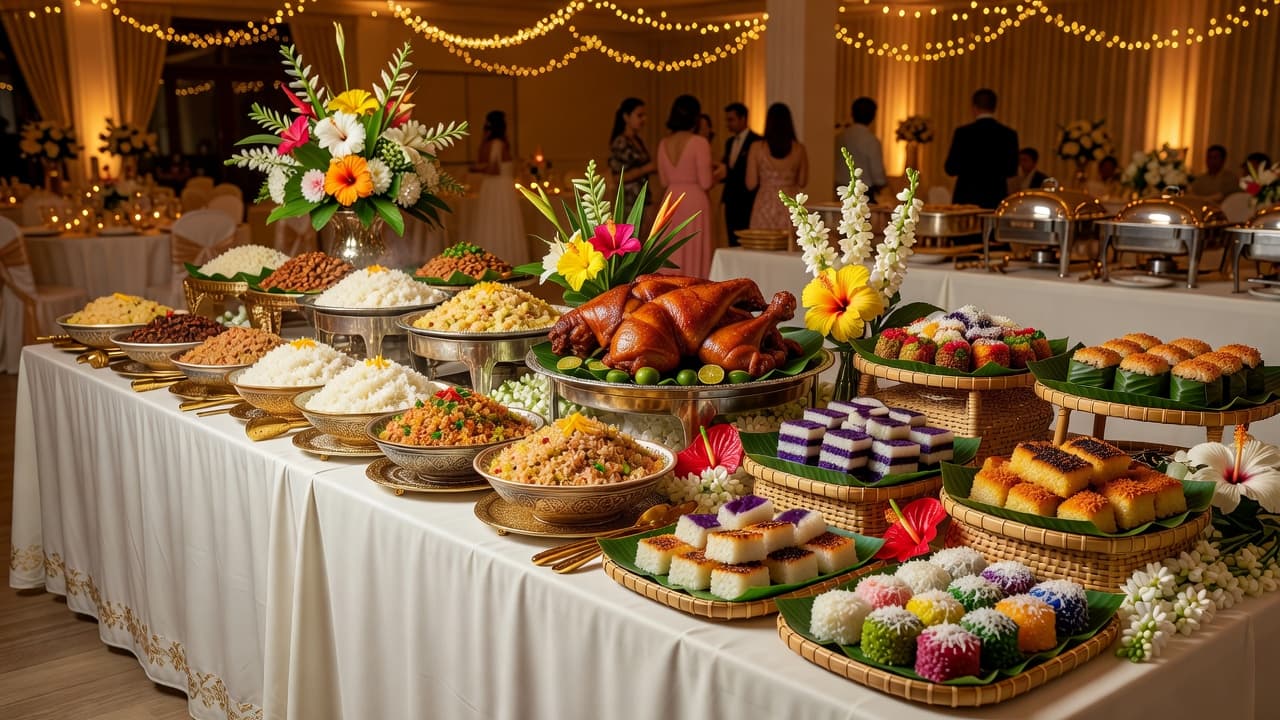
- Classic comfort: soup + pancit + chicken main + pork main + garlic rice + seasonal fruit + leche flan or cassava/ube-style dessert.
- Modern Filipino fusion: starter salad + a noodle favorite + chicken adobo-style or sweet-savory main + grilled-style seafood or vegetable main + rice + halo-halo-inspired dessert.
- Guest-diverse plan: include an explicit vegetarian/halal-labeled option (even if it’s simpler) so fewer guests feel left out.
Internal link opportunity: [Internal link: Philippine wedding menu ideas by guest count and dietary needs].
How should you plan rice for your wedding reception?
In many Philippine weddings, rice becomes the “satisfaction baseline.” If rice supply is uncertain or quality drops, guests feel it immediately—especially after mains start arriving and people decide whether they want seconds.
Concise answer (40–60 words): Plan rice by combining your headcount with real appetite expectations and your dish heaviness. Ask your caterer how they calculate rice volume, whether they include buffer for seconds, and how rice is held or refilled during peak service.
Rice planning checklist
- Confirm rice type: steamed, garlic rice, fried rice, or mixed styles.
- Ask for the “seconds plan”: will rice be refilled continuously or staged at intervals?
- Evaluate rice holding method: does it stay fluffy and warm without drying out?
- Match rice to menu weight: if you have heavier mains and lots of sauces, lean toward a dependable rice quantity and cleanliness.
- Coordinate with serving style: buffet vs. served changes how quickly rice gets taken and how often it must be replenished.
A simple planning rule (flexible, not rigid)
Use this as a starting point: guests typically take about one main “serving” of rice and may want more if the meal includes saucy mains (adobo-style, braised beef, gravies) or if the reception starts with snacks but little early food. Adjust upward if most guests are big eaters or if the program delays dinner time.
Best practice: during tasting, ask the caterer to serve rice in the same portion size they’ll use on event day. If the rice feels small in the sample, it probably will be small on scale.
How do you plan desserts so they’re a memorable finale?
Dessert planning is part logistics, part psychology. Guests anticipate it, and it’s where catering can swing from “good” to “people are still talking about it.” The biggest dessert risks are timing (arrives too late), temperature (melts too quickly), and portion mismatch (disappears before most guests reach the dessert table).
Choose desserts that fit your pacing and climate
- Better for longer pacing: desserts that hold texture (certain baked items, leche flan-style options).
- Better for crowd favorites: halo-halo-inspired or chilled desserts—if the caterer has a plan for keeping them cold during service.
- Cake + sweets balance: if you’re having a wedding cake, decide whether dessert tables are “extra” or the main finale.
Dessert table planning checklist
- Portion math: ensure each guest can get at least one clear serving plus a “second bite” option for popular items.
- Staged rollout: rather than dropping everything at once, ask if they can refresh desserts during peak times.
- Labeling: label flavors and include notes for allergen awareness if you have guests with sensitivities.
- Presentation: a neatly arranged dessert table increases perceived value and reduces chaos when guests queue.
Internal link opportunity: [Internal link: Dessert table setup ideas for Philippine weddings].
What pacing should you expect during a Philippine wedding meal?
Even the best menu can fail if guests experience long gaps, unclear serving order, or missing replenishment. Pacing is how you keep the reception “moving,” especially if there are speeches, program delays, and the natural lull after the main course begins.
Build your service flow like an itinerary
Here’s a practical example of pacing for many receptions (adapt to your timeline):
| Time (example) | What guests experience | Catering goal |
|---|---|---|
| Pre-dinner / arrivals | Light bites, drinks, mingling | Set appetite without overfilling |
| Program start | Announcements and first food moments | Start service early enough to avoid hunger spikes |
| Main course peak | Rice + viands/pasta/pancit | Continuous replenishment and temperature control |
| Second wave | Seconds, refills, and cleared stations | Prevent “running out” moments |
| Dessert finale | Cake cutting, dessert queue | Serve on time and manage melt/holding |
| Wrap-up | Cleanup and last servings | Keep everything tidy and consistent |
Pacing-specific questions to ask caterers
- “What is your refill schedule?” (Who refills stations, and how often?)
- “How do you handle program delays?” (Do they hold or reheat without ruining quality?)
- “Do you use chafers/holding equipment?” (Which items stay warm or crisp?)
- “How do you stage rice and mains?” (To avoid early depletion.)
- “Can you assign a service captain?” (So you’re not troubleshooting on the day.)
Common mistake: assuming that “per-head quantity” automatically means “no running out.” In reality, pacing affects consumption rate—especially right after program speeches or when guests get seated in batches.
How do you compare quotes without getting tricked by “hidden” costs?
A quote is more than a price. It’s a map of what the caterer is responsible for. The most common quote problems are missing staff details, unclear equipment inclusion, or vague “extras.”
Ask for an itemized proposal
- Food items: exact dishes, rice style, dessert list
- Staffing: servers, chefs, attendants, cleanup crew
- Equipment & rentals: chafers, serving utensils, linens, cold holding for chilled desserts
- Service charge: clarify any additional fees
- Travel and overtime: if your reception runs long, what happens?
- Dietary/extra items: cost and workflow for special meals
Practical budgeting advice: choose the caterer that offers the best “value of reliability.” If one option is cheaper but has weaker tasting consistency or unclear replenishment plans, you may pay more in the form of extra food orders, last-minute rentals, or disappointing guest feedback.
Common mistakes Filipino couples make with caterers (and how to avoid them)
- Booking without tasting the exact menu: “Similar dishes” can behave differently under holding and buffet conditions.
- Overloading the menu: too many heavy mains leads to leftover food and underwhelming dessert demand.
- Under-planning rice: rice is a demand baseline; insufficient rice creates instant dissatisfaction.
- Assuming desserts will “stretch”: dessert tables disappear fastest during peak queues.
- Ignoring pacing logistics: forgetting refill cadence and temperature control makes even good food feel “off.”
- Not accounting for guest diversity: if you have dietary needs, plan for labeling and accommodations early.
Internal link opportunity: [Internal link: Filipino wedding planning checklist timeline for couples].
Best practices: A 10-step checklist you can use today
- Shortlist 3 caterers with wedding experience in your area.
- Ask for an itemized quote before scheduling tasting.
- Request the tasting menu matches your final menu items.
- Score using a checklist (flavor, texture, portion realism, temperature).
- Confirm rice planning includes seconds and refill method.
- Choose dessert that matches pacing and holding equipment.
- Discuss service flow (buffet replenishment and peak moments).
- Plan dietary accommodations with clear labeling.
- Agree on timing around program delays and announcements.
- Finalize with a service captain for coordination on event day.
Key Takeaways
- Philippines wedding catering tips start with tastings: evaluate consistency, portion realism, and holding performance—not just taste.
- Menu balance matters: combine savory mains with a reliable starch plan and a dessert finale that matches your pacing.
- Rice is the satisfaction baseline: confirm seconds planning, refill cadence, and rice holding quality.
- Desserts need timing + temperature plans: stage and refresh so guests can actually reach the table.
- Pacing turns “good food” into “great experience”: ask for service flow, refill schedule, and a dedicated event lead.
- Use itemized quotes to avoid hidden costs: staffing, equipment, and overtime terms should be explicit.
Frequently Asked Questions
How early should we book a caterer for a Philippines wedding reception?
In general, book early so you can schedule tastings, lock menu decisions, and confirm availability. For popular wedding seasons, earlier is safer because tastings and staff planning fill up. Treat catering as a core vendor, not a last-minute add-on.
What should we bring to a caterer tasting?
Bring your guest count estimate, your proposed menu list, and any dietary needs. Ask the caterer to serve rice and main items in the same portion style you’ll get on event day. Use a quick scorecard so decisions stay objective.
How do we know if the caterer can handle buffet pacing?
Ask about replenishment flow: who refills stations, how often, and how they manage peak consumption after speeches or program pauses. A strong caterer can explain their staffing and equipment plan clearly.
Should we choose buffet or plated service for a reception?
Buffet often works well for large groups because guests can choose their portions and pace. Plated service can feel more formal, but it requires tighter timing and coordination. Your best option depends on venue flow and whether the caterer can manage service reliability.
How much rice should we plan for?
Plan rice based on menu heaviness and the expected appetite of your guests, then confirm the caterer includes a buffer for seconds. Ask how they calculate rice volume and how they hold rice during the event so quality stays consistent.
What’s the safest way to accommodate guests with dietary restrictions?
Tell the caterer early about vegetarian, halal, and any allergy needs. Ask for labeled options and a separate workflow for special meals if needed. Don’t assume “they can figure it out on the day”—clarity is what prevents mistakes.
How do we avoid dessert running out too fast?
Ask the caterer to estimate dessert portions realistically and stage dessert service so guests don’t miss it due to cake cutting or queue surges. Ensure chilled desserts have cold-holding plans and that dessert refreshments are timed.
What questions should we ask about keeping food warm or crisp?
Ask what holding equipment they use (chafers, warmers, cold holding) and how they manage temperature across a multi-hour event. Also ask how crunchy items stay crisp when held longer during delays.
Is the cheapest quote always the best deal?
No. A lower price can hide costs in staffing, rentals, service charge, or reduced replenishment plans. Compare itemized proposals and prioritize reliability—consistent taste, clear rice and dessert strategy, and a proven service flow.
Conclusion
Choosing a caterer is one of the most impactful decisions you’ll make for a Philippines wedding reception. When you start with Philippines wedding catering tips—tasting the exact menu, planning menu balance, locking in rice and dessert strategy, and confirming pacing—you give your guests an experience they’ll remember for the right reasons.
CTA: If you’re comparing caterers right now, shortlist two or three options and request an itemized proposal plus a tasting that matches your final menu. Then use the checklist above to choose the caterer whose service flow fits your reception—not just whose food tastes good once.