Wedding Etiquette Philippines: 15 Rules Every Guest Should Follow
By WedPlanner Team
Going to a Filipino kasal? From how much to give and what to wear to when to arrive, here are 15 wedding etiquette Philippines rules every guest should know.
So you got invited to a Filipino kasal — congratulations, you are officially part of someone's most important day. But if you have ever sat through a three-hour reception in a Tagaytay ballroom wondering if you did something wrong, you know that wedding etiquette Philippines style is its own thing. We are not talking stiff Western rules about fish forks. We are talking about real Filipino wedding culture: how much to put in the envelope, whether you can wear a barong, what time you should actually show up, and how to survive the money dance without awkwardness.
Here are 15 rules every guest should follow — written like a kasal barkada giving you the real lowdown before the big day.
1. RSVP Like Your Life Depends on It
In the Philippines, guest lists are serious business. Couples often pay per head — anywhere from ₱350 to ₱650 per guest for catering alone — so your "maybe" costs them real money. When you get the invitation, respond within the deadline. If you cannot attend, say so early. Do not be the person who confirms and then no-shows. That is the one thing every Filipino couple remembers.
If the couple used WedPlanner's online RSVP, replying takes about thirty seconds. No excuses.
2. Arrive on Filipino Time — But Not Too Filipino
Filipino time is real, but weddings are the one event where you should not push it. Church ceremonies typically start at the printed time (or up to 30 minutes after, realistically). If the invitation says 3:00 PM at San Agustin Church in Manila, arrive by 2:45 PM. You will need time to find parking, navigate the old Intramuros streets, and find a seat before the bridal march.
For receptions, arriving 15 to 30 minutes after the stated time is acceptable. But do not arrive when dinner is already being served — that is just awkward for everyone.
3. Dress the Part — Follow the Dress Code
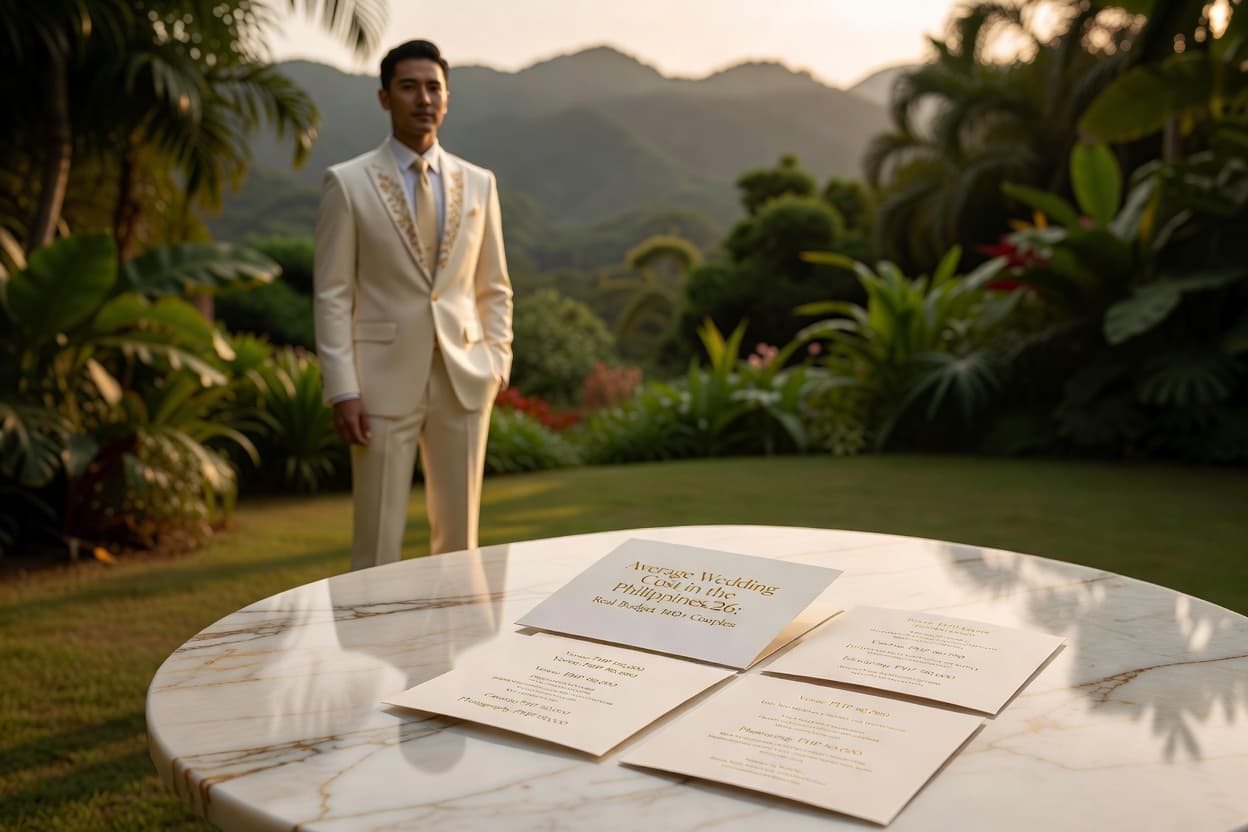
Filipino weddings have dress codes, and they are not suggestions. If the invitation says formal, wear formal. For men, that usually means a barong Tagalog or a dark suit. For women, a cocktail dress or a Filipiniana gown if the theme calls for it.
Avoid white at all costs — that is for the bride. Avoid black unless it is explicitly a black-tie evening wedding. And please, no jeans. Even if the wedding is in a Boracay beach venue, there is a difference between beach casual and showing up like you just came from a convenience store.
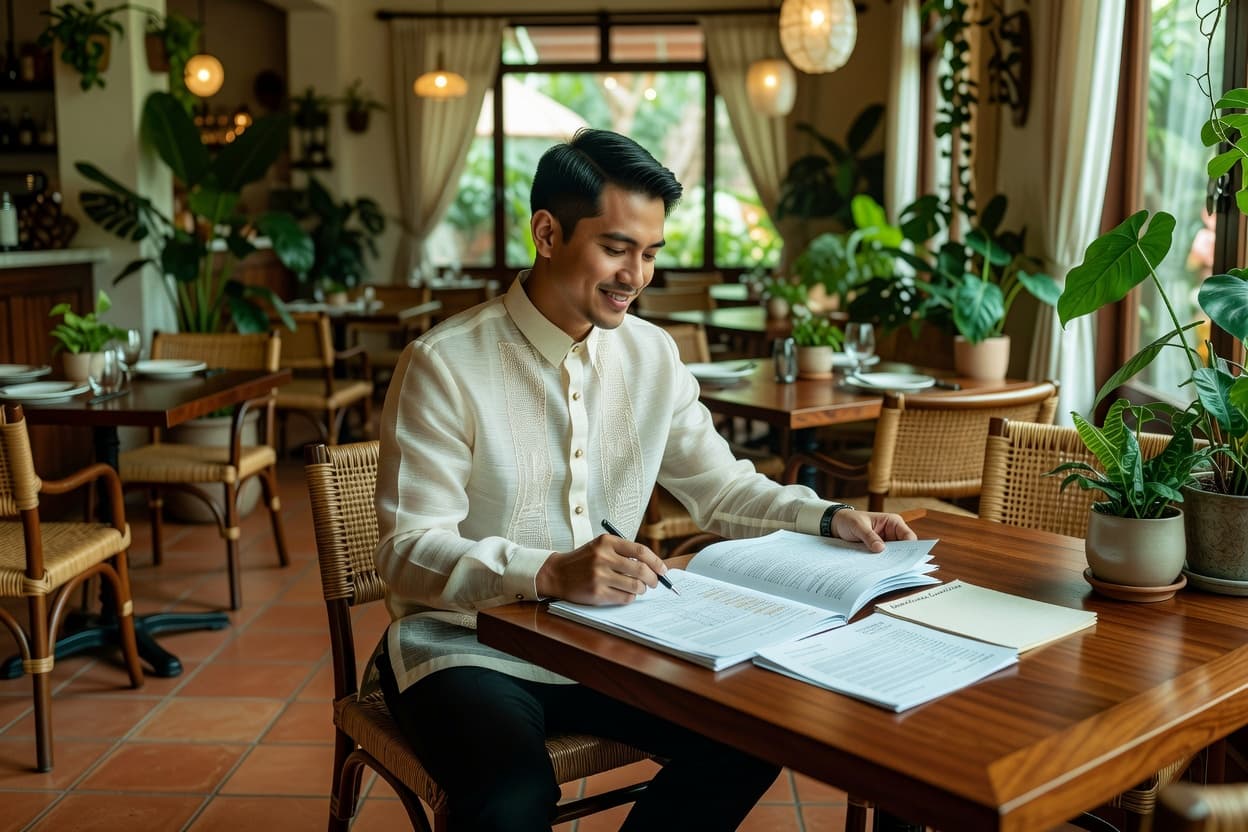
4. Wear a Barong with Pride
The barong Tagalog is the most iconic Filipino formal wear, and yes, even non-Filipino guests can wear one. In fact, couples love seeing their foreign friends and balikbayan relatives in barong — it shows respect for the culture. You can rent one for ₱2,000 to ₱5,000 in most Metro Manila malls, or buy a good quality piña barong for ₱5,000 and up.
If you are not comfortable in a barong, a well-tailored long-sleeve shirt with a tie is perfectly acceptable for most weddings.
5. Do Not Bring an Uninvited Plus-One
Filipino weddings are expensive, and guest lists are carefully curated. If your invitation says "Mr. Juan dela Cruz" and not "Mr. Juan dela Cruz and guest," do not bring a plus-one. Do not bring your children if they are not named on the envelope. This is one of the most common wedding etiquette Philippines mistakes, and it causes real stress for couples who have to scramble for extra seats and meals.
If you genuinely need to bring someone — say, you are traveling from Cebu and need a companion — ask the couple privately and well in advance.
6. How Much to Give: Wedding Etiquette Philippines and the Envelope Question
Let us talk about the elephant in the room: the envelope. In Filipino weddings, giving cash is not just acceptable — it is expected. The question is always how much.
Here is a practical guide based on 2025 to 2026 Filipino wedding costs:
- Close friend or family: ₱2,000 to ₱5,000
- Regular friend or colleague: ₱1,000 to ₱2,000
- Principal sponsor (ninong/ninang): ₱5,000 to ₱10,000+
- Destination wedding (Boracay, Palawan): Add ₱1,000 to ₱2,000 since you are also covering your travel
If you cannot afford these amounts, do not panic. Presence matters more than peso amount — we will cover this in the FAQ below. The key is to give what you can genuinely afford without stressing yourself.

7. GCash and Digital Gifts Are Totally Acceptable
Gone are the days when you had to stuff cash in a crisp white envelope. Today, many Filipino couples actively prefer GCash or Maya transfers — it is safer, more convenient, and you do not have to worry about your envelope getting lost in the chaos of the reception.
Some couples include their GCash number on the invitation or set up a GCash wedding registry. If they do, use it. If they do not, a physical envelope at the reception is still perfectly fine.
8. Turn Off Your Phone During the Ceremony
This should be obvious, but you would be surprised how many phones ring during the Our Father at a Filipino church wedding. Put your phone on silent before the ceremony starts. Do not take photos during the ceremony — the couple hired a professional photographer for that. If you want to take pictures, do it at the reception.
The one exception: if the couple asks guests to use a specific hashtag and post photos. Even then, keep it discreet during the ceremony.
9. Sign the Guestbook
Filipino couples treasure their guestbook. It is one of the few keepsakes from the day that they will actually look at years later. Take two minutes to sign it with a heartfelt message — not just your name. Write something personal. "Congratulations, ate and kuya! So happy for you both" is better than a signature alone.
10. Participate in the Money Dance Graciously
The money dance — or dollar dance in some regions — is a beloved Filipino wedding tradition where guests pin cash onto the couple's clothes while dancing with them. It is not tacky. It is culture. It helps the couple start their married life with a little extra cash.
If you are invited to dance, say yes. Pin whatever amount you are comfortable with — ₱100, ₱500, it all adds up. Do not be the guest who sits out and judges. For more on guest etiquette at Filipino weddings, check out this wedding money dance guide.
11. Do Not Be a Picky Eater
Filipino wedding receptions serve a set menu — usually a combination of soup, salad, a main course (beef, chicken, or fish), dessert, and coffee. You do not get to choose. If you have dietary restrictions, tell the couple before the wedding so they can inform the caterer. Do not complain about the food at the table. Someone paid good money for that lechon and that catering package.
If you genuinely cannot eat something, quietly leave it on your plate. No commentary needed.
12. Respect the Principal Sponsors
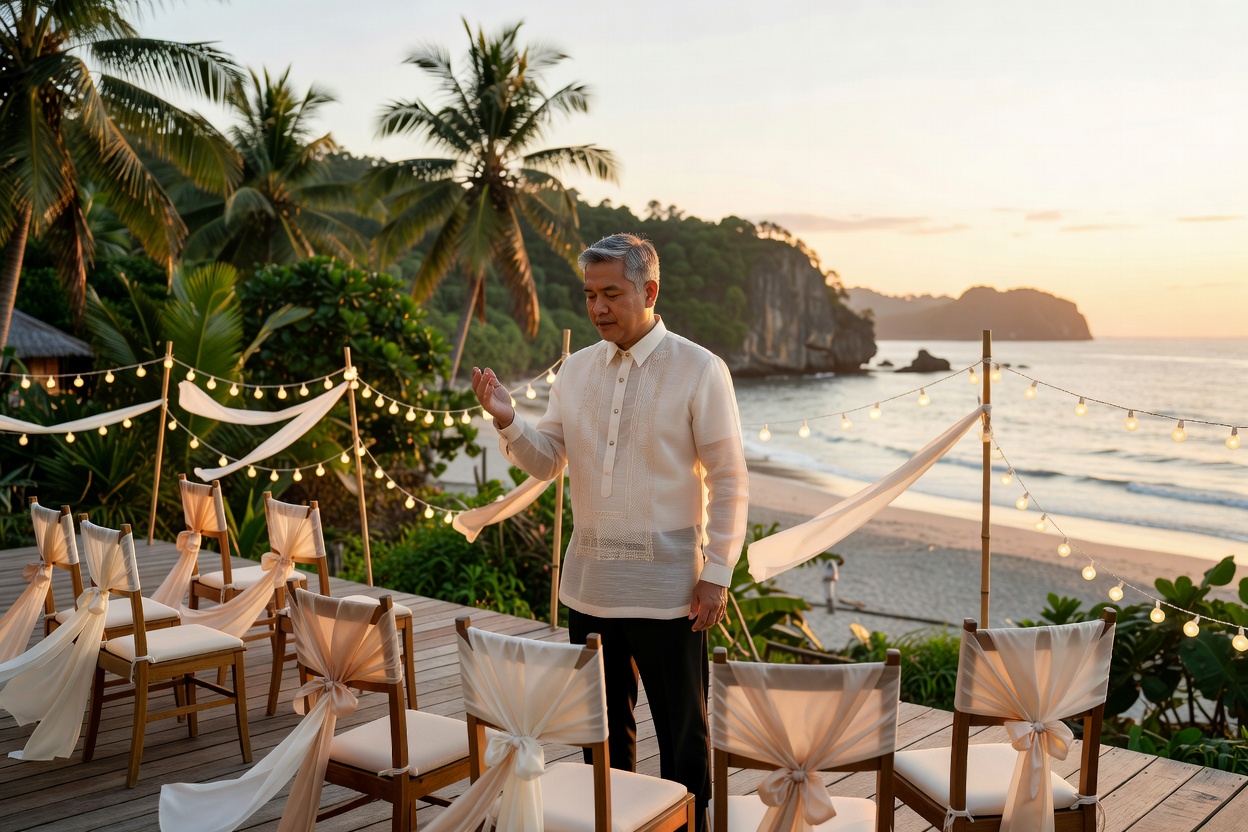
Principal sponsors — the ninong and ninang — are not just wedding attendees. They are honored figures, often older relatives or family friends who serve as moral and spiritual guides for the couple. In Filipino culture, they are treated with the same respect as family elders.
If a ninong or ninang enters the room, stand up. If they are seated at the presidential table, do not crash their table for chika. And if you are seated near them, help them with their chair or their plate if they need it. That is just Filipino values at work. To understand more about the roles in a Filipino wedding, read about these Filipino wedding traditions.
13. Stay for the Program (At Least Most of It)
Filipino wedding receptions are long — sometimes four to five hours. There are games, speeches, the first dance, the cake cutting, the bouquet toss, and sometimes a video presentation. You do not have to stay until the very end, but try to stay through the main program. Leaving right after dinner is like leaving a party before the guest of honor arrives.
If you absolutely must leave early, say goodbye to the couple and their parents. Do not just vanish.
14. Do Not Post Unflattering Photos
This is a modern rule, but an important one. Do not post photos where the couple looks tired, sweaty, or mid-bite. Do not post behind-the-scenes shots of the bride getting ready without her permission. And do not post any photos before the couple posts their own official photos — let them have their moment.
When in doubt, ask. A quick "okay ba mag-post nito?" goes a long way.
15. Send a Thank-You Message the Next Day
After the wedding, send the couple a short message — a text, a DM, or a comment on their wedding post. Something simple like, "Congratulations again! The wedding was beautiful. So happy we got to celebrate with you." It takes thirty seconds and means the world to a couple who spent months planning.
Quick Guest Etiquette Checklist
- RSVP within the deadline
- Arrive 15 minutes before the ceremony starts
- Follow the dress code — no white, no jeans
- Prepare your envelope or GCash transfer ahead of time
- Silence your phone before the ceremony
- Sign the guestbook with a personal message
- Participate in the money dance if invited
- Stay through the main reception program
- Say goodbye to the couple before leaving
- Send a thank-you message the next day
Common Wedding Etiquette Questions
Can I wear a barong if I am not Filipino?
Absolutely. Wearing a barong Tagalog as a non-Filipino guest is a beautiful gesture of respect for Filipino culture. Couples love seeing their foreign friends, colleagues, and balikbayan relatives in barong. If you do not own one, you can rent a barong for ₱2,000 to ₱5,000 at most formal wear shops in SM, Ayala, or Shangri-La malls. Just make sure it is pressed and properly fitted — a wrinkled barong is worse than a nice suit.
Is GCash acceptable for wedding gifts?
Yes, GCash is completely acceptable and increasingly preferred. Many Filipino couples today include their GCash number directly on the invitation or set up a digital wedding registry. It is safer than carrying cash, more convenient than finding an ATM on the wedding day, and the couple does not have to worry about envelopes going missing. If the couple provided a GCash number, use it. If not, a physical envelope at the reception is equally appreciated.
What if I cannot afford the suggested gift amount?
Do not stress. In Filipino culture, your presence is valued more than your piso. If ₱1,000 is what you can afford, give ₱1,000 with a sincere note. If even that is tight, a heartfelt gift — something personal like a framed photo or a handwritten letter — is meaningful. The couple invited you because they want you there, not because they calculated your envelope value. Show up, celebrate sincerely, and give what you can without guilt.
The Bottom Line
Being a great wedding guest in the Philippines is not about knowing which fork to use. It is about showing up on time, giving what you can, respecting Filipino traditions, and celebrating the couple sincerely. Follow these 15 rules and you will be the guest every couple wants at their kasal.
Planning your own wedding? Create your free wedding checklist with WedPlanner and stay organized from pamamanhikan to the last dance.