Rainy-Season Filipino Wedding Planning (June–Nov)
By WedPlanner Team
Planning a rainy-season kasal (June–November) in the Philippines? This practical survival guide covers backup venues, tent rentals, waterproof makeup, payong giveaways, and rain-proof wedding photography—so your day stays beautiful even when it pours.
Rainy Season Wedding in the Philippines: Filipino wedding planning for June to November kasal
Quick Answer: A rainy-season kasal can still feel magical with the right “runbook.” Secure indoor backup options, rent a well-anchored tent with proper flooring and sidewalls, and plan guest comfort (like payong giveaways and towel stations). Use waterproof makeup and rain-ready photography workflows to keep everything moving—even when it rains.
Introduction
If you’re doing Filipino wedding planning for a June-to-November kasal, you’re likely balancing two realities: gorgeous natural scenery and a real chance of downpours, strong humidity, and last-minute weather changes. The good news? Rain doesn’t automatically ruin a wedding—it just demands smarter preparation.
In this guide, you’ll get practical, culturally relevant tips you can use right away: how to choose backup venues, what to ask when renting tents, how to keep your bridal party looking fresh with waterproof makeup, how to keep guests comfortable (payong giveaways included), and how to photograph your day beautifully—even when the sky decides to participate.
What counts as “rainy season” for a Philippine wedding?
In the Philippines, “rainy season” typically refers to months when rainfall is more frequent and unpredictable. For many couples, that practical window is June through November—a period where you may experience steady rain, thunderstorms, and occasional storms.
Definition (useful for planning): A “rainy wedding risk” isn’t just about drops on the ground. It also includes humidity (affecting makeup and fabric), wet walkways (safety and comfort), and operational delays (timing the ceremony, photos, and entrances).
Why this matters for Filipino wedding planning
Filipino weddings are family-and-community events—often with extended relatives, coordinated entourage moments, and photo-heavy traditions. When weather hits, the goal is not to “cancel hope,” but to protect comfort and keep the flow gentle and respectful.
Pro tip: Treat weather plans like a vendor timeline. You don’t improvise your seating chart—you shouldn’t improvise your rain solution either.
How do you plan a rainy-season kasal step-by-step?
Use this checklist as your featured-snippet style “runbook.” It’s designed for couples: clear decisions, vendor questions, and on-the-day contingency actions.
Rainy-season wedding runbook (June–Nov) — checklist
- Confirm your “rain date plan”: Choose the exact fallback location (not just “maybe inside”). Write it into your wedding blueprint.
- Map the venue to protect movement: Identify wet-prone zones—parking to entrance, pathway to ceremony, waiting areas, and photo spots.
- Plan tent coverage like a system: Flooring + sidewalls + anchoring + lighting + emergency exits (not just a tent “on top” of rain).
- Lock in makeup longevity for humidity: waterproof mascara, transfer-resistant lip products, sweat-control primer, and setting spray.
- Prepare guest comfort kits: payong giveaways (or umbrella station alternatives), ponchos, wet wipes, and towel stations.
- Coordinate the photography workflow: protect gear, schedule “rain-safe” shot lists, and plan umbrella-based compositions.
- Assign a “weather captain”: one coordinator/vendor lead who watches updates and triggers contingency steps.
Backup venue planning: what should you secure before you sign?
Backup planning is the difference between “rain-proof” and “rain-damaged.” For a rainy-season kasal, aim for two layers of contingency: a venue fallback and an equipment/space fallback.
Layer 1: Backup venue options (choose at least one)
- Indoor ceremony space: A function hall, covered pavilion, or church area that can accommodate guests comfortably.
- Indoor reception fallback: If the reception is outdoors, confirm a full indoor capacity plan.
- Second outdoors-to-covered shift: For example, moving from garden ceremony to a covered terrace within the same property (if airflow and sightlines still work).
Layer 2: Backup infrastructure (tent + flooring + safety)
If your ceremony is outdoors and you plan to use tents, you’re not just renting shade—you’re building your rain protection system. Ask vendors how they handle airflow, water drainage, and stable ground under foot traffic.
Questions to ask venues (practical, must-answer)
- Where does rainwater collect, and who clears it?
- Is there a covered holding area for the entourage before ceremony time?
- Are there designated pathways for guests with non-slip surfaces?
- What is the indoor overflow capacity if rain becomes heavy?
- Are there any restrictions on tent anchoring, power usage, or fire safety?
Common mistake: Choosing a backup “idea” instead of a backup “plan.” A plan should name the location, capacity, and logistics (entrances, sound setup, and timing).
Tent rental considerations for a Philippine rainy wedding
Tents are often the center of rainy-day relief, but only when they’re specified correctly. For rainy-season weddings in the Philippines, the best tent rentals combine coverage, stability, and guest comfort.
What to specify in your tent rental contract
- Flooring: Ask for non-slip flooring or flooring solutions appropriate for heavy foot traffic.
- Sidewalls: Clear or fabric sidewalls help block rain spray and reduce wind chill.
- Anchoring: Wind and rain can shift lightweight setups; ensure proper anchoring for the site.
- Drainage plan: Confirm where runoff goes and how standing water is prevented around the tent.
- Lighting + power access: Dark, wet conditions make lighting critical for makeup, dinner service, and aisle visibility.
- Ventilation: Humidity is real—good airflow helps makeup and guest comfort.
- Emergency exits: Make sure there’s clear egress and no blocked pathways.
- Fire safety: Confirm materials and compliance expectations with local requirements.
Contingency planning when rain gets worse than expected
Create a “trigger point” list with your weather captain. For example:
- Light rain: Keep outdoors with tent coverage; adjust photo timing.
- Heavy rain / thunder: Transition guests to covered/indoor spaces; pause any outdoor vow moments if required.
- Storm conditions: Move fully indoors early to avoid last-minute movement during peak rain.
Pro move: Have your coordinator communicate transitions in a calm, Filipino-warm way: “For everyone’s comfort, we’ll move to the covered area now.” Families typically respond well when guidance is clear and respectful.
Waterproof makeup advice for the couple and bridal party
In rainy-season Filipino weddings, makeup challenges are mostly about humidity, sweat, and water exposure. With the right products and a simple application plan, you can keep the look fresh for photos and close-ups.
What to waterproof (and what to skip)
Don’t waterproof everything blindly. Instead, target the areas that are most likely to smudge:
- Eyes: waterproof mascara and eyeliner; ensure it’s transfer-resistant.
- Lips: long-wear lip color with minimal reapplication or a protective liner strategy.
- Base makeup: sweat-control primer and long-wear foundation that tolerates humidity.
- Cheeks: set blush with powder lightly to reduce fading under humidity.
A simple waterproof makeup routine (for Filipino wedding planning)
- Prep: hydrating primer (not greasy), then set with a light powder where needed.
- Long-wear base: apply in thin layers to reduce slip.
- Eye strategy: waterproof eye products + set gently (avoid over-thick layers).
- Setting: use setting spray suitable for humidity (follow product directions).
- Touch-up kit: blotting paper, compact powder, travel size setting spray, spare lip product.
Practice before the wedding day
If you can, do a makeup trial close to the wedding timeline and ask for photo-wear testing. Rainy conditions amplify mistakes that would only look “slightly off” in dry settings.
Guest comfort: payong giveaways, umbrellas, and “rain-day kindness”
Your guests will remember how cared-for they felt. A rainy-season kasal is a chance to turn weather discomfort into a warm moment of hospitality—especially when you plan comfort early.
Payong giveaways: when and how
- Timing: distribute payong/umbrellas near arrival or at the entrance to your venue.
- Quantity: consider an extra buffer for last-minute guests and families arriving separately.
- Branding: keep it simple—matching wedding colors or a small logo look great in photos.
- Backup alternative: if payong giveaways are not feasible, set up an “umbrella station” with a limited but clear distribution policy.
Other comfort upgrades your guests will thank you for
- Ponchos at entry points (lightweight and easy to use).
- Wet wipes and hand towels near restrooms and major transitions.
- Non-slip matting at key walkways.
- Comfort seating under covered areas for elders and children.
- Weather-friendly signage: clear directions to covered areas to reduce stress.
Cultural note: Filipino hospitality thrives on thoughtful care. Even small extras—like a towel station—signal “we planned for you,” not “we’re hoping for good weather.”
Photography in the rain: how to get stunning photos without panic
Rain can create cinematic reflections, softer lighting, and dramatic textures—if you treat it like a photography condition, not an interruption.
Rain-friendly photography checklist
- Gear protection: waterproof covers, lens protection, and backup batteries kept warm.
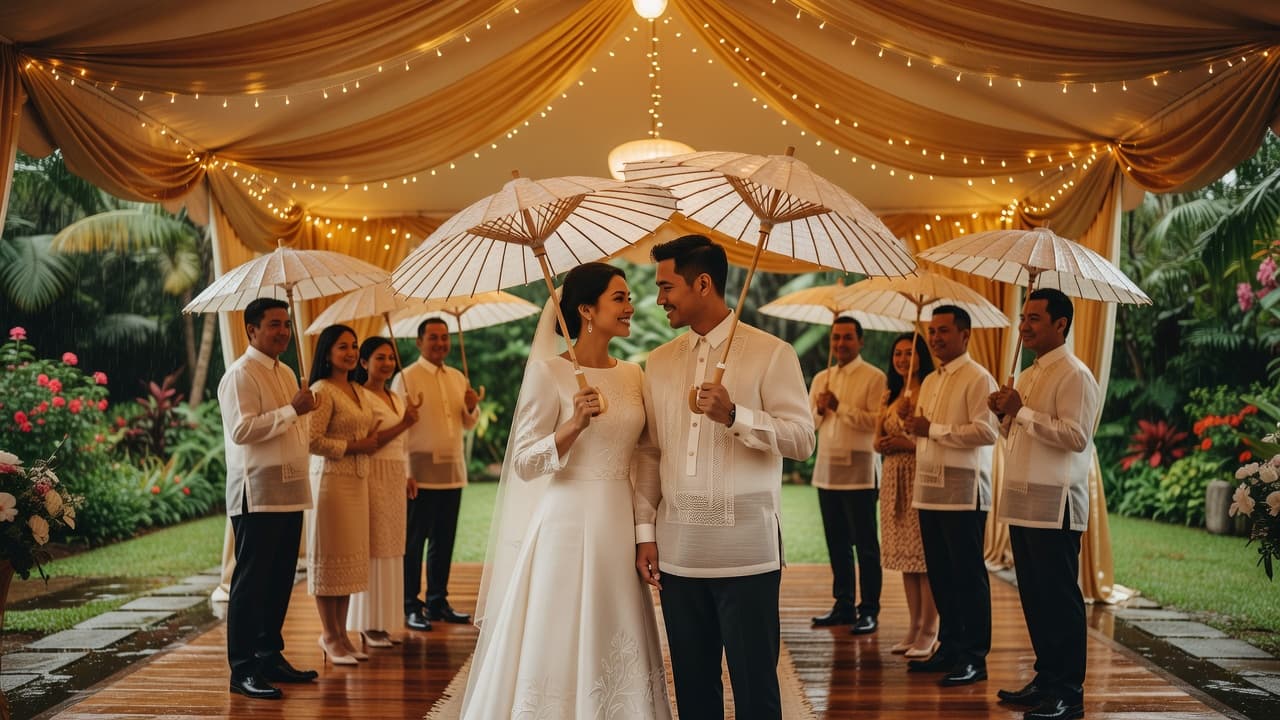
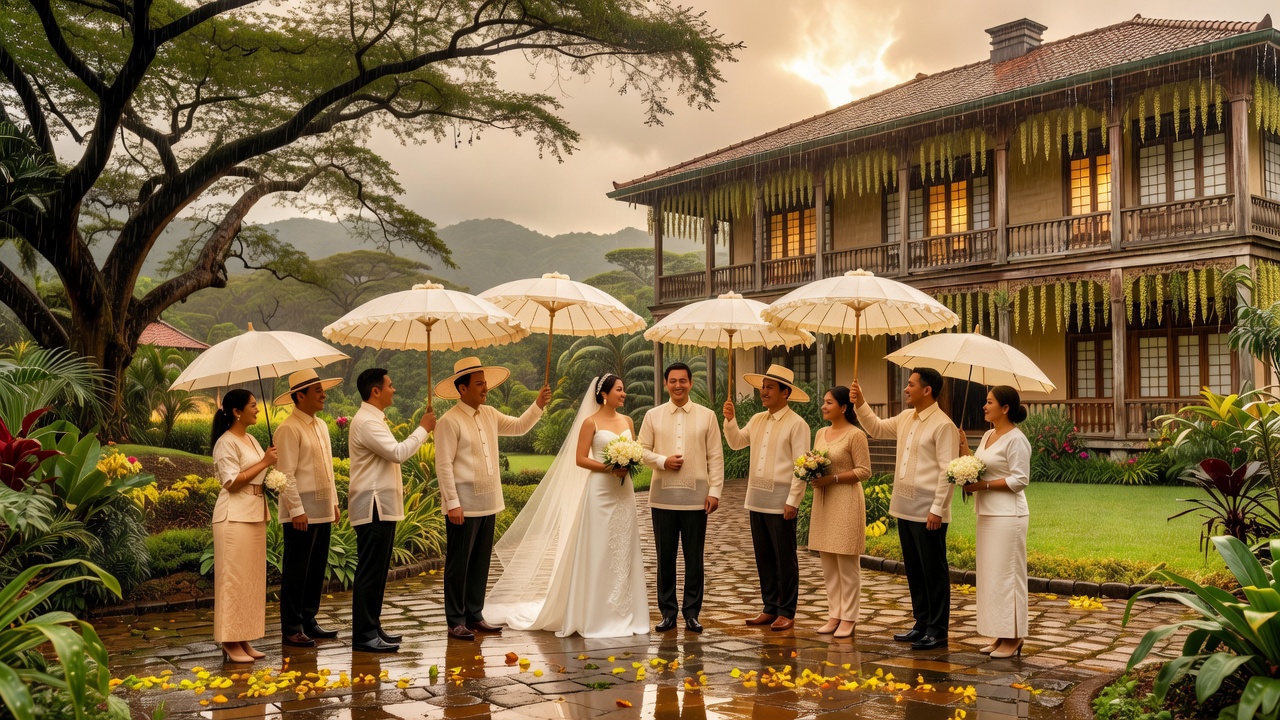
- Umbrella choreography: umbrellas aren’t just practical—they’re compositional tools. Coordinate colors with your palette.
- Shot list adjustments: schedule “rain-safe” portraits under coverage first, then move to outdoor moments when conditions pause.
- Indoor-to-outdoor transitions: use indoor staging to keep the couple calm, then capture quick exterior frames when rain shifts.
- Family group photos planning: assign a clear grouping plan to reduce long exposure time.
Featured snippet: “What should we tell our photographer if it rains?”
Tell them: “We want rain-friendly portraits, protected gear workflow, and a shot list that works under a tent/covered area. Prioritize speed, comfort, and safe timing for elders and families.” This one message helps photographers plan composition and pacing.
Make rain part of the story
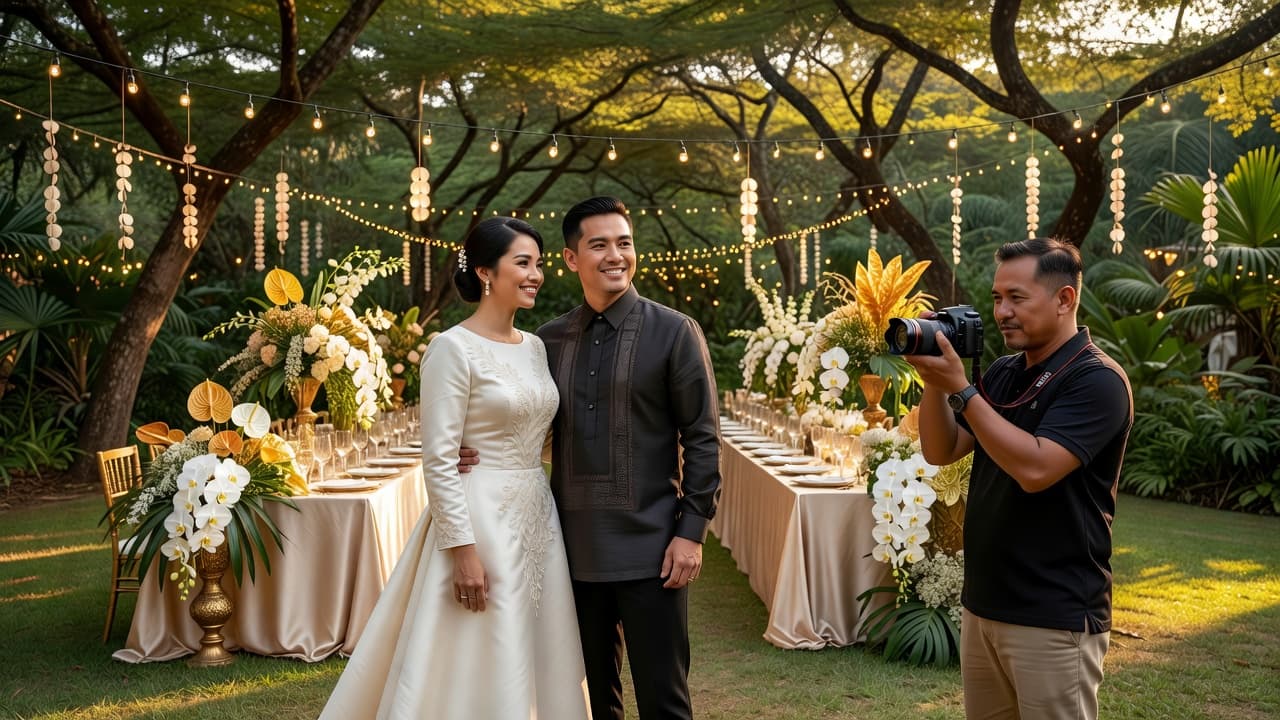
Rainy wedding photos can feel intimate and memorable because they show real weather emotion—hands holding umbrellas, wet hair softly framing faces, and family laughter under cover.
Why rainy weddings can still be beautiful and memorable
A rainy-season kasal doesn’t have to be a “lost outdoor wedding.” In fact, rain can add meaning: it turns the day into a shared story of resilience and love. For many couples, it becomes a detail they’ll tell friends and family for years.
Beauty in rainy-season weddings comes from four places
- Soft light: cloudy skies can flatter skin and reduce harsh shadows.
- Atmosphere: rain adds texture—especially when you use umbrellas and covered settings.
- Family energy: guests often bond under shared preparation moments (like receiving payong giveaways).
- Real emotion: your expressions will reflect the lived moment, not an idealized scenario.
Balanced perspective: You still plan for safety and comfort. The goal is not to “embrace discomfort,” but to make sure rain becomes part of the beauty—not the barrier.
Costs and budgeting: what usually changes for June–November weddings?
Rainy-season weddings may shift costs in predictable ways. Instead of guessing totals, budget by categories that vendors commonly adjust.
Typical cost drivers (by category)
| Budget Category | Rainy-season impact |
|---|---|
| Tent rentals | Flooring, sidewalls, anchoring, lighting, and ventilation can add cost. |
| Weather transition logistics | Additional coordination time, sound setup adjustments, and guest movement planning. |
| Hair & makeup | Humidity-proof product selection and touch-up kit preparation. |
| Guest comfort | Payong giveaways, ponchos, wet wipes, towels, and signage. |
| Photography | More rain-safe coverage time or faster shot pacing; gear protection supplies. |
Money-saving, not penny-pinching: Spend where it reduces risk—flooring, anchoring, and guest comfort typically outperform last-minute “temporary fixes.”
Common rainy-season wedding mistakes (and how to avoid them)
If you’ve been hearing “rain is fine, we’ll just manage,” here’s the reality: rainy weddings fail at predictable points—movement, comfort, and timing.
7 mistakes to avoid
- No real backup venue (only “maybe indoor”).
- Tent without flooring—guests slip and get uncomfortable fast.
- Ignoring humidity impact on makeup, hair, and fabric.
- Forgetting guest comfort basics like payong giveaways or a towel station.
- Unplanned photo delays that cause the couple to rush and look stressed.
- Long outdoor queue time for family groups in heavy rain.
- No designated weather captain so decisions become confusing.
Fix mindset: Create decisions ahead of time, then communicate simply on the day.
When should you hire extra professional help?
Couples can absolutely DIY parts of rainy-season planning. But some tasks benefit from professionals—especially if you’re dealing with multiple venues, a large guest list, or a complex tent setup.
Consider a planner/producer if:
- Your reception and ceremony are outdoors with limited indoor overflow.
- You need multiple vendor coordination (tents, lighting, sound, flooring, transport).
- You want a documented contingency runbook for the team.
- You’re coordinating elders, children, or mobility considerations.
Practical recommendation: Even if you hire help lightly, ask them to produce a weather-day timeline and vendor call sheet. That document alone reduces chaos.
Key Takeaways
- Filipino wedding planning for June–November means planning for humidity, wet walkways, and timing—not just rain drops.
- Secure backup venue options with named locations and capacity, not vague “we’ll see” plans.
- When renting tents, prioritize flooring, sidewalls, anchoring, drainage, lighting, and safety.
- Use waterproof makeup strategies for the couple and bridal party: long-wear base, waterproof eyes, transfer-resistant lips, and a touch-up kit.
- Keep guests comfortable with payong giveaways (or umbrella stations), ponchos, towels/wipes, and clear signage.
- For photography in the rain, protect gear, adjust the shot list, and use umbrellas as part of the composition.
- Rain can make your kasal more memorable through atmosphere, soft light, and shared resilience.
Frequently Asked Questions
1) Should we cancel the outdoor parts if it rains during a June–November kasal?
You usually don’t need to cancel everything—if you planned a proper backup and you have tent coverage with safe flooring. The right move depends on rain intensity, thunder risk, and guest movement safety. Decide with your weather captain and follow venue guidance.
2) What’s the best tent setup for Philippine rainy weddings?
The best setups combine non-slip flooring, secure anchoring, and sidewalls to block rain spray, plus ventilation so humidity doesn’t ruin comfort. Also ensure lighting for ceremonies, clear emergency exits, and a drainage plan around the tent area.
3) What waterproof makeup should the bride and entourage use?
Prioritize waterproof mascara and transfer-resistant eyeliner, long-wear base makeup suited for humidity, and long-lasting lip color. Set with appropriate sprays/powders and bring a small touch-up kit. A trial run that matches your wedding timeline improves results.
4) How many payong giveaways should we prepare?
Plan for your guest list plus a buffer for split-family arrivals and unexpected guests. If you can’t fully cover everyone, consider an umbrella station at entry with clear distribution rules. The goal is comfort without creating crowding at one point.
5) Can photographers still take beautiful photos in the rain?
Yes. Rain often creates flattering, softer lighting and interesting textures. With proper gear protection, a rain-safe shot list, and umbrella-based compositions, photographers can capture cinematic portraits. Timing matters—schedule portraits under coverage first.
6) What should we do for elders and children if it rains?
Provide covered seating, clear directions to protected areas, and comfort items like ponchos and towels. Keep long waiting times outdoors to a minimum, and plan group photos quickly to reduce discomfort and exposure.
7) How early should we confirm our backup venue plan?
Confirm backup venues during the same planning phase you lock your primary ceremony/reception location—not weeks before. You want enough time to coordinate capacity, layout, sound setup, and vendor logistics so the transition is calm if rain arrives.
8) Are there culturally relevant touches we can add for rainy-season wedding hospitality?
Absolutely. Payong giveaways, towel stations, and warm, clear announcements help guests feel cared for—especially in a Filipino family setting. You can also coordinate group photos and transitions in a way that respects elders and maintains the festive rhythm.
9) Should we practice umbrella/family poses in a rainy-season wedding plan?
If your theme includes umbrellas or you want cohesive rain photos, short practice helps. Even 10 minutes of umbrella handling rehearsal reduces awkwardness on the day. Your photographer can guide simple poses that look natural and stay safe.
Conclusion
A rainy-season kasal in the Philippines can be tender, beautiful, and deeply memorable—especially when your Filipino wedding planning includes real backup venue decisions, thoughtful tent rentals, humidity-proof makeup, and genuine guest comfort (yes, payong giveaways). If you want to reduce last-minute stress, consider working with a local coordinator or wedding team to create a documented rainy-day runbook and vendor call sheet—so you can focus on celebrating each other, rain or shine.
Ready to plan smarter? [Internal link: related article on wedding day run-of-show + vendor call sheet] and [Internal link: rainy day checklist for couples] — or reach out to a professional team to tailor a contingency plan to your specific venue and guest list.