Filipino Wedding Emcee Lines & Readings, Elegant & Heartfelt
By WedPlanner Team
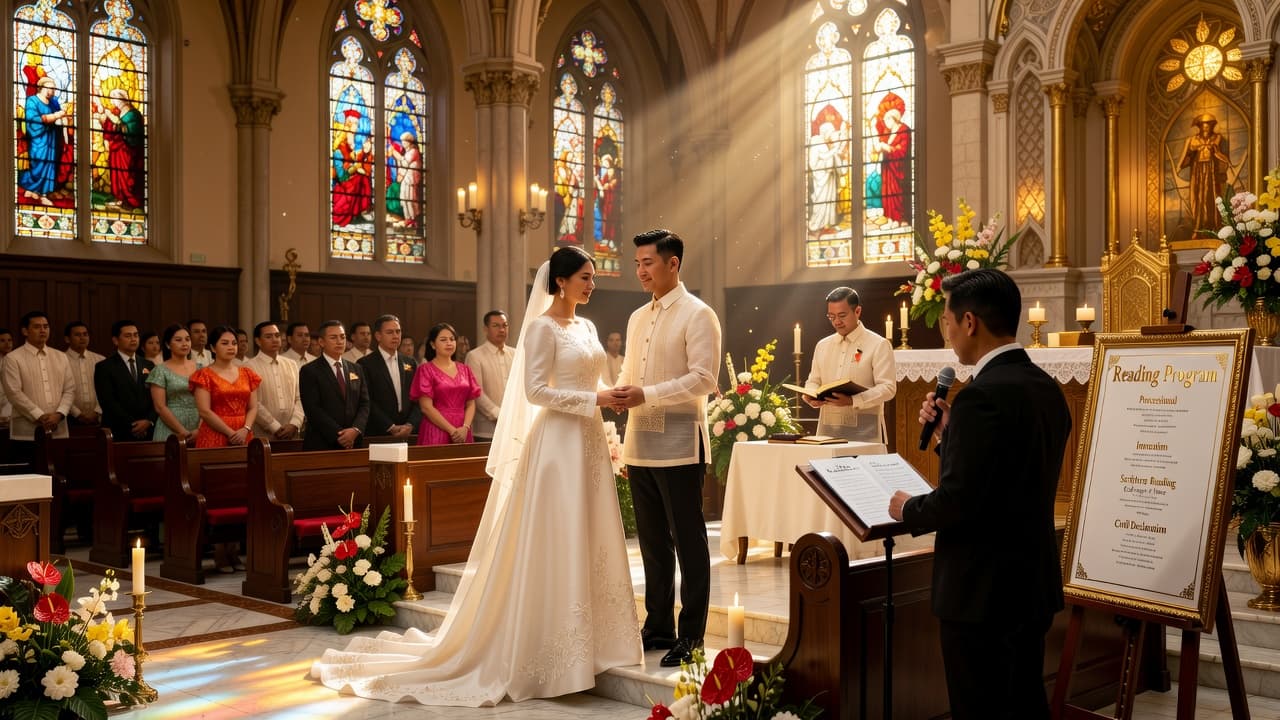
Make your wedding flow feel Filipino and elegant. This guide shares respectful emcee lines and ceremony reading ideas for both church and civil rites—plus tone tips to stay warm without sounding forced.
Filipino wedding emcee lines and readings: elegant, heartfelt ceremony flow
Quick Answer: You can sound naturally Filipino and elegant by matching your tone to the venue, using respectful honorifics, and keeping transitions clear. Choose readings that reflect love, family, and gratitude, and time them well—especially for church (prayer/liturgy) and civil rites (official program).
Introduction
Finding the right words for wedding readings and emcee lines can feel surprisingly hard. You want it to be respectful, heartfelt, and unmistakably Filipino—yet you also want it to stay polished enough for church and civil ceremony settings in the Philippines.
This guide helps you do exactly that. You’ll get practical Filipino wedding emcee lines and readings for key moments, plus reading ideas for both church and civil ceremonies. More importantly, you’ll learn how to keep a warm, culturally familiar tone without becoming overly casual or forced.
[Internal link: related article on writing a Tagalog-English wedding program] [Internal link: related article on wedding rehearsal and cueing suppliers] [Internal link: related article on choosing a wedding playlist for solemn moments]
At-a-glance: What readings and emcee lines should do?
Short answer (40–60 words): Ceremony readings give meaning: they frame love, marriage, faith (if applicable), gratitude, and commitment. Emcee lines guide timing: they welcome guests, introduce people, cue processions, and transition between prayer, vows, and exchanges. Together, they reduce confusion and keep emotions steady.
Define the roles (so your words match the moment)
- Emcee / Master of Ceremonies (MC): Sets pacing and clarity. Uses respectful greetings, formal transitions, and gentle guidance.
- Ceremony reader / scripture reader: Delivers a selected text (scripture, reflection, poem, message) clearly, at an appropriate length.
- Officiant / priest / solemnizing officer: Leads official parts (prayer, vows, exchange, declaration). Your MC supports—not replaces—the officiant.
Featured snippet: Ceremony setting → recommended approach
| Setting | What to emphasize | What to avoid |
|---|---|---|
| Church ceremony | Prayerful tone, scripture continuity, reverence | Too many jokes; interrupting liturgical flow |
| Civil ceremony | Respectful dignity, love and unity, clear transitions | Overly casual banter; lengthy speeches |
How do you keep a warm Filipino tone without sounding casual or forced?
Short answer (40–60 words): Use “formal warmth”: respectful honorifics (po/opo, Ginoo/Gng.), simple Tagalog-English phrasing, and emotionally sincere but concise sentences. Aim for “steady and gracious,” not “chatty.” If you’re unsure, write one sentence per cue, rehearse out loud, and remove filler words.
Practical tone rules for Filipino emcees
- Start with a respectful greeting that fits the venue. Example: “Magandang araw po sa inyong lahat.”
- Use clear honorifics and plural respect. “Lahat po tayo,” “para sa ating mga magulang,” “ang ating pong mga ninong at ninang.”
- Prefer short, complete sentences. Wedding cues should be easy to follow even for guests with background noise.
- Keep humor gentle and rare. If you joke, do it once and softly—avoid jokes during prayers, vow moments, and officiant declarations.
- Let Tagalog carry emotion—English can carry structure. This “mix” is common in Filipino weddings and helps keep elegance.
Simple bilingual language choices that sound natural
- Instead of: “Hi everyone! Ready na ba?” → Try: “Magandang umaga po. Maraming salamat sa pagdalo.”
- Instead of: “Okay, let’s start!” → Try: “Nawa’y maging mapayapa ang araw na ito para sa ating dalawa.”
- Instead of: “Sobrang love namin kayo!” → Try: “Lubos po ang aming pasasalamat sa inyong suporta at panalangin.”
Suggested title options (SEO-friendly)
- Ceremony Readings and Filipino Wedding Emcee Lines That Feel Elegant
- Filipino Wedding Emcee Lines and Readings: Church & Civil Ceremony Guide
- Warm, Respectful Filipino Wedding Readings & MC Lines (Tagalog Tips Included)
- Filipino Wedding Emcee Lines and Readings for a Heartfelt Ceremony Flow
Section outline / headings you can copy into your program
- Opening Welcome (MC greeting + gratitude)
- Processional Cue (arrivals, doors, seating)
- Prayer / Blessing Moment (keep reverent)
- First Reading / Scripture or Reflection
- Second Reading (love, family, unity)
- Officiant Introduction
- Vows / Exchange
- Declaration / Unity Moment
- Closing Blessing (thanks + announcement)
Main ceremony map: what to say at each Filipino wedding moment
Short answer (40–60 words): Your emcee script should “cue” the room. Use a consistent structure: greeting → welcome → introduce readings → support the officiant → transition to vows → close with gratitude and next steps. Write one line per event, then add two optional sentences for warmth.
1) Opening welcome (before the ceremony begins)
Goal: calm the room, welcome guests, and set a respectful tone.
- English-forward: “Good [morning/afternoon/evening], everyone. Thank you for being here to witness and celebrate the marriage of [Name] and [Name]. Your presence makes this day even more meaningful.”
- Tagalog-forward: “Magandang araw po sa inyong lahat. Maraming salamat sa pagdalo upang masaksihan ang inyong pong pakikiisa sa kasal nina [Name] at [Name].”
- Elegant blend: “Welcome, po. Today, we gather with love and prayer to support two families as they begin a lifelong journey together.”
2) Processional cue (when the couple or bridal entourage enters)
- Reverent: “At this moment, we invite everyone to please be seated. Let us welcome the couple with our warm applause and quiet hearts.”
- Filipino tone: “Maraming salamat po. Habang tayo po ay nagpapanatiling tahimik at magalang, atin pong ipakikita ang ating suporta habang sila ay papasok.”
3) Introducing the first reading (church-friendly and civil-friendly)
- Church-style respect: “We will now have a reading. This message will guide us to reflect on love, faith, and commitment.”
- Civil-style dignity: “Now, may we listen as [Reader’s Name] shares a meaningful reflection about love and partnership.”
- Hybrid: “Para sa atin pong lahat, ang susunod na bahagi ay pagninilay tungkol sa tunay na pag-ibig—mabuti, matiyaga, at tapat.”
4) Transition lines between readings
- “Let us hold the message in our hearts as we proceed to the next reading.”
- “Thank you to our reader. May we continue to listen with gratitude.”
5) During officiant/vows: how the MC should behave
Rule of thumb: keep the MC supportive and minimal. The officiant leads. Your words only cue attention.
- “Let us all please remain standing as we listen to the solemn words of our officiant.”
- “As the vows begin, may we give our full attention.”
- “We now proceed to the exchange of vows. Please take this moment to keep your hearts open.”
6) Unity moment (candle, cord, unity tree, unity sand)
- Candle / light: “With this light, may their love become a steady guide—renewed every day through patience and prayer.”
- Unity sand: “As the colors blend, may it remind us that two lives become one shared journey.”
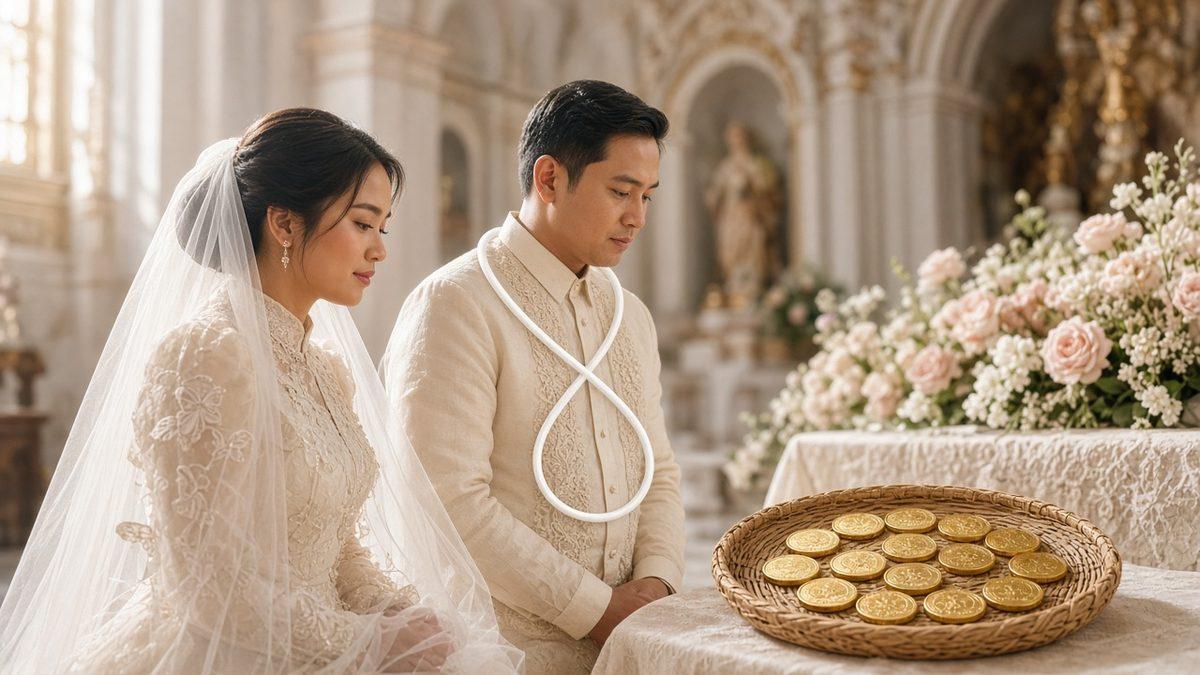
- Unity cord: “This cord symbolizes strength through togetherness—support that does not fade.”
7) Closing: gratitude + next steps
- Filipino gratitude: “Sa bawat ngiti at pagdasal, maraming salamat po. We truly appreciate your support for [Name] and [Name].”
- Practical announcement: “You may now greet the newlyweds. We invite everyone to join us for [cocktail/reception] at [time/location].”
- Elegant close: “May God bless your families, and may we all carry this joy forward.”
Emcee line tips for church vs. civil ceremonies
Short answer (40–60 words): Church ceremonies call for reverence and continuity with liturgy (prayer, scripture, officiant flow). Civil ceremonies call for respectful clarity and “official timeline” pacing (introduction, solemnizing officer, vows/declaration, next event). Adjust your language and volume to match.
Church ceremony tips (Philippines context)
- Use fewer transitions around prayers. Let the officiant speak.
- Confirm the reading format. Some churches prefer the official order and approved texts.
- Keep applause quiet. Applause timing should follow guidance from the priest/venue.
Civil ceremony tips
- Choose uplifting reflections. You can still use scripture-inspired readings, but keep them non-pressured for all guests.
- Be extra clear about the sequence. Civil guests sometimes arrive later or need cues.
- Avoid anything that sounds like a speech. Emcee lines should cue, not dominate.
List of emcee line examples (ready-to-adapt)
Tip: Replace brackets with your details. Keep your final script under 1–2 minutes for opening and under 1 minute for each major section.
- Opening (formal warm): “Magandang araw po. We are honored to welcome everyone as we celebrate the union of [Name] and [Name]—with gratitude for your presence and prayers.”
- Thank the parents: “We acknowledge with respect the families who guided and supported them—maraming salamat po sa inyong pagmamahal at sakripisyo.”
- Introduce readers: “Now, we will hear a reading from [Reader’s Name]. Please listen with open hearts.”
- Before vows: “As we approach the vows, may we remember that love is not only a feeling—it is a choice made daily.”
- After vows (transition): “Let us celebrate with gratitude as [Name] and [Name] continue this sacred commitment.”
- Unity moment cue: “This symbol reminds us that love grows through shared effort, patience, and hope.”
- Closing thanks: “Maraming maraming salamat po. Thank you for being part of this beautiful beginning.”
- Reception cue: “You may now proceed to [reception venue]. Please enjoy the celebration together.”
List of ceremony reading ideas (church + civil)
Short answer (40–60 words): Pick readings that match your ceremony’s tone: love, unity, faith, gratitude, and lifelong commitment. For church, align with scripture and the church’s reading order. For civil rites, choose short reflections or scripture-inspired passages that feel inclusive.
How to choose the right reading (simple checklist)
- Length: typically 1–3 minutes per reading for smooth pacing.
- Theme: love, patience, family support, gratitude, hope.
- Language: Tagalog/English or English-only—keep it consistent for clarity.
- Guest comfort: in mixed religious/cultural settings, prefer inclusive wording.
Church-friendly reading themes (scripture ideas)
Note: If you’re Catholic/Christian, confirm with your church about the approved readings and the order.
- Love in action: 1 Corinthians 13:4–7 (often read for wedding themes)
- God’s love reflected in marriage: 1 John 4:7–12
- Unity through humility and patience: Ephesians 4:2–3
- Marriage as a “one journey”: Ecclesiastes 4:9–12
- Faithful partnership: Ruth 1:16–17
Civil-friendly reading ideas (inspiring, inclusive)
For civil ceremonies in the Philippines, readings often work best when they’re reflective rather than overly doctrinal.
- “Love is a daily choice” reflection: A short, heartfelt reading about commitment, patience, and respect.
- Poetic reading (original or traditional): A poem about home, family, and hope.
- Family gratitude message: A letter from the couple thanking parents/ninong/ninang and supporting relatives.
- Scripture-inspired reading: 1 Corinthians 13 paraphrase in accessible language (still respectful, not preachy).
- Simple proverb-style wisdom: A reading inspired by Proverbs about character, integrity, and kindness.
Ready-to-use sample reading paragraphs (Tagalog-English friendly)
Reading idea #1 (love and patience, Tagalog-English):
“Ang pag-ibig po ay hindi lamang kilig—ito ay pasensya, kabutihan, at katatagan. Sa bawat araw, pipiliin natin ang maging magalang, ang maging totoo, at ang umunawa sa isa’t isa. Sa pag-ibig na ito, nagiging tahanan ang tahanan—sapagkat may pag-aalaga, may paggalang, at may pag-asa.”
Reading idea #2 (unity and support):
“Sa paglalakbay ng dalawang buhay, hindi ibig sabihin na walang pagsubok. Ang ibig sabihin, may kasama tayo—may taong handang tumindig sa tabi natin. Kung minsan, matututo tayo sa katahimikan, matitibay sa pag-uusap, at magiging mas malalim sa panalangin at pasasalamat.”
Reading idea #3 (gratitude to families):
“Maraming salamat po sa inyong mga dasal at gabay. Ang pag-ibig na ipinaparamdam namin ngayon ay pinanday ng inyong pagmamahal—sa pag-aalaga, sa suporta, at sa pag-unawa. Bilang mag-asawa, patuloy namin itong isasabuhay: pagbabalik ng kabutihan, at paglikha ng bagong pamilya na puno ng respeto.”
Common mistakes (and how to avoid them)
Short answer (40–60 words): Most wedding script problems come from pacing (too long), tone mismatch (too casual during solemn parts), and unclear cues (guests don’t know what’s happening). Fix these by limiting each MC cue to one purpose, rehearsing out loud, and aligning with the officiant’s flow.
7 mistakes to watch for
- Over-talking during prayer/vows. The officiant is the focus.
- Humor at the wrong time. Save light moments for the reception-style parts, not sacred moments.
- Readings that are too long. Short, clear readings feel more elegant and keep guests attentive.
- Unclear names/titles. Practice pronunciation of sponsors, ninong/ninang, and family names.
- Switching tone mid-script. Keep “formal warmth” from start to finish.
- No cue for guests. Always say what will happen next (seated/standing/please listen).
- Forgetting the bilingual rhythm. If using Tagalog, keep sentences natural, not forced.
Best practices checklist (printable for your MC)
- Write cues in order. Opening → processional → readings → officiant/vows → unity → closing.
- Confirm the exact reading order with church/venue officiant (if applicable).
- Time each segment. Do a short rehearsal with the mic.
- Rehearse pronunciation. Especially for sponsor names and locations.
- Prepare “Plan B” cues. If a reader runs late, you still have a smooth transition line.
- Keep a respectful applause plan. Ask venue rules beforehand.
Key Takeaways
- Use “formal warmth”: respectful greetings, honorifics, and short cues that guide guests.
- Choose readings for theme and pacing: love, unity, gratitude, commitment—usually 1–3 minutes each.
- Match your setting: church favors reverence and continuity; civil favors dignity and clarity.
- Keep the MC supportive: officiant leads vows and declarations; the MC cues, transitions, and closes.
- Rehearse out loud: bilingual scripts (Tagalog-English) sound best when they’re spoken naturally.
Frequently Asked Questions
How many ceremony readings should we include for a Filipino wedding?
Most weddings feel smooth with 1–3 meaningful readings. For example: one scripture or reflection, then a second that echoes love and unity. If your church has a specific liturgy, follow it—clarity matters more than quantity.
Can we use Tagalog in our wedding readings and emcee lines?
Yes—Tagalog often makes the message feel more intimate and culturally familiar. Keep the wording elegant: avoid slang, keep sentences complete, and maintain a respectful tone with honorifics. If the officiant sets rules, confirm language preferences in advance.
Should the emcee read the scripture aloud during the ceremony?
Usually, scripture readings are assigned to a designated reader (reader/lector) rather than the MC. This helps the MC stay focused on transitions while the reader delivers the text clearly. If circumstances require it, rehearse carefully and keep it respectful.
What’s a good length for a Filipino wedding emcee intro?
Aim for brevity—often 60–120 seconds for the opening welcome. Your goal is to set tone and welcome guests, not to explain the whole program. Use short bilingual sentences and end with a clear cue for the processional or next part.
What if our ceremony is mixed religious or mixed faith?
Choose readings that emphasize universal values: patience, love, commitment, gratitude, and family support. In mixed faith settings, avoid overly doctrinal wording. Your emcee can include gentle inclusivity lines like “for those who share this faith and for all who support them.”
How do we keep a warm tone without sounding overly casual?
Write “formal warmth” sentences: sincere, respectful, and not chatty. Use po/opo-style respect, avoid slang, and keep jokes minimal or none during solemn parts. Rehearse with a steady pace; if it feels like a conversation, revise it into a dignified cue.
Who should deliver the readings—family, friends, or ninong/ninang?
Any of these can work, as long as the reader is comfortable speaking clearly. Family members and ninong/ninang often bring emotional sincerity. Pick people who can read at a calm pace and are available for rehearsal—confidence matters more than title.
What should we do if a reader forgets lines or runs late?
Have a backup transition line ready: a short cue for the next part, plus a calm reassurance like “Thank you for your patience.” In rehearsals, provide the reader with prompts (first sentence, key words) so they can recover without panic.
Do we need professional help for wedding scripts and readings?
Professional help can be worth it if you want polished timing, bilingual flow, or if multiple parties must coordinate. However, you can also succeed with a rehearsal plan: written script, timing checks, and pronunciation practice. Choose support based on your complexity.
Conclusion
Elegant Filipino wedding ceremonies are built from small choices: respectful tone, clear transitions, and readings that reflect love in action. With the right Filipino wedding emcee lines and readings, your church or civil ceremony can feel heartfelt and culturally familiar—without becoming overly casual or forced.
Next step: If you’d like, share your ceremony type (church or civil), your preferred language mix (Tagalog/English), and the number of readings you want, and we’ll help you refine an emcee script and reading list that fits your exact program flow.
[External link: Vatican or official church resources on the Rite of Marriage and wedding liturgy (for church ceremonies)] [External link: Philippine civil marriage guidance from official government sources (for civil ceremony structure and solemnizing officers)]