Destination Wedding in Palawan: Planning Checklist
By WedPlanner Team
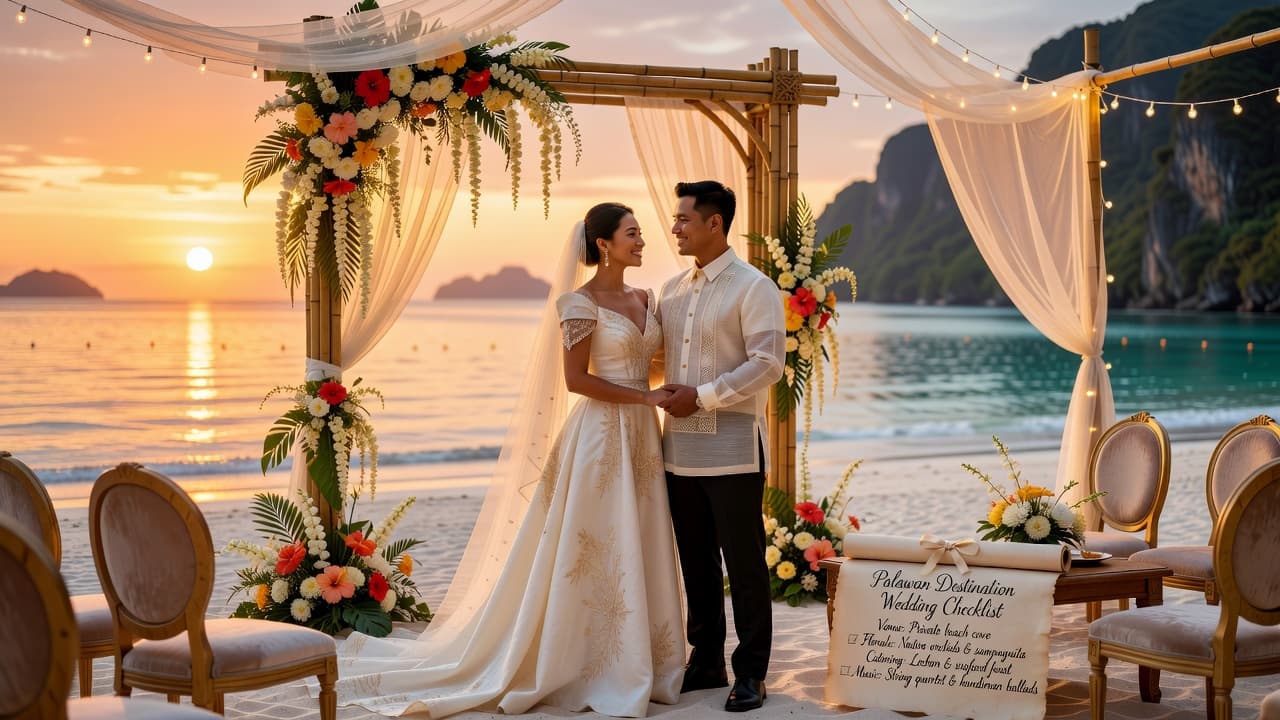
Palawan wedding photos are stunning—but only if your planning is equally thoughtful. This checklist helps first-time couples plan travel timing, local logistics, vendor coordination, and photo-ready contingencies for weather disruptions.
Destination Wedding in Palawan: Palawan destination wedding checklist for first-time couples
Quick Answer: The easiest way to stay stress-free is to plan Palawan like a “weather-aware project.” Lock your dates around drier months, confirm venues and permits early, map local transport by area, and build a rain/last-minute backup schedule for photos and ceremony flow—so your day still looks intentional.
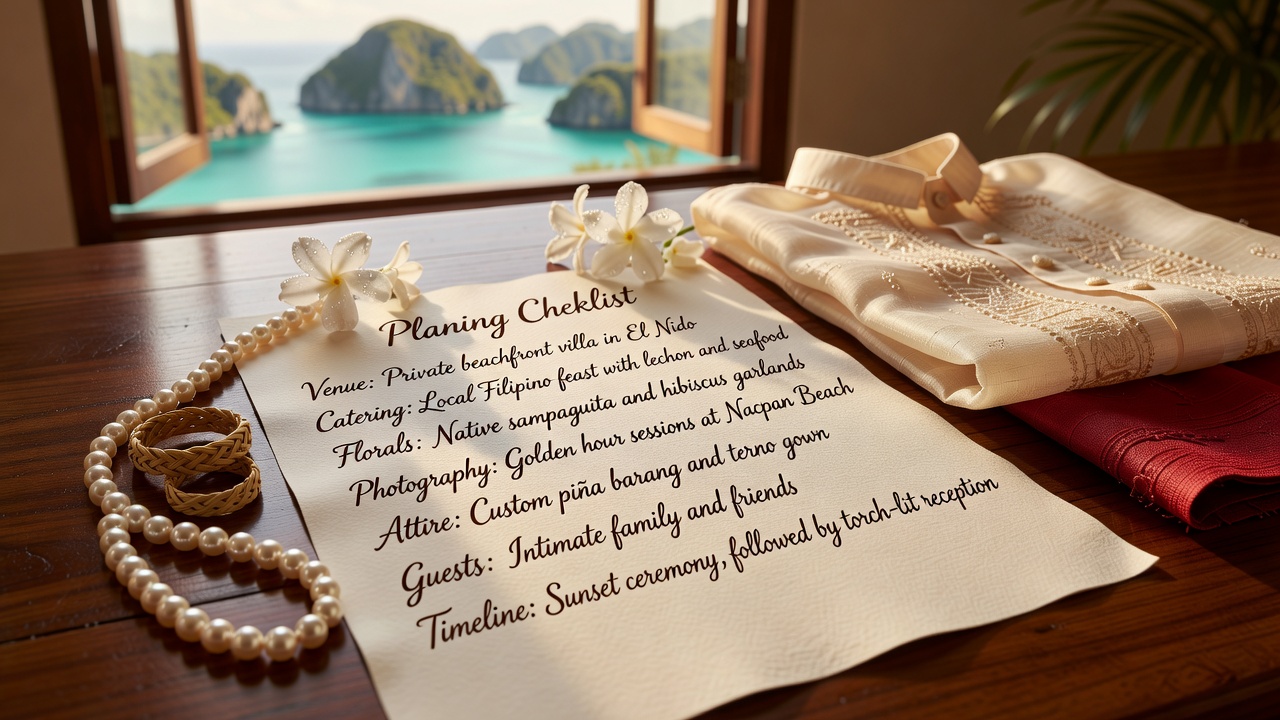
Introduction
A Palawan destination wedding is beautiful: turquoise water, dramatic limestone cliffs, and golden sunsets that make even a simple ceremony feel cinematic. The trade-off is that Palawan planning is detail-heavy—especially for first-time couples coordinating flights, transfers, and weather on a tight timeline.
This guide is a practical Palawan destination wedding checklist you can follow step-by-step. It focuses on what actually causes last-minute stress (timing, logistics, permits, photo plans, and weather disruption) and gives you contingency ideas that keep the day photo-ready, calm, and organized.
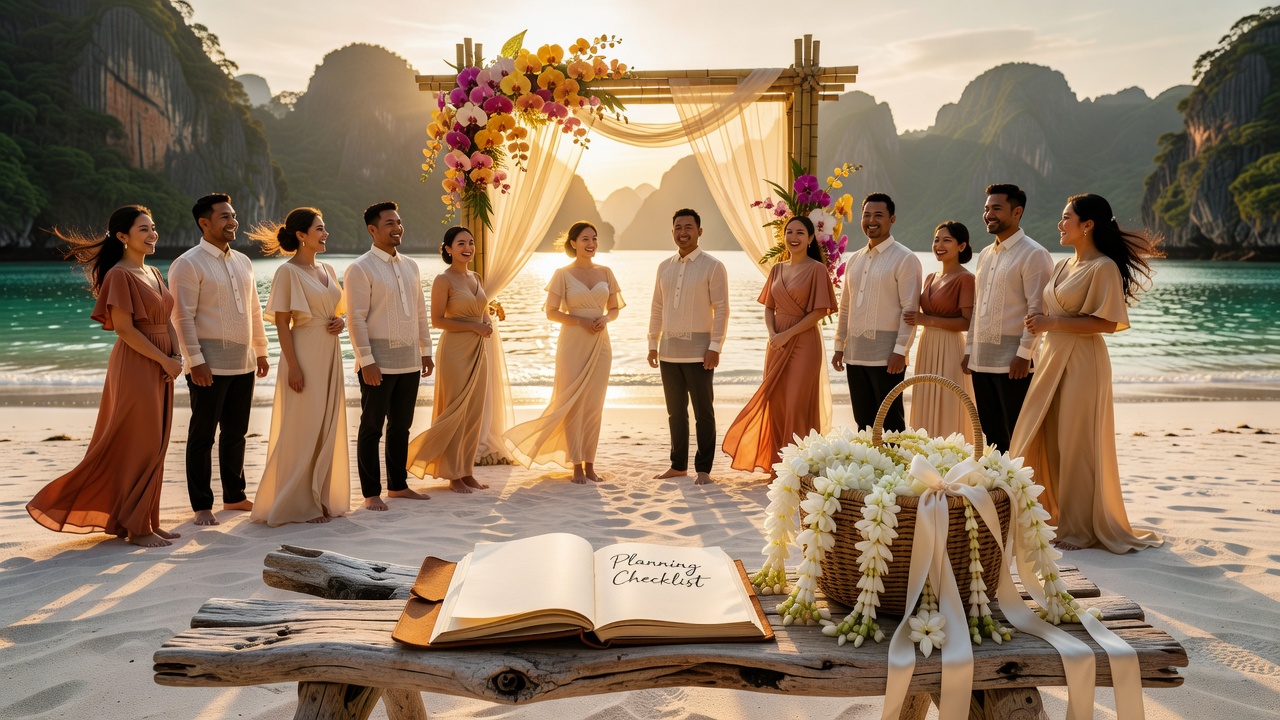
Key planning mindset (so your checklist actually works)
Most destination-wedding stress comes from two gaps: (1) decisions made too late, and (2) “single-plan thinking” (one schedule, one weather outcome). Use this mindset:
- Time-box your decisions: Set dates for “lock venue,” “confirm vendors,” and “finalize photo route.”
- Plan in layers: Big-picture plan (weeks), logistics plan (days), and contingency plan (hours).
- Make photos resilient: Build a weather-safe photo sequence that still fits your storytelling.
Definition: A “contingency plan” is not just an alternative location—it’s a time-and-roles plan (who decides, what moves when, and what you’ll shoot in rain).
When is the best time for a Palawan destination wedding?
Palawan’s weather is seasonal. For most couples, the smoothest wedding experience is choosing a drier window and building buffer time for passing rain or changing conditions. As a rule of thumb: many weddings aim for November to April, while May to October can bring heavier rain and higher disruption risk.
Checklist: Travel windows & timing
- Choose a target “wedding window” (not one single day only). If your ceremony is on a fixed date, plan two backup photo windows.
- Account for peak travel periods (popular months mean higher demand for flights, accommodations, and drivers).
- Build in weather buffers by scheduling:
- Photos: early-morning or late-afternoon slots, plus a rainy-day indoor/covered alternative.
- Vendor setup: earlier arrival than you think you need (loading, decor, power checks).
- Guest transfers: at least 30–60 minutes of buffer for beach-road traffic and unloading.
- Check forecast timing (especially within 72 hours). Update your “Plan B photo route” based on what you see.
- Mind travel complexity between islands/areas (e.g., Puerto Princesa vs El Nido vs Coron). If guests fly into one hub, plan internal transfers intentionally.
Which Palawan wedding area is right for you?
Palawan is huge in experience, even if it’s small on a map. Your guest experience and photo style change depending on whether you’re closer to:
- El Nido: dramatic scenery and popular tours; great for sunset-forward photography.
- Puerto Princesa / coastal areas: often easier access logistics for first-time destination planning.
- Coron: island-hopping vibes; excellent if your wedding story is “adventure romance.”
Checklist: Venue shortlisting (area + fit)
- Define your wedding “story” (classic beach ceremony, cliffside portraits, sunset vows, or resort-luxury).
- Confirm walking/transfer reality for guests (sand length, steps, shuttle needs, restroom access).
- Ask about tide, sun angle, and wind for beach ceremonies.
- Verify power reliability if you plan microphones, lighting, or a reception DJ setup.
Mistake to avoid: Choosing a venue only for the Instagram shot. In Palawan, “beauty” and “operational feasibility” must match (setup access, rain cover, and sound logistics).
Permits, rules, and local requirements (plan this before you fall in love)
Even if your venue is “wedding-friendly,” there can be permits or local rules for beach or outdoor ceremonies, event size, and vendor access. The earlier you confirm, the less you risk last-minute compromises.
Checklist: Paperwork & permissions
- Confirm who provides the permits (venue/resort vs you vs a local coordinator).
- Ask about event restrictions (music volume, curfews, decor placement, fire/lights policy).
- If you’re doing non-standard elements (fireworks, drones, large floral arches), request written rules in advance.
- Plan your official ceremony logistics separately from your photo sessions—don’t bundle everything into one outdoor timeline.
Recommendation: Hire a local wedding coordinator or a venue team member who routinely handles event logistics. That role can convert “what if” into realistic options fast.
Guest travel & accommodation logistics (the part that scares most couples)
First-time couples often focus on the couple’s experience and underestimate how guests experience friction: late arrivals, unclear pickup points, and last-minute transport changes. Your job is to make it easy for guests to arrive calm and on time.
Checklist: Guest journey map
- Choose a “default arrival plan” (What airport/port do most guests use?)
- Assign pickup & drop-off rules (time windows, where drivers wait, what happens if a flight is delayed).
- Use rooming blocks at 2–3 price points to reduce decision fatigue.
- Plan local transport by area (resort shuttles vs private vans vs scheduled drivers).
- Set expectations about roads and beach transfers (unsealed sections, slower travel, comfort needs).
Photo-ready tip: If guests attend welcome events, coordinate a short “portrait hour” early in the trip. It reduces the “everyone needs photos only on wedding day” bottleneck.
Vendor planning in Palawan: what to lock first
Great vendors aren’t just creative—they’re reliable under time pressure. In destination weddings, reliability beats flashiness. Lock vendors in this priority order.
Checklist: Vendor priority sequence
- Venue / coordinator (they influence everything else).
- Photography + videography (confirm backup coverage plan for rain).
- Makeup & hair with a clear “prep timeline” and access instructions for the room/space.
- Flowers / decor with humidity-safe and sand-safe planning.
- Music & sound (microphones, speaker coverage, and power availability).
- Transportation (drivers, vehicles, and timing rules for beach access).
- Officiant / ceremony logistics (if applicable, confirm all required steps early).
Common mistake: Confirming your wedding photographer but not discussing the contingency photo route. Ask for a “rain plan” in writing (or at least in a clear shot list).
Build a photo-ready contingency plan (weather disruptions included)
This is where your checklist becomes a stress shield. Palawan can deliver gorgeous light and sudden rain. You want a plan that keeps the day feeling intentional, not chaotic.
Photo contingency checklist
- Create a 2-track shot list:
- Track A (dry conditions): beach ceremony portraits, outdoor wide shots, sunset moments.
- Track B (rain or high wind): covered areas, indoor portraits, sheltered walkways, and “story shots” (details like hands, veils, rings, and close-ups).
- Pick “rain-friendly” locations during venue scouting: covered courtyards, verandas, hotels with aesthetic interiors, or styled lobbies.
- Decide what stays the same (music cue, vow timing, ring exchange order) even if the backdrop changes.
- Use wardrobe resilience: bring a backup hem/steaming kit, waterproof garment bags, and hair protection for humidity.
- Give yourself schedule slack: add 15–25 minutes between photo sets so rain doesn’t cascade into everything.
- Prepare a “micro-story” list: if outdoor photos are delayed, you still capture meaningful moments (details + emotions) so your gallery remains cohesive.
Quick AEO tip (for your own planning clarity): When you ask “What happens if it rains?”, define “what changes” and “what doesn’t.” That single clarification prevents panic decisions.
Ceremony day timeline: checklist for calm execution
Destination wedding schedules fail when they rely on perfect conditions. Instead, schedule reality: transport delays, makeup pace, and setup time.
Checklist: A practical day-of flow
| Time block | Goal | Checklist items |
|---|---|---|
| Morning prep | Keep everyone on track | Hair/makeup station ready; privacy; water/heat control; steam/repair kit |
| Setup window | Decor + sound + lighting ready | Microphone test; backup battery/power check; decor access confirmed |
| Couple portrait slot | Dry-light capture (or rain alternative) | Shot list loaded; umbrellas/waterproof covers; coordinator confirms route |
| Ceremony | Stay consistent | Order of events; officiant readiness; cue timing with music |
| Reception transition | Reduce gaps | Quick guest direction; signage; photo handoff timing |
| Golden-hour backups | Optional magic | If weather cooperates, do the outdoor set; if not, do Track B |
Recommendation: Assign roles. Even if you’re not using a full wedding planner, decide who makes the “switch to rain plan” call.
Local logistics that matter more than you think
Small logistics create big comfort. In Palawan, details like sand, wind, humidity, and travel routing influence how smoothly your day runs.
Logistics checklist
- Sand & footwear: confirm where guests can safely stand, and plan a “shoe-friendly” pathway.
- Humidity-proof decor: ask flower providers about humidity control and backup ribbon/fasteners.
- Restroom planning: ensure guest access is clear (and private enough for comfort).
- Signage: simple directional signs reduce confusion—especially in outdoor spaces.
- Waste & cleanup: ask the venue how cleanup works after decor and ceremony resets.
- Power + audio: confirm what’s available on-site (outlets, extension needs, mic coverage).
Photo-ready contingency detail: Bring a small “rain kit” for both couple and photographer: microfiber cloths, zip bags for electronics, and a lightweight umbrella plan.
Budget planning: where destination wedding costs actually show up
Destination wedding budgets aren’t just venue + photographer. They include transport complexity, vendor coordination, and contingency options.
Checklist: budget line items to include
- Travel & transfers: you + key vendors + any rehearsal logistics.
- Accommodation blocks: family and bridal party priorities.
- Local transport: drivers, vehicles, fuel/staff if applicable.
- Weather contingency: covered venue backup fees, extra setup time, additional portrait session if needed.
- Audio/lighting: power needs and setup labor.
- Fees & permits: venue/area rules and administrative requirements.
- Buffer fund: a realistic “unknown unknowns” reserve.
Practical advice: Don’t aim for the lowest quote. Aim for the vendor who can execute calmly under changing conditions—especially for rain and timing.
Communication plan: your secret weapon against stress
When you’re in a different location, miscommunication multiplies. Use a simple plan that keeps everyone aligned.
Checklist: communications
- Create a shared schedule (one document) with ceremony, photo times, and pickup windows.
- Use one decision channel for day-of changes (e.g., your coordinator as “single source of truth”).
- Share contact points for each vendor, not just the lead planner.
- Set guest instructions clearly (dress code, footwear guidance for sand, arrival timing).
- Rehearsal reminder: if possible, do a quick walkthrough for ceremony cues (processional timing, mic placement).
Alternatives if you want less complexity (without losing the Palawan vibe)
If you want a simpler planning path, consider “hybrid approaches” that still feel destination-rich:
- Shorter guest program: welcome event + ceremony + a single portrait session.
- Resort-led execution: venues with in-house coordinators can reduce permit and transport ambiguity.
- Elopement or small wedding: still includes photo-rich locations but fewer moving parts.
Pros/cons snapshot
- Full guest wedding: more joy, more logistics, higher risk from timing changes.
- Smaller celebration: easier coordination, more flexibility for weather-based portrait sessions.
- Resort-focused: reliable execution, sometimes less freedom in ceremony placement.
Best practices mistakes checklist (quick QA before you book)
Use this mini checklist to catch common planning failures:
- No rain plan: if your photo list doesn’t have Track B, you’re likely to feel rushed later.
- Unclear pickup rules: guests arrive stressed if pickup windows and meeting points aren’t explicit.
- Late vendor confirmation: in busy months, the best photographers and makeup artists book early.
- Trying to do everything outdoors: ceremony + portraits + reception photos all outside increases disruption.
- Overloading the timeline: too many transfers in one day makes schedule cascades likely.
Fixing these now is cheaper than improvising later.
Internal & external resources (placeholders to strengthen SEO)
To round out your planning, consider adding these resources to your site or reading list:
- [Internal link: related article on planning a destination wedding timeline]
- [Internal link: wedding photography shot list checklist]
- [Internal link: destination wedding budgeting guide]
- [External link: Philippine Department of Tourism (DOT) travel guidance]
- [External link: PAGASA (weather updates and forecasts)]
- [External link: Official info from your airline/port authority for travel advisories]
Key Takeaways
- Use a Palawan destination wedding checklist built around weather-aware scheduling, not just aesthetics.
- Choose your timing with seasonal reality in mind, and plan photos with a Track A / Track B system.
- Confirm permits, rules, and setup access early to avoid last-minute location changes.
- Map local logistics by area: transport, restrooms, power, and decor stability.
- Assign roles for day-of decisions, and build schedule buffers so disruptions don’t cascade.
Frequently Asked Questions
What months are best for a Palawan destination wedding?
Many couples aim for the drier window roughly from November to April, when conditions are generally more predictable. That said, Palawan can still have passing rain. If you’re flexible, choose a broader wedding window and build weather buffers so your schedule doesn’t collapse.
Do we need a local wedding coordinator in Palawan?
A coordinator isn’t mandatory, but it’s often worth it for first-time couples. They handle vendor timing, site rules, and day-of changes faster than remote planning alone. At minimum, ask the venue team to confirm permits, setup access, and a rain-ready operational plan.
How do we plan a beach ceremony if weather changes suddenly?
Create a contingency ceremony + photo sequence. Pick a nearby covered option (or an indoor aesthetic space) during venue scouting, and decide what stays the same (timing, music cues, ring exchange order). Then schedule a buffer so you can switch without rushing.
What should we include in a Palawan wedding photo contingency plan?
Include a weather-safe shot list, a backup location route, and a schedule adjustment window. Prepare small “rain kit” items like umbrellas, cloths for lenses, and waterproof storage for electronics. Coordinate with your photographer so the backup plan still tells your wedding story.
What logistics should we confirm with vendors before we arrive?
Confirm setup access, power/audio needs, and how they handle humidity and sand exposure for decor and hair/makeup. Ask for arrival times, who leads setup decisions, and what they’ll do if rain delays outdoor sections. Written clarity reduces stress on the day.
How do we handle guest transfers between airports/ports and resorts?
Set a default arrival hub and publish clear pickup windows, meeting points, and what to do if a flight is delayed. Plan transport by area and count unloading time. If guests are staying at multiple properties, designate how they’ll be grouped for shuttles.
Is it worth doing an engagement session in Palawan?
It can be worth it if you want more comfortable, confidence-building time for portraits in a high-scenery location. It also helps your photographer learn the best light and routes. If budget is tight, you can achieve similar benefits with a small “portrait hour” during the wedding trip.
What hidden costs should first-time couples budget for?
Expect costs for transportation complexity, power/audio needs, permits or administrative fees, and contingency time. Also budget for buffer time that might require extra vendor hours or additional photography coverage if weather disrupts outdoor plans.
Can we still get great wedding photos if it rains?
Yes—if your plan is designed for it. Rain doesn’t automatically ruin photos; it changes the backdrop, light, and timing. With Track B locations, wardrobe readiness, and close-up storytelling shots, your gallery can still look intentional and cohesive.
Conclusion
A Palawan destination wedding can be effortless—if you plan it with the right level of detail. Use this Palawan destination wedding checklist to lock timing, confirm logistics and local requirements, and build photo-ready contingency plans so weather surprises don’t steal your joy.
CTA: If you’d like, share your target month and your planned area (e.g., El Nido, Puerto Princesa, or Coron). I can help you turn this checklist into a day-by-day schedule and a simple Track A / Track B photo plan you can hand to your vendors.