Philippines Wedding Reception Program Flow Host Guide
By WedPlanner Team
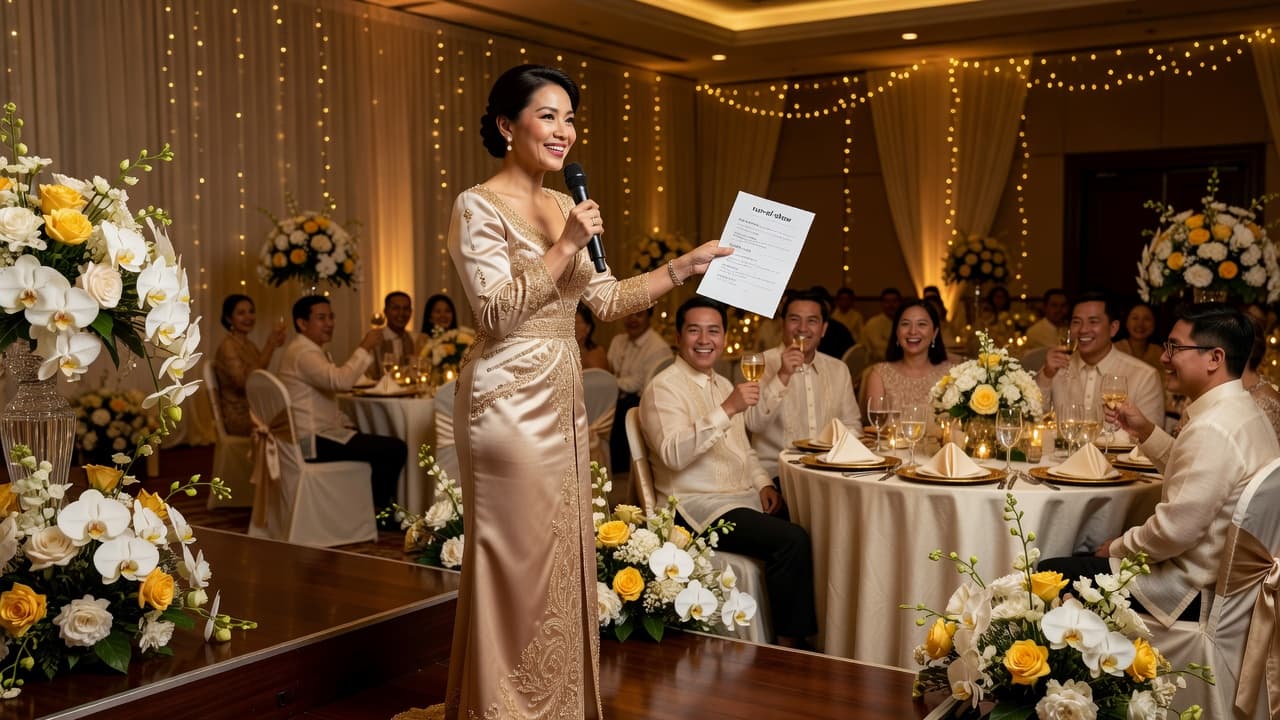
A smooth Philippines wedding reception program flow host is built from timing, scripted cues, and calm transitions. This guide gives a practical run-of-show framework for entrances, speeches, games, and dead-air prevention—based on Filipino reception expectations.
Philippines wedding reception program flow host: a smooth reception guide
Quick Answer: A smooth Philippines wedding reception program flow host relies on timing, scripted cues, and a calm backup plan. Build a “run of show” with start/finish targets, name-read prompts, and transition lines. Then rehearse with the couple and AV tech so entrances, speeches, and games land on time—without dead air.
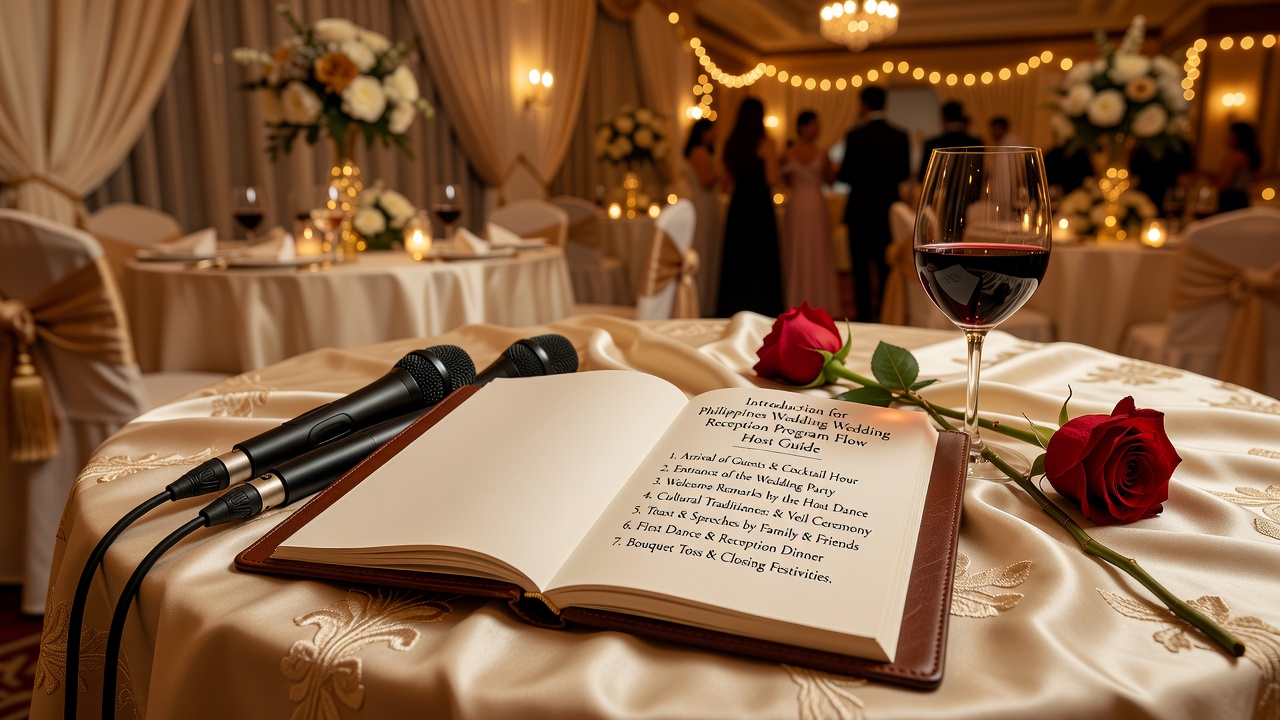
Introduction
Most awkward receptions don’t happen because people are “unlucky”—they happen because transitions are vague. When the program flow has unclear timing, the host hesitates, and guests don’t know what’s next, dead air shows up fast.
This guide is for Filipino wedding receptions that include common moments like the couple’s entrance, AVPs, sponsor greetings, cake cutting, special dances, and guest games. You’ll get a practical framework you can plan around, plus host scripting tactics that keep energy steady from the first welcome until the last call.
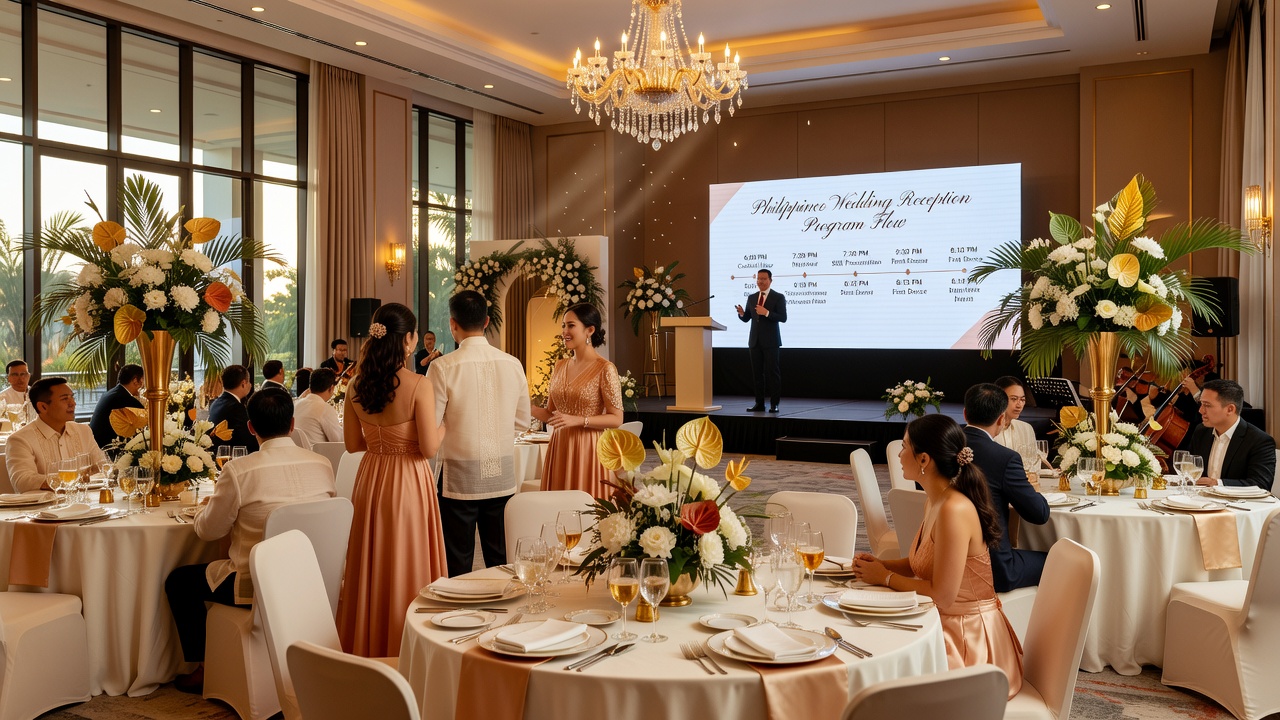
What makes a Philippines wedding reception feel “smooth”?
40–60 word answer: A smooth reception feels like “everything connects.” That comes from (1) timing that matches real human pace, (2) scripting that tells the host exactly what to say and when, and (3) calm control—so the program recovers instantly when a song starts late, a speaker arrives late, or the mic battery drops.
Key ideas (in simple terms)
- Timing: each segment has an “expected” duration and a “recovery” option.
- Scripting: the host doesn’t improvise during pressure; they follow cues.
- Flow ownership: one person controls transitions (often the emcee/host), while assistants handle cue lights, music, and props.
What is a reception program flow (and who should run it)?
A program flow (also called a run of show) is the ordered schedule of reception segments—complete with start times, segment durations, and cues for the host, sound/AV operator, photographer, and coordinators.
In a Filipino wedding reception, program flow also needs cultural awareness: guests expect moments like sponsor/ninong–ninang greetings, family speeches, and interactive parts (games, giveaways, and “special dances”). The host’s job is to keep these moments respectful, energetic, and on schedule.
Host vs. coordinator: what each role does
| Role | Focus | Best tool |
|---|---|---|
| Philippines wedding reception program flow host (Emcee) | Transitions, timing calls, announcements, crowd direction | Script + cue cards |
| Reception coordinator / stage manager | Line-up checks, backstage readiness, sponsor order | Checklist + contact sheet |
| AV / sound technician | Mic routing, music/AV playback, volume balance | Playback cue list |
The practical flow framework: plan your “run of show” in 6 steps
If you want dead-air-free momentum, don’t start with fancy wording. Start with structure. Use this framework:
Step 1: Create a “segment card” for every part
For each segment, write:
- Start cue: what triggers it (e.g., “Doors open,” “Couple arrives,” “AVP ends”)
- Time target: how long it should take
- Host script goal: what the host must communicate in one sentence
- Recovery option: what you do if it runs late
Step 2: Add buffers where Filipino weddings typically slow down
Common “time leaks” include:
- Entrance delays (flowers/cord, family line-up, last-minute outfit adjustments)
- Speech arrivals (finding the speaker, walking to stage, unexpected mic needs)
- Interactive moments (guests moving slowly, participants choosing teams)
- AV playback (USB/VTR issues, wrong file, volume mismatch)
Plan a buffer (5–10 minutes) around these without making the program feel “wobbly.” That buffer becomes your dead-air insurance.
Step 3: Script transitions, not just announcements
Many hosts write only what they will say for each segment. Smooth hosting writes what happens between segments.
Use a consistent transition formula:
- Close: “Thank you—everyone please give them a warm round of applause.”
- Bridge: “While we prepare for the next moment…”
- Direct: “Please keep your seats ready / check the next direction from our team.”
- Tease: “Next, we’ll have [name of segment]…”
Step 4: Use “name-read prompts” for quick, clean sponsor/speech flow
In Filipino receptions, you often have multiple greetings: parents, sponsors (ninong/ninang), principal sponsors, friends, and sometimes relatives who speak. To avoid stumble-and-search moments, prepare a “Name-Read Prompt” list:
- Exact name spelling
- Title to use (e.g., “Mr./Ms.” or family role)
- Who introduces them (host vs. coordinator)
- Suggested mic approach (wired/wireless)
Step 5: Rehearse with AV timing—no guessing
Most dead air happens when the host waits for the music, or the sound tech waits for the host. Do a short run-through of:
- Entrance music start cue
- Mic muting/unmuting sequence
- AVP playback start + stop (including fades)
- Crowd-direction signals (“please be seated,” “stage ready”)
Step 6: Decide what “late” means (and what you will cut)
When timing slips, you need permission to adjust. Choose cut rules in advance, such as:
- If a speech is beyond X minutes, ask for one key message only
- If an AVP runs long, shorten applause breaks
- If games overrun, switch to a faster “final round”
This prevents the host from doing awkward “uh… we’ll just… wait” moments.
How do you handle entrances smoothly (without rushing or stopping)?
Entrances set the emotional tempo. If they’re clunky, the rest of the night feels late even when the schedule is fine.
Entrance checklist (simple but powerful)
- Line-up cue: confirm who enters first, and who stays backstage.
- Stage readiness signal: define one clear signal between coordinator and AV (for example: “green card” or a hand gesture).
- Host script for the “gap”: write 2 backup lines for when family walks slower than expected.
- Sound balance: ensure entrance music doesn’t overpower the host voice for first announcements.
Host script example (entrance transition)
“Ladies and gentlemen, please get ready—our newlyweds will be arriving in just a moment. While they make their way in, kindly hold your seats and keep the applause ready. Thank you.”
This line solves two problems at once: it fills waiting time and it gives guests a clear job (applaud/seat ready).
How do you run speeches and acknowledgments with zero awkward dead air?
Speeches are where “quiet time” happens—especially if the mic is missing or the speaker is still finding their place. Make speeches predictable and paced.
Speech pacing that feels respectful (and doesn’t drag)
- Use a time cap: even gentle caps keep the overall flow.
- Introduce in one breath: 10–15 seconds for name/title and the message.
- Close tightly: applause + immediate next cue (“we’ll proceed to the next greeting”).
Dead-air prevention tactics for speeches
- Backstage staging: speakers are lined up before they’re called.
- Mic standby: have a spare mic battery check before speeches begin.
- Applause choreography: applause patterns can mask micro-delays (e.g., 15 seconds while the mic is adjusted).
Short “fill lines” for the host (scripted, calm)
- While switching mics: “We’ll just adjust our setup—thank you for your patience.”
- While speaker walks to stage: “Let’s give them a warm welcome as they join us.”
- While AV plays: “Please enjoy this next message—then we’ll continue our program.”
These are not filler jokes. They’re functional language that keeps the room oriented.
How do you host games and interactive moments without derailing the timeline?
Games are a Filipino reception staple—but they can also become time-consuming if rules and pacing aren’t controlled.
Choose games that match your venue and crowd
Before picking games, decide:
- Space: can guests move safely?
- Sound: can mic + music be heard clearly?
- Time: do you have a 15-minute window or a 30-minute block?
- Energy balance: games should not replace key moments (cake cutting, special dances).
Game format that protects the program flow
- Explain rules in 20–30 seconds (not 2 minutes).
- Run 1 demonstration round only if needed.
- Limit rounds (e.g., “top 3 advance” approach).
- Keep prizes ready so winners don’t wait.
Host phrasing that keeps momentum
“This round is quick—listen carefully. Contestants, please be ready in 10 seconds. After this round, we’ll announce our winners and move straight to the next program segment.”
That final sentence is important: it tells guests the game is not becoming a marathon.
How do you transition between segments like a pro?
Transitions are where smooth receptions are won. A good host doesn’t just announce—they orchestrate.
The “3-layer transition” method
- Layer 1: Audience direction (“please be seated,” “please come closer,” “winners step forward”).
- Layer 2: Program continuity (“next is cake cutting after this message”).
- Layer 3: Time control (“we’ll start in 3 minutes” when you’re sure).
Use a “transition queue” (so you never improvise under pressure)
Write a queue of prepared cues for each transition type:
- Music transition: 1 line + next segment tease
- Stage swap: “please hold your applause as we reset”
- Sponsor waiting: “our sponsors are on their way” + short respectful tone
- AVP waiting: “thank you for watching” + crowd orientation
How do you avoid awkward dead air during the reception?
Dead air is usually caused by one of these gaps: waiting on AV, waiting on people, or waiting on the next cue. Fix each with a specific plan.
Dead-air causes and fixes (fast reference)
| Cause | What guests see | Host fix | Coordinator/AV fix |
|---|---|---|---|
| AV not ready | Silence while music/search | Bridge line + applause instruction | Preload files, test USB, confirm playback cue |
| Speaker not in place | Host looks for them | Warm welcome line + short time window | Speaker backstage staging + backup speaker |
| Mic issues | Mumbling or no sound | “We’ll adjust, thank you for your patience.” | Spare mic + spare battery ready |
| Game overruns | Program falls behind | “Final round” script + reset crowd energy | Time limit + prize distribution plan |
Keep the host calm on purpose
When you practice the script, you don’t “think” during delays—you execute. That’s what calm hosting looks like: clear voice, slow pace, and prewritten lines for common problems.
Suggested timeline example (Philippines wedding reception program flow)
Every wedding differs, but this sample run-of-show shows how timing + scripting fit together. Adjust durations based on your venue and number of speeches/sponsors.
| Segment | Time target | Host focus |
|---|---|---|
| Welcome + program intro | 5–10 min | Set expectations, direct guests |
| Ceremony-to-reception transition (if applicable) | 2–5 min | Respectful bridge line |
| Couple entrance + first applause cue | 5–8 min | Introduce the couple, guide seating/standing |
| AVP / message from family | 5–10 min | Quiet instructions + when to applaud |
| Sponsor/ninong–ninang greetings | 15–25 min | Clean name-read prompts, time caps |
| Cake cutting | 8–12 min | Coordinate moment timing with AV/photographers |
| Games / interactive round | 15–25 min | Explain fast + confirm “next segment after this” |
| Special dances / open mic (optional) | 10–25 min | Respect + pacing |
| Final remarks + last call | 5–10 min | Wrap calmly, thank guests clearly |
Budgeting and costs: what “smooth flow” usually requires
Costs vary by venue and guest count, but smooth program flow isn’t only about expensive equipment. It’s mostly about planning time and rehearsal readiness.
Common cost categories
- Host materials: printed run-of-show, cue cards, name-read prompt sheets
- AV support: reliable wireless mics, backup batteries, stable audio playback
- Coordination: coordinator hours for staging speakers and managing backstage readiness
- Optional tech: a cue-light system or a simple tablet timer for the stage manager
If you don’t have a dedicated stage manager, consider hiring a wedding coordinator or emcee who has reception hosting experience (especially with Filipino program elements like greetings, AVPs, and sponsor calls).
Internal and external resources (opportunities)
To keep your planning grounded, you can cross-check etiquette and timeline structure with reputable wedding planning references.
- Internal link: [Internal link: wedding reception timeline checklist]
- Internal link: [Internal link: Philippines wedding emcee/MC scripting template]
- Internal link: [Internal link: audio/AV venue checklist for hosts]
- External link: [External link: Emily Post wedding etiquette guidance]
- External link: [External link: The Knot reception timeline tips]
- External link: [External link: WeddingWire MC or reception flow tips]
Key Takeaways
- A smooth Philippines wedding reception program flow host is built on timing, scripted cues, and calm recovery plans.
- Use a segment card for every part: time target, host goal, and a recovery option.
- Script transitions (close → bridge → direct → tease) to prevent awkward dead air.
- For speeches and greetings, prepare name-read prompts and enforce a gentle time cap.
- For games, explain fast, limit rounds, and always confirm what happens immediately after.
- Plan cut rules for “late”—so the host never improvises under pressure.
Frequently Asked Questions
1) How long should a Philippines wedding reception program be?
Most receptions run long enough to include key moments (entrance, greetings/speeches, cake cutting, at least one interactive segment) without exhausting guests. A practical approach is to set hard time targets per segment and include recovery buffers. Your schedule should fit your venue rules and your priority moments.
2) Who should control the program flow during the reception?
Ideally, one person owns transitions: the emcee/host or a stage manager, with AV support. The host handles announcements and crowd direction, while the coordinator ensures speakers and participants are ready. Clear “one decision-maker” ownership prevents conflicting cues that cause dead air.
3) How do we handle multiple sponsor speeches without losing time?
Use a name-read prompt sheet, introduce each speaker briefly, and set gentle time caps. Stage the speakers backstage so they’re ready when called. When delays happen, switch to your prepared bridge line plus a quick applause choreography to mask micro-adjustments.
4) What should the host say when the AVP or music is delayed?
Use a calm bridge script: acknowledge the pause (“We’ll adjust our setup—thank you for your patience”), give the crowd a job (applause/seat-ready), and tease the next segment (“Next, we’ll continue with…”). Avoid jokes that require timing—keep the message functional and short.
5) Are games required in a Filipino wedding reception program?
No, games are optional. Many Filipino receptions include them because they create shared moments and photos, but the best choice is what fits your crowd, venue, and timeline. If you’re short on time, choose one well-managed interactive segment rather than multiple long games.
6) How do we prevent dead air during mic changes?
Prepare a mic switching plan: confirm spare batteries, keep a spare mic ready, and rehearse the order. The host should use scripted “pause lines” while switching happens. Guests stay engaged when the host gives direction (“please look this way,” “please enjoy the next message”).
7) What’s the best way to rehearse the reception flow?
Do a short run-through focusing on cues: entrance music timing, mic handoffs, AVP playback start/stop, and transition lines. Even a 15–20 minute rehearsal with AV tech and the stage manager can prevent most “waiting moments” that create awkward silence.
8) Should we hire a professional emcee for the program flow?
If your reception has many speakers, sponsor greetings, or complex AV elements, a professional emcee can reduce risk because they’re experienced with tempo and recovery. If budget is tight, you can still succeed with a detailed run-of-show, rehearsed transitions, and clear backstage staging responsibilities.
Conclusion
A smooth Philippines wedding reception program flow host isn’t about being perfect—it’s about being prepared. When you build a clear run of show, script your transitions, stage your speakers, and rehearse with AV timing, the night moves like a connected story: entrances land, speeches flow, games energize, and dead air rarely has a chance.
CTA: If you want a calmer wedding day, consider hiring an experienced emcee/host or reception coordinator to review your run-of-show and cue scripts. For a ready-to-use planning checklist, see our [Internal link: Philippines wedding reception timeline checklist].