Wedding Photographer Questions in the Philippines
By WedPlanner Team
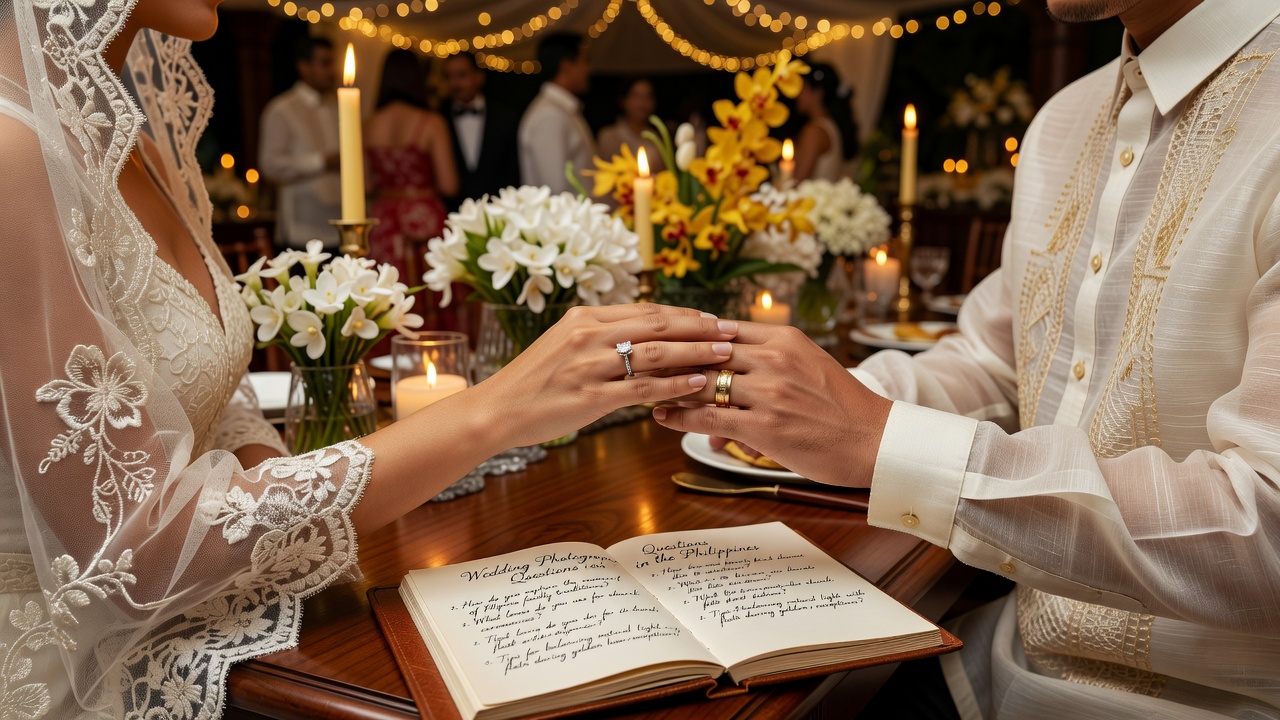
Stop guessing: use high-impact wedding photographer questions in the Philippines to match your style, confirm coverage and deliverables, plan for rainy weather, and set clear turnaround expectations.
Choosing a Wedding Photographer in the Philippines: wedding photographer questions Philippines couples actually need
Quick Answer: Don’t hire on vibes alone. Ask about portfolio fit (lighting + posing + skin tones), exact coverage hours, what’s included (second shooter, engagement sessions, albums, raw files), editing/turnaround timeline, delivery format, and rainy-day contingency plans—especially for typhoon season across the Philippines.
Introduction
Picking a wedding photographer in the Philippines can feel like guesswork: you like their photos—until you receive the final gallery and realize the coverage didn’t match your priorities, the turnaround is slower than you expected, or the “rain plan” wasn’t real. The fastest way to reduce risk is to ask sharper questions early.
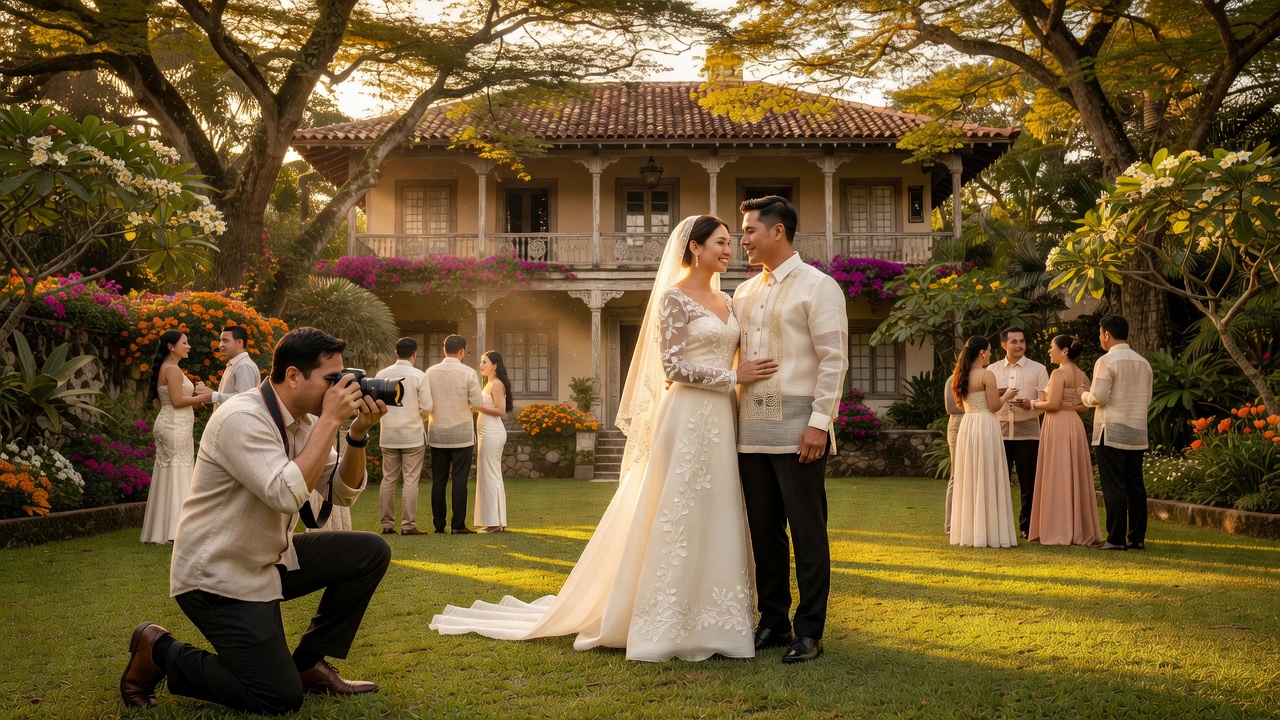
This guide is built around high-impact wedding photographer questions Philippines couples can use during consultations. You’ll learn how to evaluate a portfolio, confirm coverage and package inclusions, set realistic editing and delivery expectations, and plan for bad weather (monsoon showers, sudden storms, and typhoons) without panic.
Main Section
What are the 12 wedding photographer questions Philippines couples should ask first?
Quick answer: Start with questions that prove fit and clarity: style match, portfolio consistency, coverage hours, second shooter, deliverables, editing approach, turnaround timeline, backup/storage workflow, travel/travel fees, and a real rainy-day plan. These questions prevent “surprise mismatches” that commonly happen after booking.
- How would you describe your shooting style? (Candid, editorial, documentary, traditional, or mixed.)
- Do you have full wedding galleries that look like our vibe? Ask for galleries from weddings with similar lighting and emotion.
- What’s your exact coverage time—and what happens if we run late?
- Do you bring a second photographer? If yes, what role do they play?
- What’s included in the package? (Engagement session, album, prints, highlight video, retouching level.)
- How many edited photos can we expect? And how is that number determined?
- What’s your editing workflow? (Color grading style, skin tone approach, consistency checks.)
- What’s your turnaround time for sneak peeks and final gallery?
- What delivery formats do we get? (High-res downloads, web gallery, album order, USB, cloud link.)
- How do you protect our photos? (On-site backups, card handling, storage redundancy.)
- What are travel and location fees? (Manila vs. provincial venues; condo prep; out-of-town stay.)
- What’s your rainy-day / bad-weather plan? (Location scouting, umbrella/lighting strategy, venue constraints.)
Use this list as your consultation checklist. If the photographer can answer clearly and consistently, you’re probably dealing with a professional who understands weddings—not just “good photos.”
How do you evaluate a photographer’s portfolio without overthinking?
What should you look for beyond “pretty pictures”?
Quick answer: Focus on consistency and predictability. Look for repeated examples of your preferred lighting style, reliable skin tone color, storytelling across the full day, and coverage that doesn’t stop at the ceremony. A strong portfolio shows process—not just one “perfect” highlight.
Portfolios can be curated, so you want to evaluate patterns. Here’s a practical way to scan wedding samples (whether they’re on Instagram, a website, or a PDF portfolio):
- Story coverage: Are there images that document the full flow—getting ready, ceremony, reception, first dance, and key moments with emotion?
- Lighting and skin tone: Do faces look natural under indoor lighting and mixed environments (hotel ballroom + church + sunset)?
- Consistency: Does the gallery look like the photographer’s “signature” from beginning to end, or does it feel random?
- Composition: Do they frame people well (not just landscapes) and keep images flattering without over-filtering?
- Editing style: Do you like their color grading and contrast? If their style changes drastically between posts, ask why.
- Problem-solving shots: Look for photos taken in challenging situations—crowds, low light, motion, or rain. You learn a lot from “hard moments.”
Ask for a full gallery that matches your wedding day
One of the most reliable questions is: “Can you share a full set from a wedding with a similar vibe and lighting situation?” “Similar” could mean:
- Venue type: church ceremony + hotel reception vs. beach ceremony vs. garden set-up
- Lighting: sunset golden hour vs. indoor low light vs. mixed lighting
- Timeline: same ceremony + reception flow you plan
- Wedding energy: formal/traditional, semi-candid, or highly emotional family moments
Pro tip: Don’t just ask for “highlights.” Ask for the complete coverage to see whether their style is consistent throughout.
Which portfolio red flags should you watch for?
What signals “inconsistent delivery”?
Quick answer: Red flags aren’t about taste—they’re about reliability. Watch for photographers who only post singles (not full timelines), show inconsistent skin tones, avoid answering questions about editing/timeframes, or can’t explain backup workflow and deliverables clearly.
- Only highlight posts: Great shots, but no full-day gallery.
- Unclear editing approach: They can’t explain what “retouching” includes or how colors stay consistent.
- Vague deliverables: “You’ll get many photos” without specifics on the edited gallery.
- Slow or uncertain turnaround: They won’t commit to a realistic window for sneak peeks and finals.
- No backup story: They can’t explain how they handle cards and redundancy on event day.
- Style mismatch: Their portfolio is mostly a different look (e.g., heavy editorial color) than what you want.
If you see multiple red flags, it doesn’t mean they’re “bad”—it means you might be taking avoidable risk. Wedding days are high-stakes. Clarity wins.
What should you ask about coverage and package inclusions?
How do you confirm “coverage” matches your actual wedding plan?
Quick answer: Coverage is more than hours—it’s what those hours include. Ask for the exact timeline they cover (getting ready, ceremony, pre-reception, family photos, reception highlights) and what happens if you run late. Then confirm who is shooting during each segment.
In the Philippines, wedding timelines vary by region and venue rules—church schedules, traffic, travel between locations, and venue curfews. The photographer should help you plan. Here’s how to evaluate coverage properly:
- List your must-have moments: getting ready, first look (if you do it), ceremony, key family photos, entrance, speeches, cake cutting, and the “quiet moments” with emotion.
- Map coverage hours to your timeline: If you’re planning two locations, ask how travel time is handled.
- Ask about “buffer time”: Some couples prefer a longer block to avoid rushed family photos.
- Clarify lead time: When will the photographer arrive? How much prep time do they expect?
- Ask about venue constraints: Are flash restrictions allowed? Are there restrictions inside certain churches?
Common mistake: Buying “8 hours” without verifying that the last hour includes reception portraits and not just people settling in.
What package inclusions should you confirm in writing?
Quick answer: Treat inclusions like a contract checklist. Confirm deliverables and extras: second shooter, engagement session, highlight video, album size and page count, print options, and retouching scope. If something is important to you, it should be named and priced clearly.
Here’s a practical table of what to ask (and what “good answers” usually include):
| Topic | Ask This | What to Look For |
|---|---|---|
| Second shooter | Will you bring one? What’s their role? | Clear coverage responsibility (details + alternate angles, not random) |
| Engagement session | Is it included? How many hours? | Time length, location options, and how photos are delivered |
| Albums & prints | Is there a physical album? What size/specs? | Album type, page count, materials, and delivery timeline |
| Retouching | What does “editing” include? Skin smoothing? Blemish removal? | Natural retouching boundaries + consistency across the set |
| Number of images | How many edited photos do we receive? | A realistic range and the method used to select edits |
| Video (optional) | Is highlight video included? Who films/edit it? | Style expectations, length, and delivery timeframe |
| Usage rights | Can we use images for announcements and social? | Clear licensing/usage expectations and any restrictions |
| Travel & permits | Are out-of-town fees or venue permits included? | Transparent pricing for Manila vs. provincial coverage |
Philippines-specific tip: For destination or far-province weddings, ask about transport and lodging included (or not), and how early they will arrive for scouting and weather checks.
How do you set turnaround time expectations for edited photos?
What turnaround should you expect in the Philippines?
Quick answer: Most wedding photographers deliver sneak peeks quickly (often within days), then the full edited gallery in a few weeks to a few months depending on season volume and editing complexity. The key is to ask for a timeline window you can plan around.
Turnaround times vary by team size and workload. What matters most is whether the photographer can explain their process and provide a realistic delivery window. Ask:
- When will we receive sneak peeks? (e.g., 48 hours, 3–5 days, within a week)
- When do we get the full gallery? (ask for a range, not just “soon”)
- How many photos are edited per day/week? (this hints at workflow capacity)
- What happens during peak wedding season? (rainy season and holidays can affect scheduling)
Delivery expectations you should clarify:
- Is there a private online gallery link?
- Do you get high-resolution downloads?
- Do you receive resized images for social media?
- Is there an album proof step before final printing?
- How do they handle reshoots or replacements for missed shots (if any)?
If you have a strict deadline (e.g., sending announcements within 30 days), you can ask whether expedited delivery is possible and what additional cost (if any) applies.
How should you prepare for rainy-day or bad-weather photo plans in the Philippines?
What rainy-day plan should a professional photographer have?
Quick answer: A strong rainy-day plan includes alternatives for lighting, backup locations within the venue, and a clear “when it rains” workflow (timeline changes, family photo priorities, and how they use umbrellas/lighting). Ask how they’ll keep images flattering even when rain changes light and crowds.
The Philippines experiences weather shifts across islands and regions. For many weddings, you may face monsoon showers or sudden rain, and in some months the risk of typhoons rises. Photographers who’ve shot weddings here typically plan in layers:
- Before the wedding: Ask if they do venue scouting (or at least plan shot lists) with indoor and covered options identified.
- Family photo strategy: Ask what they prioritize first if rain starts (often: formal portraits, then candid coverage in covered areas).
- Lighting approach: Rain can create dramatic skies, but it can also dim light. A professional explains how they adjust exposure, flash use (where permitted), and composition.
- Wardrobe + comfort: Do they help you plan with umbrellas/ponchos, shoe protection, and quick-change logistics?
- Schedule flexibility: Ask if they can shift timeline blocks to capture portraits during breaks in the rain.
- Communication: How do they coordinate with you and the coordinator if weather changes quickly?
Where PAGASA fits in: The Philippine Atmospheric, Geophysical and Astronomical Services Administration (PAGASA) issues weather updates and advisories. A photographer who stays professional will reference official updates rather than guess. You should also ask whether they check weather forecasts close to the date.
What kinds of “rain photos” should you ask about (so you’re not disappointed)?
Quick answer: Ask for examples of rainy-day or overcast weddings that match your style. Some couples want romantic, moody rain portraits; others prefer bright, airy edits. Seeing their results avoids misalignment between “rain is dramatic” and “rain ruins our look.”
To keep your expectations aligned, request:
- Rainy-day portrait examples (umbrella shots, covered walks, indoor portraits)
- How they handle wet clothing and reflections
- Whether they use off-camera lighting or on-camera flash when allowed
- Whether they plan for quick location changes (e.g., from outdoor garden to covered pavilion)
Local venue reality: Some churches restrict flash or limit movement. Ask how they handle timing and what gear choices they make to stay compliant.
What mistakes do couples make when choosing a wedding photographer?
Why do “great photos” sometimes turn into a bad hiring choice?
Quick answer: The most common mistake is hiring based on aesthetics while ignoring operational details: coverage schedule, editing consistency, deliverables, and turnaround timeline. Another frequent issue is not clarifying retouching and family photo priorities—leading to stress on wedding day.
- Choosing without a timeline conversation: “We’ll figure it out later” usually fails.
- Not asking about inclusions: Couples assume an album or engagement session is included when it isn’t.
- Not requesting backup proof: No clear on-site backup workflow creates risk.
- Underestimating weather impact: When rain starts and there’s no plan, you lose key moments.
- Waiting too long to decide: Popular photographers book early—especially around peak seasons.
How much does a wedding photographer cost in the Philippines—and what affects price?
What should influence your budget decisions?
Quick answer: Pricing usually reflects coverage hours, team size (single vs. second shooter), editing scope, deliverables (album/video prints), travel distance, and season demand. A higher price isn’t automatically better, but unclear pricing signals you might be paying for uncertainty.
When you compare packages, don’t compare only the total amount. Compare the value components:
- Coverage hours and arrival time
- Second shooter or assistant
- Number of edited images
- Retouching and editing style
- Album specs
- Highlight video
- Travel and accommodation
- Delivery timelines and planning support
Budget tip: If you love a photographer’s style but their package is above budget, ask if you can adjust coverage hours or remove extras while keeping core deliverables.
Alternative approach: Do you need “one” photographer, or a team?
When does a second shooter or team help most?
Quick answer: A second shooter helps when you have multiple locations, a long day, separate getting-ready moments, or you want both candid and detailed coverage simultaneously. If you’re planning a complex schedule, asking about team structure can be more valuable than chasing “the cheapest package.”
- Two-location weddings: Different scenes happen at once.
- Long reception timelines: More events and more simultaneous moments.
- Family-heavy photos: More people, more time, more need for parallel coverage.
- Weather risk: When conditions change fast, you want more capture angles and flexibility.
Even if you choose a single photographer, ask how they handle multiple simultaneous moments and how they plan shot lists in advance.
Key Takeaways
- Use “portfolio + proof”: Look for consistent full-day galleries that match your lighting and emotional vibe.
- Ask about coverage specifics: Confirm exact hours, arrival time, timeline flexibility, and whether there’s a second shooter.
- Get deliverables in writing: Engagement session, album/video, retouching scope, editing style, and whether you get a final gallery download link.
- Set turnaround expectations early: Ask for sneak-peek timing and a realistic final delivery window.
- Plan for weather like professionals: Ask for a rainy-day workflow, covered location strategy, and examples of rain-appropriate photos.
- In the Philippines, clarity beats guesswork: Weather, venue rules, and travel logistics make it especially important to confirm details before you sign.
Frequently Asked Questions
How do I know if a wedding photographer’s style will fit our wedding in the Philippines?
Start by matching portfolio lighting and venue context. Ask for full wedding galleries from ceremonies and receptions that resemble your plan (church + hotel, garden + sunset, beach + indoor backup). If they can explain how they approach skin tones, color grading, and candid moments, you’re closer to a confident fit.
What should we ask about editing and retouching?
Ask what “editing” includes (color grading, exposure corrections, skin retouching boundaries, and how they keep a consistent look). Request examples of natural retouching versus heavy smoothing, and clarify whether family photos are edited for consistency across many faces.
What’s a realistic timeline for receiving our final wedding photos?
Sneak peeks are often delivered within days, while final edited galleries commonly arrive weeks to a few months later. Ask for a concrete timeline window for both sneak peeks and final delivery, and confirm what affects speed (season volume, team size, editing complexity).
Should we worry about raw files or unedited images?
Many wedding photographers deliver edited images as final deliverables rather than full raw files. Ask what you receive, the licensing/usage rights, and whether any unedited or raw files are available (often not included). The goal is clarity on what you’ll actually get and how you can use it.
How do we plan family photo coverage if it rains?
Ask for a rainy-day workflow that prioritizes formal family portraits early in the rain window and shifts to covered areas quickly. A professional should suggest shot-list priorities, coordinate timing with your wedding planner/coordinator, and explain how they’ll keep people comfortable and the lighting flattering indoors.
Is a second photographer worth it for a Philippine wedding?
If your schedule is complex (two locations, multiple getting-ready moments, or a long reception with many simultaneous events), a second shooter can add coverage angles and reduce missed moments. Ask how the second shooter is used and confirm whether their photos blend seamlessly with the lead photographer’s editing style.
How should we handle travel fees and provincial wedding costs?
Ask how travel is charged (transport, accommodation, driver fees, and any per-diem). For destinations outside Metro Manila or farther provinces, confirm whether scouting time is included and what the photographer needs from your coordinator for efficient arrival and setup.
What questions should we ask before signing a contract?
Confirm deliverables, coverage hours, arrival time, overtime policy, editing and turnaround windows, weather contingency approach, and backup workflow. Clarify rescheduling or cancellation terms (especially relevant during typhoon advisories). Get inclusions in writing so there are no surprises.
How far in advance should we book a wedding photographer in the Philippines?
For peak wedding dates, aim to book several months ahead—especially if you want a specific style or a photographer with high demand. Ask about their availability early, and schedule an engagement session (if included) so you’re comfortable during the real wedding day.
Conclusion
Choosing a wedding photographer in the Philippines doesn’t have to be stressful. When you use targeted wedding photographer questions Philippines—about portfolio fit, coverage details, deliverables, turnaround, and rainy-day plans—you replace guesswork with confidence.
If you’re ready to book, shortlist 3 photographers, send them your checklist, and compare answers—not just sample photos. That’s how you end up with a photographer who can protect your timeline and deliver the wedding story you imagined.
CTA: If you want, share your wedding date, venue type (church/hotel/beach), and your must-have moments, and we’ll help you refine the exact questions and a simple timeline coverage plan.