Wedding Checklist Philippines: Civil Wedding 2026 Guide
By WedPlanner Team
This 2026 guide walks couples through a civil wedding in the Philippines—from marriage license requirements and where to apply, to judge vs. mayor officiants, fees, witnesses, and a ceremony timeline.
Wedding Checklist Philippines: Civil Wedding in the Philippines (2026 Guide)
Quick Answer: For a legal civil wedding in the Philippines, start by applying for a marriage license at your local civil registrar (LCRO) and prepare required documents (IDs, PSA birth certificates, and—if applicable—CENOMAR). Fees and timelines vary by city/municipality, but once the license is issued, a judge or mayor can solemnize your ceremony with two legal-age witnesses.
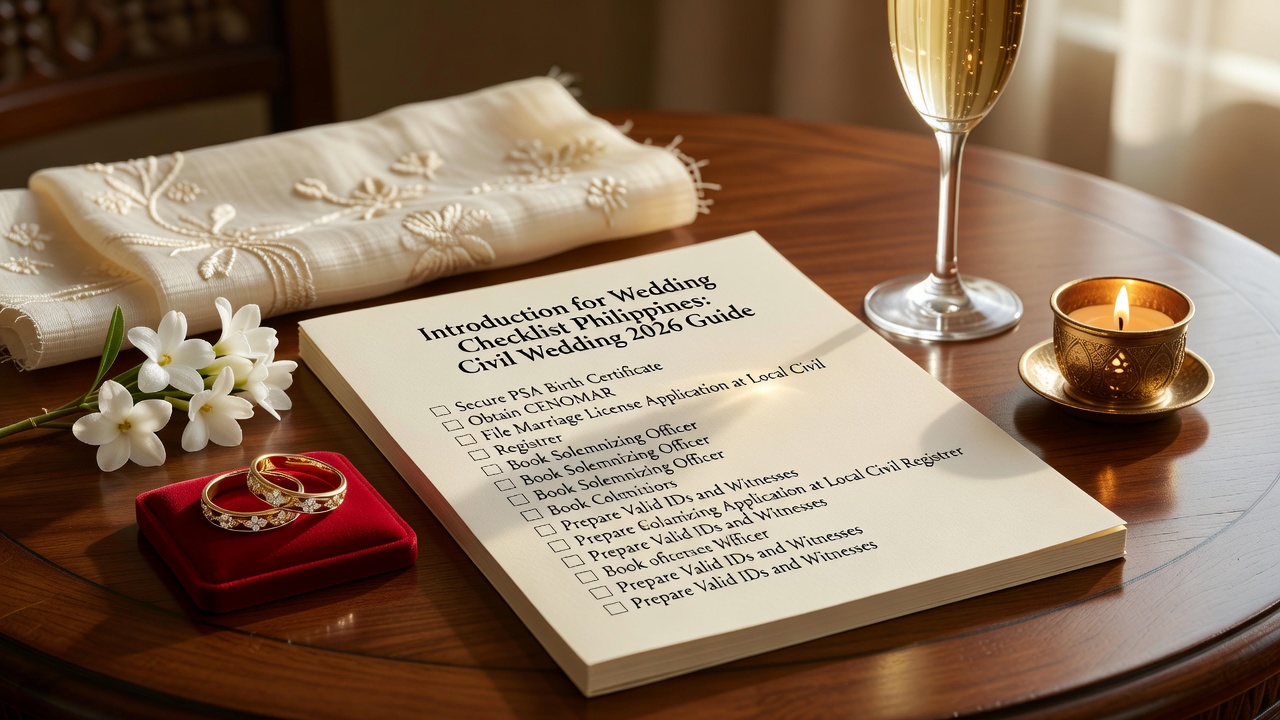
Introduction
Planning a civil wedding in the Philippines can feel overwhelming—especially when you’re trying to figure out exactly what documents you need, where to apply, who can officiate, what it costs, and how to keep everything smooth on ceremony day. This 2026 guide is your wedding checklist Philippines for a legal, stress-reduced civil marriage.
By the end, you’ll know the requirements, the application process, typical costs, witness rules, and what to expect before, during, and after your ceremony—plus practical ways to make a simple civil wedding feel personal (even with a modest budget).
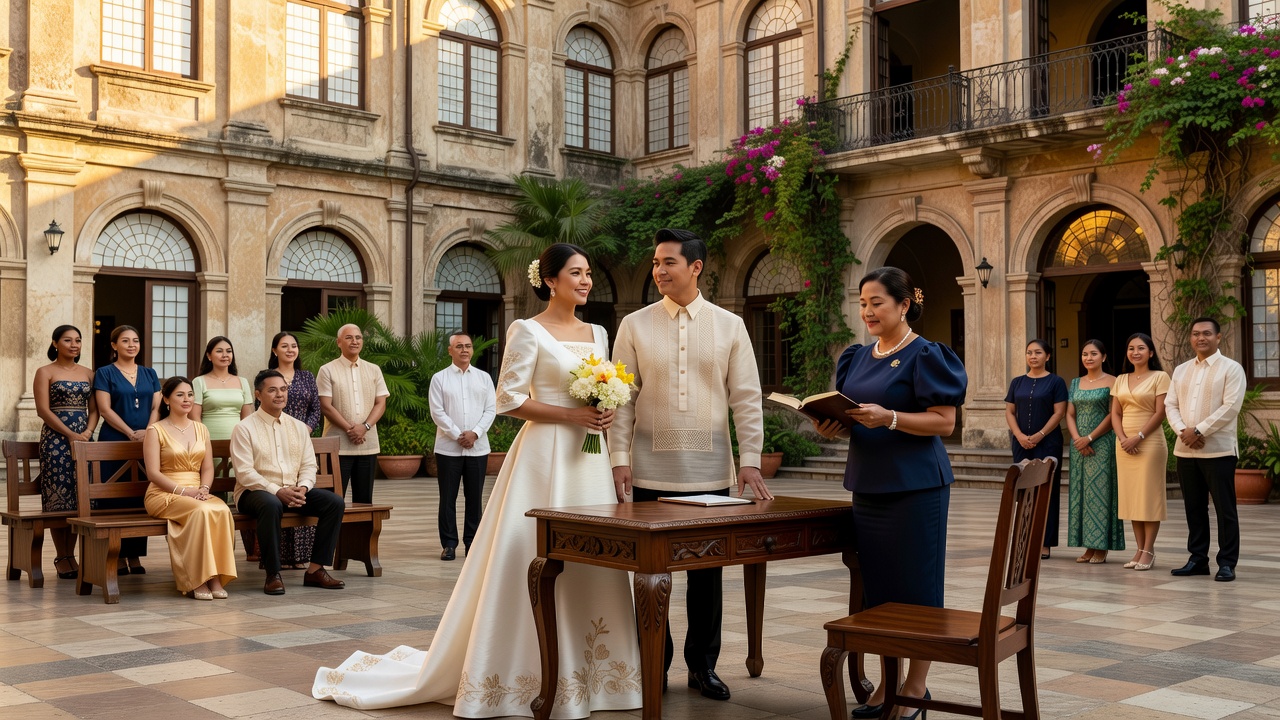
What is a civil wedding in the Philippines?
A civil wedding is a legally binding marriage solemnized by an authorized civil officiant (such as a judge or a mayor) and recorded in the civil registry through a signed marriage contract. Unlike a church wedding, the civil ceremony is about compliance with Philippine legal requirements, including the marriage license and witness participation.
Featured snippet: What do you need for a civil wedding?
In most cases, you’ll need:
- A marriage license issued by your Local Civil Registrar
- Valid IDs and PSA/NSO birth certificates
- CENOMAR (Certificate of No Marriage) if you are single
- Additional documents if widowed/divorced (e.g., death certificate or court/legal proof)
- Two witnesses of legal age
- An authorized officiant (judge or mayor)
What are the marriage license requirements for a civil wedding in the Philippines?
Quick Answer: Your marriage license application typically requires IDs, PSA birth certificates, and proof of legal capacity to marry—often a CENOMAR for single applicants. If you’re widowed or divorced, you usually submit documents showing the status of your previous marriage. Your local civil registrar may also ask for supporting forms and pre-marriage guidance requirements.
Requirements can vary slightly by city/municipality and by your specific situation (single, previously married, foreign citizenship, etc.). Use this as a practical checklist and confirm final details with your LCRO before you travel or pay fees.
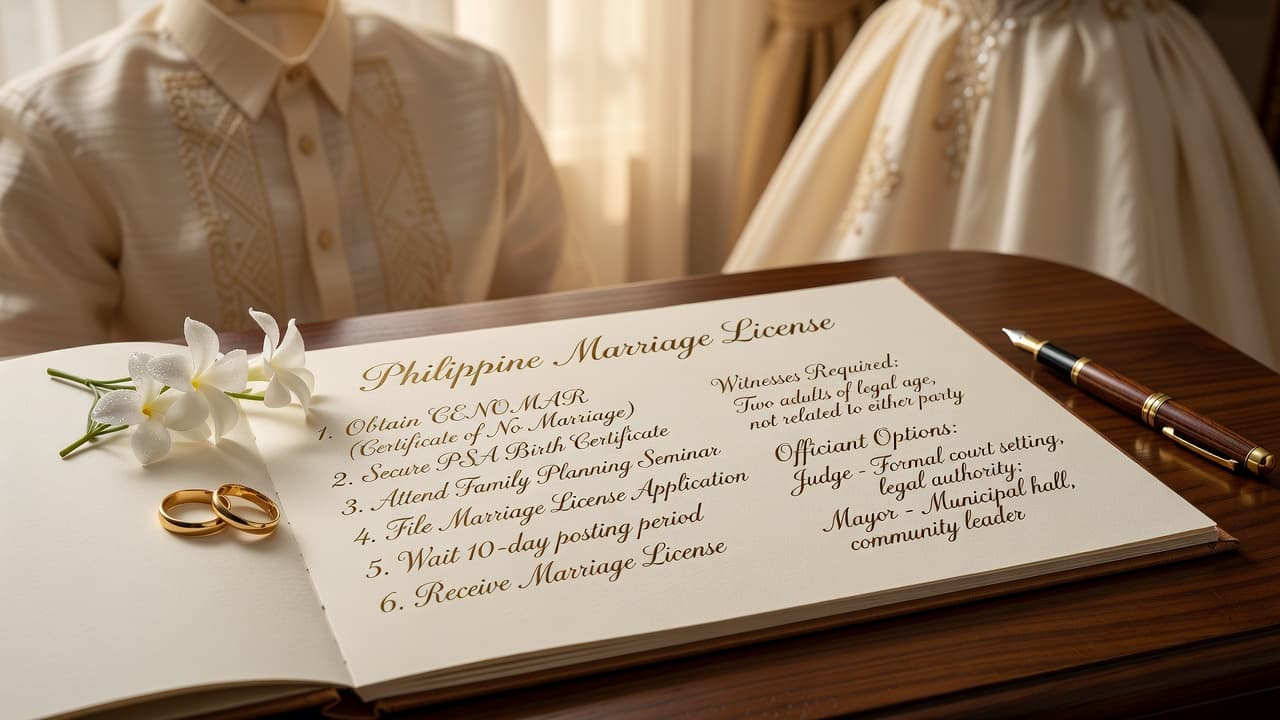
General document checklist (most couples)
- Application for Marriage License (form provided by your LCRO)
- PSA/NSO birth certificates of both applicants
- Valid government-issued IDs of both applicants
- Certificate of No Marriage (CENOMAR) (commonly requested for applicants who are single)
- Pre-marriage counseling / guidance and family planning seminar (often required and usually coordinated through the LGU/authorized provider)
- Community Tax Certificate (cedula) / local tax requirements (commonly requested by many LCROs; check your LGU)
If either applicant is widowed
- PSA death certificate of the deceased spouse
- Additional LCRO-requested documents (forms or certification of prior marriage details)
If either applicant is divorced (or had a prior marriage annulled/declared void)
- Court documents and/or PSA/recognition documents that support the legal status of the prior marriage
- Your LCRO may require copies and certification of key court issuances
Tip: If you’re not sure what applies to you, don’t guess—ask your LCRO for a written “requirements for your case” list. It’s faster than re-submitting.
What about foreigners or mixed citizenship?
Foreigners usually need a different set of requirements, such as a Certificate of Legal Capacity to Contract Marriage (issued by their country’s embassy/consulate or competent authority) and other documentary proof. Your LCRO will specify the exact list—so plan early.
Where do we apply for a marriage license and civil wedding documents?
Quick Answer: You typically apply for your marriage license at the Local Civil Registrar (LCR) of the city or municipality where either applicant resides. Many areas require appointments, document pre-checks, and payment of processing and related fees. After the license is issued, the civil ceremony is scheduled and recorded.
In practical terms, your location determines your process flow. Here’s a simple way to plan:
- Choose your LCRO office (based on residency rules your local registrar follows)
- Call or message the LCRO to confirm the current submission process (walk-in vs appointment)
- Prepare PSA documents and ensure spelling matches your IDs
- Bring both applicants (most offices require in-person presence for at least part of the process)
- Follow the seminar and publication timeline if required
Documents you’ll handle during the process often include the marriage license application forms, supporting certificates (CENOMAR, birth certificates, etc.), and any LCRO-issued receipts or schedules tied to your ceremony date.
Marriage license vs. civil ceremony: what’s the difference?
License (legal permission) vs ceremony (solemnization)
Your marriage license is the legal authorization issued by the LCRO after verifying you meet requirements. Your civil ceremony is when an authorized officiant solemnizes the marriage and both parties and witnesses sign the marriage contract.
It’s common for couples to plan the celebration before the license is finalized—avoid this by treating the marriage license as your “gate” for the ceremony date.
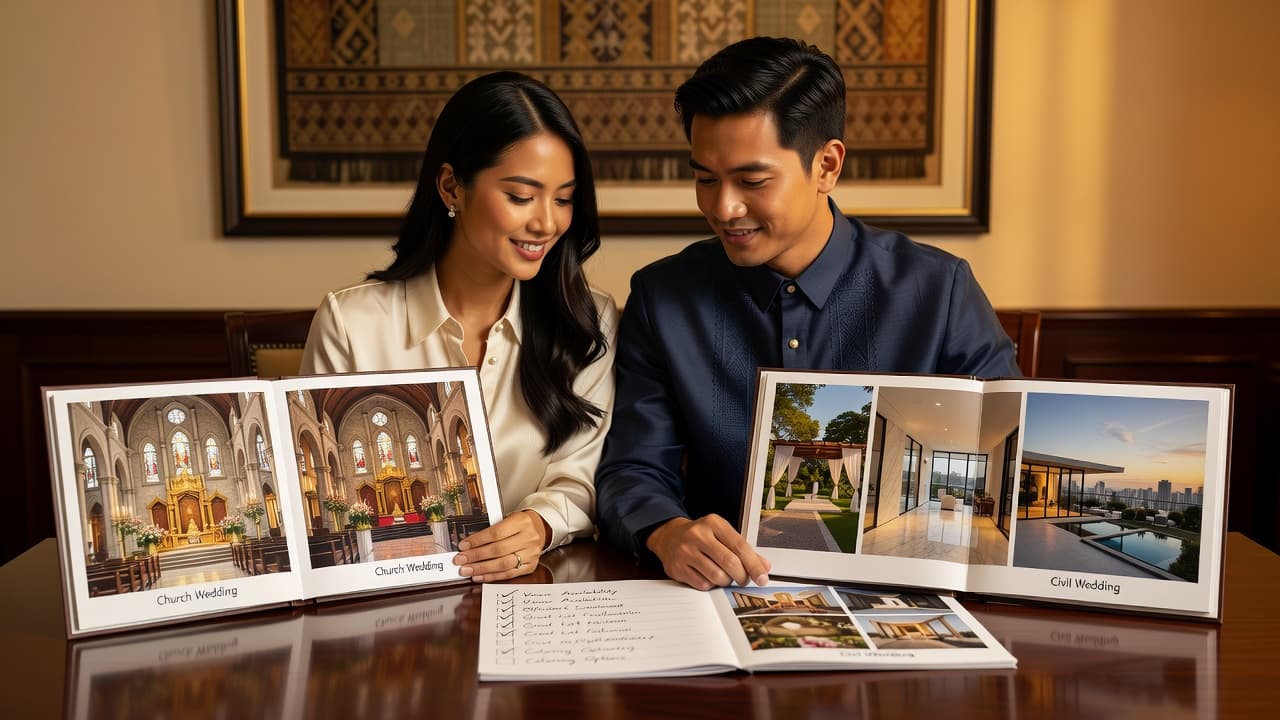
Who can officiate a civil wedding in the Philippines? (Judge vs. Mayor)
Quick Answer: Civil weddings in the Philippines can be solemnized by authorized officials, most commonly a judge or a mayor (within their authority). Your LCRO or officiant will provide guidance on scheduling and the needed paperwork for the marriage contract signing.
The “judge vs mayor” question is one of the biggest planning decisions because it affects availability, ceremony vibe, and timing.
Judge vs. Mayor officiant: at a glance
| Officiant | Typical role | Planning considerations |
|---|---|---|
| Mayor (LGU Chief Executive) | Authorized to solemnize civil marriages within their jurisdiction/authority | Availability may depend on LGU schedule and local protocols |
| Judge (trial courts) | Authorized to solemnize civil marriages | Scheduling depends on court calendars; may suit formal venues |
Practical advice: Choose based on availability and logistics first (date, venue access, expected flow). Then align your ceremony style—judge-led tends to feel more formal; mayor-led may feel more LGU-community oriented, but both can be dignified and personal.
How much does a civil wedding cost in the Philippines? (Fees & typical expenses)
Quick Answer: The marriage license costs vary by city/municipality and by requirements (e.g., CENOMAR processing, publication-related fees, and possible pre-marriage counseling costs). In addition to LCRO processing, couples should budget for PSA copies, document requests, and ceremony-day logistics.
Because fees change and differ by location, the most accurate approach is to confirm with your LCRO. Still, here’s a practical budget framework couples commonly use for a civil wedding:
Common cost buckets
- Marriage license processing fees (varies by LGU)
- CENOMAR and document fees (if applicable)
- Pre-marriage counseling / seminar costs (often coordinated through authorized providers or LGU programs)
- Publication and other LCRO-related charges (some areas include publication steps/fees)
- PSA copies after the marriage is registered (certified copies, if you need extra documents)
- Ceremony-day expenses: venue, basic decor, transport, and witnesses’ travel (if applicable)
Budgeting example (realistic range, not a quote)
Many couples find that the total “marriage paperwork + ceremony logistics” budget can range from mid to higher four figures up to several thousand pesos depending on location and document needs. The biggest swing factor is whether additional legal documents are required and what your city charges for processing and seminar/publication-related steps.
Best practice: Ask the LCRO for an itemized fee breakdown or a receipt sample so you can budget accurately.
What are the witness requirements for a civil wedding?
Quick Answer: Civil weddings require two (2) witnesses who are usually required to be of legal age. They will sign the marriage contract along with the couple and the officiant. Witnesses should bring valid IDs and match the information printed in your documents.
Witness checklist
- Number: two (2) witnesses is the standard expectation
- Legal age: ensure they are legally eligible as required by the LCRO
- IDs: bring IDs to avoid last-minute corrections
- Consistency: names and details must match the marriage contract and forms
Tip: Choose witnesses who can attend the entire process on the ceremony day, not just show up for a quick signature.
Timeline: what to expect before, during, and after your civil ceremony
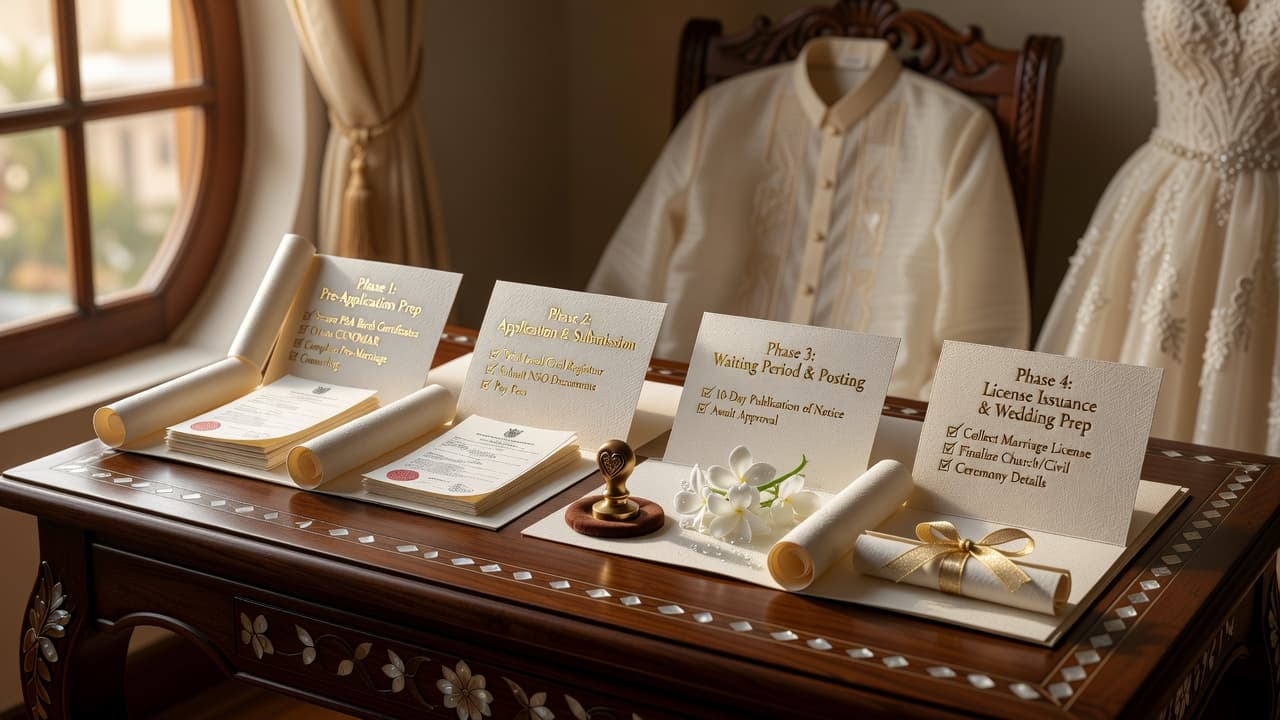
Before the civil ceremony (weeks leading up)
Once you start the process, treat your timeline like a sequence of checkpoints:
- Document preparation: request PSA documents and prepare IDs
- LCRO application: submit requirements, pay initial fees, and follow office instructions
- Pre-marriage seminar/counseling: complete any required guidance
- Publication and clearance steps (if required by your LCRO): follow the schedule
- License issuance: confirm the date your license becomes valid and the validity window
Featured snippet: Wedding checklist Philippines (before ceremony)
- PSA birth certificates (both)
- CENOMAR (if applicable)
- Valid IDs
- Seminar/counseling completion (if required)
- Witnesses selected and ready
- Officiant confirmed (judge or mayor)
During the civil ceremony (what happens on-site)
On ceremony day, expect a straightforward legal flow:
- The officiant verifies identities and ensures the marriage contract paperwork is ready
- You and your partner answer or follow the officiant’s legal questions/sequence
- Both parties sign the marriage contract
- Witnesses sign
- The officiant signs
- The officiant may issue any required acknowledgements per local procedures
Practical advice: Arrive early, review spelling in the contract, and keep a small “ceremony kit” (IDs and copies of key documents).
After the civil ceremony (registration and next steps)
After your signatures, the marriage must be properly recorded. Common next steps include:
- Ensuring the marriage contract is filed through the proper channels (your officiant/LCRO flow will guide this)
- Requesting PSA-certified copies once available, if you need them for name changes, records, or future legal processes
- Checking details if you plan to update records (banks, IDs, etc.)
Important: Your exact post-ceremony steps depend on your LCRO’s process and the officiant’s filing flow.
How to make a simple civil wedding feel special and personal
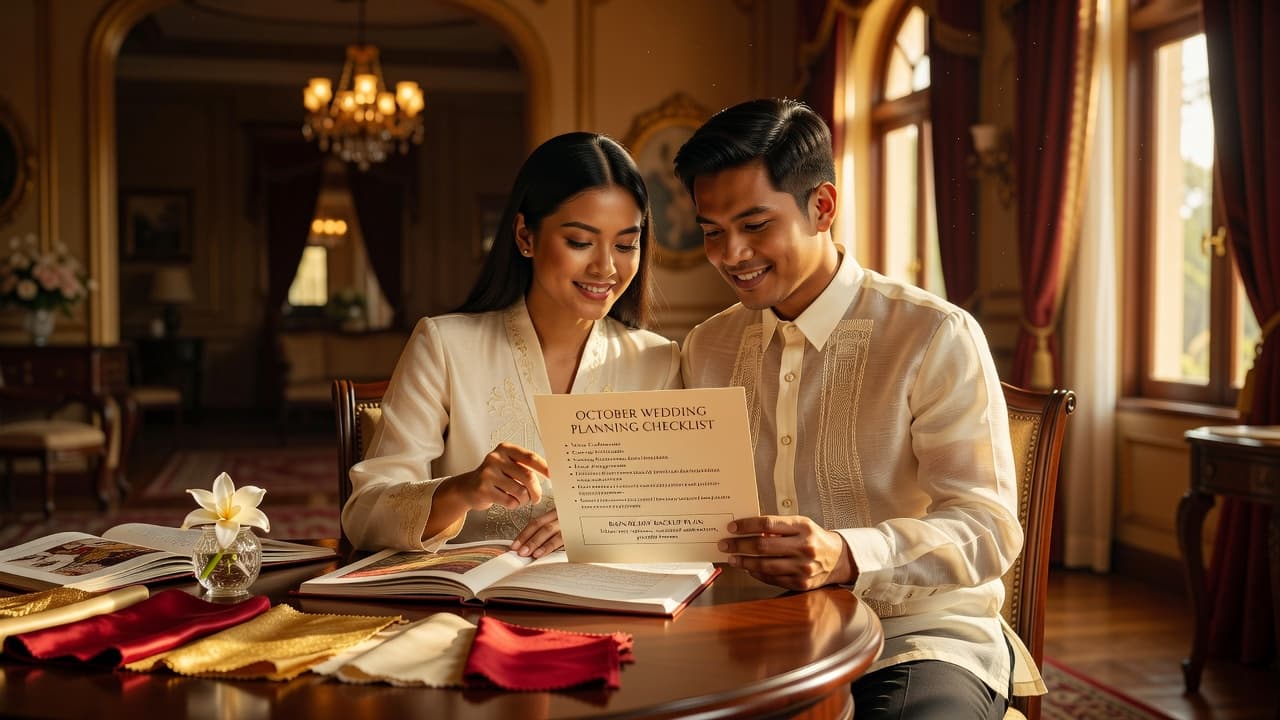
Here’s the good news: civil weddings can be meaningful without being complicated. The ceremony is about legality, but you can absolutely personalize the experience—within the officiant’s allowed format and local protocols.
5 personal touches that work for civil ceremonies
- Write a short, personal “why” statement (separate from the legal vows, if needed). Share it right after the legal portion—often it can be done as a reading or reflection.
- Create a small ceremony program (1-page). Include your story, the order of events, and a thank-you note for witnesses.
- Choose one meaningful element: a favorite song played softly before you sign, a unity candle (only if allowed/feasible), or a simple flower exchange.
- Use a themed but minimal decor palette (colors + one focal point). Civil ceremonies don’t need elaborate setups—coherence beats quantity.
- Plan a “witness moment”: thank your witnesses with a short card or photo prompt. It makes the ceremony feel intentional.
Keep it respectful (and easy)
Ask your officiant or LCRO about any formatting limits. For example, if you want readings, confirm whether the officiant allows extra segments before or after the legal part. This prevents last-minute adjustments.
Common mistakes to avoid (so your civil wedding doesn’t get delayed)
Civil marriage is usually smooth, but delays happen when couples submit incomplete documents or assume timelines. Avoid these frequent problems:
- Using unverified documents: Always use PSA copies and ensure names match your IDs.
- Assuming “single” documents apply to everyone: If you’re widowed/divorced, you need the right legal proofs.
- Forgetting witness requirements: Pick witnesses early and confirm they can attend.
- Planning the ceremony date before license issuance: Treat the license timeline as your anchor.
- Not budgeting for document fees: CENOMAR and other supporting documents add up—plan a buffer.
Alternatives and options couples consider
If you want fewer steps, more flexibility, or a different feel, couples sometimes explore options like:
- Scheduling based on officiant availability: Many couples choose the date after confirming whether a judge or mayor can accommodate.
- Small guest list + focused experience: Instead of a big event, do a mini reception later the same day or a simple dinner after.
- Professional guidance for complex cases: If documents are complicated (e.g., prior marriage status), consider legal assistance or ask the LCRO to clarify the exact requirement list.
Professional help note: For typical cases, LCRO guidance is usually sufficient. For legally complex situations, getting proper legal advice can prevent repeated document submissions.
Key Takeaways
- Use this as your wedding checklist Philippines for a legal civil wedding: license first, then ceremony.
- Marriage license requirements commonly include PSA birth certificates, IDs, and CENOMAR for single applicants (plus extra documents for widowed/divorced cases).
- Apply at your Local Civil Registrar where either applicant resides, and confirm appointment/process updates.
- A judge or mayor can officiate a civil wedding; choose based on availability and logistics.
- Budget for variable LCRO and document fees, plus witness-related and ceremony logistics.
- Two legal-age witnesses are typically required and must sign the marriage contract.
- You can make a simple ceremony feel special with meaningful personalization—without violating legal steps or LCRO/officiant rules.
Frequently Asked Questions
1) What is the fastest way to get a marriage license for a civil wedding?
Speed usually comes from preparation. Request PSA birth certificates early, confirm whether you need CENOMAR, complete any required seminar/counseling, and submit a complete application with correct spellings. Then follow your LCRO’s publication/processing schedule. Avoid reserving your ceremony date before the license is issued.
2) Can a judge and a mayor both officiate, and what should we choose?
Yes—both judges and mayors can be authorized civil officiants, depending on jurisdiction and schedule. Choose based on availability, ceremony flow, and venue logistics. If you want a more formal tone, a judge may align well; if you prefer an LGU-style flow, a mayor may fit. In both cases, plan early.
3) Are CENOMAR requirements the same for everyone?
CENOMAR is commonly needed for applicants who are single, but requirements differ for widowed, divorced, or annulled cases. Your LCRO may require additional court or PSA documents. The safest approach is to ask the LCRO for the exact “requirements for your case” list rather than relying on generalized checklists.
4) What documents do witnesses need for a civil wedding?
Witnesses typically need to be of legal age and bring valid IDs (and any additional information your LCRO requires). They sign the marriage contract. To avoid delays, confirm witness availability early and ensure names match the contract details. If corrections are needed, resolve them before the ceremony signing.
5) How many witnesses are required for a civil marriage?
Most civil wedding processes require two witnesses who meet the legal age requirement and can sign the marriage contract. Some LGUs may have additional procedural expectations. Always confirm with your LCRO so your witnesses match the exact format and requirements for your city or municipality.
6) Do civil weddings need a specific ceremony script or vows?
Civil ceremonies focus on the legal solemnization and signing process, so the officiant typically leads the required sequence. Couples can personalize other parts—like readings, a short message, or meaningful music—if permitted by the officiant and LCRO. Keep extra elements minimal and respectful to avoid last-minute disruption.
7) How much should we budget for a civil wedding in 2026?
Fees vary by city/municipality and your document needs. Budget for the marriage license processing fees, possible publication-related charges, and document requests like CENOMAR and PSA copies. Add a realistic buffer for seminar/public guidance steps and ceremony logistics (venue, transport, and basic decor). Confirm itemized fees with your LCRO.
8) What happens after the civil ceremony—do we still need PSA registration?
After the ceremony and signing, the marriage must be properly filed/recorded through the correct civil registry process. Later, you can request PSA-certified copies of your marriage certificate if you need them for official transactions (name updates, records, or documentation). Ask your LCRO about expected timelines for PSAs copies.
Conclusion
A civil wedding in the Philippines doesn’t have to feel “just legal.” With the right wedding checklist Philippines—documents, LCRO application steps, correct witness setup, and a confirmed officiant—you can plan with confidence and reduce delays. Then, add a few personal touches to make the day feel unmistakably yours.
CTA: If you want, share your city/municipality and whether you’re both single or have prior marriage history. I can help you turn this guide into a simple, personalized pre-ceremony to-do list you can follow step-by-step.