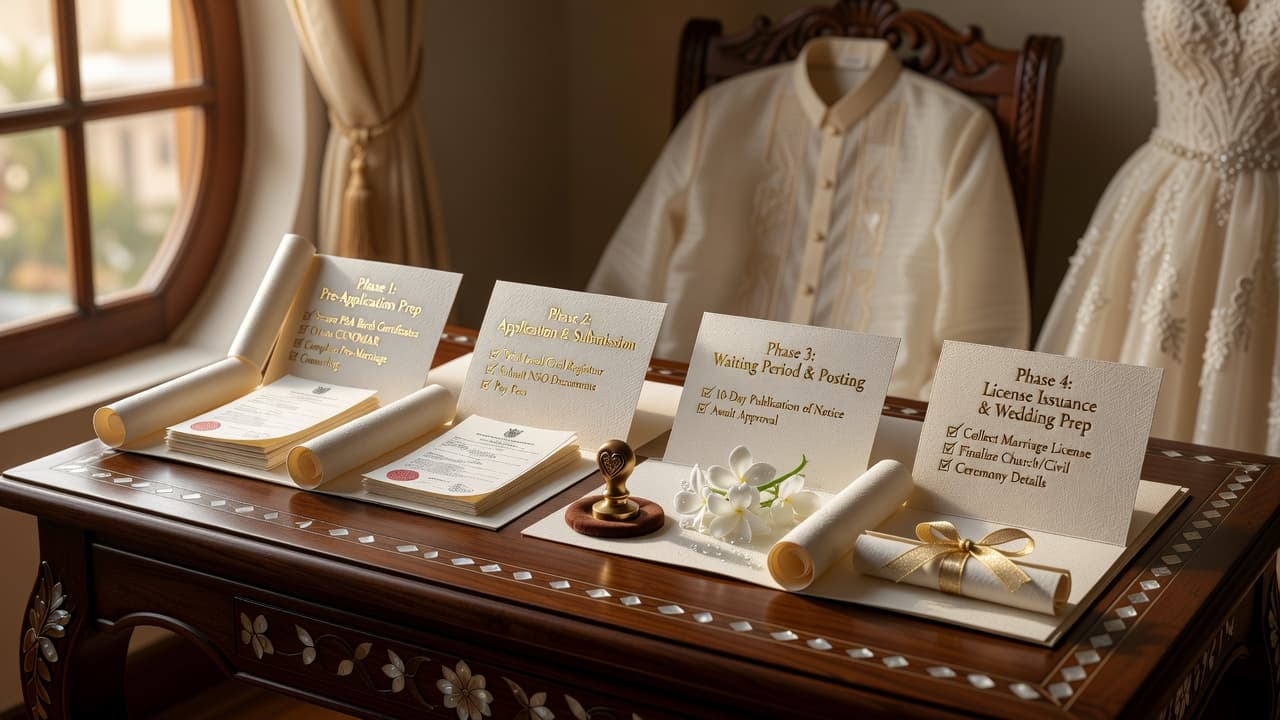
Wedding Planning Checklist for Filipina Couples (October)
By WedPlanner Team

Planning a Philippines wedding in October? This day-by-day checklist helps Filipina couples book the right venue and suppliers first, then build a rainy-season backup plan so your big day stays beautiful—no matter the weather.
Philippines wedding planning checklist October: Day-by-Day for Filipina Couples
Quick Answer: Start with your venue first, then lock key suppliers (photo/video, styling, catering, HMUA, transport, and a coordinator). For October, build a rain-ready plan: covered ceremony space, contingency indoor setup, guest arrival routes, and a backup schedule. Follow the 30-day checklist below to book in the right order—fast.
Introduction
If you’re planning a wedding in the Philippines during October, you’re planning for an extra variable: rain. Storms can mean slippery roads, power or internet issues, last-minute venue changes, and guests arriving late. The good news? You can reduce most risk by booking in the correct order and designing a rainy-season backup plan early—before you spend on details that can’t survive a sudden weather shift.
This Philippines wedding planning checklist October is tailored for Filipina couples: it balances tradition (church or solemnization, entourage flow, family coordination) with practical realities (typhoon season, venue logistics, and contingency planning). Use it day by day to know exactly what to book first—venue, suppliers, and your backup plan.
What makes October weddings in the Philippines different?
October falls inside the country’s rainy/typhoon season window, which typically increases the chances of heavy downpours, thunderstorms, and unsafe travel conditions. Even if the forecast looks “okay,” you’ll want plans that protect:
- Guest comfort (dry arrival, accessible restrooms, waiting areas)
- Photo/video quality (rain cover + lighting + backup shot list)
- Flow of the program (ceremony timeline, move-from-ceremony-to-reception plan)
- Setup reliability (power, sound checks, flooring for covered outdoor areas)
Definition (simple): A backup plan is a pre-approved alternative setup and schedule you can switch to quickly if weather conditions worsen—without renegotiating with everyone at the last minute.
Key October weather risks you should plan for
- Rain during outdoor parts (ceremony, cocktail hour, garden photos)
- Flooded or muddy paths (especially venues with ground-based pathways)
- Travel delays (typhoon warnings can affect roads and schedules)
- Humidity and makeup wear (foundation oxidation, hair frizz, sweat transfer)
- Power/sound instability (venues may switch generators; sound engineers must confirm settings)
What should you book first (and why)?
If you only remember one principle: book the venue first, then suppliers that lock the timeline and indoor/outdoor setup. October planning is about reducing the number of “moving parts” that depend on weather.
Recommended booking order:
- Venue + ceremony location (and confirm the indoor rain alternative)
- Wedding coordinator (or “project manager”) (someone must own the contingency switch)
- Photo/video team (they need the backup shot plan and lighting strategy)
- Catering + bar package (they manage service flow and hot food readiness)
- HMUA (hair & makeup) + styling (humidity-proof plan)
- Transport + guest arrival logistics (routes, pickup points, timing buffers)
- Decor/florals + styling team (materials and placement safety)
- Sound/lighting + program flow (checks, microphones, backup power plan)
- Religious requirements & permits (church/solemnization schedule, documents)
Featured-snippet friendly: October “Book-First” checklist
- Venue: covered ceremony + indoor reception fallback
- Coordinator: one person responsible for weather switching
- Photo/video: indoor rainy shot list + backup location markers
- Catering: service plan for indoor move (and food timing)
- HMUA: humidity-ready product plan and touch-up kit
- Transport: arrival buffer + contingency route
The day-by-day Philippines wedding planning checklist October
Use this 30-day checklist as a practical planning run. If your wedding date is farther away, scale the same order (venue → coordinator → photo/video → catering → HMUA → transport → decor → program/logistics → legal steps). For October, prioritize weather-readiness early—especially during the first week.
Quick tip: Save one Google Sheet (or spreadsheet) called October Wedding Risk Register with columns: Risk, Trigger, Owner, Backup Option, Decision Date, Notes. Your coordinator can own it.
Day 1: Lock your target date + pick your “rain-safe” venue criteria
- Write your ideal wedding date and backup ceremony day/time window (even if you don’t change it, the thinking reduces panic).
- Create a venue checklist: covered areas, indoor backup room, flooring quality, power backup, and staff responsiveness.
Day 2: Venue shortlisting (2–4 options max)
- Shortlist venues that have both ceremony and reception spaces with real shelter.
- Ask specifically: “If it rains hard for 60 minutes, what happens to ceremony seating and aisle?”
Day 3: Book the venue (and get the rain alternative in writing)
- Confirm the indoor setup plan (layout, staging position, capacity, and whether it requires extra fees).
- Request written confirmation of how they handle rain: flooring/matting, umbrella policy, and staff coverage.
Day 4: Choose your coordinator (or assign a “decision owner”)
- If you’re hiring a full coordinator, check they handle contingency switching—not just “day-of coordination.”
- If you’re doing DIY, name one family member as the weather decision owner (and make them responsible for calling the switch).
Day 5: Book photo/video with a rainy-season plan
- Ask what they shoot when it rains: indoor portraits, covered area coverage, and lighting approach.
- Request a backup shot list (ceremony aisle shots, couple portraits, family photos) that works indoors.
Day 6: Confirm ceremony requirements (church/solemnization schedule)
- Coordinate with your church/minister for your ceremony time, rehearsal day, and rain-handling rules (some churches have strict hallway seating and restrictions).
- Prepare your document timeline (marriage license and any church-required documents) and decide who follows up.
Day 7: Catering + service flow (indoor move planning)
- Choose catering packages that can maintain hot food timing if the reception shifts indoors.
- Ask: “If we move cocktail hour from outdoors to indoors, can you adjust staffing and food staging?”
Day 8: HMUA selection—humidity proofing
- Ask for product recommendations for rainy weather and long wear (setting spray, long-wear foundation, anti-frizz plan).
- Confirm whether they provide touch-up kits or include touch-up time.
Day 9: Transport planning (guest arrival is where rain hurts most)
- Design your guest arrival strategy: pickup points, drop-off zones, and padding time.
- Pick the “rain buffer”: add 15–30 minutes to guest arrival timing and build a plan for guests who arrive late.
Day 10: Sound/lighting + power check
- Confirm where speakers and microphones will be placed in indoor vs covered setups.
- Ask the venue and team how they handle generator switching, cable safety, and sound checks during rain.
Day 11: Decor/florals—rain-safe materials
- Discuss materials: fabric, foam, flower placement, and whether centerpieces can handle humidity.
- Confirm how you’ll protect key photo areas (backdrop, aisle runner alternatives, signage).
Day 12: Program flow map (create 2 versions)
- Create Program A (clear weather) and Program B (rainy switch).
- Define who announces the switch and the exact transition timing (e.g., ceremony ends → 10-minute move window → reception starts).
Day 13: Build your contingency “switch call” rules
- Decide trigger points: “If it rains continuously for 30 minutes” or “If PAGASA issues a stronger warning” (you can also track live updates the day before).
- Assign decision responsibilities to your coordinator and backup decision owner.
Day 14: Legal and logistics mini-audit
- Double-check: rehearsal schedule, transport confirmations, key vendor contact list, and emergency numbers.
- Prepare a quick vendor briefing sheet: venue address, rain setup rules, parking/loading instructions, and call times.
Day 15: Confirm major vendor contracts and addendum clauses
- Ask vendors if they can adjust for rain-related schedule changes without major fees.
- Ensure you have clear arrival times, meeting points, and who decides last-minute changes.
Day 16: Plan your rainy-day couple portrait strategy
- Choose 10–15 photos that can be taken under cover (courtyard with roof, hotel lobby, indoor studio corner, hallway backdrops).
- Prepare a “weather styling kit”: garment steamer (or plan), lint roller, spare pins, small umbrella set.
Day 17: Guest communication draft (save-the-date + day-of instructions)
- Create a simple message template for: arrival time buffer, dress comfort, and what guests should do if it rains.
- Coordinate who sends the updates (you/your coordinator) and where updates appear.
Day 18: Menu tasting (with rainy-day assumptions)
- Taste the menu with the indoor timeline in mind—does plating change if moving indoors is delayed?
- Confirm the beverage service plan and whether bars shift locations.
Day 19: Contingency staffing for rain (venue + vendors)
- Ask the venue and key vendors: “If rain delays setup, what staff do you deploy and what time window do you guarantee?”
- Make sure your coordinator has a “reschedule script” for vendors.
Day 20: Wedding dress & attire protection plan
- Confirm garment protection: dust covers, rain ponchos, and quick-change space.
- Plan shoe strategy for slippery conditions (spares or coverings for ceremonies in wet areas).
Day 21: Rehearsal and arrival rehearsals
- Rehearse the aisle and movements for both Program A and Program B.
- If possible, test where ring bearer/ushers go during the transition.
Day 22: Touch-up and emergency kit shopping
- Build your kit: blotting papers, mini deodorant, stain remover pen, safety pins, needle/thread, spare lipstick, power bank, tissue packs.
- Add vendor copies: a printed contact sheet and your Program A/B timeline.
Day 23: Confirm suppliers for guest comfort (umbrellas, fans, heaters if needed)
- If your venue allows, consider guest comfort extras (umbrellas, folding fans, wet wipes, or designated waiting areas).
- Ask if the venue provides any comfort amenities during heavy rain.
Day 24: Finalize seating plan with rain realities
- Keep high-risk seating near sheltered areas.
- Plan for late arrivals: a “late guests” seating buffer and quick usher instructions.
Day 25: Backdrop, signage, and printed items backup
- Protect printed items from humidity: laminate signage or choose moisture-resistant materials.
- Confirm if any signage must be moved indoors if rain intensifies.
Day 26: Vendor call times + on-site workflow
- Create a single “On-site workflow” page: load-in time, setup areas, photo/video meeting points, and sound check windows.
- Share it with all vendors and your coordinator.
Day 27: Final weather plan (day-before + day-of steps)
- Decide your day-before weather check routine (time and owner).
- Confirm what you’ll do if “Program B” triggers (who calls, what changes immediately).
Day 28: Budget sanity check (October contingency costs)
- Allocate a small buffer fund for rain-related needs: extra flooring, replacement signage, garment protection supplies, or schedule timing adjustments.
- Don’t assume you’ll stay dry—assume you’ll need minor fixes.
Day 29: Create the day-of FAQ script for your coordinator
- Examples: “Where do guests wait if it rains?”, “When do we switch programs?”, “Who handles late arrivals?”
- Make sure ushers and entourage have clear instructions.
Day 30: Relax—then prepare a calm final briefing
- Confirm arrival times and vendor meeting points one last time.
- Do a final check on essentials: rings, documents, outfits, jewelry, emergency kit, and phone chargers.
- Keep your mindset: rainy photos often become your best stories—if the plan is solid.
Backup plan templates for October (copy/paste ideas)
Below are practical backup templates couples often use in the Philippines during rainy-season weddings.
Backup Template A: Ceremony switch (outdoor → covered/indoor)
- Trigger: continuous rain for 30–60 minutes or unsafe travel conditions.
- Action: move seating to covered area; reduce aisle time; shorten ceremony pacing if needed.
- Owner: coordinator + venue manager.
- Proof: pre-confirmed indoor layout with vendor staging positions.
Backup Template B: Photo/video coverage plan
- Trigger: heavy rain forecast or active storms during portrait time.
- Action: shift to indoor portraits + covered backdrop portraits; use rain-friendly lens/lighting approach.
- Owner: photo/video lead.
- Proof: shot list pre-made and location marks labeled on your venue floor plan.
Backup Template C: Guest arrival buffer and communication
- Trigger: late arrivals likely due to weather or road conditions.
- Action: keep reception start time flexible within a defined window; designate ushers for “late guest seating.”
- Owner: coordinator.
- Proof: pre-drafted guest instructions message and vendor contact sheet.
Common mistakes Filipina couples make in October planning
- Booking a venue based on photos only (without a written indoor rain alternative). October requires clarity on covered spaces, flooring, and indoor transitions.
- Skipping a coordinator—or leaving decision-making unclear. Rain turns small problems into rapid decisions.
- Underestimating humidity on HMUA. Even the best makeup can melt if touch-up time and product selection aren’t planned.
- Not planning a Program B timeline. If the switch isn’t rehearsed, it creates confusion and delays.
- Relying on outdoor portraits as “must-do” photos. Always have an indoor list and a fallback background setup.
- Forgetting guest comfort. Wet guests feel stressed, and it shows during ceremonies and photos.
Costs & budgeting: where October may affect your spending
Weddings in the Philippines can vary widely by city (Metro Manila, Cebu, Davao, Iloilo, and more), venue capacity, and guest count. Instead of guessing one total price, budget by categories and include a rainy-season contingency.
Practical budget categories (with October contingency)
- Venue + ceremony setup: base cost + potential indoor move or flooring fees
- Coordination: usually the “risk reducer” that prevents expensive last-minute errors
- Photo/video: sometimes requires extra indoor shot coverage and extra time buffers
- Catering: staffing and service adjustments if timeline shifts
- HMUA: products and touch-up time; ensure humidity-proofing is included
- Decor/florals: rain-safe materials and potential protective measures
- Transportation: buffers and possible rerouting
- Contingency fund: for minor replacements and adjustments caused by rain
Recommendation: Keep a small “rain buffer” even if you’re confident in the forecast. The goal isn’t overspending—it’s protecting your day from emergencies.
Where to find help (and when to hire pros)
October planning can be DIY-friendly, but you’ll benefit from professional help when decisions affect your timeline and safety.
Hire a pro if you need:
- Clear contingency switching (venue layout + vendor scheduling)
- Humidity-proof HMUA and styling
- Sound/lighting reliability during rain or indoor transitions
- Program A/B rehearsal for ceremony and reception flow
If your budget is tight, prioritize the coordinator and the photo/video team—because they help ensure the day still looks intentional, even if the weather changes.
Internal & external resources to bookmark
Internal link opportunities
- [Internal link: Philippines wedding budget guide for Filipina couples]
- [Internal link: How to choose a wedding coordinator in the Philippines]
- [Internal link: Wedding timeline template (Program A/B) for rainy season]
Authoritative external-source opportunities
- [External link: PAGASA official updates for weather and warnings]
- [External link: DOST or official government guidance on typhoon preparedness]
- [External link: Wedding vendor association or event-safety guidance in your region]
Key Takeaways
- Lock your venue first and require a written indoor rain alternative.
- Book in this order: venue → coordinator → photo/video → catering → HMUA → transport → decor → program flow.
- Build Program A and Program B so October rain doesn’t derail your timeline.
- Plan for guest arrival with buffer time and clear day-of instructions.
- Humidity-proof your look with product planning and touch-up time.
- Create a rainy-season switch call rule with clear ownership and triggers.
Frequently Asked Questions
How far in advance should we start planning an October wedding?
Most couples start with venue and major suppliers as early as possible—often several months out—because availability changes quickly. The checklist above works as a 30-day sprint, but the booking order (venue → coordinator → photo/video → catering → HMUA) is the most important part to follow.
Is it safe to plan an outdoor ceremony for an October wedding in the Philippines?
Outdoor ceremonies can be beautiful, but you should only do them when the venue offers real coverage and a clear indoor backup plan. Ask about flooring, seating shelters, sound placement, and whether the ceremony can move quickly if rain becomes heavy.
What should we prioritize for backup if the forecast worsens?
Prioritize the switch that affects everyone first: ceremony coverage, guest arrival routes, and the reception start timing. Then confirm photo/video backup locations and HMUA touch-up needs. The coordinator should own the decision and communicate it fast.
How do we protect makeup and hair during rainy weather?
Work with your HMUA to use humidity-resistant products, finishing spray, and an organized touch-up plan. Consider blotting and spare items in a kit. Avoid last-minute hairstyle changes—practice or test a rain-friendly style during pre-wedding prep.
What questions should we ask our venue for October planning?
Ask for: indoor fallback layout, how they handle heavy rain (flooring/matting, umbrella policy), power or generator plans, loading/parking access during rain, and staff roles during setup delays. Get key answers in writing for clarity.
Do we need separate photos for rainy weather?
You don’t need “separate” photos, but you should have a backup shot list that works under cover. Plan a mix of indoor portraits and covered-area shots, and coordinate with your photographer on lens/lighting approach so the results still feel intentional.
How should we communicate rain updates to guests?
Use one channel with a clear message: arrival buffer, what to expect, and where to check updates. Assign one person (usually the coordinator) to send updates consistently. Keep messages simple and time-stamped to avoid confusion.
Can we adjust our wedding timeline if it rains?
Yes—if you pre-plan Program B. Shorten transition windows, protect hot-food timing, and ensure sound checks are clear. Flexibility is possible, but only when your vendors know the alternative plan in advance.
What are the most common October wedding expenses couples forget?
Couples often forget small rain-impact items: extra flooring/matting, protective signage materials, garment protection supplies, and time buffers for vendors if setup is delayed. Keep a contingency fund so you can solve minor issues without panic.
Conclusion
October weddings in the Philippines don’t have to feel risky. When you use a Philippines wedding planning checklist October approach—venue first, key suppliers next, and a written rainy-season backup plan—you protect your timeline, comfort, and memories.
Next step: If you want, share your guest count, target city (e.g., Metro Manila, Cebu, Davao), and whether you’re doing church ceremony or a civil/solemnization venue. I’ll help you refine the checklist into a realistic vendor booking order and a simple Program A/B timeline.