Civil Wedding Philippines: Requirements, Costs & Guide
By WedPlanner Team

Learn everything about planning a civil wedding in the Philippines — from marriage license requirements and fees to choosing between a judge or mayor officiant, plus tips to make your ceremony special.
Civil Wedding in the Philippines: Complete Requirements and Costs Guide
Quick Answer: A civil wedding in the Philippines requires a valid marriage license, two witnesses of legal age, and an officiant (judge or mayor). Costs typically range from ₱3,500 to ₱12,000 total, including the marriage license (₱150–₱300), ceremony fee (₱300–₱5,000+), and other expenses. The process takes 10 days minimum from application due to the mandatory posting period.
Introduction
Planning a wedding shouldn't feel like navigating a maze of paperwork and confusing fees. Yet for many Filipino couples, the civil wedding process feels exactly that way — buried under legal jargon, unclear requirements, and scattered information.
This guide cuts through the noise. Whether you're eloping, keeping things simple, or just want to understand your legal options before a church wedding later, here's everything you need to know about getting married civilly in the Philippines — from the marriage license application to the final "I do."
What Is a Civil Wedding in the Philippines?
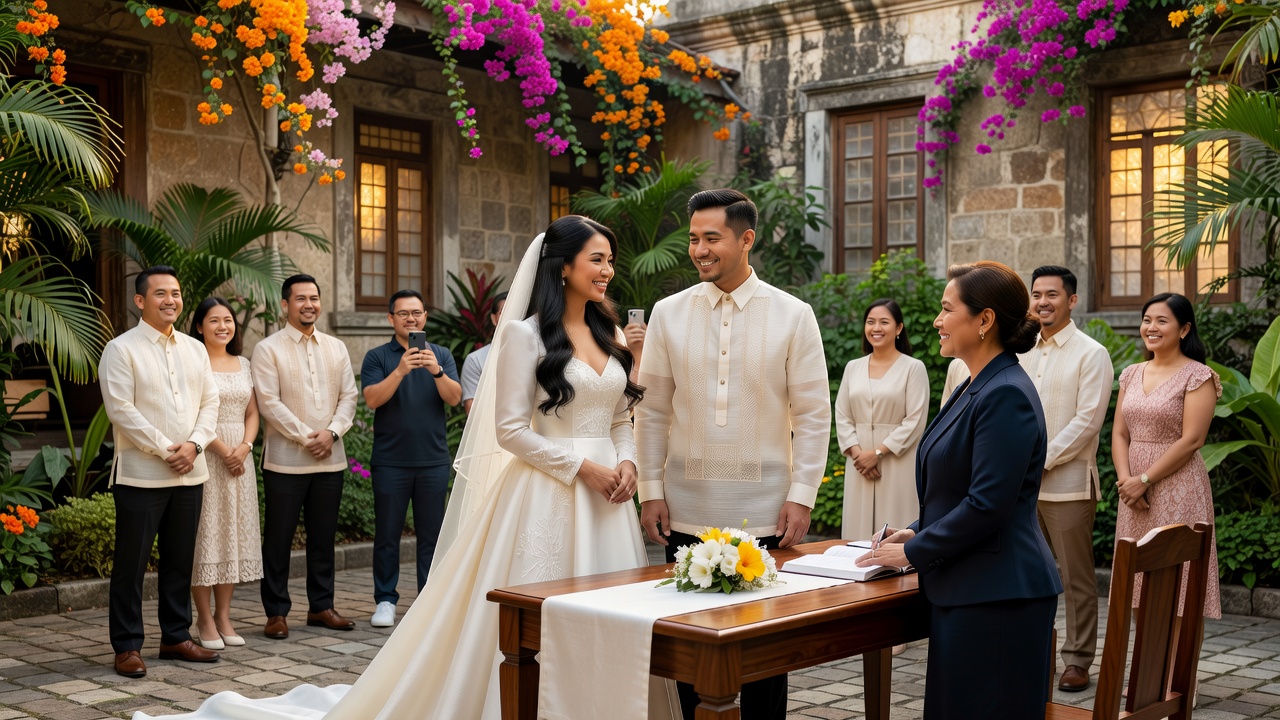
A civil wedding is a legally recognized marriage ceremony conducted by an authorized government official rather than a religious minister. In the Philippines, it's governed by the Family Code of the Philippines (Executive Order No. 209) and is just as valid as a church wedding.
Many couples choose a civil wedding because it's:
- Budget-friendly — significantly cheaper than traditional church weddings
- Faster — no church scheduling backlogs or lengthy seminars
- Flexible — can be held in various locations (offices, gardens, venues)
- Legally sufficient — valid for all legal purposes including visa applications, property rights, and inheritance
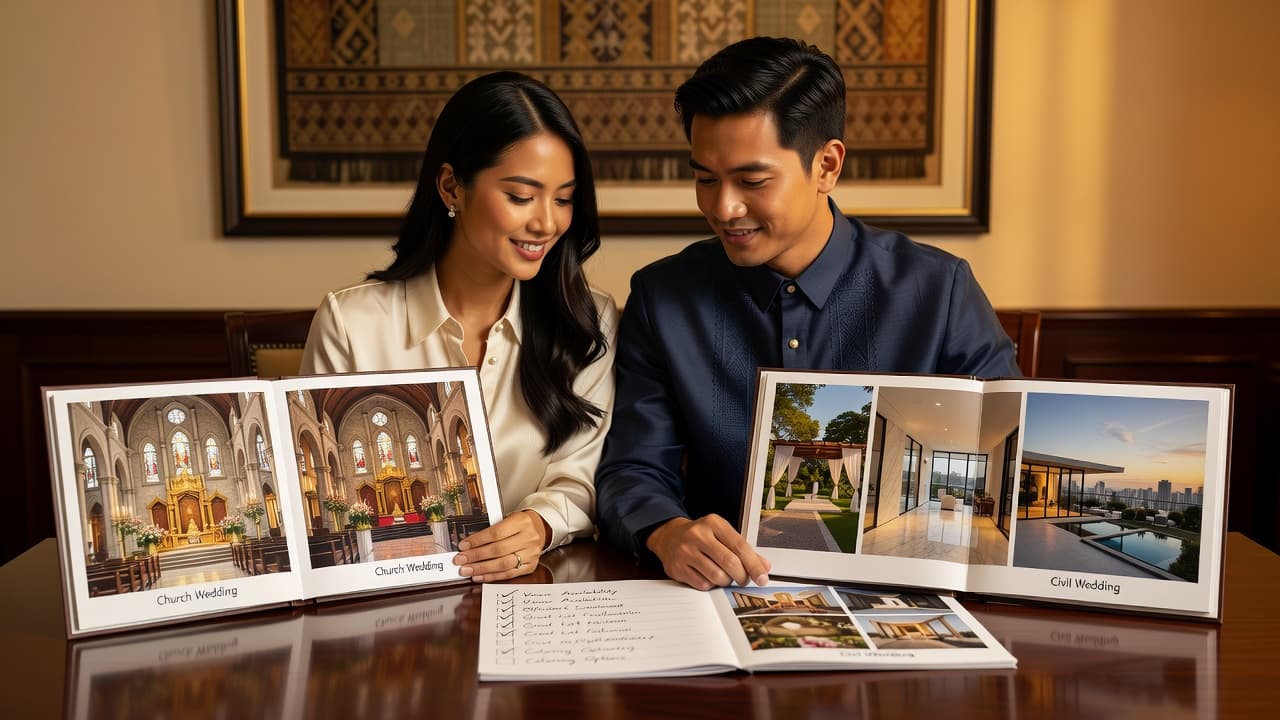
It's also common for couples planning a large church wedding later to have a civil ceremony first for legal or practical reasons.
Marriage License Requirements
The marriage license is the foundational document for any civil wedding in the Philippines. Without it, your marriage cannot be legally solemnized.
Where to Apply
Apply at the Civil Registrar's Office in the city or municipality where either the bride or groom has resided for at least six months prior to the application.
Required Documents
Both parties must submit:
- Application form (available at the Civil Registrar)
- NSO/PSA-issued birth certificate — original or certified true copy
- Certificate of No Marriage (CENOMAR) — for both parties, proving single status
- Valid government-issued ID — passport, driver's license, SSS ID, etc.
- Certificate of Attendance in a Family Planning Seminar — required by most LGUs (often conducted by the City/Municipal Health Office)
- Barangay Clearance — certifying residency
- Death certificate of former spouse — if widowed
- Annulment or court decision — if previously married and annulled
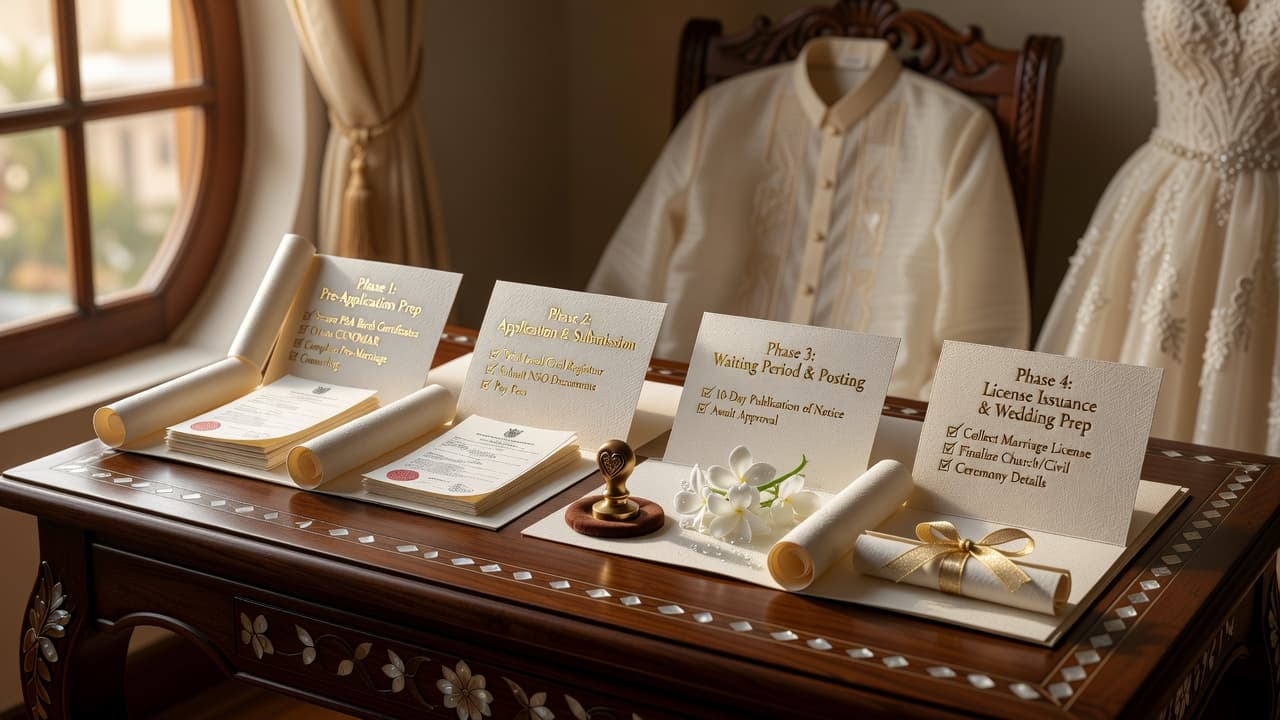
Key Rule: The 10-Day Posting Period
Once you apply, the marriage license application must be publicly posted for 10 consecutive days at the Civil Registrar's office. This allows anyone with legal objections to come forward. You cannot get married until this period expires.
Validity: The marriage license is valid for 120 days (4 months) from issuance anywhere in the Philippines.
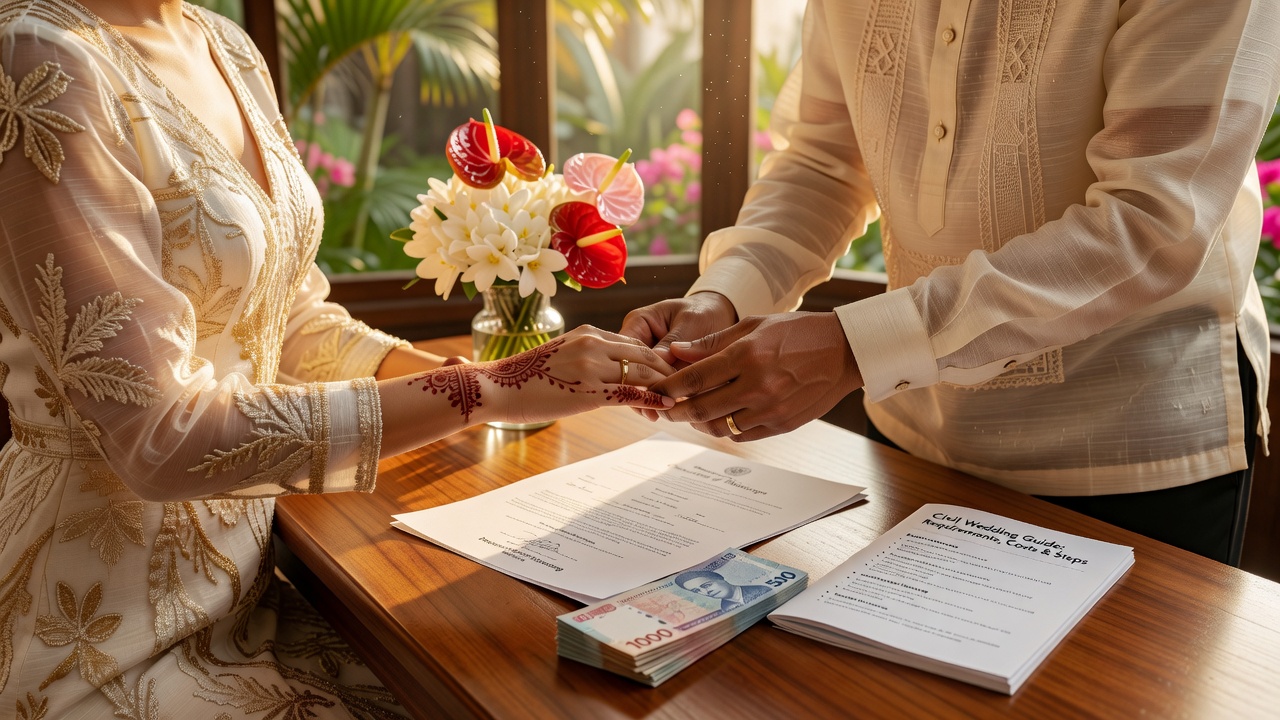
Civil Wedding Costs: Complete PHP Pricing Breakdown
| Item | Cost Range (PHP) | Notes |
|---|---|---|
| Marriage License Fee | ₱150 – ₱300 | Set by LGU; some cities charge more |
| Family Planning Seminar | ₱0 – ₱500 | Often free at government health offices |
| CENOMAR (per person) | ₱210 – ₱330 | PSA online or walk-in processing |
| Birth Certificate (if needed) | ₱155 – ₱330 | PSA-certified copy |
| Judge Officiant Fee | ₱300 – ₱1,000 | Standard court-based ceremony |
| Mayor Officiant Fee | ₱1,000 – ₱5,000+ | Higher in major cities; VIP rates possible |
| venue/location fee (optional) | ₱0 – ₱5,000 | If not held at government office |
| Documentary stamps, etc. | ₱100 – ₱300 | Miscellaneous processing fees |
| Total Estimated Cost | ₱3,500 – ₱12,000+ | Depending on location and extras |
Note: Costs vary significantly by city/municipality. Metro Manila and major cities tend to be more expensive. Always call ahead to confirm current fees.
Judge vs Mayor: Who Should Officiate?
Under Philippine law, the following can solemnize civil marriages:
- Judges — within their court's territorial jurisdiction
- Municipal/City Mayors — within their territorial jurisdiction
- Other authorized officials — including certain barangay captains in specific cases (for Muslim marriages or in remote areas)
Judge Officiant
Pros:
- Lower cost (typically ₱300–₱1,000)
- More formal, legal atmosphere
- Available at Hall of Justice or court premises
Cons:
- Limited to court hours and locations
- May feel impersonal or rushed
- Less flexibility in ceremony personalization
Mayor Officiant
Pros:
- Can officiate outside city hall (at venues, gardens, etc.)
- More flexibility in ceremony timing
- More personalized experience in many cases
Cons:
- Higher cost (₱1,000–₱5,000+)
- May require scheduling around official duties
- More in demand, especially in larger cities
Verdict: Choose a judge if you want simplicity and low cost. Choose a mayor if you want flexibility, a nicer venue, and don't mind spending more.
Witness Requirements
You need at least two witnesses who meet these criteria:
- Must be of legal age (18 years old and above)
- Must have arrived at the ceremony before it ends (they can't walk in during the vows)
- Preferably people who know both of you
The witnesses sign the marriage contract alongside the couple and officiant. Choose reliable people who won't be late — their signatures are legally required.
How to Make a Civil Wedding Feel Special
A civil wedding doesn't have to feel like a DMV transaction. Here's how Filipino couples add meaning and warmth:
1. Dress the Part
Even without a church, wear something that makes you feel amazing. Many brides still wear white dresses; grooms opt for barong or suits. Your photos will thank you.
2. Bring Personal Vows
While civil ceremonies follow a legal script, many judges and mayors allow you to add personal vows. Ask in advance — it makes the moment uniquely yours.
3. Decorate Your Space
If marrying at city hall, bring flowers, a small arch, or candles. Some venues allow minimal decorations even in government offices.
4. Hire a Photographer
Budget ₱3,000–₱8,000 for a few hours. Even a simple civil wedding deserves professional documentation.
5. Host a Small Reception After
Invite close family to a restaurant or home-cooked meal. The ceremony may be quick, but the celebration extends the joy.
6. Choose a Meaningful Date
Many couples pick anniversaries, lucky numbers, or dates with personal significance. It adds emotional weight to the legal proceedings.
Common Mistakes to Avoid
- Applying too late — Remember the 10-day posting period plus processing time. Apply at least 3–4 weeks before your target date.
- Wrong jurisdiction — Apply where you've resided for 6+ months. Applying elsewhere wastes time.
- Expired documents — CENOMAR and birth certificates have validity periods. Check expiration dates.
- Forgetting witness IDs — Witnesses need valid IDs too.
- Assuming same-day marriage — No legal same-day civil weddings in the Philippines due to the posting requirement.
Key Takeaways
- A civil wedding in the Philippines is legally valid, budget-friendly, and requires a marriage license from your local Civil Registrar.
- The mandatory 10-day posting period means you must apply at least 2–3 weeks before your wedding date.
- Total costs range from ₱3,500 to ₱12,000+ depending on location, officiant, and extras.
- Judges are cheaper but less flexible; mayors cost more but offer personalization and venue options.
- Two legal-age witnesses are required and must be present before the ceremony ends.
- Personal touches — vows, outfits, photography, small receptions — make civil weddings memorable.
- Always verify current fees and requirements with your local Civil Registrar before applying.
Frequently Asked Questions
How long does it take to get a marriage license in the Philippines?
The minimum time is 10 days due to the mandatory posting period, but factor in document processing time. Apply at least 2–3 weeks before your wedding date to be safe.
Can foreigners get married in a Philippine civil wedding?
Yes, but additional requirements apply including a Certificate of Legal Capacity to Marry from their embassy and authenticated birth documents. Processing takes longer.
Is a civil wedding valid for a spousal visa?
Yes, a properly registered civil wedding is fully valid for visa applications, immigration, and all legal purposes worldwide.
Can we have a church wedding after a civil wedding?
Yes, many couples do this. The civil wedding handles legal requirements, and the church wedding becomes a spiritual blessing. Some churches require the civil marriage first.
Do we need a premarital seminar for a civil wedding?
Most LGUs require a Family Planning Seminar certificate. It's often free and takes a few hours at the City Health Office.
Can we get married on the same day we get the license?
No. The 10-day posting period is mandatory by law. Same-day civil weddings are not legally possible in the Philippines.
What's the difference between civil marriage and church marriage?
Only the officiant differs — both are legally valid. Civil weddings use judges or mayors; church weddings use priests or ministers. The legal rights are identical.
Do witnesses need to bring documents?
Witnesses need valid government-issued IDs. They don't need birth certificates or other documents unless specifically requested by the officiant.
How long is the marriage license valid?
120 days (4 months) from issuance anywhere in the Philippines. If you don't marry within that window, you'll need to reapply.
Can LGBT couples have a civil wedding in the Philippines?
Currently, Philippine law does not recognize same-sex marriage. Civil partnerships or unions are not legally binding nationwide, though some local ordinances exist.
Conclusion
A civil wedding in the Philippines is practical, affordable, and legally binding — but that doesn't mean it has to feel rushed or impersonal. By understanding the requirements, budgeting realistically, and adding thoughtful personal touches, you can create a ceremony that feels just as meaningful as any grand celebration.
Start with your marriage license application, confirm fees with your local Civil Registrar, and give yourself at least three weeks to handle paperwork. Whether you choose a judge or mayor, keep it intimate or celebrate after, the most important thing is that you're building a life together — legally and lovingly.
Planning a wedding reception too? [Internal link: related article on wedding checklist Philippines] for a complete planning timeline, vendor booking tips, and budget templates.