Filipino Wedding Planning: 4-Hour Reception Program
By WedPlanner Team
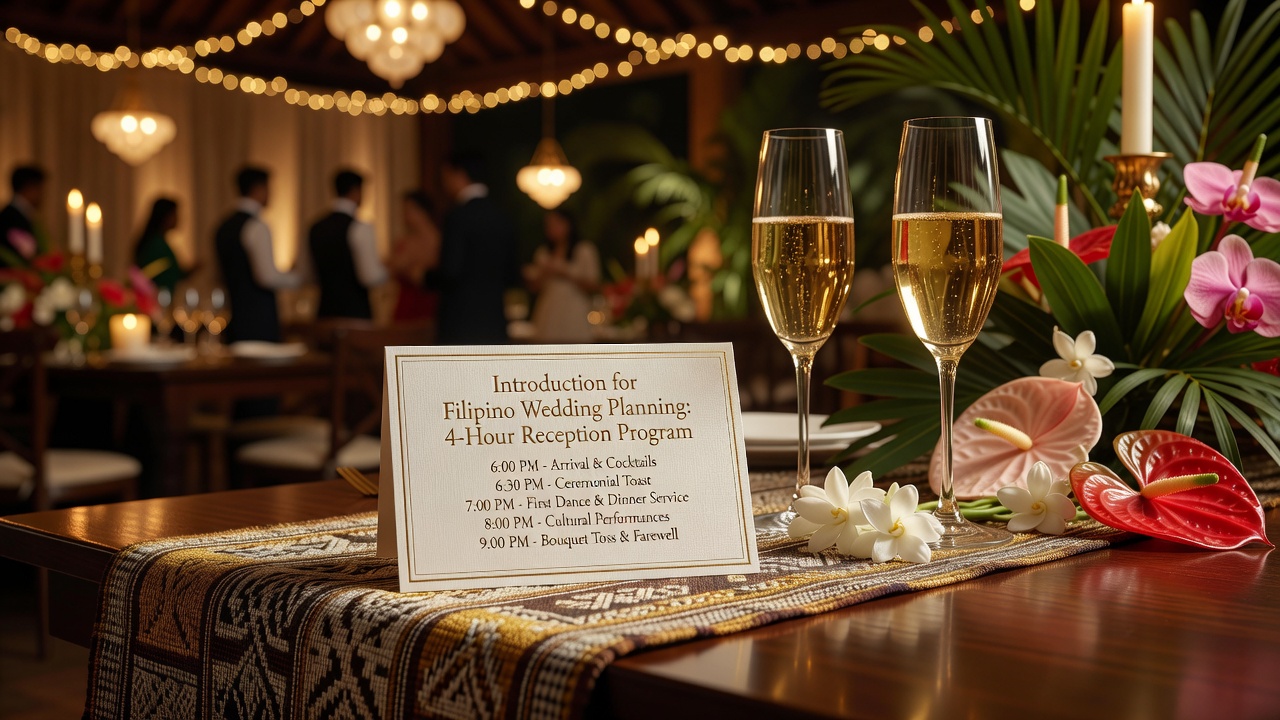
Use this Filipino wedding planning guide to run a smooth 4-hour reception. Get a tightly timed, culturally familiar flow (entrance, dinner, money dance, cake cutting, toss, games, send-off) plus exact lechon-serving guidance.
Filipino Wedding Planning: A Minute-by-Minute 4-Hour Reception Program
Quick Answer: If you want a Filipino wedding reception that stays energetic without running late, use this minute-by-minute program. It sequences your entrance, dinner, money dance (sayaw sa salapi), cake cutting, garter/bouquet toss, games, and send-off—plus practical lechon timing and pacing cues so the program never stalls.
Introduction
A great Filipino wedding planning checklist doesn’t end at “arrive on time.” The hardest part is keeping the reception flowing—especially when you’re balancing family photos, dinner service, money dance momentum, and signature moments like cake cutting and the garter/bouquet toss.
This guide gives you a publication-ready, real-world 4-hour reception program with a tightly timed structure. You’ll also get lechon-serving notes (when to carve, when to plate, and how to keep it hot), plus pacing tips that help your emcee and entourage hit every mark without rushing anyone.
What’s a Filipino wedding reception program (and why minute-by-minute matters)?
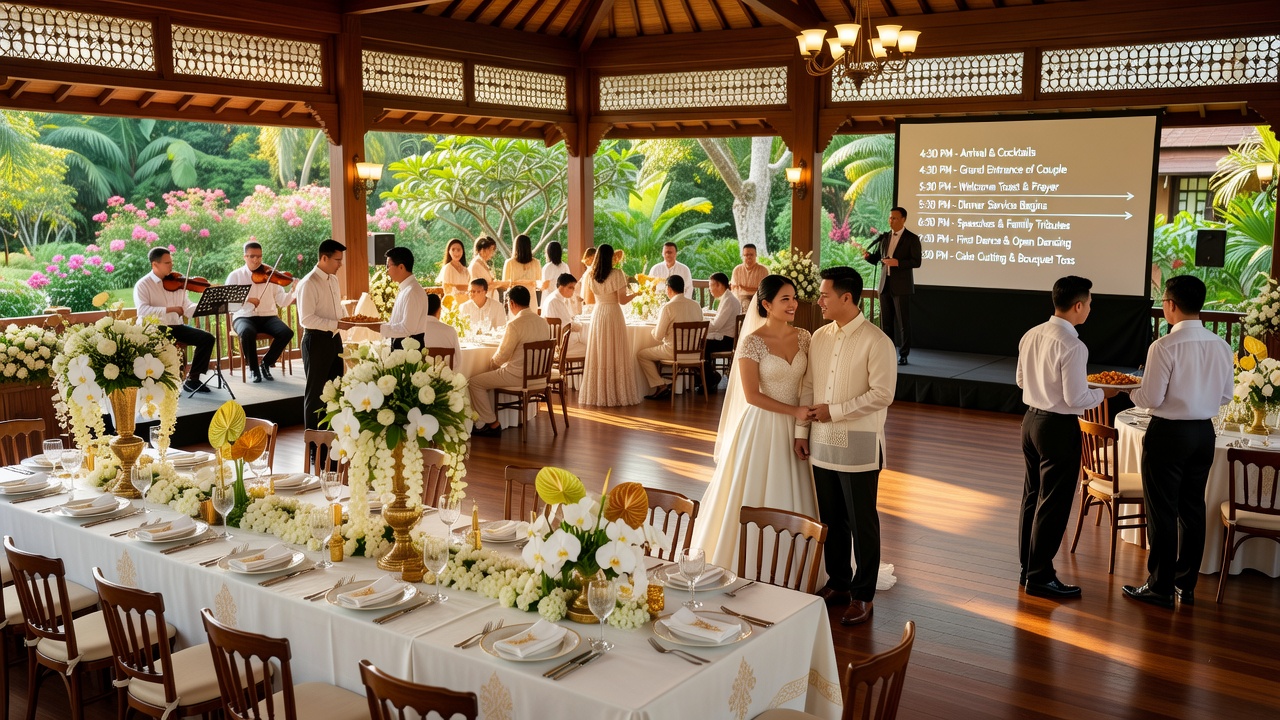
A reception program is the planned order of events, speaking time, music cues, and transitions (like when the lights dim, when the band starts, and when food is served). In Filipino weddings, where moments like the money dance, cake cutting, and toss are crowd-driven, timing is everything—your guests move together when the flow is clear.
Minute-by-minute planning helps you:
- Prevent long dead air while people wait for dinner or photos
- Keep the emcee from improvising too long
- Serve lechon while it’s still fresh and hot
- Protect the energy peak (usually the money dance + group dance)
Key Filipino reception traditions you’ll build into the flow
Entrance + “welcome” moment
Typically, your emcee introduces the couple and entourage. The entrance is where the crowd focus shifts from arrival to “this is the party.” For best impact, coordinate sound check, lighting cues, and an entrance song before doors open.
Dinner service (with a realistic service rhythm)
Filipino receptions often start with buffet-style or family-style dining. To avoid chaos, decide your service mode in advance and align it with your program segments. The goal: guests should eat before major crowd-participation moments.
Money dance (Sayaw sa Salapi)
The money dance is a signature crowd-driving moment in many Filipino receptions. It works best when you set a clear rule (e.g., “one song, then we rotate”) and when you keep it moving—so it doesn’t become a long, stalled line dance.
Cake cutting
Cake cutting is visually important for photos. Plan it after guests are seated and comfortable, but before the reception energy peaks so it doesn’t get overshadowed.
Garter/bouquet toss
This is usually held when the room is already lively. Make sure security/ushers can manage the crowd and that you have a clear “catch area.”
Games
Games should be short, funny, and easy to participate in. Filipino weddings often do multiple rounds—keep them scheduled so you don’t extend the reception beyond 4 hours.
Send-off
The send-off is your final emotional high (or celebratory exit). Keep it organized so guests don’t linger because the program ended hours ago—your last 15–20 minutes should be confident and well-managed.
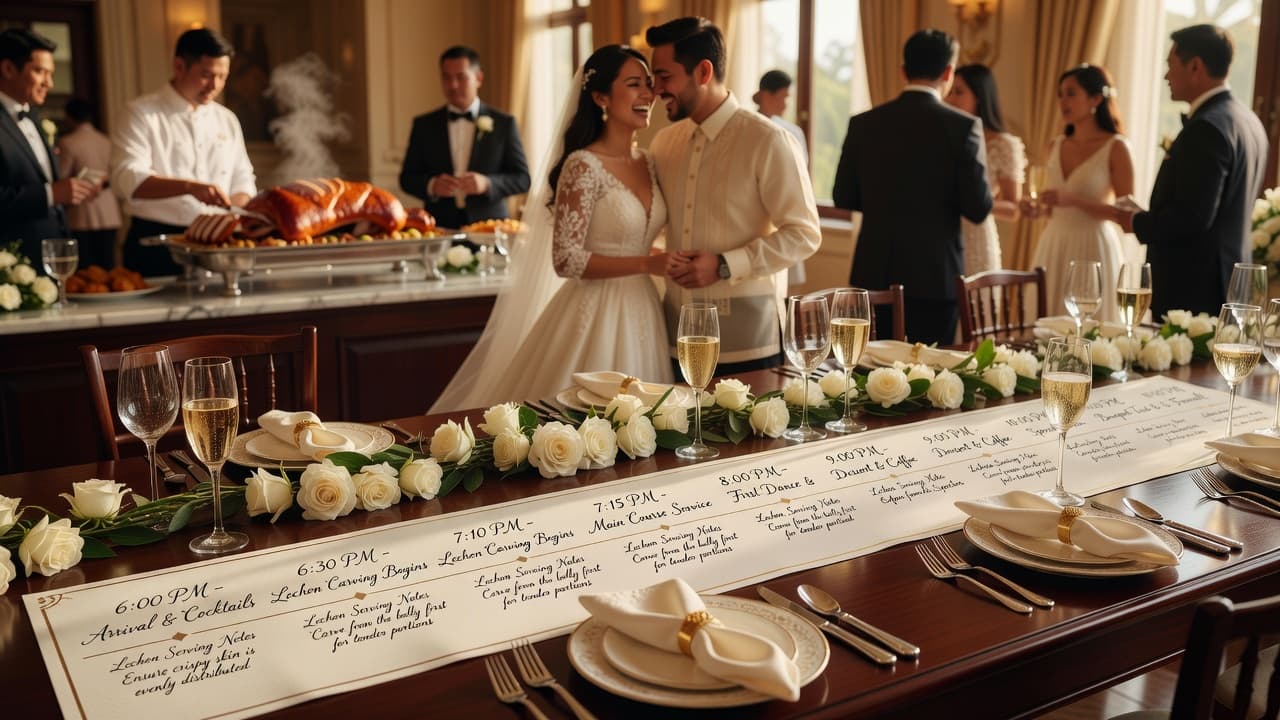
4-hour Filipino wedding reception timeline (minute-by-minute)
How to use this: Treat “T0” as the moment your reception program formally begins (when doors open or when the emcee starts the kickoff). If your event time is fixed, you can shift the whole schedule by adding the difference.
| Time (4 hours) | Program Segment | What to Do (Filipino wedding planning notes) | Timing/Logistics Watch-outs |
|---|---|---|---|
| T0–T+15 | Guest arrival + background music | House band/playlist, photo corner open, ushers guide seating. Emcee holds announcements (keep it light). | Keep microphone warm but quiet. Make sure the couple’s “ready” time is protected. |
| T+15–T+25 | Program kickoff | Emcee welcomes guests, announces flow, quick etiquette reminders (e.g., phones, “please stay seated during X”). | No long speech. This is an orientation sprint. |
| T+25–T+40 | Bridal party + couple entrance | Entrance song cues. Introduce entourage (bridesmaids/groomsmen). Couple makes their entrance and poses for the first wave of photos. | Assign 2 photo captains (one per side). Don’t let photos spill into the dinner window. |
| T+40–T+55 | Welcome remarks + “first round” seating readiness | Short remarks (best man/officiant/host—one person only). Then transition: “Dinner service begins.” | Coordinate lighting: brighter for dining, then return to party lighting before money dance. |
| T+55–T+70 | Dinner service (start) | Start appetizers or main course depending on your format. Start serving first batches so lechon timing won’t delay everything. | Have plates/cutlery staged. Confirm food runner routes with your team. |
| T+70–T+95 | Lechon serving window (carve + plate) | Carve lechon at the start of this window; plate/serve in waves. Emcee says a brief line: “Please continue enjoying your meal—lechon is coming!” | Serving rule: Hot food should be held hot and served promptly. Assign one lead to prevent delays while the lechon is carving. |
| T+95–T+110 | Transition to energy peak | Quick stretch moment: dessert prep cues, then emcee introduces money dance mechanics. | Keep it moving: 1 announcement only, then music cue. |
| T+110–T+135 | Money dance (Sayaw sa Salapi) | Start with clear rules: how people line up, how rotation works, how many rounds per table/couple. | Choose a “one-song per pair” guideline to avoid overruns. Use a timekeeper. |
| T+135–T+155 | Cake cutting | Couple cuts cake for photos, then emcee invites a quick “photo moment.” Serve cake/coffee/water if available. | Confirm cake server access so the couple isn’t blocked by staff. |
| T+155–T+175 | Garter + bouquet toss | Assign ushers to manage the catch area. Keep instructions short. Capture 2 photo angles. | If the crowd is large, increase spacing and use a boundary marker. |
| T+175–T+205 | Games (2–3 short rounds) | Run quick games with winners announced immediately. Keep prizes small but meaningful. | Avoid games that require long setup. Prepare props the day before. |
| T+205–T+225 | Open dance + “high-energy” music block | Let guests settle into spontaneous dancing. This is the buffer for small delays elsewhere. | This block is your schedule safety net. Don’t replace it with another major segment. |
| T+225–T+240 | Send-off | Final announcements (thanks, sponsors if any), couple’s farewell, then exit cue. | Confirm vehicle/exit route so the couple doesn’t wait on staff. |
When should you serve lechon during a 4-hour Filipino reception?
If you only remember one detail from this Filipino wedding planning guide, make it this: serve lechon in the first half of your reception, right after dinner starts. That way, guests have food before the money dance and other crowd events.
Recommended lechon timing (practical rule)
- Best window: around T+70 to T+95 in the program above
- Why it works: guests are seated and ready, but you haven’t hit your peak participation moments
- Why it prevents stalls: you avoid “we’re waiting for lechon” during transitions
Food-safety pacing note (simple, verifiable guidance)
Lechon is best served hot and promptly. For general food safety principles, follow hot holding guidance such as the USDA Food Safety & Inspection Service recommendations (hot foods should stay above safe holding temperatures). Your caterer should manage this—your job is to coordinate timing so service doesn’t get stuck.
How to keep lechon carving smooth
- Assign a lechon lead: one person calls the carve time and confirms plate delivery waves.
- Pre-clear the route: runners should know which tables are next (avoid last-minute walking).
- Announce lightly: a short emcee line is enough—don’t turn it into a long wait cue.
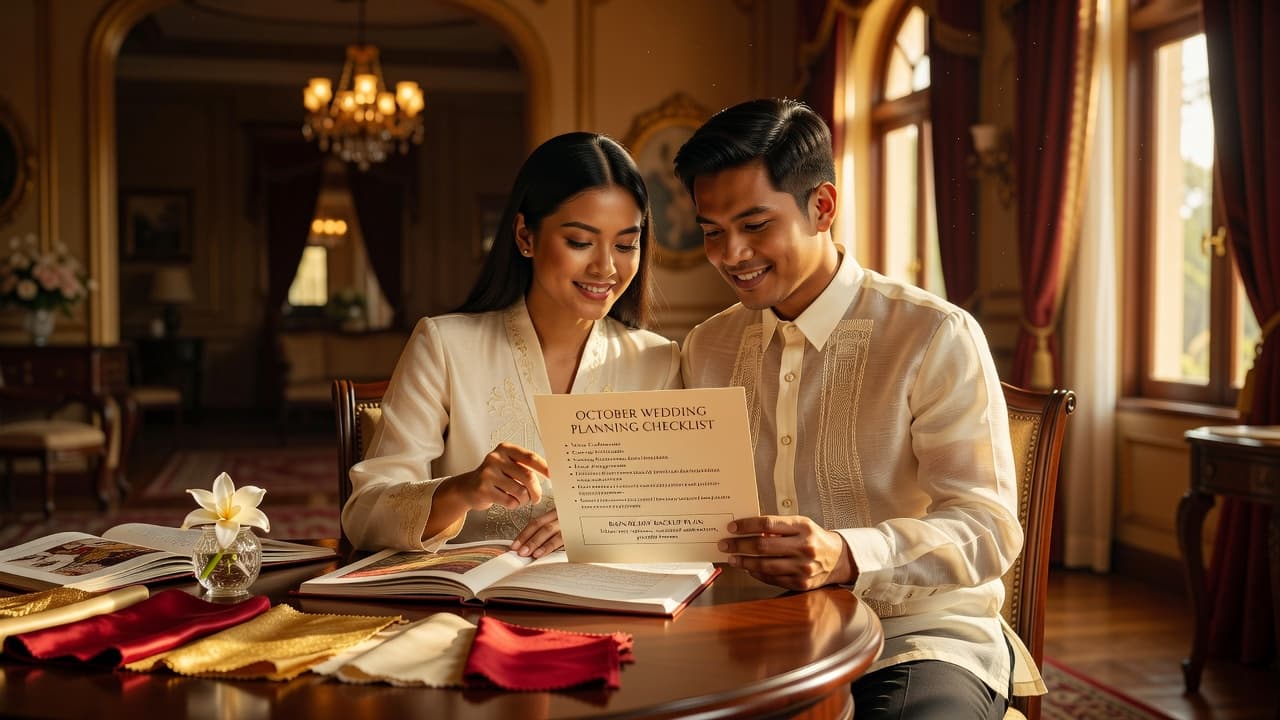
- Plan a “backup”: if carving runs late, shift money dance by 10 minutes max and use your dance buffer later.
How do you keep the reception program moving on schedule?
Most “run late” problems come from the same root causes: too many speakers, unclear transitions, and missing timekeepers. Fix that with a simple operations mindset.
Use a 3-role control team
- Emcee captain: follows the script and enforces “short + on time” speaking rules.
- Timekeeper: has a stopwatch and can signal “+5 minutes” or “freeze this segment.”
- Food/tech lead: confirms sound, lights, mic batteries, and food delivery status.
Keep announcements short and repeatable
Filipino weddings love heartfelt remarks, but receptions run on rhythm. Use templates:
- “Please look this way for the entrance.”
- “Dinner is being served now—thank you for your patience.”
- “We’ll start money dance in a few minutes. Please prepare your participation slips if needed.”
Build in buffer (so delays don’t break the whole night)
In the timeline, notice the open dance block before send-off. That’s intentional. It’s your schedule stabilizer for small issues like late photo groups or a slow lechon carve.
Common mistakes (and how to avoid them)
- Letting the money dance overrun: set rotation rules and timebox it to one dedicated segment.
- Too many games: pick 2–3 short games, not 6 “maybe” games.
- Waiting for photos: schedule photos earlier through a “photo blitz” plan so the couple returns on time.
- Late dinner start: if dinner slips, lechon becomes late too—serving hot food becomes difficult.
- Unclear toss boundaries: manage the catch area to keep it safe and quick.
Optional upgrades: make your program feel premium without adding chaos
Script the money dance (simple but effective)
Write a one-page guideline for how people join, how long each rotation lasts, and how the couple acknowledges donors. Guests feel respected when the rules are fair and consistent.
Use “cue cards” for staff
Give your ushers, lechon runners, and entourage leads short cue cards:
- “When emcee says ‘cake cutting,’ bring couple to stage-left.”
- “When toss starts, open a clear circle—no crowd pushing.”
- “When games start, props are at Table 12.”
Consider hiring a wedding coordinator (if your team is small)
If your wedding party is busy or you’re managing multiple suppliers, a coordinator can be worth it. They help you enforce the schedule with calm authority so you don’t become the “human timekeeper.”
Estimated coordination time and cost considerations (ballpark)
Costs vary widely by city and package, but here’s how to think about budget for a clean program:
- Program/script preparation: can be part of coordinator services or emcee setup time.
- Timekeeping: often internal staff—free if you assign roles.
- Coordinator hiring: you may pay for a dedicated person to manage transitions, suppliers, and pacing.
For accurate pricing, ask your venue and vendors for package rates tied to day-of management.
At-a-glance: the “safe” 4-hour flow (for featured snippets)
- 0:00–0:15 Guest arrival + photo corner
- 0:15–0:40 Kickoff + couple/bridal entrance
- 0:55–1:10 Dinner begins
- 1:10–1:35 Lechon carving + plating (best window)
- 1:50–2:25 Money dance
- 2:25–2:55 Cake cutting + toss
- 2:55–3:25 Games
- 3:25–4:00 Open dance + send-off
Key Takeaways
- A smooth Filipino wedding planning reception follows a clear, timeboxed sequence—don’t let major segments drift.
- Serve lechon in the first half (recommended window: around T+70 to T+95) so guests eat before high-participation moments.
- Timebox the money dance with rotation rules to prevent overruns.
- Use staff roles (emcee captain, timekeeper, food/tech lead) to keep transitions clean.
- Protect your last 15–20 minutes for a confident send-off and exit cue.
Frequently Asked Questions
How long should the money dance be in a Filipino wedding reception?
In a 4-hour reception, keep the money dance to a single dedicated segment (about 20–25 minutes in this program). Set simple rotation rules and timebox it so guests don’t wait while others line up. Your emcee should enforce it consistently.
When should cake cutting happen during the program?
Cake cutting works best after the money dance begins or shortly after it ends—when guests are energized but not yet exhausted. In this timeline, it’s scheduled around T+135–T+155 so photos are smooth and the toss/games still have a lively pace.
Should lechon be served before or after the money dance?
For most receptions, serve lechon before the money dance. Serving it early (first half) gives guests energy for dancing and reduces the “we’re waiting for food” stall. The earlier lechon is served, the easier it is to keep it hot and moving.
What if our lechon carving runs late?
If lechon runs late by a few minutes, avoid adding new segments. Instead, shift only the next transition (like money dance) by up to 10 minutes and use the later open-dance buffer. The goal is to preserve the 4-hour end time and prevent guest frustration.
How many games should we include in a 4-hour reception?
Plan for 2–3 short games, not many. Keep each game quick (setup and instructions included) so the crowd stays engaged. If you want more, treat them as bonus moments inside your open-dance block—never as replacements for dinner or signature traditions.
Do we need a coordinator to follow this program?
You don’t strictly need one, but it helps if your team is large enough to be split across suppliers. A coordinator ensures that the timekeeper signals are respected and that vendors hit their windows, especially for lechon carving, stage transitions, and sound cues.
How do we make sure the program doesn’t feel rushed?
“Not rushed” comes from structured pacing, not extra time. Keep speeches short, timebox crowd events, and schedule a buffer block (open dance). Guests should have enough time to eat, participate, and celebrate—without waiting for the couple to reappear.
What’s the best way to announce the garter/bouquet toss?
Announce it clearly with safety and participation cues, then move quickly. Assign ushers to manage the catch area and keep the crowd from pushing forward. In this program, toss happens after cake cutting so guests are already energized and ready.
How do we plan group photos without delaying everything?
Use a “photo blitz” strategy earlier—don’t wait until the couple is on stage for dinner or money dance. Assign photo leaders and clear time windows. That way, the couple returns on schedule and the emcee can keep the reception flow consistent.
Conclusion
Done well, a Filipino wedding reception feels like a smooth, joyful storyline: entrance to dinner, dinner to money dance, and then cake cutting, toss, games, and send-off—without chaos. Use the 4-hour timeline above as your backbone, and coordinate lechon during the recommended window so energy stays high.
If you want, share your reception start time (and whether you’re buffet or family-style). I can help you shift this minute-by-minute schedule to fit your exact venue flow and vendor arrival windows.