Wedding Hair & Makeup PH Checklist (All-Day)
By WedPlanner Team
Use a trial-run-first, durability-focused checklist to plan wedding hair and makeup that survives Philippine humidity, tears, and flash photos.
Wedding Hair and Makeup Philippines Checklist: Finding Your Perfect Look
Quick Answer: Use this wedding hair and makeup Philippines checklist to plan trial runs, build a long-wear “hold system” for skin and hair, and schedule practical touch-ups for the realities of hot, humid venues and photo flashes. Communicate references with a clear photo brief (angles, finishes, accessories) to get photos-ready results.
Introduction
If you’re searching for “wedding hair and makeup Philippines checklist,” you’re probably balancing three worries at once: you want the look to match your references, you need it to last through church-to-reception timing, and you don’t want surprises when you’re under bright lighting, cameras, and (very possibly) humidity.
This guide is built around one goal: help you choose hair and makeup that holds up all day—while making it easy to communicate what you want so your stylist can recreate it reliably.
Why do Filipino weddings need a durability-first hair and makeup checklist?
In the Philippines, wedding days often involve heat, humidity, long photo sessions, and emotional moments (hello, happy tears). Those factors can cause makeup to melt, transfer, or separate—and hair to frizz, lose shape, or loosen around clips, veils, or hairpins. A checklist helps you plan for durability, not just “how it looks on the first try.”
Featured snippet-ready definition:
A “durability-first” wedding beauty plan is a process where you test your look (trial run), choose products designed for long wear, and set an all-day strategy (hold + touch-ups + venue considerations) to keep your finish consistent from ceremony to last dance.
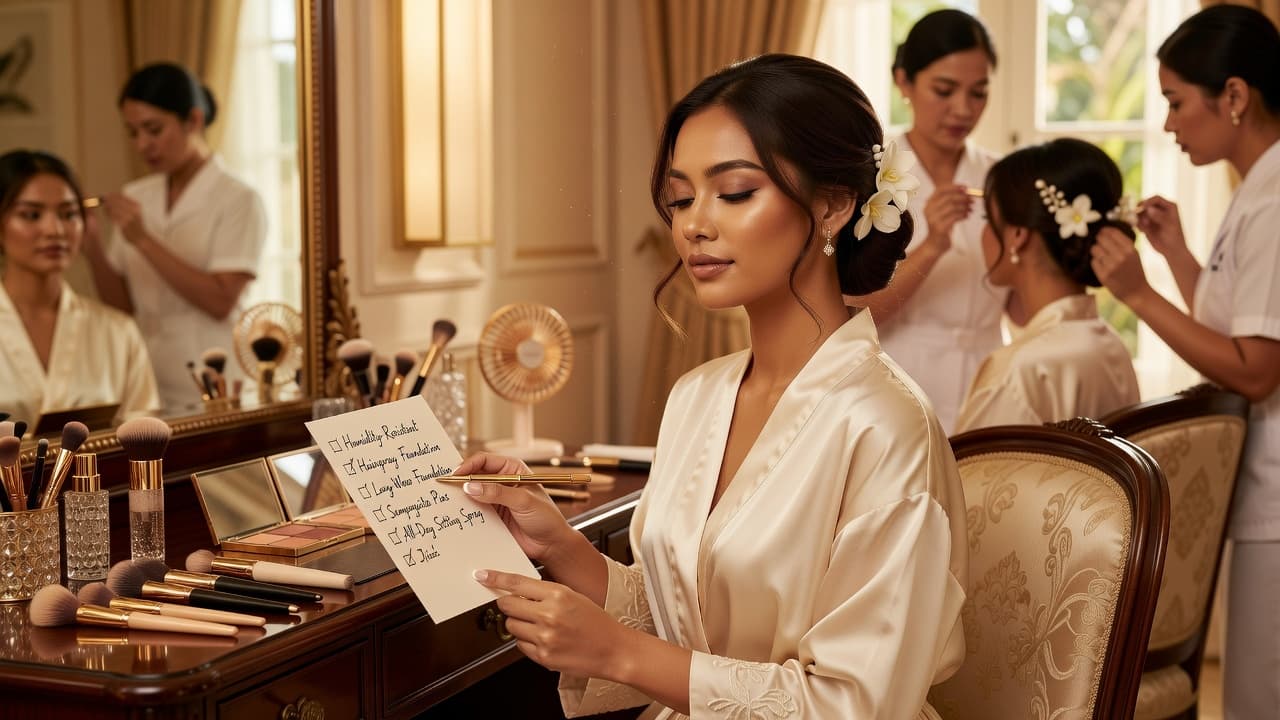
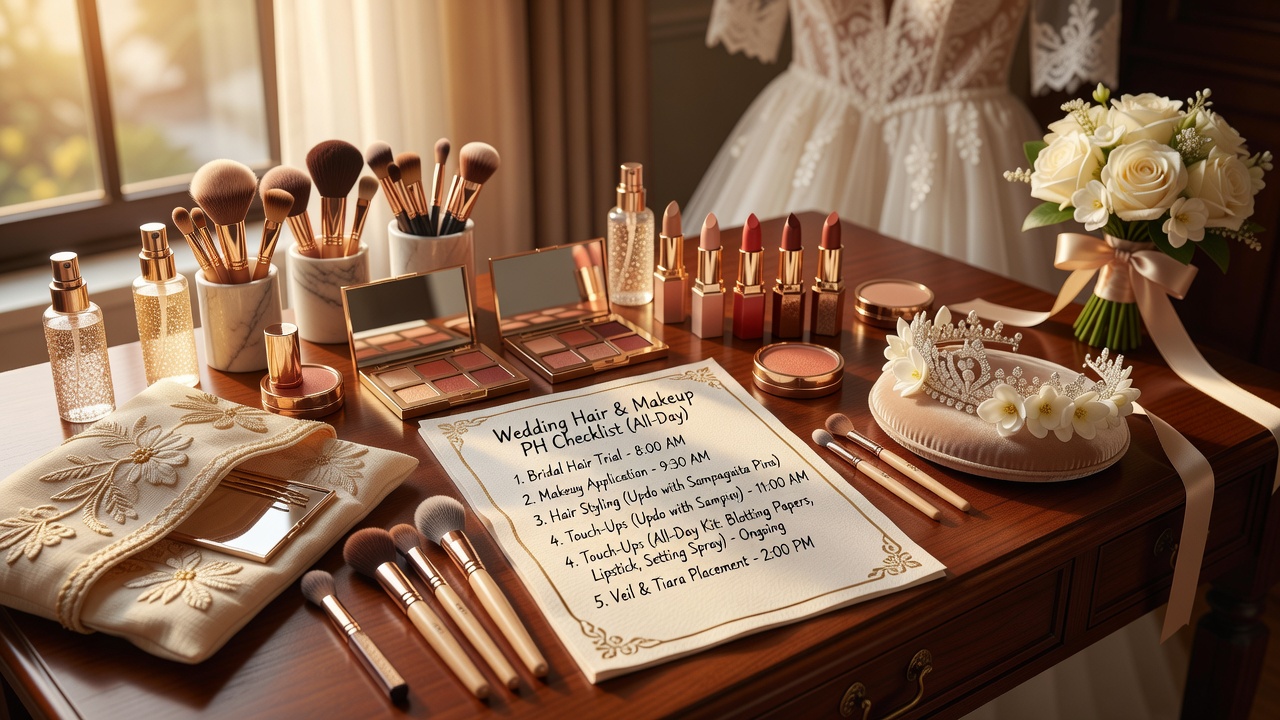
Wedding hair and makeup Philippines checklist (copy-and-save)
Use this as a one-page planning sheet you can screenshot. Bring it to your stylist consultation and trial run.
| Checklist item | What to ask/test | Why it matters |
|---|---|---|
| Trial run scheduled | Confirm date/time + whether it includes hair + makeup together; request photos of the final result. | You’ll see how the look behaves under lighting and your own hair/skin conditions. |
| Reference clarity | Share 6–12 images: front view, side view, up-close texture, eye/liner style, lip shade, and “hair movement” shots. | Reduces misinterpretation—especially for finishes like matte vs. glow. |
| Humidity + transfer testing | Test with the same finish goals you want on wedding day (powder level, setting spray type, waterproof mascara). | Helps prevent oil breakthrough, smudging, and lipstick transfer. |
| Veil/accessory compatibility | Bring your veil/hairpiece/tiara and do a mock setup during trial. | Ensures the hairstyle placement doesn’t shift and avoids visible pin lines. |
| Photo-ready base | Confirm whether the look is flash-friendly (no heavy “flashback,” balanced highlight). | Reduces washed-out skin or overly reflective areas. |
| All-day timeline plan | Agree on touch-up moments (before ceremony photos, after couple portraits, during reception). | Prevents “we have to fix it with no time” stress. |
| Touch-up kit readiness | Get a small kit: blotting sheets, compact powder, lip product, hair pins, blot-friendly tools. | You stay confident even if you sweat, cry, or reapply during events. |
| Comfort check | Confirm lash comfort, face tightening feel, and hair weight/hold. | Comfort affects how still and confident you feel for photos. |
1) Trial runs: schedule, photos, and the “reference brief”
When should you book your trial run?
A practical timing approach is to schedule your trial run at least a few weeks before the wedding (and earlier if your hair is being grown out, freshly colored, or you’re switching to a new style). This gives you time to adjust color, texture, and hold—not just “try it once.”
What should you bring to the trial?
- Your wedding-day references (more on how to share them below).
- Your veil/hairpiece (or the closest version) so your stylist can place hair around it.
- Your outfit jewelry cues (neckline, earrings, and whether you’ll wear a secondary accessory at reception).
- Your skincare reality: any products that you know your skin tolerates (or patch-test concerns).
- Optional: a “day timeline” showing ceremony time, photo schedule, and reception duration.
Mini checklist: how to evaluate trial results
Right after you see the mirror version, do a quick evaluation with your phone:
- Front + side photos under the same lighting you expect during the wedding (bright indoor lighting or daylight).
- Finish check: matte, natural, or glowy—does it match your reference?
- Hair movement test: gently turn your head and move naturally to see if the shape holds.
- Comfort test: look up, smile, and keep your expression for 1–2 minutes.
Keep trial photos in a dedicated folder labeled with the hairstyle + makeup finish (e.g., “Style A - soft glam matte + pearl hairpin”). This helps you reference later if you make small edits.
2) Product durability: build a hold system (skin + hair)
Instead of thinking “one magic product,” think in layers. A wedding look usually lasts best when your hair and makeup are built as a system: preparation + application + seal + touch-up plan.
Makeup durability: what usually matters most
- Prep: moisturize appropriately for your skin type; consider primer that matches your finish goal (blurring, oil-control, smoothing).
- Base: choose long-wear foundation/concealer and set key areas (especially where oil appears).
- Eyes: use waterproof or transfer-resistant mascara and a stable liner/eye base for long wear.
- Lips: for transfer resistance, long-wear liners + lipstick layers often perform better than a single swipe.
- Seal: setting spray helps lock the finish, but the “seal” is strongest when applied with the right amount and technique (not too heavy).
Durability tip for Philippine weddings: ask your artist how they handle humidity and what they recommend for “oil-control + photo-friendly finish.” You want the look to stay consistent, not just initially pretty.
Hair durability: hold without crunch
- Prep + heat protection if you’re curling/straightening—heat affects texture and frizz risk.
- Root and shape control using the right styling base (e.g., smoothing or volumizing products based on your hair type).
- Humidity strategy: anti-humidity sprays/finishing products can help maintain shape.
- Pin and clip placement: a hairstyle holds longer when the structure is anchored to the right sections.
- Finish spray: choose a hold level that keeps your shape but doesn’t feel brittle in photos.
Common local reality: travel from prep area to venue can be stressful. A “hold system” reduces the chance you arrive looking different than how you left the mirror.
3) All-day wear plan: timeline, touch-ups, and venue realities
A good wedding beauty plan includes timing. Even a durable finish may need small adjustments after photos, emotional moments, or long outdoor sessions.
Make a simple all-day timeline (use this as a template)
- Before ceremony photos: confirm hair placement + makeup base looks consistent.
- After vows / emotional moments: check mascara and lip transfer; blot gently if needed.
- Couple portraits: refresh the most visible areas if your wedding is flash-heavy.
- Reception: adjust shine level and lip color for entertainment lighting.
- Final photos: do a last quick check with the compact kit.
Touch-up kit: small, practical, wedding-friendly
- Blotting sheets (instead of rubbing).
- Compact powder or travel-friendly setting powder.
- Lip product (and liner if you’re using a structured lip).
- Hair pins + mini comb/brush for quick fixes.
- Optional: face wipes or a gentle cloth for emergencies (only if your artist recommends it).
Good to know: If you’re using contact lenses, confirm with your artist whether they’ll be careful with lash adhesives and eye area comfort.
How to communicate references clearly for photos-ready results
This is where most misunderstandings happen: the reference looks right to you, but the stylist interprets the “finish” differently. Your job is to translate your vision into precise visual and functional instructions.
Use this “reference brief” formula
Send references that cover three categories:
- Style: the shape (updo vs. waves vs. half-up), eye direction, brow shape, and lip silhouette.
- Finish: matte vs. natural glow, soft blur vs. full coverage, “dewy” vs. “set.”
- Context: where it will be worn (church, outdoor garden, beach), plus your accessories (veil, hairpiece, earrings).
Copy-paste template you can send to your stylist
Message template:
Hi! I’m looking for a wedding look that matches these references:
- Hair: (updo/half-up/soft waves). I like this because: (e.g., pinned structure, face-framing pieces, shine level).
- Makeup finish: (natural matte / soft glam / glow but not oily). I want: (long-wear + minimal smudging).
- Eyes: (thick liner / soft brown crease / defined lashes). Please use: (waterproof/transfer-resistant).
- Lips: (shade vibe + I want it to survive photos and light eating).
- Accessories: I’ll wear a veil/hairpiece/tiara—please test placement during the trial.
- Venue note: Expect hot/humid lighting and long photo sessions.
Please confirm if you can recreate this finish and how you’ll ensure all-day wear.
Angle checklist: include these photo types
- Front view (face brightness + base finish).
- Side view (ear-to-hairline placement + contour balance).
- Up-close eye shot (liner thickness, lash density, crease blend).
- Lip close-up (shade and texture so you know if it’s creamy, satin, or matte).
- Hair movement shots (walking/turning photo to show volume and bounce).
If you only show one image, you often get one “best guess.” Multiple angles tell your stylist exactly what to replicate.
Choosing hair styles that survive PH weather and wedding moments
Your hairstyle should work with your hair texture (straight, wavy, curly, thick, fine), your accessories, and the moments that challenge hair—sweat, wind, hugs, and long photo sessions.
What to match to your wedding venue
- Church ceremony: stable updos and secure pin structures help maintain shape during still-photo moments.
- Outdoor gardens: consider humidity/wind resistance; avoid overly loose sections unless you plan frequent touch-ups.
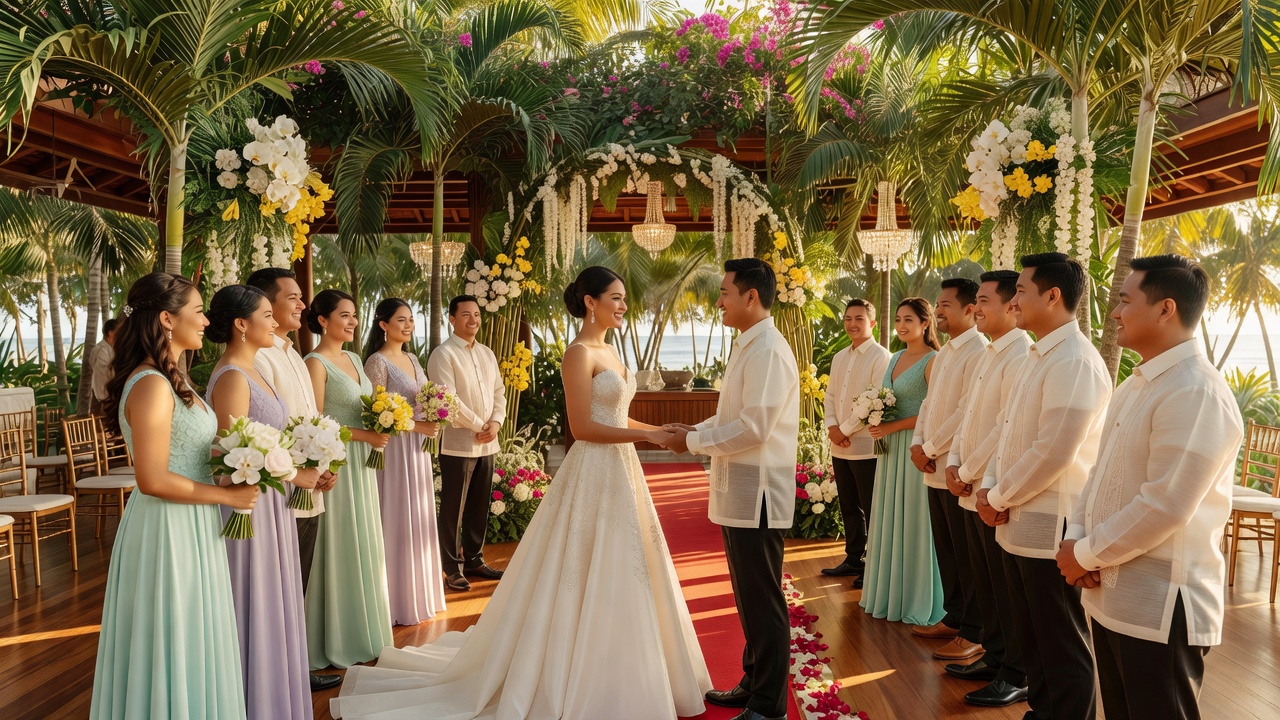
- Beach or seaside venues: ask about salt-air and humidity management; hold structures and seal strategies matter.
- Traditional ceremonies: hairstyles with intentional ornament placement can help keep accessories aligned in photos.
Veil compatibility check (do this during trial)
A veil can change how your hair behaves—especially around the crown and where it attaches. Ensure your trial includes:
- Proper attachment placement so hair doesn’t shift
- Veil flow alignment with your hairstyle shape
- Pin visibility check from front and side angles
Choosing makeup finishes that look good in church, reception, and flash photography
Wedding makeup needs to photograph well in multiple lighting conditions. In many Filipino venues, you may move from bright daylight or stained-glass church lighting into reception lighting that’s warmer or dimmer.
Base finish: how to choose matte vs. glow
- Matte or soft-matte: often helps with oil control and reduces shine during long photos.
- Natural glow: can look beautiful, but you’ll want careful placement so it doesn’t turn into “shiny spots” under flash.
Practical question to ask: “Will this look stay consistent in flash photos? What do you do to avoid flashback or overly reflective highlights?”
Eyes and lips: durability multipliers
- Eyes: waterproof mascara and transfer-resistant liner reduce smudging during tears and hugs.
- Lips: layered long-wear methods (liner + base + top layer) typically last longer than a single coat.
Blush and contour: keep it balanced, not muddy
Humidity and sweat can change how powders sit. Ask your artist to demonstrate where blush and contour will sit so it stays flattering from close-up portraits to wider shots.
Common mistakes (and what to do instead)
1) Choosing based only on “one pretty picture”
Instead: ask for finish notes (matte vs glow), and request multiple angles. During trial, take photos in similar lighting so you’re not surprised later.
2) Skipping the trial run
Instead: treat trial as quality control. Even if you have an experienced artist, your hair texture and skin will always behave uniquely on your wedding day.
3) Vague references (“I want it natural”)
Instead: define natural with details: brow softness, liner thickness, lip shade vibe (pink nude vs. rose vs. warm beige), and base finish.
4) Not matching hairstyle placement to your veil/accessories
Instead: bring your veil/hairpiece and test crown placement during the trial. Accessories can shift your entire silhouette.
5) Forgetting all-day time realities
Instead: agree on a touch-up plan and identify what you’ll need before ceremony photos, after emotional moments, and during reception.
6) Overloading products (caking instead of lasting)
Instead: durability doesn’t always mean “more.” Ask your artist for a hold system that controls shine without thick buildup.
How much does wedding hair and makeup cost in the Philippines?
Costs vary by city (e.g., Metro Manila vs. Cebu vs. Davao), experience level, number of people (bride + entourage), and whether you include trial runs and on-site touch-ups. A common way to plan is to ask for a detailed quote that breaks down:
- Trial run fee
- Wedding-day service fee
- On-site setup/travel charges
- Product/lashes/hair accessory fees (if any)
- Whether touch-up support is included
Planning tip: Instead of comparing only the total price, compare the “coverage” of the service: How many touch-ups? Is it hair + makeup together? Do they document your trial result with photos?
Internal link opportunity: [Internal link: related article on how to budget for a Filipino wedding (hair, makeup, and other services)]
Alternatives: DIY, hybrid, or fully professional—what’s best for your budget?
Fully professional (recommended when you want low stress)
- Pros: expertise, durable product choices, faster application, cleaner photo finish.
- Cons: higher cost; you still must communicate references clearly.
Hybrid (you do one part, professional does the other)
- Pros: can save budget; you keep control over a specific look element.
- Cons: requires coordination so the final finish is consistent.
DIY (best when you’re confident + you practice)
- Pros: maximum control; potentially lower cost.
- Cons: time risk and durability risk—especially for long, humid wedding schedules.
Rule of thumb: If you’re not sure your DIY version will last through church lighting + reception photos, prioritize a professional trial and at least professional makeup durability planning.
Key Takeaways
- Use a durability-first checklist: trial run + hold system + all-day timeline.
- Communicate references with a “reference brief” (style, finish, context) and multiple angles.
- Plan for Philippine realities: humidity, long photos, tears, flash photography, and venue transitions.
- Test veil/accessory placement during trial—hair structure needs real-world matching.
- Agree on touch-up moments and bring a small kit for blotting, powder, and lip refresh.
Frequently Asked Questions
How many weeks before the wedding should I do a hair and makeup trial run in the Philippines?
Ideally, book your trial a few weeks before your wedding so you have time to make adjustments to shade, finish, and hair hold. If you’re changing hair color, growing out length, or using a veil for the first time, schedule earlier to avoid last-minute fixes.
What should I bring to my stylist if I want photos-ready results?
Bring multiple reference photos (front, side, eye close-up, lip close-up, and hair texture/movement) plus your veil or hair accessories. Share your wedding venue context (indoor/outdoor, expected lighting) and your timeline so they can match durability to real day conditions.
How can I make sure my makeup won’t smudge during the ceremony and reception?
Ask your artist for waterproof/transfer-resistant eye products and a sealing plan (primer + setting technique + setting spray). During trial, take photos and do comfort checks—especially around tears, hugs, and movement—so you can confirm it behaves well under flash and bright lighting.
What’s the best makeup finish for humid Philippine weather?
Many brides do well with soft-matte or controlled-glow finishes that manage oil breakthrough without looking heavy. The “best” choice depends on your skin type and your reference style—so test with your trial photos and ask how your artist controls shine during long photo sessions.
Should I choose matte or dewy foundation for wedding photos?
If flash photography is important, you’ll want a finish that looks balanced under camera lighting. Dewy looks can be beautiful, but highlights must be placed intentionally to avoid reflective “hot spots.” Ask your artist how they keep the base consistent from ceremony to reception.
How do I choose a lipstick that lasts through eating and photos?
For durability, ask for a long-wear approach that usually includes lining for structure and layering for color payoff. In trial, confirm the shade under your wedding lighting and decide whether you want a matte, satin, or cream texture based on comfort and transfer risk.
What hair products help hairstyles last all day in humidity?
Look for a hold system: proper prep for your hair type, humidity-friendly styling support, secure pin placement, and a finish spray with the right hold level. The goal is shape retention without crunchy texture. During trial, test how your hair looks when you move and take photos.
Can I ask my stylist to match a reference exactly?
You can request a close match, but the most reliable approach is to describe what you like about the reference (shape, finish, and placement). Bring multiple images and define what you want to stay consistent. That way, your stylist can adapt to your face and hair realities rather than guess.
Is it okay to do touch-ups during the wedding day?
Yes—small, planned touch-ups are normal and often expected. Decide together when touch-ups happen (after ceremony photos, during reception transition, or before final portraits). Keep your kit simple: blotting sheets, compact powder, and lip product to avoid overworking the makeup.
Should I hire different artists for hair and makeup?
Many brides choose one combined beauty team for smoother coordination and consistent timing. However, separate specialists can also work well if they communicate clearly and coordinate start times. The key is alignment on finish goals, product durability, and who manages touch-ups.
Conclusion
Finding your perfect wedding hair and makeup look in the Philippines is less about luck and more about process. When you follow a wedding hair and makeup Philippines checklist—trial run first, durability planning, clear references, and an all-day timeline—you get results that look amazing now and still look great when the cameras roll later.
CTA: Save this checklist, then book (or confirm) a trial consultation with a hair and makeup artist who documents trial results and can explain how they ensure all-day wear. If you want, share your top 3 references and your venue details—I’ll help you turn them into a clear “reference brief” you can send.