Filipino Wedding Entourage Guide: Roles & Costs
By WedPlanner Team
Complete guide to Filipino wedding entourage roles, from ninong and ninang to secondary sponsors and flower girls. Learn each role's duties, who traditionally pays for their attire, and how to ask them with proper etiquette.
Filipino Wedding Entourage Roles: A Complete Guide to Who Does What (And Who Pays for What)
Quick Answer: In a Filipino wedding, the ninong and ninang (godparents) serve as principal sponsors and spiritual guides, while the best man and maid of honor handle day-of logistics. Secondary sponsors manage the candle, veil, and cord ceremonies. The couple traditionally pays for all entourage attire, though ninong and ninang sometimes purchase their own formal wear. Ask in person with thoughtful gestures, never via text.
Introduction
Planning a Filipino wedding means assembling your entourage—a sacred tradition woven into the fabric of Philippine culture. The entourage isn't just decorative; each role carries spiritual significance, familial honor, and practical responsibilities. For couples navigating Filipino wedding planning, understanding who does what (and who pays for what) prevents awkward conversations and ensures every ceremony runs smoothly.
Whether you're a bride-to-be in Manila or a couple planning a destination wedding from abroad, this guide breaks down every entourage role with the cultural context, practical duties, financial etiquette, and invitation advice you need to honor tradition while keeping your budget intact.
Principal Sponsors: Ninong and Ninang
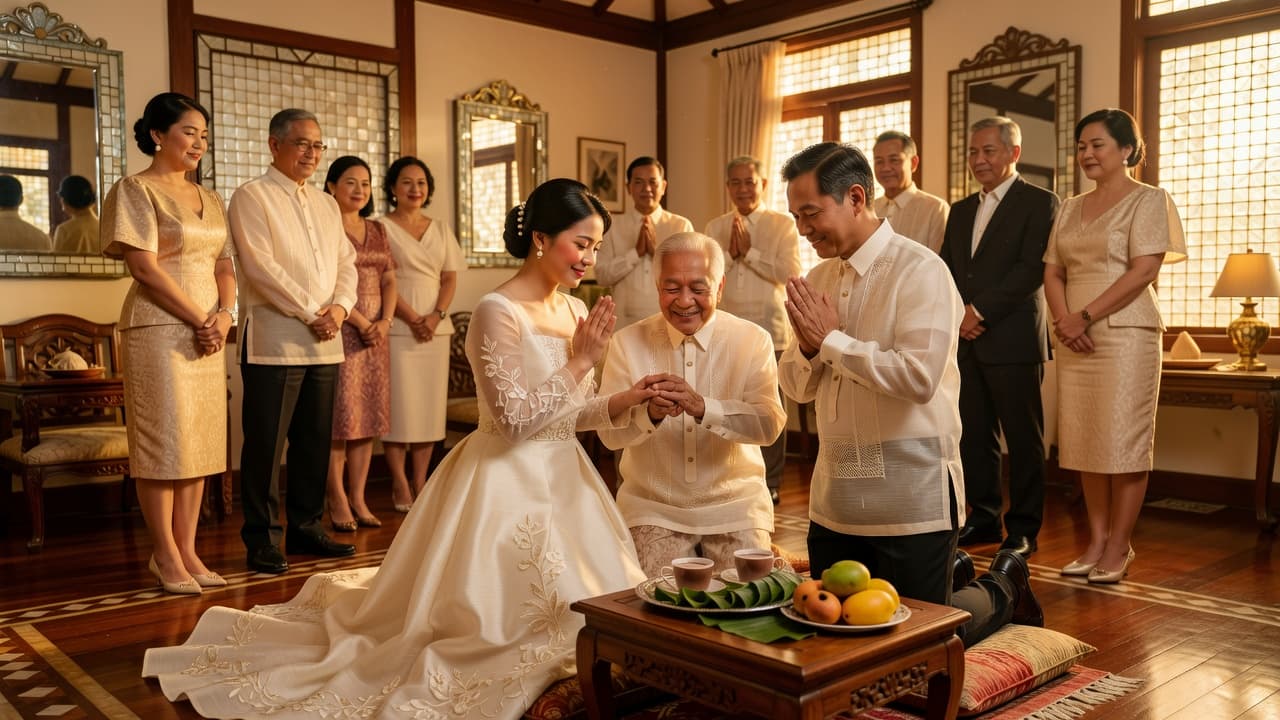
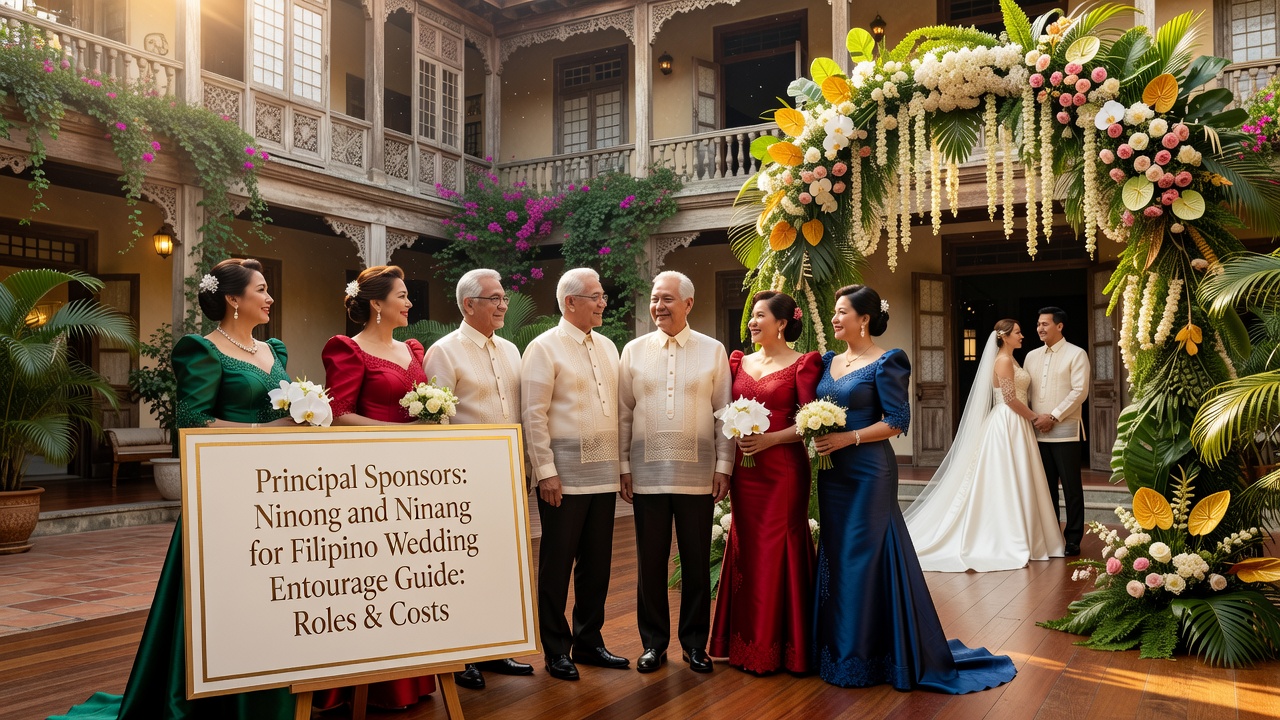
The ninong (male godparent) and ninang (female godparent) hold the most honored positions in a Filipino wedding entourage. They are typically older relatives, family friends, or respected community figures who serve as witnesses to the marriage and spiritual mentors to the couple.
What Ninong and Ninang Do on the Wedding Day
- Sign the marriage certificate as principal witnesses
- Offer prayers and blessings during the ceremony
- Provide spiritual guidance to the couple throughout their marriage
- Stand as role models for a successful, lasting union
- May participate in the arras (coin) ceremony as secondary sponsors if asked
Who Pays for Ninong and Ninang Attire
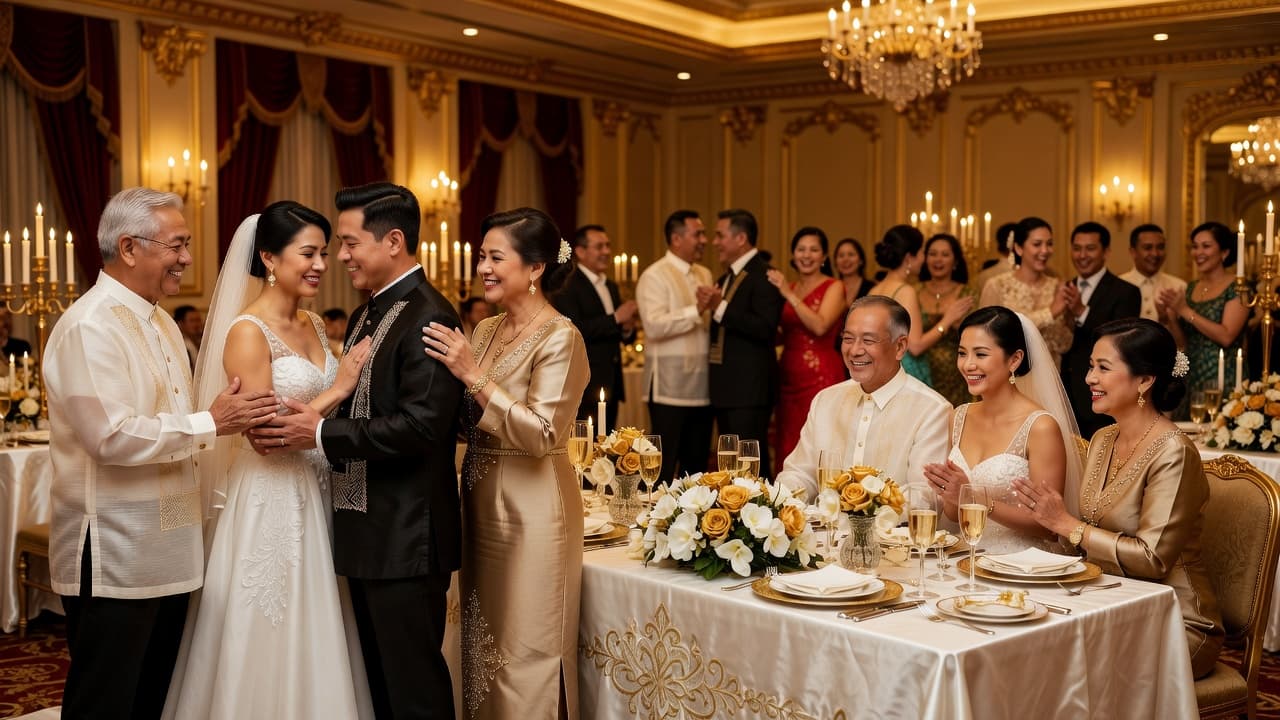
Traditionally, the couple pays for ninong and ninang attire, including barong Tagalog for men and formal Filipiniana gowns or elegant dresses for women. However, many modern ninong and ninang choose to purchase their own formal wear, especially if they prefer a specific style or already own appropriate barong or gowns. The couple typically provides a color palette or theme to coordinate with the wedding aesthetic.
In some families, ninong and ninang may offer to cover their own attire as a gesture of respect and financial support for the couple. If they do, graciously accept—this is a blessing, not an obligation to refuse.
How to Ask Ninong and Ninang
Asking someone to be a ninong or ninang is a significant honor, not a casual request. Follow this etiquette:
- Ask in person: Visit their home with your partner. Bring a small gift—native delicacies, wine, or a personalized item.
- Explain why you chose them: Share what their guidance has meant to you and why you want them in this role.
- Give them time to consider: Some may need to check schedules or discuss with family. Never pressure for an immediate answer.
- Follow up with a formal written invitation: Once they accept, send a beautifully designed invitation card to make it official.
Never ask via text, social media, or through a third party. This is one of the most formal requests in Filipino wedding culture.
Best Man and Maid of Honor
The best man and maid of honor are the couple's closest confidants—usually siblings, best friends, or cousins who know the couple deeply and can handle high-stress wedding day logistics.
Best Man Duties
- Organizes the bachelor party or despedida de soltero
- Coordinates groomsmen and ensures everyone arrives on time
- Keeps the wedding rings safe and presents them during the ceremony
- Assists the groom with attire, nerves, and last-minute needs
- Delivers a toast at the reception (keep it heartfelt, not embarrassing)
- Acts as a witness on the marriage certificate
Maid of Honor Duties
- Organizes the bridal shower and bachelorette party
- Coordinates bridesmaids, schedules fittings, and ensures dress uniformity
- Assists the bride with dressing, makeup touch-ups, and emotional support
- Holds the bride's bouquet during the ceremony and exchanges
- Manages the bride's emergency kit (tissues, pins, stain remover, pain relievers)
- Delivers a toast at the reception
- Acts as a witness on the marriage certificate
Who Pays for Best Man and Maid of Honor Attire
The couple pays for best man and maid of honor attire, matching the groomsmen and bridesmaids. This includes the groom's barong or suit for the best man and the maid of honor's dress or gown. Accessories like shoes and jewelry are sometimes covered by the couple, but modern weddings often leave those to the entourage member.
How to Ask Your Best Man or Maid of Honor
These roles go to your closest people, so the ask should feel personal:
- Choose someone who can handle stress: Emotional support matters, but logistics matter more on the day.
- Ask early: Give them 6-12 months notice so they can plan time off and budget for pre-wedding events.
- Make it personal: Write a letter or take them to a meaningful place. Explain what their friendship means and why you need them by your side.
- Be clear about expectations: Tell them what duties are involved so they can commit fully.
Secondary Sponsors: Candle, Veil, and Cord
Secondary sponsors are a uniquely Filipino wedding tradition. They participate in the unity candle, veil, and cord ceremonies—symbolic rituals that represent the couple's union and the community's support.
Candle Sponsors (1-2 pairs)
The candle sponsors light the unity candles representing the couple's families. During the ceremony, they light the two outer candles; the bride and groom later use these to light the central unity candle, symbolizing their joining as one family.
Duties: Light family candles before the procession, coordinate with the priest or officiant on timing, and ensure candles are properly placed and lit.
Attire payment: The couple pays for candle sponsors' attire, matching the secondary sponsor color palette (typically a distinct shade from the bridesmaids).
Veil Sponsors (1-2 pairs)
The veil sponsors place a ceremonial veil over the kneeling couple's shoulders during the nuptial blessing, symbolizing God's protection and the couple's submission to each other in marriage.
Duties: Pin or drape the veil over the couple at the officiant's signal, then remove it at the appropriate moment. Coordinate with the cord sponsors to avoid tangling.
Attire payment: The couple pays for veil sponsors' attire, matching the secondary sponsor theme.
Cord Sponsors (1-2 pairs)
The cord sponsors place the cord (a silk rope or decorative lasso) in a figure-eight over the couple's shoulders, symbolizing their infinite bond and unity. The cord is typically removed after the exchange of rings.
Duties: Place the cord loosely around the couple's shoulders at the officiant's cue, then remove it after the ring exchange. Practice the placement beforehand to avoid awkward fumbling.
Attire payment: The couple pays for cord sponsors' attire, matching other secondary sponsors.
Who Pays for Secondary Sponsors' Attire
The couple covers all secondary sponsor attire. These sponsors typically wear coordinated dresses or barong in a complementary color to the bridesmaids and groomsmen. Provide a swatch or reference photo to avoid mismatched shades.
How to Ask Secondary Sponsors
Secondary sponsors are usually close relatives or family friends of the couple's parents. Here's the etiquette:
- Parents often suggest candidates: In traditional Filipino families, parents recommend secondary sponsors from their own circle of friends.
- Ask as a couple with parents present: Visit the prospective sponsors' home together with your parents for a formal request.
- Explain the specific role: Clarify whether they're being asked for candle, veil, or cord duty so they understand the ceremony involvement.
- Present a small gift: A box of pastries, a bottle of wine, or a personalized token shows respect.
Ring Bearer and Coin Bearer
These charming roles are filled by young children—usually nephews, cousins, or close family friends—who add innocence and delight to the ceremony.
Ring Bearer
The ring bearer carries the wedding rings down the aisle on a small pillow or in a decorative box. While the rings are often tied securely to the pillow (to prevent loss), the symbolism is what matters.
Duties: Walk down the aisle with the ring pillow, hand the rings to the best man or officiant at the appropriate moment, then sit with parents or join the flower girls.
Attire payment: The couple pays for the ring bearer's attire—typically a mini barong, suit, or formal outfit matching the groomsmen's style.
How to ask: Ask the child's parents first, not the child directly. Explain the role and confirm the child can handle walking down the aisle in front of a crowd. Children aged 3-7 are ideal; younger may cry or wander, older may feel too grown-up for the role.
Coin Bearer (Arras)
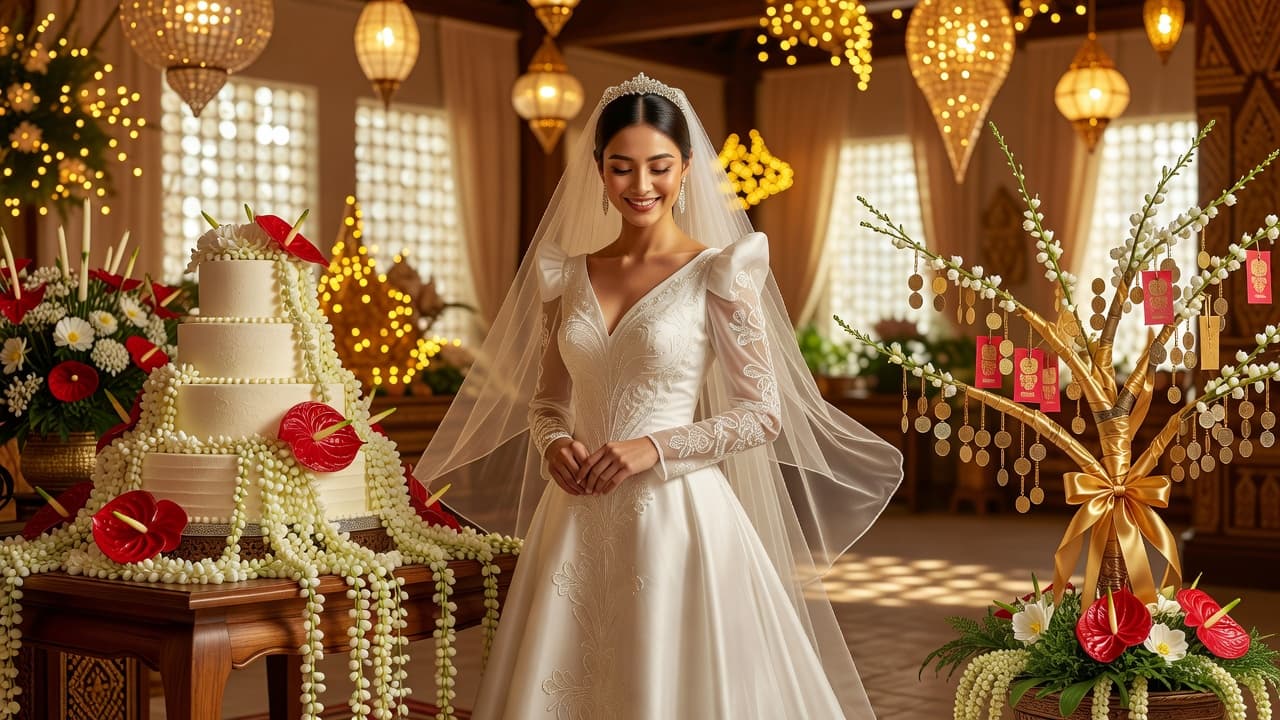
The coin bearer carries the arras—13 coins representing prosperity and the groom's promise to provide for the family. In some ceremonies, the coins are presented by the sponsors rather than a child, but a coin bearer is traditional in formal Filipino weddings.
Duties: Carry the arras coins down the aisle, present them to the officiant or groom during the ceremony, then return to their seat.
Attire payment: The couple pays for the coin bearer's attire, matching the ring bearer.
How to ask: Same as the ring bearer—approach parents first, confirm the child is comfortable with the role, and keep expectations age-appropriate. Practice the walk at least once before the wedding.
Flower Girls
Flower girls scatter petals down the aisle before the bride's entrance, creating a romantic path and symbolizing fertility and new beginnings.
Flower Girl Duties
- Walk down the aisle scattering flower petals (or carrying a small bouquet if scattering isn't allowed at the venue)
- Sometimes carry a small basket of flowers instead of petals
- Exit with parents or the bridal party after the ceremony
- May join the couple for formal photos
Who Pays for Flower Girl Attire
The couple pays for flower girl dresses, which are typically white or pastel and match the wedding's aesthetic. Shoes and accessories are sometimes included but often left to the parents. Provide clear sizing requirements early—children grow fast, and last-minute alterations are stressful.
How to Ask Flower Girls
Ask the parents first. Present it as a fun, honored role, not a burden. Give parents a timeline for fittings and rehearsals. If you have multiple flower girls, ensure they get along and practice walking together. Consider having a backup plan—one parent near the aisle exit—if a child gets stage fright.
Groomsmen and Bridesmaids
While not unique to Filipino weddings, these roles fill out the entourage and support the best man and maid of honor.
Groomsmen Duties
- Usher guests to their seats before the ceremony
- Escort bridesmaids down the aisle during the processional
- Assist with setup, logistics, and troubleshooting
- Attend pre-wedding events (bachelor party, rehearsals)
- Support the groom emotionally and practically
Bridesmaids Duties
- Assist with wedding planning tasks (DIY projects, vendor research)
- Attend dress fittings and bridal shower
- Help the bride dress and stay calm on the wedding day
- Walk down the aisle with groomsmen
- Participate in pre-wedding photos and events
Who Pays for Groomsmen and Bridesmaids Attire
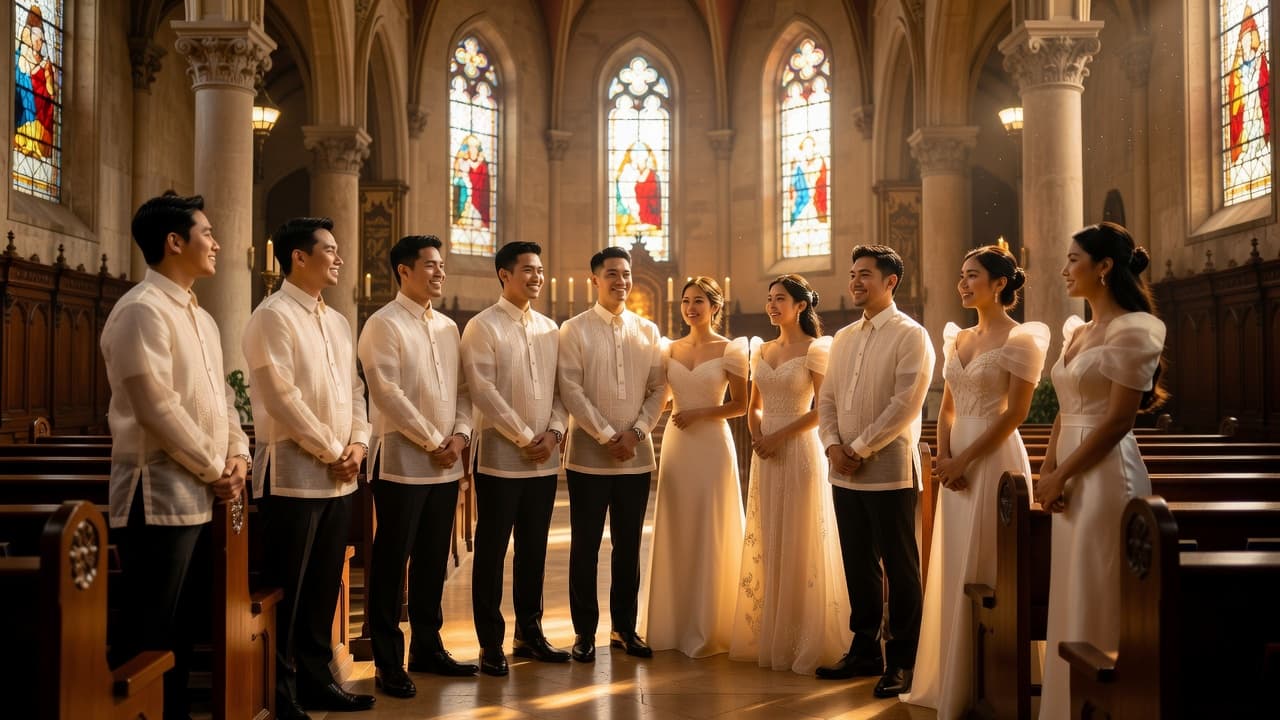
The couple pays for all groomsmen and bridesmaids attire. This is standard in Filipino weddings. Groomsmen wear barong Tagalog or suits matching the groom; bridesmaids wear coordinated dresses or gowns. The couple typically chooses the design and color; entourage members provide their measurements.
How to Ask Groomsmen and Bridesmaids
Ask friends and siblings who are reliable, supportive, and available. Give them a clear timeline and budget for pre-wedding events. A fun way to ask: send a personalized card or small gift box with a note asking them to stand by your side. Group announcements at a dinner or gathering also work for close-knit friend groups.
Key Takeaways
- The ninong and ninang are the most honored roles, serving as spiritual witnesses and mentors. Ask them in person with a small gift, never via text.
- The couple traditionally pays for all entourage attire, including barong Tagalog, Filipiniana gowns, bridesmaid dresses, and children's formal wear.
- Secondary sponsors (candle, veil, cord) participate in unique Filipino unity ceremonies and are typically chosen from the parents' circle of friends.
- Ring bearers, coin bearers, and flower girls add charm but require age-appropriate expectations and parental involvement.
- Ask all entourage members early—6 to 12 months before the wedding—to allow time for planning, fittings, and pre-wedding events.
- Be clear about duties and financial expectations to avoid awkward conversations later.
- Honor Filipino wedding traditions while adapting to modern budgets and schedules—flexibility is key to a joyful celebration.
Frequently Asked Questions
How many ninong and ninang should we have?
Most Filipino weddings have 2-4 pairs of ninong and ninang. Some formal Catholic weddings may have more, but 4-8 total principal sponsors is standard. Choose people who genuinely know and care about your marriage, not just prominent names for status.
Can we have a female best man or male maid of honor?
Yes, modern Filipino weddings are increasingly flexible. A "man of honor" or "best woman" is perfectly acceptable. The title matters less than the person's ability to support you on your wedding day. Choose your closest, most reliable person regardless of gender.
What if our ninong or ninang can't afford their attire?
The couple traditionally covers ninong and ninang attire. If they offer to pay, graciously accept. If they can't, quietly cover the cost without making them feel embarrassed. The honor of their presence matters more than who pays.
Do secondary sponsors need to be married?
Traditionally, yes—candle, veil, and cord sponsors are often married couples who represent a successful union. However, modern weddings are more flexible. Unmarried couples or close relatives can serve as secondary sponsors if they hold significant meaning to the couple or their families.
How do we handle entourage attire for a destination wedding?
For beach or international destination weddings, provide clear attire guidelines. Lightweight barong or linen suits work for tropical locations. If entourage members are flying in, consider having attire made locally or shipped to the destination. Cover shipping costs if you're providing the outfits.
Can we combine the ring bearer and coin bearer roles?
Yes, one child can carry both if your ceremony includes both traditions. However, ensure the child is old enough to handle two items without confusion. Alternatively, the arras coins may be presented by secondary sponsors or the officiant instead of a child bearer.
What if someone we asked declines the role?
Graciously accept their decision. They may have financial, health, or scheduling constraints. Never guilt or pressure someone. Have a backup list of potential candidates, but don't rush to ask someone else immediately—it can feel like a second choice.
Do we need to give gifts to our entourage?
Yes, it's customary to give small thank-you gifts to entourage members, especially ninong and ninang. Personalized items, religious tokens, or practical gifts like engraved pens or photo frames are thoughtful. Present gifts at the rehearsal dinner or during the reception.
How do we coordinate entourage attire colors?
Provide a color swatch or reference photo to all entourage members. For bridesmaids, choose a specific dress design from one supplier to ensure uniformity. For ninong and ninang, specify barong color (white, cream, beige) and provide fabric swatches if you're covering the cost.
Can we have entourage members who aren't Filipino?
Absolutely. Many Filipino weddings include non-Filipino friends, in-laws, or colleagues. Brief them on the ceremony's spiritual significance so they feel comfortable participating. Non-Filipino ninong or ninang should understand the cultural and religious weight of the role before accepting.
Conclusion
Assembling your Filipino wedding entourage is one of the most meaningful parts of wedding planning. Each role—from the ninong and ninang who witness your vows to the flower girls who scatter petals before your entrance—carries tradition, honor, and purpose. Understanding who pays for what, how to ask with proper etiquette, and what each person does on the day ensures your ceremony reflects both cultural heritage and personal relationships.
The best entourage is built on genuine connection, not obligation. Choose people who will stand by your marriage, not just your wedding day. And remember: traditions are a guide, not a rulebook. Adapt them to your family, your budget, and your love story.
Need help planning your wedding ceremony? [Internal link: related article on Filipino wedding ceremony traditions] or [Internal link: related article on wedding budget planning for Filipino couples].