Ninong & Ninang: Principal Sponsors Guide + Templates
By WedPlanner Team
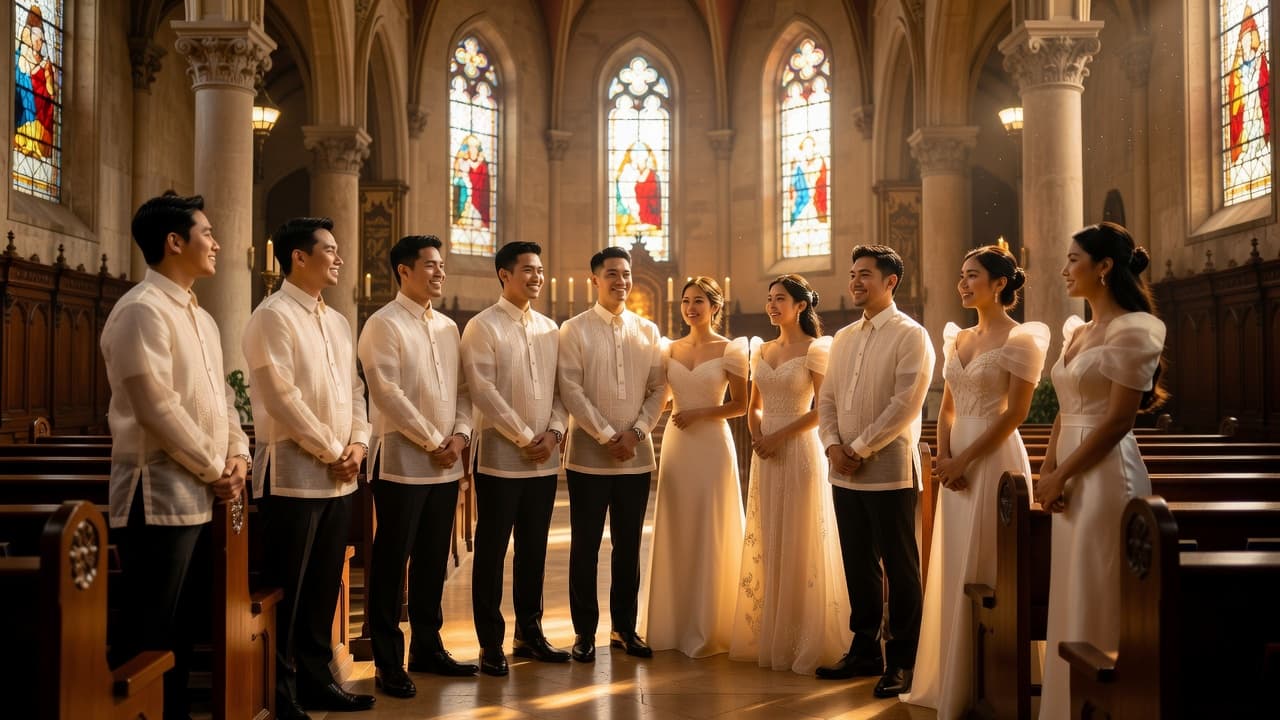
This deep-dive explains how ninong and ninang principal sponsors work in Filipino wedding traditions—how many to choose, what they actually sponsor, their ceremony vs. reception roles, and copy-paste request letter templates.
Filipino wedding traditions: The Ninong and Ninang Guide to principal sponsors
Quick Answer: In Filipino wedding traditions, principal sponsors (ninong and ninang) are trusted adults who help coordinate key ceremony moments, may sponsor specific wedding items or costs, and often support the reception program. The “right” number is usually 2 or 4, chosen by availability, fit, and how clearly you define responsibilities.
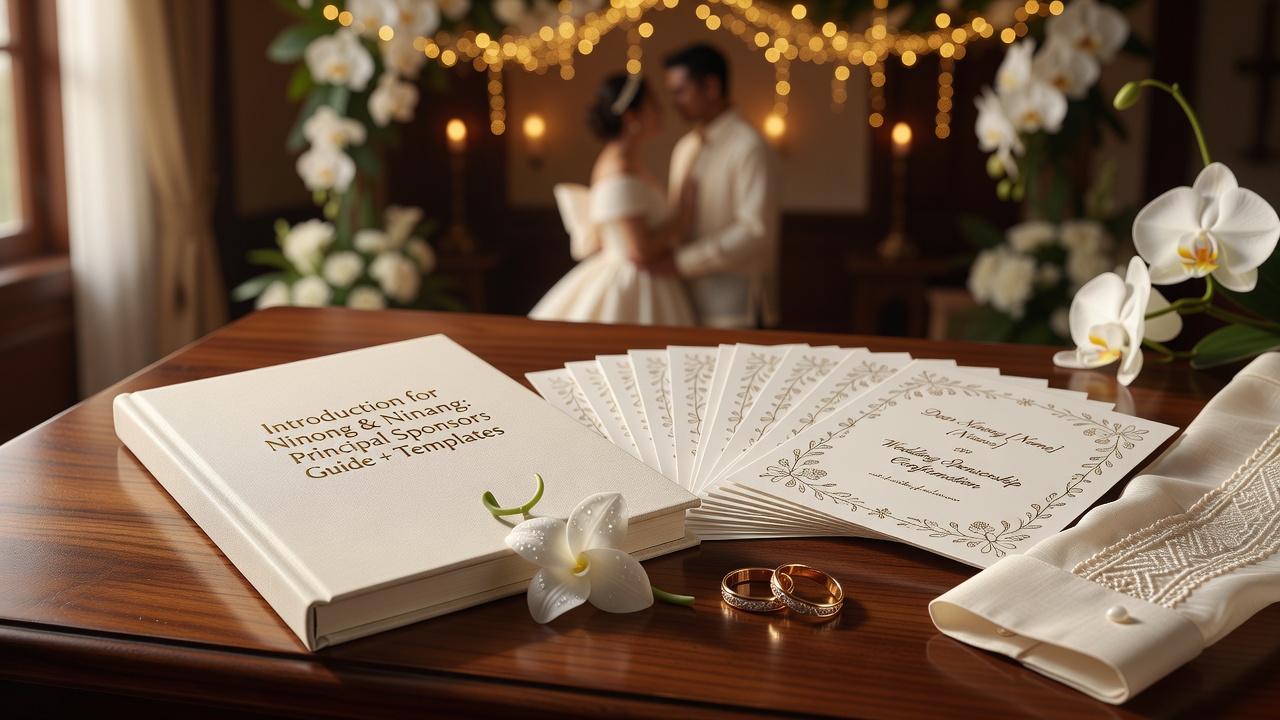
Introduction
Choosing ninong and ninang can feel joyful—until you realize the role comes with real expectations. Couples often wonder: How many principal sponsors should we have? Who should we ask? What are they responsible for—financially, logistically, or both? And the biggest pain point: How do we ask without awkward pressure?
This guide answers all of that with a practical deep dive into principal sponsors in Filipino weddings. You’ll get clear definitions, a decision framework, ceremony vs. reception responsibilities, sponsorship categories (so you’re not vague), and multiple request-letter templates you can copy-paste.
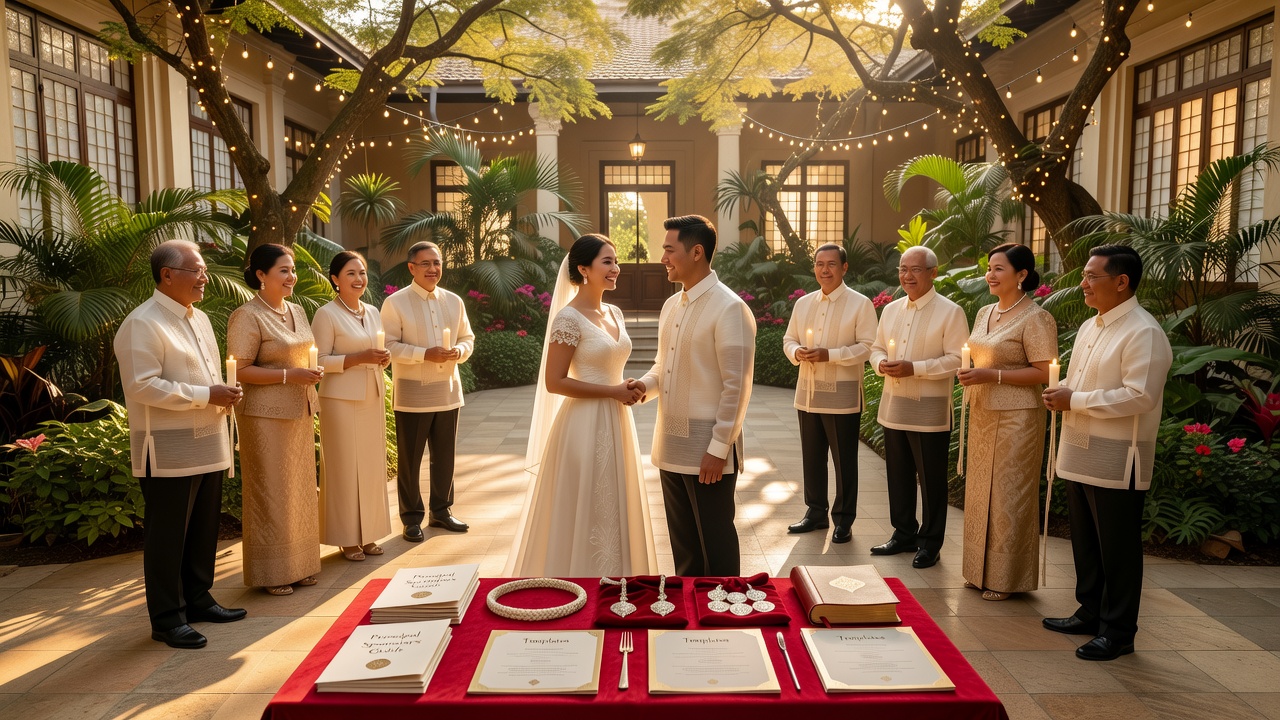
Filipino wedding traditions: What principal sponsors really handle
Quick Answer: Principal sponsors are not just “special guests.” They are accountable adults you invite to lead or participate in the most visible wedding phases. Depending on your family practice, they also sponsor specific items/costs (or provide a blessing envelope) and support the reception flow so your day stays organized and blessed.
Before you choose, it helps to define key terms:
- Ninong (male) and Ninang (female): respected individuals you invite to serve as ceremonial sponsors.
- Principal sponsors: the main ninong/ninang who carry the biggest, most coordinated responsibilities (participation + sponsorship alignment + presence during key moments).
- Secondary sponsors (sometimes called sponsors/honorees): additional people who may support with blessings or items but aren’t assigned the same “principal” coordination duties.
- Blessing envelope: a monetary or value contribution given for agreed wedding needs—common in some families—usually handled with clear boundaries and deadlines.
Why this matters: Most stress comes from assumptions. When responsibilities are defined early, principal sponsors feel respected, and you avoid last-minute confusion.
[Internal link: Wedding timeline checklist for Filipino weddings]
How many principal sponsors should you have?
Quick Answer: Most couples choose either 2 principal sponsors (one ninong + one ninang) or 4 principal sponsors (two ninong + two ninang). Choose based on ceremony complexity, the number of adults who can reliably attend, and how much coordination you want to do.
Common options (and when they fit)
| Setup | Typical meaning | Best for |
|---|---|---|
| 2 principal sponsors | 1 ninong + 1 ninang | Smaller celebrations, simpler ceremony flow, couples who want less coordination. |
| 4 principal sponsors | 2 ninong + 2 ninang | Traditional family expectations, larger guest lists, ceremonies with more structured sponsor moments. |
| More than 4 | Principal + supporting sponsor structure | Only if you separate duties clearly so “principal” doesn’t become a confusing label for everyone. |
A quick decision checklist
- Availability: Can they arrive early, stay for key moments, and help through the reception portion you need?
- Communication: Are they responsive enough to confirm details by a deadline?
- Fit: Do they know you well enough to represent your family respectfully during ceremonial moments?
- Willingness to align: Can you define what they sponsor (or what they participate in) without awkward bargaining?
Rule of thumb: If you’re uncertain, start with 2. Upgrade to 4 only when you’re confident the extra sponsors will be organized and present.
Who should you ask to be ninong and ninang?
Quick Answer: Choose people who are meaningful and dependable. Common options are godparents, respected relatives, mentors, and long-standing family friends. The best principal sponsors are willing to show up, understand the role clearly, and confirm what they can sponsor—without you having to “chase” them.
High-fit candidates (usually)
- Godparents or spiritual mentors who already hold a blessing relationship with you.
- Aunt/Uncle or elder relatives respected in your community and comfortable with ceremony participation.
- Family friends who “act like family” and have the temperament for formal roles.
- Mentors who supported your journey and can represent your values politely.
Low-fit candidates (avoid as principal sponsors)
- People who tend to cancel, run late, or dislike planning.
- Anyone who gets stressed when they have to confirm expectations.
- Someone you value, but who isn’t realistically available for the ceremony/reception commitments you need.
Practical tip: When you invite, ask for their commitment to presence first. Sponsorship can often be structured in a way that fits their comfort, but unreliable attendance can disrupt your program.
[Internal link: Ceremony program checklist and “roles at the altar” worksheet]
What do principal sponsors sponsor or are responsible for?
Quick Answer: Principal sponsors typically sponsor specific wedding items or selected costs, or they contribute through a blessing envelope. They may also be responsible for defined logistics (like transportation coordination) and for participating in key ceremony and reception moments.
Because Filipino wedding traditions vary by family and region, the most helpful approach is to treat sponsorship as a menu with categories you can assign—not a vague “support us.”
Common sponsorship categories (define these early)
- Ceremony support: contributions tied to the ceremony flow (varies by church and family tradition).
- Wedding wardrobe or accessories support: sometimes they assist with outfits, formalwear, or key accessories needed for sponsor participation.
- Rings-related support: in some families, sponsors help fund or provide ring-related items.
- Reception contribution: a portion of food, program elements, or other reception needs—again, this must be defined.
- Blessing envelope: a value contribution meant for agreed wedding needs, usually with a deadline.
- Logistics support: helping with transportation, problem-solving, and guest assistance on the day.
How to set responsibilities without awkwardness
Use a simple formula in your planning conversations:
- What: item/cost category (not just “help”)
- How much (optional): your comfort range, or “whatever you’re comfortable with”
- When: a due date for confirmation or payment
- How to deliver: pick-up date, handover date, or coordination person
Key principle: A good principal sponsor request is a planning alignment, not a financial demand.
What is a principal sponsor’s role during the ceremony?
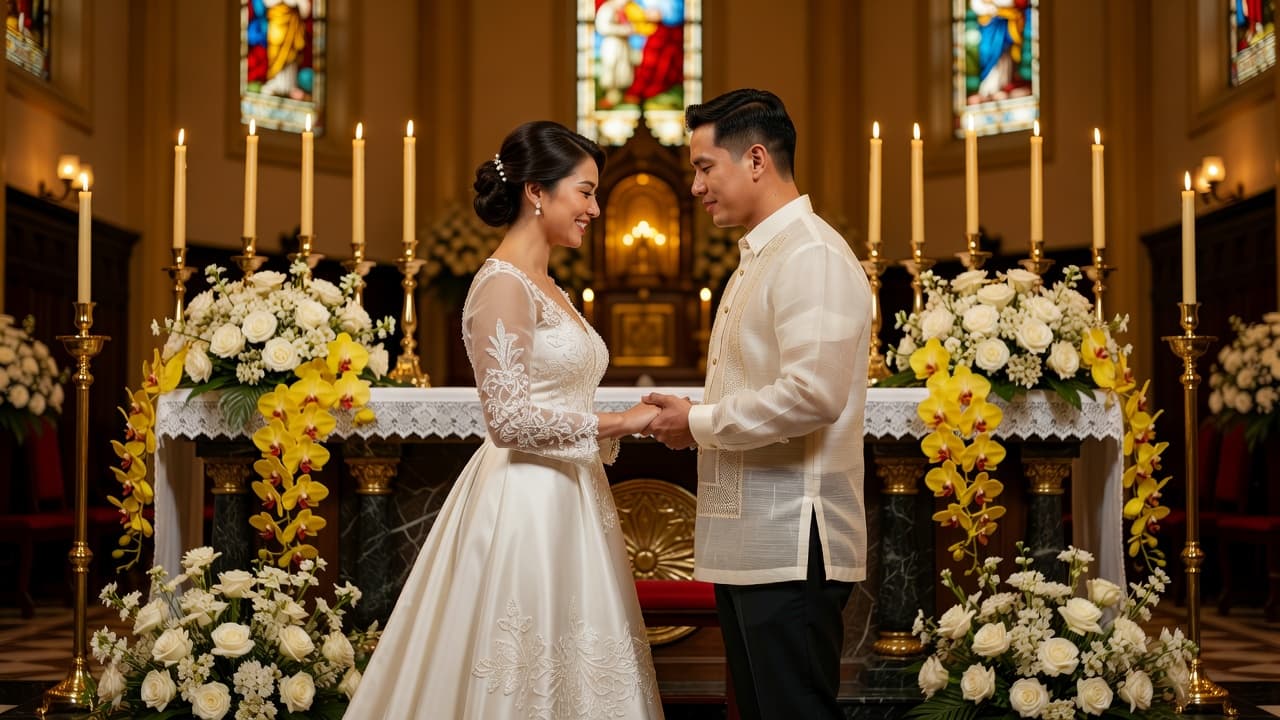
Quick Answer: During the ceremony, principal sponsors typically provide visible, structured support: they arrive early, follow church/coordinator instructions, and participate in sponsor-related moments (standing/sitting in designated places, holding or presenting items when required, and maintaining a calm, present energy).
Exact ceremony duties depend on your religious setting (church program, officiant instructions) and your family’s practice, but a principal sponsor role usually includes:
- Early readiness: arriving before guests, briefing on where to go, and following usher/coordinator directions.
- Formal participation: taking part in the sponsor moments assigned by your ceremony flow.
- Support presence: staying for the key segments that involve sponsor participation—so you’re not reassigning roles mid-program.
Featured snippet checklist (ceremony)
- Confirm arrival time and where to be.
- Share your ceremony sequence with sponsor moments highlighted.
- Agree on any items they must bring/hold (if applicable).
- Assign a point person (you or coordinator) for day-of questions.
Tip: If you have a wedding coordinator, ask them to include principal sponsors in one short pre-ceremony orientation.
What is a principal sponsor’s role during the reception?
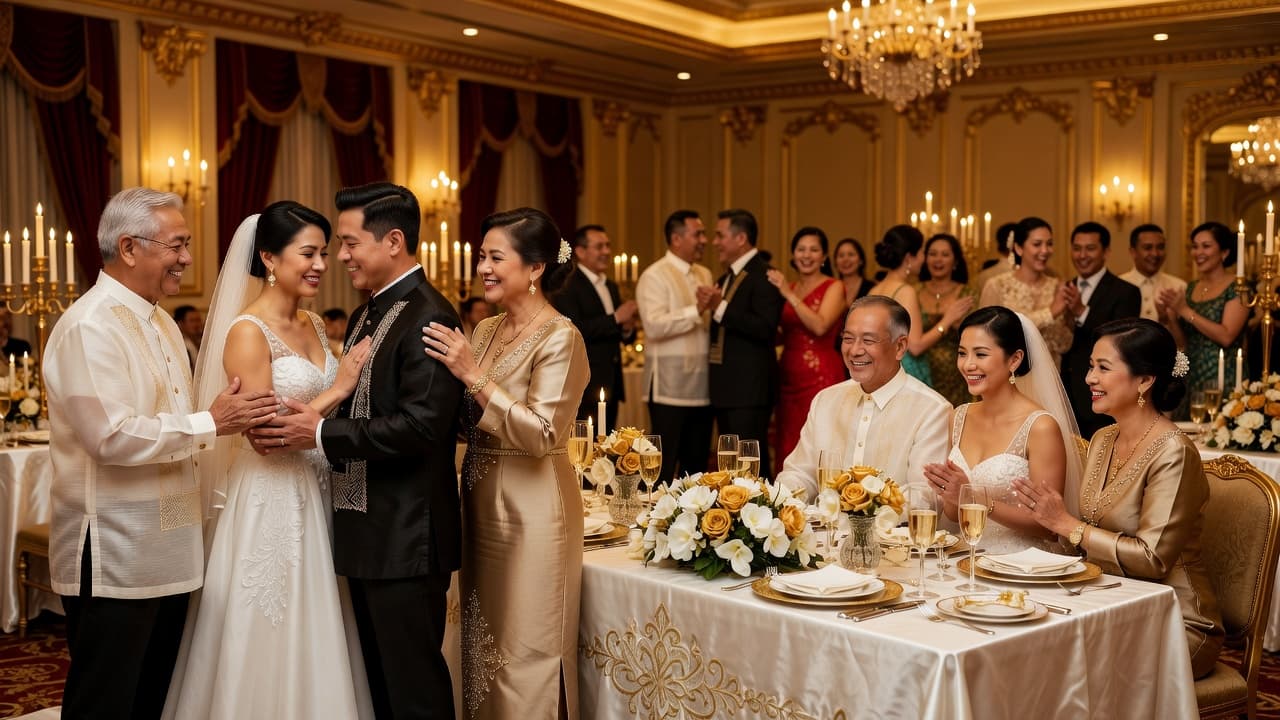
Quick Answer: During the reception, principal sponsors often shift from ritual participation to community leadership. They may help greet guests, support the program flow, deliver blessings or announcements when scheduled, and handle small logistics—especially helping the couple stay calm and focused.
Reception responsibilities depend on how your program is structured, but commonly include:
- Welcoming and guest support: greeting families, assisting older relatives, and keeping guest movement smooth.
- Program continuity: staying available for speeches, sponsor acknowledgments, or blessing moments (as defined by your reception emcee/program).
- Day-of problem solving: being a calm presence who can quickly handle “where is X?” moments.
- Representation: reaffirming that the celebration is anchored in family/community support—not just couple-centered.
Simple rule for couples: If your reception is short, assign principal sponsors fewer visible moments. If it’s long, give them a clear schedule so they know when to be active and when they can relax.
[Internal link: Reception program flow templates (intro → meals → speeches → formalities)]
What might principal sponsorship cost?
Quick Answer: Principal sponsors often cover specific categories—like wardrobe support, ceremony-linked items, rings-related support, reception contributions, or a blessing envelope. Costs vary widely by family practice and budget. The safest approach is to agree on categories and deadlines, then let sponsors contribute within their comfort.
Instead of asking for an exact number immediately, consider a tiered approach:
- Step 1 (category): Decide what they will support (e.g., reception contribution or a blessing envelope).
- Step 2 (comfort range): Share your comfort needs (e.g., “We’re budgeting X–Y for this category” or “Any amount within your comfort is welcome”).
- Step 3 (deadline): Confirm when the sponsorship should be ready.
- Step 4 (handover method): Decide how you receive it (pickup, delivery, or coordination via a designated person).
Professional help note: If you’re dealing with a complicated family dynamic or conflicting expectations, a wedding coordinator can help translate responsibilities into an organized day plan that prevents misunderstandings.
How to choose the right principal sponsors: a step-by-step framework
Quick Answer: Choose principal sponsors by reliability first, then alignment on responsibilities, then emotional meaning. Confirm their willingness clearly, define sponsorship categories and deadlines, and prepare them with a short ceremony/reception schedule. This reduces stress for you and prevents sponsors from feeling surprised.
Step 1: Build your sponsor “responsibility map”
Create a one-page list with:
- Which ceremony moments involve sponsors
- Which reception segments they support
- Which sponsorship category each principal sponsor owns (or the option set)
- Day-of contact person
Step 2: Invite people with clarity
In your initial ask, explain:
- They are principal sponsors, not just invitees
- They will participate in key ceremony/reception moments
- There will be a quick planning alignment on categories and deadlines
Step 3: Confirm in writing (even if brief)
A simple text confirmation is enough, but it protects both sides:
- Date and role confirmation
- Sponsorship category
- Due date
- What they need to bring (if applicable)
How to write a meaningful request letter to ninong and ninang (plus tips)
Quick Answer: A meaningful request letter is respectful, specific, and easy to respond to. It should state your wedding date, explain why you chose them, clearly describe the principal sponsor role in ceremony and reception, include a sponsorship category (or options), and end with a clear response deadline.
What a strong request letter must include
- Relationship framing: Why them (1–2 sincere lines).
- Role clarity: “We’re asking you to be our principal sponsor (ninong/ninang).”
- Participation: Mention ceremony + reception involvement at a high level.
- Sponsorship alignment: Give categories or options (avoid vagueness).
- Response timeline: A deadline and next step (call/meeting or confirmation).
- Gratitude: Close with warmth and respect.
Tone rules (to avoid awkwardness)
- Use “alignment” language instead of “demand” language.
- Offer choices if you worry about pressure.
- Avoid vague requests like “sponsor anything” or “help with everything.”
[External link: Church wedding guidelines and sponsor/participant etiquette (placeholder)]
Request letter templates: copy-paste wording
Template 1: Formal printed letter (traditional tone)
Subject/Opening: Ninong/Ninang [Full Name], Principal Sponsor Request for Our Wedding
Dear Ninong/Ninang [Full Name],
Greetings of blessings. My name is [Your Full Name], and I am writing to respectfully ask for your support as a principal sponsor (ninong/ninang) in our wedding on [Wedding Date].
We chose you because [1 sentence: relationship reason—e.g., “you have been a guiding presence in our lives and we deeply value your blessings”]. Your support would mean a lot to us and our families.
As our principal sponsor, we kindly ask for your participation in the following:
- Ceremony: joining us for the sponsor-related moments on our wedding day and following the coordinator/church instructions for where to be and when.
- Reception: supporting the reception program flow and (if scheduled) joining our key reception moments.
- Sponsorship/support: we would like to align with what you are most comfortable supporting. Options may include [choose one or more: selected wedding items, reception contribution, or a blessing envelope for agreed wedding needs].
To help us prepare smoothly, may we request your confirmation by [Response Deadline]? If you are open, we would also appreciate a short call/meeting (10–15 minutes) to align on timing and sponsorship details.
Thank you for considering our request. With respect and gratitude, your presence and blessing will be truly meaningful to us.
Sincerely,
[Your Full Name]
[Partner Full Name]
[Contact Number / Email]
Template 2: Warm message for chat/email (simple and clear)
Subject: Request to be our Ninong/Ninang Principal Sponsor
Hi Ninong/Ninang [Name]! I hope you’re doing well.
We’re getting married on [Wedding Date], and we wanted to ask if you would be our ninong/ninang principal sponsor. We chose you because [1 sentence relationship reason].
As principal sponsors, we’ll coordinate the key ceremony and reception moments with you. We’ll also align on what support you’re comfortable providing (for example, a blessing envelope or a specific item/category).
If you’re available, may we confirm your yes by [deadline]? Thank you so much—we’d be honored to have your blessing.
With love and respect,
[Your Name]
Template 3: “Options” template (reduces pressure and misunderstandings)
Dear Ninong/Ninang [Name],
We are honored to invite you to be one of our principal sponsors for our wedding on [Wedding Date].
To make it easier for you to participate comfortably, we would like to align sponsorship/support in one of these ways:
- Option A: Sponsor a specific wedding item/category that you prefer.
- Option B: Provide a blessing envelope for agreed wedding needs.
- Option C: Participate mainly in ceremony and reception moments, if you prefer a lighter sponsorship.
Please let us know which option feels right for you. We respectfully request confirmation by [deadline] so we can finalize our ceremony and program.
With gratitude,
[Your Names]
Common mistakes couples make with principal sponsors (and fixes)
Quick Answer: The most common mistakes are vague expectations, late asking, and choosing principal sponsors without confirming their availability and comfort. Fix it by assigning clear categories, agreeing on deadlines, sharing your ceremony/reception flow, and confirming responsibilities in writing.
Mistake 1: Asking “for help” without defining the principal role
If they think they’re just a guest, they may feel blindsided. In your letter, explain principal sponsor expectations—participation and alignment on sponsorship/support.
Mistake 2: Choosing principal sponsors without checking availability
A meaningful person can still be a poor principal sponsor if they can’t be present. Confirm attendance before locking the title.
Mistake 3: Sponsorship without categories
“Can you sponsor something?” creates pressure. Use categories or options in your letter.
Mistake 4: No timeline or response deadline
Principal sponsors need time to prepare. Add a confirmation deadline and propose a short planning call.
Mistake 5: Overloading “principal sponsors” with responsibilities for everyone
If you assign too much, even the best sponsors will struggle. Keep principal responsibilities manageable and aligned with what they can do.
Alternatives if you can’t (or shouldn’t) have multiple principal sponsors
Quick Answer: You can still honor Filipino wedding traditions with a smaller principal sponsor team, clearer roles, or a structured plan where sponsorship categories are assigned only to available adults. The key is clarity: define who participates when and what support each person owns.
Practical alternatives
- Go with 2 principal sponsors and use secondary sponsors only where needed.
- Make principal sponsors “participation-focused” and let your family cover specific costs.
- Create a secondary blessing plan so additional supporters don’t carry “principal sponsor” coordination duties.
If budget is tight, emphasize that principal sponsor value isn’t only money—it’s presence, blessings, and organized support.
Key Takeaways
- Principal sponsors in Filipino wedding traditions are accountable adults who coordinate and participate in key ceremony/reception moments.
- Most couples choose 2 or 4 principal sponsors, depending on reliability, tradition, and how structured your ceremony is.
- Choose ninong/ninang for reliability and alignment, not just closeness.
- Define sponsorship categories (or offer options) so support is respectful, specific, and comfortable.
- Use a meaningful request letter with role clarity, sponsorship alignment, and a response deadline.
Frequently Asked Questions
1) Is it okay to have only one ninong and one ninang?
Yes. Many couples choose one ninong and one ninang because it simplifies ceremony and reception coordination. The important part is clarity: confirm arrival time, participation in key moments, and any sponsorship category or blessing envelope so expectations stay aligned.
2) What do principal sponsors usually sponsor in a Filipino wedding?
They commonly sponsor or support specific items or selected costs (such as ceremony-linked items, wardrobe/accessories help, rings-related support, reception contributions) or provide a blessing envelope for agreed wedding needs. The best practice is assigning clear categories and deadlines.
3) When should we ask ninong and ninang to be principal sponsors?
Ask early—ideally during the earlier planning stage—so they can confirm availability, prepare responsibilities, and coordinate with your wedding timeline. If you need any items purchased or prepared, give them more lead time rather than relying on last-minute decisions.
4) How do we ask about sponsorship without sounding demanding?
Use respectful language and offer options. Explain that principal sponsor support is about alignment and comfort: for example, “a blessing envelope” or “a specific item/category you prefer.” Include a deadline and invite them to confirm what they’re comfortable supporting.
5) Should principal sponsors attend both the ceremony and the reception?
Often, yes—especially when your family practice expects principal sponsors to be present for key segments. If they can’t stay the whole reception, you can assign a smaller reception role (such as scheduled blessing moments or welcoming duties), but confirm this upfront.
6) Can our principal sponsors be friends instead of relatives?
Yes. Filipino wedding traditions value meaningful relationships. A trusted friend, mentor, or godparent can be a great principal sponsor if they’re reliable, comfortable with a formal role, and willing to align on participation and sponsorship/support responsibilities.
7) What if a principal sponsor says they can’t sponsor items?
That can happen, and it’s okay. You can still invite them for ceremony/reception participation while your family or other supporters cover specific costs. Use your request letter to clarify categories so sponsorship can be adapted without confusion.
8) Do we need a written confirmation from principal sponsors?
It’s strongly recommended. A short written confirmation (text/email) helps both sides: it records the ceremony/reception expectations, the sponsorship category, and the due date. It reduces misunderstandings and prevents last-minute surprises.
9) Where do we include principal sponsors in the reception program?
Include them in the program where your tradition requires it—often during acknowledgments, blessings, or scheduled sponsor moments. If your reception has an emcee, share the exact sponsor timeline so principal sponsors know when to be available.
Conclusion
Choosing ninong and ninang principal sponsors is one of the most meaningful parts of Filipino wedding traditions—when it’s done with clarity. Pick people who will be present, align on what they sponsor or support, and participate confidently in your ceremony and reception flow.
Next step: Copy Template 1, 2, or 3 above, fill in your names and wedding date, and send your request with a clear response deadline. If you’re working with a wedding coordinator, share your sponsor responsibility map too, so everyone stays aligned.
Business CTA: If you want smoother planning, consider having a wedding coordinator review your ceremony and reception schedule with principal sponsors—so your day feels blessed and organized from start to finish.