How to Handle Wedding Day Jitters: A Filipino Couples Survival Guide
By WedPlanner Team
Learn practical and emotional strategies to manage wedding day jitters with this Filipino wedding planning survival guide. Discover what to pack, who to assign, how to eat, and how to stay calm before walking down the aisle.
How to Handle Wedding Day Jitters: A Filipino Couples Survival Guide
Quick Answer: Wedding day jitters are completely normal for Filipino couples. Pack an emergency kit 48 hours ahead, assign specific tasks to trusted family members, eat a light protein-rich breakfast 3 hours before the ceremony, and practice deep breathing when anxiety peaks. Having a structured plan lets you actually enjoy your wedding day.
Introduction
Your alarm goes off. It's finally here—the day you've been Filipino wedding planning for, maybe for months or even years. Your heart's racing, your hands are slightly clammy, and suddenly that beautiful wedding dress or barong Tagalog feels a bit too real. If you're reading this on your wedding morning, breathe. You're not alone, and you're not losing it.
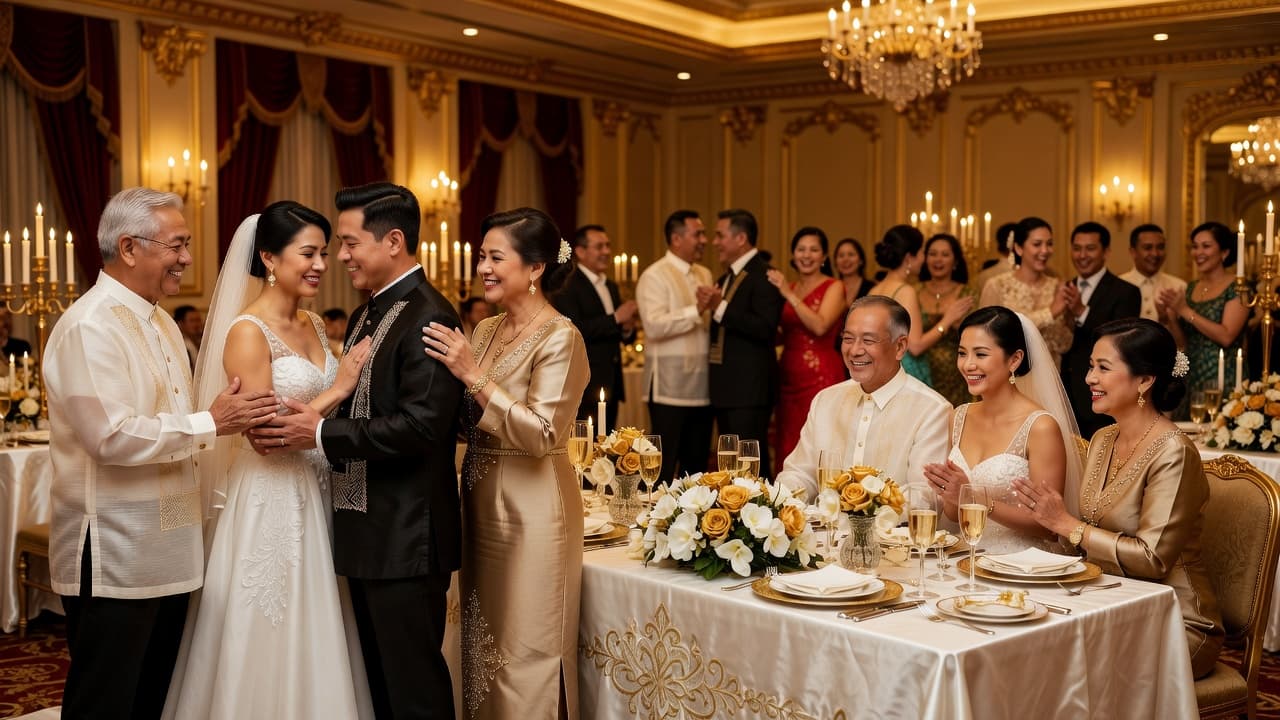
Wedding day jitters hit nearly every couple, but Filipino weddings come with their own unique pressures. Large extended families, multiple entourage members, complex Catholic or traditional ceremonies, and the weight of cultural expectations can amplify pre-ceremony anxiety. This guide isn't about eliminating nerves—that's impossible and maybe not even desirable. It's about managing them so they don't manage you.
We wrote this for real couples navigating Filipino wedding planning, not Pinterest-perfect ones. Every tip here comes from understanding how Filipino families actually operate: the well-meaning but overwhelming tita who wants to coordinate everything, the cousin who promises to help but disappears, the pressure to feed 200+ guests properly. Let's get you through this beautifully.
Understanding Wedding Day Anxiety
Why Filipino Weddings Amplify Jitters
Filipino wedding planning often involves more moving parts than Western celebrations. Average guest lists run 150-300 people. The ceremony might include Catholic mass elements, cord and veil rituals, coin blessings, or arrhae exchanges. Multiple family units—from both sides—expect involvement. It's a lot.
Research on pre-wedding anxiety shows that uncertainty drives most jitters. When you don't know who's handling what, or whether Auntie Linda remembered the cord, your brain fills the gaps with worst-case scenarios. The antidote isn't positive thinking—it's concrete planning.
The Physical Side of Nerves
Your body doesn't distinguish between wedding excitement and wedding terror. Same racing heart, same adrenaline surge. Understanding this helps: those butterflies aren't a sign something's wrong. They're a sign something important is happening.
Common physical symptoms include:
- Rapid heartbeat and shallow breathing
- Nausea or loss of appetite
- Sweaty palms and temperature fluctuations
- Tension headaches or muscle tightness
- Urgent bathroom needs (nerves hit the digestive system hard)
None of these mean you're not ready to get married. They mean you're human.
The Filipino Wedding Emergency Kit: Pack This 48 Hours Ahead
Nothing spikes wedding day anxiety like realizing you forgot something essential. Pack your emergency kit two days before—when you're still thinking clearly.
For the Bride
- Fashion tape and safety pins — Baro't saya or modern gown emergencies happen
- Comfortable backup flats — For reception dancing after hours in heels
- Oil-blotting sheets and powder — Philippine humidity is relentless
- Personal hygiene essentials — Freshen up between ceremony and reception
- Phone charger or power bank — You'll use your phone more than you think
- Copies of vendor contracts — Just in case someone needs reference numbers
For the Groom
- Spare barong or polo — Sweat happens; rice spills happen
- Extra handkerchiefs — Emotional ceremonies require them
- Cufflinks backup — Tiny items get lost in hotel room chaos
- Comfortable shoes for dancing — Those leather soles hurt after hour three
For Both
- Snacks and bottled water — We'll cover eating strategy below, but pack emergency sustenance
- Cash in small bills — For unexpected tips or vendor needs
- List of emergency contacts — Coordinator, venue manager, caterer head
- Copies of marriage license — Requirements vary by municipality; bring extras
Pro tip: Assign the emergency kit to one specific person—a sibling, best friend, or coordinator—not both of you. You shouldn't be digging through bags while getting ready.
Who to Assign: Delegate or Drown
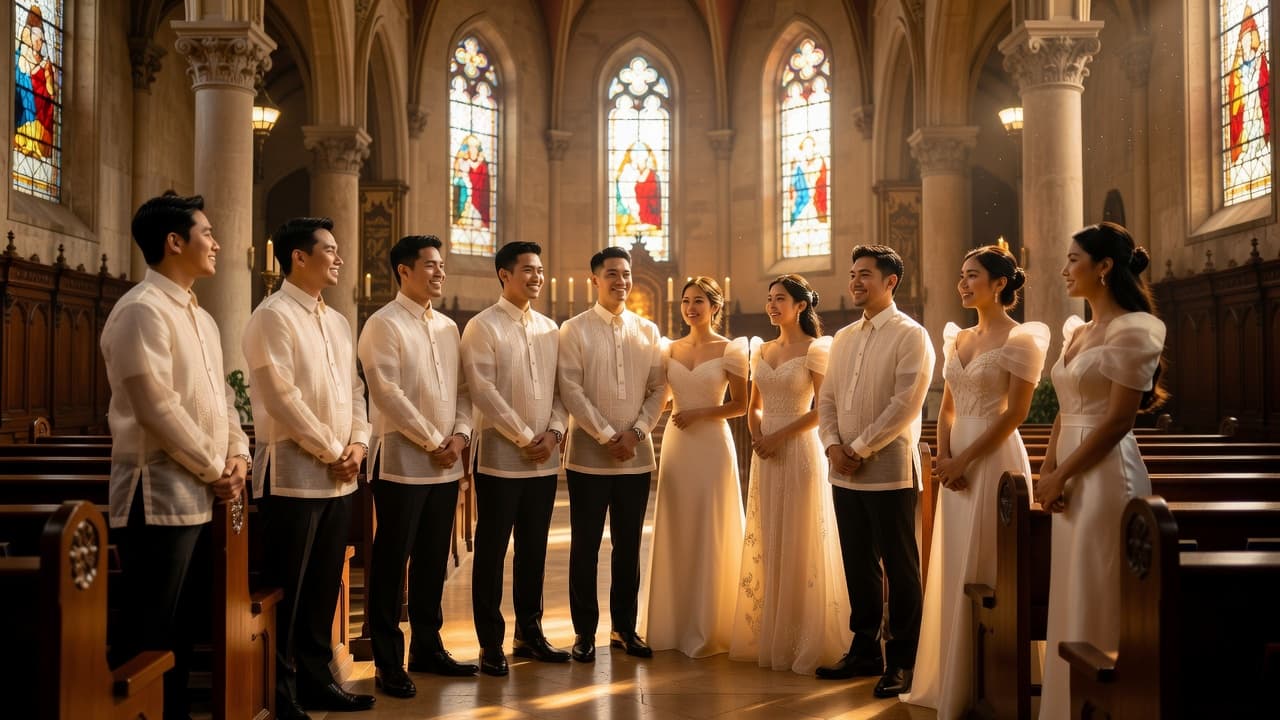
Filipino wedding planning traditionally involves the whole barangay, but unclear roles create chaos. Every task needs one named owner, not "someone will handle it."
The Essential Roles
Day-of Coordinator: This person is your buffer. They handle vendor arrivals, timeline delays, and family questions so you don't have to. Professional coordinators are worth every peso for Filipino weddings, but if budget's tight, assign your most organized, assertive friend—not your people-pleaser cousin who can't say no to tita requests.
Family Liaison (One from Each Side): Designate one trusted relative per family to field questions, manage late arrivals, and communicate any issues. This prevents 47 separate people from texting you with "Where do we park?" questions.
Photo/Video Wrangler: Filipino entourage photos take forever. Assign someone with a loud voice and zero patience for dawdling to wrangle family members for group shots. Your photographer will thank you.
Payment Handler: Someone with envelopes of cash for vendors who require final payment on-site. Not you. Not your fiancé. Someone who won't get distracted.
Personal Attendant: One person each for bride and groom who stays within shouting distance. They fetch water, hold phones, and provide emotional support.
What NOT to Do
Don't assign tasks to family members based on guilt or obligation. If your brother is chronically 45 minutes late, he's not your timekeeper. If your mother-in-law stresses you out, she's not your getting-ready companion. Kind boundaries protect your sanity.
How to Eat: Fuel for the Marathon
Food strategy sounds silly until you're lightheaded during vows or hangry during photo sessions. Filipino wedding days are long—often 12-16 hours from prep to send-off.
The Morning-of Protocol
Eat 3 hours before the ceremony. This gives food time to settle while keeping you fueled. Choose:
- Complex carbs (oatmeal, whole grain bread)
- Lean protein (eggs, chicken)
- Foods you know don't upset your stomach
Avoid: Heavy Filipino breakfast staples like tapsilog or longsilog—too greasy when nerves are already affecting digestion. Save the celebratory Filipino food for the reception.
During Prep
Set reminders to sip water every hour. Dehydration amplifies anxiety symptoms. Have light snacks available—bananas, crackers, granola bars. Assign someone to actually bring them to you; don't assume you'll remember.
Post-Ceremony
Filipino weddings often have a gap between ceremony end and reception start for photos. This is danger zone for low blood sugar. Plan a 15-minute snack break—sandwiches, fruit, anything portable. Your coordinator should build this into the timeline.
At the Reception: You'll barely eat your own wedding meal. It's not sad; it's logistics. Take bites during table visits, and have your personal attendant save you a plated portion for later. Many Filipino wedding planning veterans skip the buffet line entirely and request a reserved meal at a quiet moment.
Staying Calm: Emotional Strategies That Actually Work
The 5-Minute Pre-Ceremony Reset
Find a private space 5 minutes before you walk. Set a timer. Close your eyes. Breathe in for 4 counts, hold for 4, out for 6. Repeat. This isn't meditation fluff—it actively downregulates your sympathetic nervous system.
Grounding Techniques
When panic surges, name 5 things you can see, 4 you can touch, 3 you can hear, 2 you can smell, 1 you can taste. This pulls your brain out of catastrophic future-thinking into present reality.
The Partner Check-In
Filipino weddings sometimes separate bride and groom for hours before the ceremony. If possible, exchange a brief note, voice message, or even a quick video call. Remind each other why you're doing this. The wedding is a party; the marriage is what matters.
Assign an Emotional Sponge
One person—maid of honor, best man, sibling—gets full permission to absorb your venting without trying to fix anything. "I'm freaking out" doesn't need a solution. It needs witness.
When Family Drama Hits
Filipino family dynamics are beautiful and complicated. If tensions arise between relatives, you are not the referee today. Your coordinator or family liaisons handle it. Practice saying: "I trust you to figure that out. I need to focus right now."
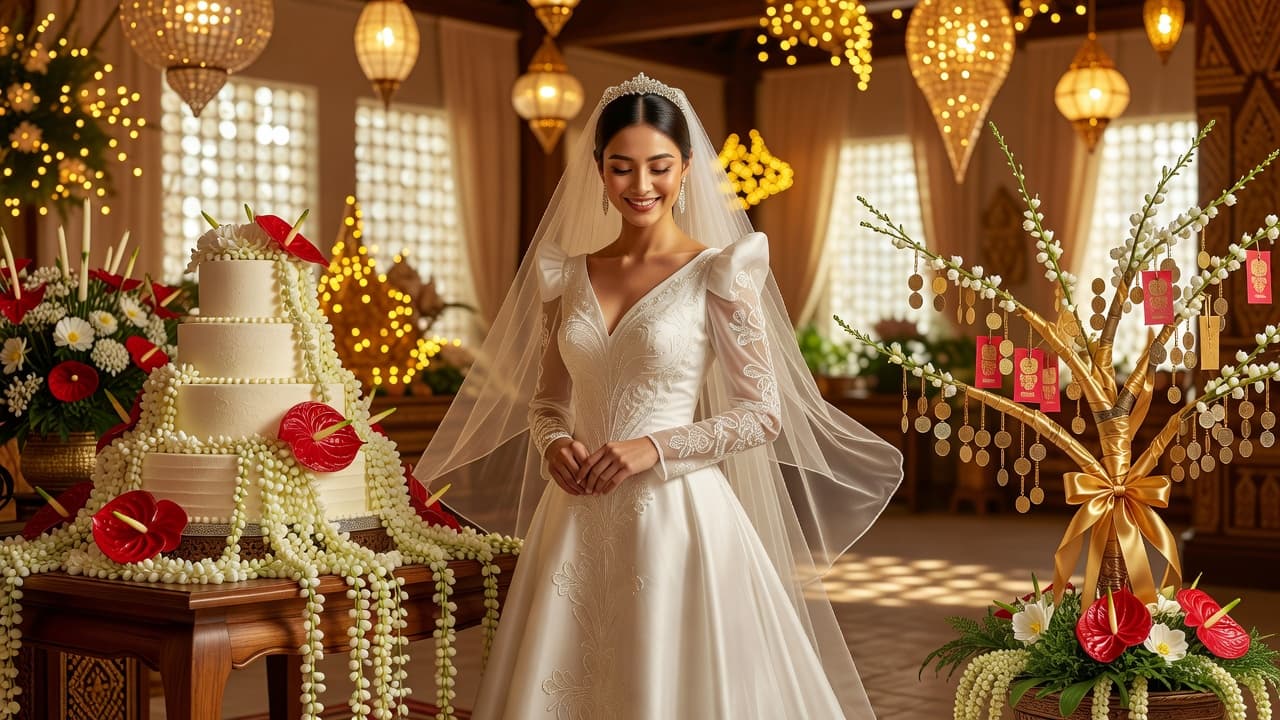
Filipino Cultural Context: Embracing Tradition Without Added Stress
The Catholic Ceremony Elements
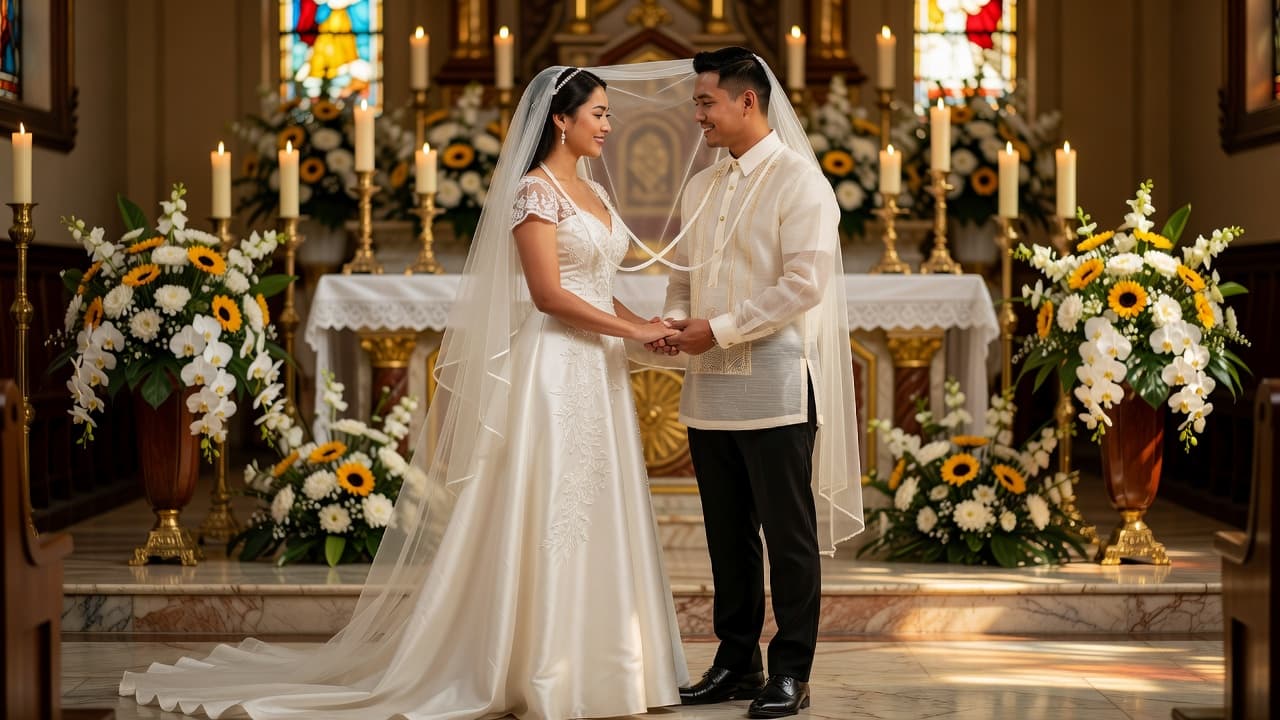
If you're having a Catholic mass wedding, build in extra time. Full nuptial mass with communion can run 60-90 minutes. Inform non-Catholic guests about standing/kneeling expectations. Having a printed program prevents awkward confusion.
The Cord, Veil, and Coins
These Filipino wedding traditions require specific participants:
- Cord sponsors (usually principal sponsors, or ninong/ninang) place a cord in figure-eight shape
- Veil sponsors drape a veil over bride and groom's shoulders
- Coin bearer presents arrhae (wedding coins)
Confirm these participants during rehearsal, not morning-of. Principal sponsors sometimes assume they're all doing everything—clarify roles explicitly.
The Reception Flow
Filipino wedding planning typically structures reception as: entrance, first dance, prayers/blessing, dinner, speeches, cake cutting, dancing. Build buffer time between each. Filipino events rarely run exactly on schedule, and that's okay—but your vendors need realistic timelines.
Feeding the Extended Family
Filipino guest lists expand. They just do. Your "final" count of 180 becomes 210 by the week before. Plan 10-15% buffer in catering numbers, or confirm your caterer's last-minute addition policy. Nothing sours a celebration faster than guests with no food.
Common Mistakes Filipino Couples Make
- Micromanaging everything — You can't coordinate and be the star. Pick one role.
- Assigning tasks based on feelings — Your favorite cousin might be terrible at time management. Be practical.
- Skipping the rehearsal — Filipino weddings have multiple ritual elements. Walk through everything once.
- Not eating — We covered this, but it bears repeating. Eat.
- Trying to please every relative — Someone will be unhappy. Accept this. Your wedding, your marriage, your rules.
- No backup indoor plan — Philippine weather is unpredictable. If any portion is outdoors, have Plan B ready.
Key Takeaways
- Pack your emergency kit 48 hours before the wedding—include fashion fixes, snacks, phone chargers, and vendor contacts
- Assign every essential task to one specific person: coordinator, family liaisons, photo wrangler, payment handler, personal attendant
- Eat a light, familiar breakfast 3 hours before the ceremony; set water reminders throughout prep
- Use breathing exercises and grounding techniques when anxiety surges—4 counts in, hold 4, out 6
- Embrace Filipino traditions fully, but clarify roles during rehearsal so morning-of runs smoothly
- Accept that Filipino weddings run on Filipino time—build buffer into every timeline
- Remember: the marriage matters more than the wedding. The jitters pass; the partnership stays
Frequently Asked Questions
How early should I start Filipino wedding planning to avoid day-of stress?
Start 12-18 months ahead for large Filipino weddings with 200+ guests. This allows time to book popular venues and coordinate principal sponsors from abroad. Last-minute Filipino wedding planning is possible but significantly increases anxiety.
What should I eat on my wedding morning if I'm too nervous?
Choose bland, familiar foods like oatmeal, toast with peanut butter, or bananas. Avoid greasy Filipino breakfast staples when nauseous. Even half a banana and water is better than nothing—low blood sugar amplifies anxiety symptoms.
Who pays for what in a traditional Filipino wedding?
Traditionally, the groom's family covers reception costs while the bride's family handles church and pre-wedding expenses. Modern Filipino couples increasingly share costs or handle everything themselves. Discuss this openly during early Filipino wedding planning.
How do I handle relatives who want to add last-minute guests?
Set a firm guest list deadline 6-8 weeks before the wedding. Communicate this clearly to both families. When late requests come, blame venue capacity or catering commitments—not personal preference. Stand firm; every addition affects budget and logistics.
What if I actually feel sick from nerves before walking down the aisle?
Sip room-temperature water, practice slow breathing, and tell your coordinator. Having them nearby helps. Remember: adrenaline peaks and subsides. Most brides report feeling calm once they start walking and see their partner.
Should we do a first look to calm nerves?
Many Filipino couples are opting for pre-ceremony first looks despite traditional separations. Seeing your partner privately before the ceremony can significantly reduce anxiety. Discuss this together during Filipino wedding planning—it's your choice, not tradition's.
How do I manage family drama on my wedding day?
Assign family liaisons from each side to handle conflicts. Refuse to be pulled into negotiations. Practice saying: "I need to focus on getting married. Please work with [liaison name]." Your coordinator can also run interference.
What's the best way to stay hydrated during a long wedding day?
Set hourly phone reminders to sip water during prep. Assign your personal attendant to bring water regularly. At the reception, alternate alcoholic drinks with water. Philippine heat and humidity make dehydration happen faster than you'd expect.
How do Filipino wedding traditions affect the timeline?
Catholic ceremonies with full mass, cord/veil/coin rituals, and long photo sessions with extended families add 2-3 hours compared to secular weddings. Build this into your vendor contracts and guest communications during Filipino wedding planning.
What if something goes wrong despite all my planning?
Something will go wrong. That's universal, not unique to Filipino weddings. The mark of a successful wedding isn't perfection—it's how quickly you move past hiccups. Guests remember joy, not minor logistical glitches. Focus on your partner and the commitment you're making.
Conclusion
Wedding day jitters don't mean you're having doubts. They mean you're having a wedding. For Filipino couples, the scale and cultural richness of the celebration adds beautiful complexity—and legitimate stress.
The antidote isn't eliminating every worry. It's building systems: packed emergency kits, delegated responsibilities, realistic timelines, and breathing room for the unexpected. Filipino wedding planning is as much about managing people and emotions as it is about picking flowers and tasting cake.
When you feel overwhelmed, remember why you're doing this. Not for the perfectly staged photo. Not for your mother's approval or your college friends' Instagram stories. For the person waiting at the end of the aisle, probably feeling exactly the same butterflies.
Take a breath. Eat something. Trust your team. Walk toward your partner. Everything else is just noise.
Planning your Filipino wedding? Explore our complete Filipino Wedding Planning Guide for venue checklists, budget templates, and month-by-month timelines.