The Kasal Planning Guide: Your 12-Month Countdown
By WedPlanner PH Team
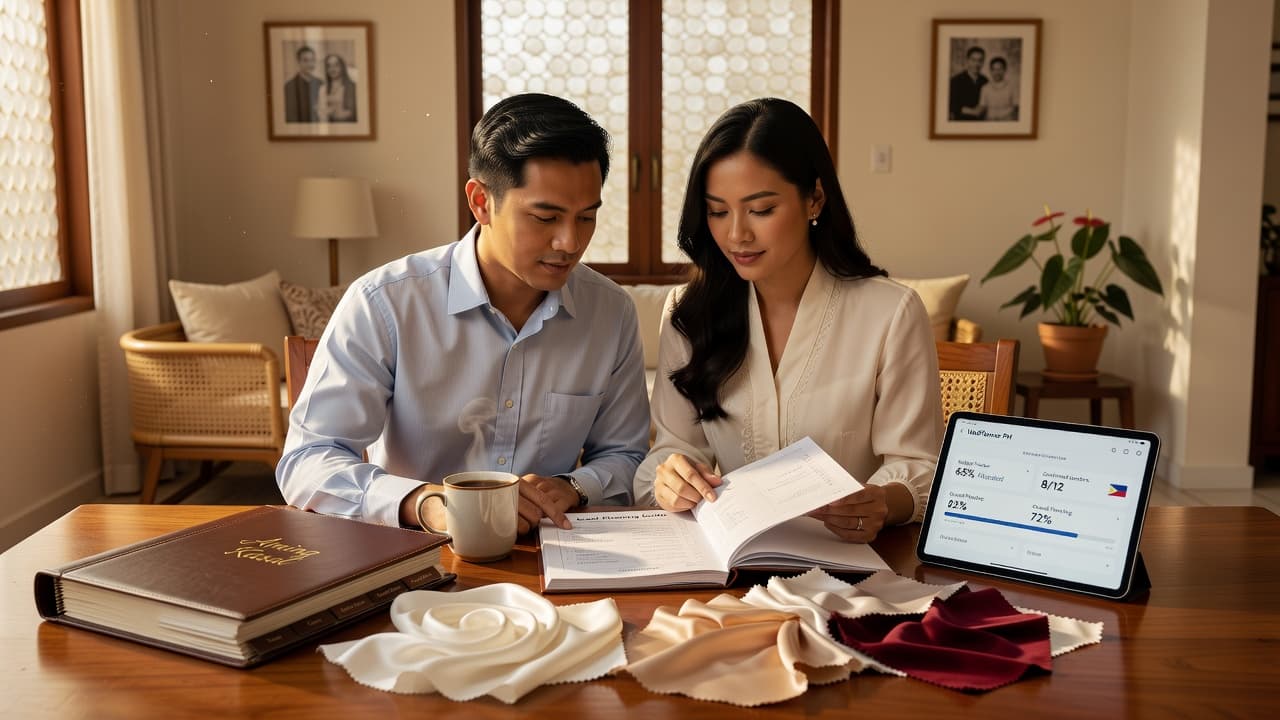
Your kasal planning guide: a 12-month Filipino wedding checklist from pamamanhikan to the big day, with real PHP budget breakdowns and traditions woven in.
Your kasal planning guide starts here — not with a Pinterest board, but with a realistic timeline. Planning a Filipino wedding means navigating pamamanhikan, ninong and ninang selection, church requirements, and a guest list that somehow triples between your first draft and the final count. This 12-month countdown walks you through every milestone — Filipino-specific, budget-conscious, and designed to keep you sane.
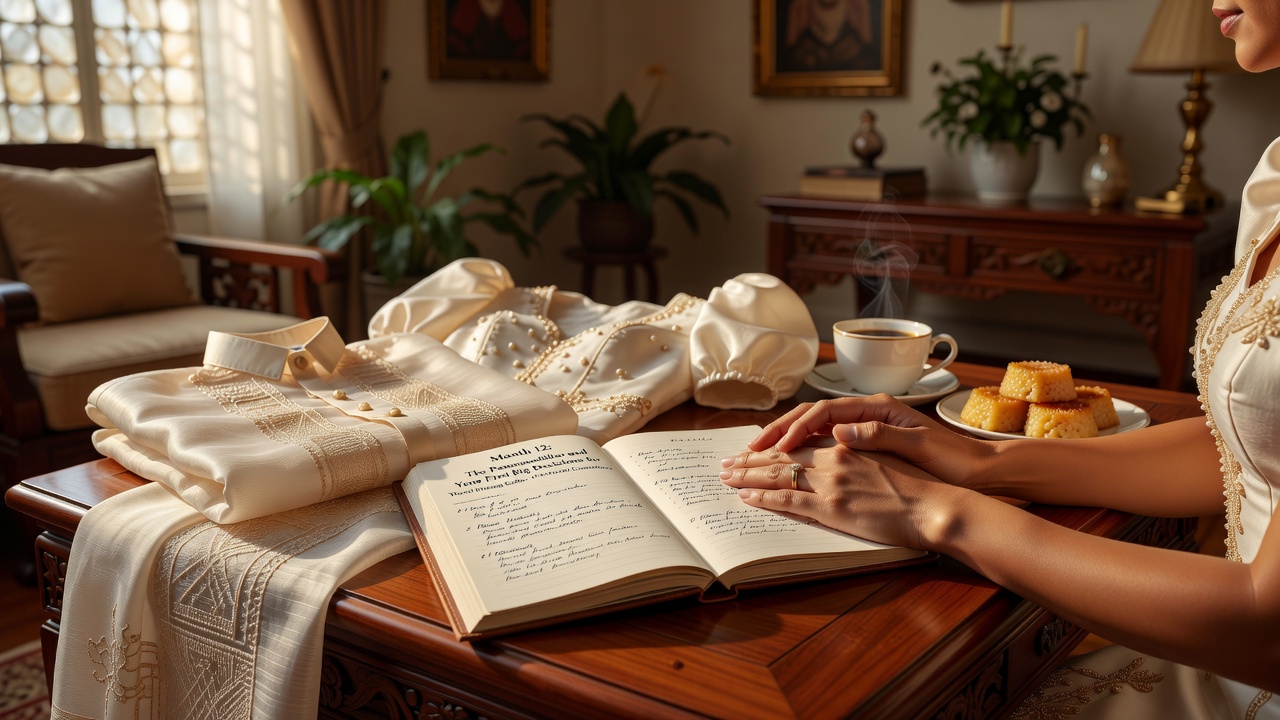
Month 12: The Pamamanhikan and Your First Big Decisions
In Filipino culture, wedding planning starts with pamamanhikan — the formal visit where the groom's family asks for the bride's hand. It's tradition, but it's also practical: this is where both families first discuss the wedding and the budget.
- Schedule the pamamanhikan. The groom's family traditionally brings food. Dress respectfully.
- Have the money conversation. Filipino weddings are often funded by multiple parties — the couple, both sets of parents, and sometimes ninongs and ninangs. A kasal budget Philippines conversation now prevents resentment later.
- Set your rough budget. A modest wedding (50–80 guests): ₱100,000–₱250,000. Mid-range (100–200 guests): ₱300,000–₱800,000. Large (200+ guests): ₱1,000,000+.
- Discuss wedding type. Church or garden? Catholic or civil? This shapes everything.
- Start your guest list. Write down everyone. Your parents will add names. Your ninong will expect to bring his family. Start full; trim later.
Filipino Context: The Guest List Reality
Here's a truth every Filipino couple learns: your guest list is not entirely yours. Between your parents' kumpadres, your ninongs' extended families, and barangay connections, a "small" Filipino wedding often means 150 people. Accept this early and budget for it.
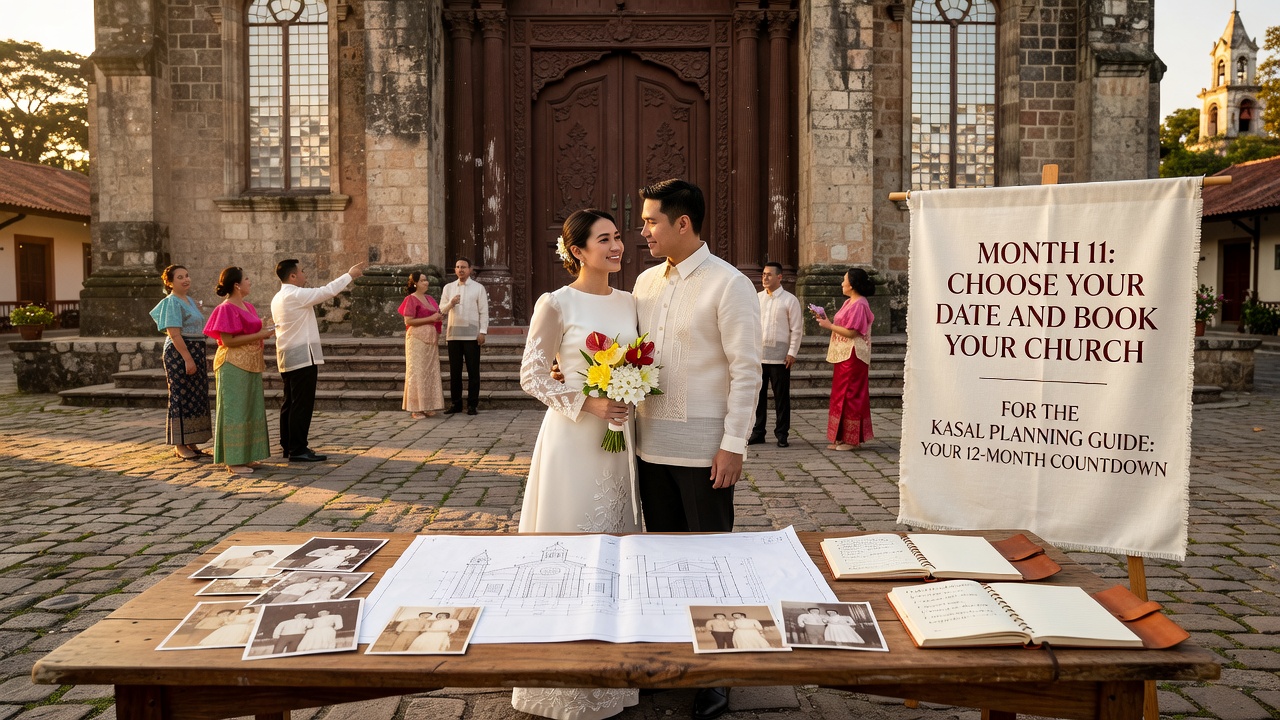
Month 11: Choose Your Date and Book Your Church
Your wedding date isn't just about availability — it's about the church calendar, the weather, and sometimes pamahiin (superstitions).
- Check the church calendar. Popular churches like San Agustin or Caleruega book 12–18 months ahead. Call or visit in person — many parishes don't have online booking.
- Understand church requirements. Baptismal and confirmation certificates (with "For Marriage Purposes" annotation), marriage license, canonical interview, Pre-Cana seminar certificate, and principal sponsors list. Start gathering now — provincial parish documents can take weeks.
- Consider the weather. December–February is peak season (cooler). June–November is typhoon season — have a rain plan for garden weddings. March–May is summer: hot but dry.
- Book your reception venue. Popular Tagaytay, Batangas, and Antipolo venues book 12+ months out.
Church vs. Garden: What Changes
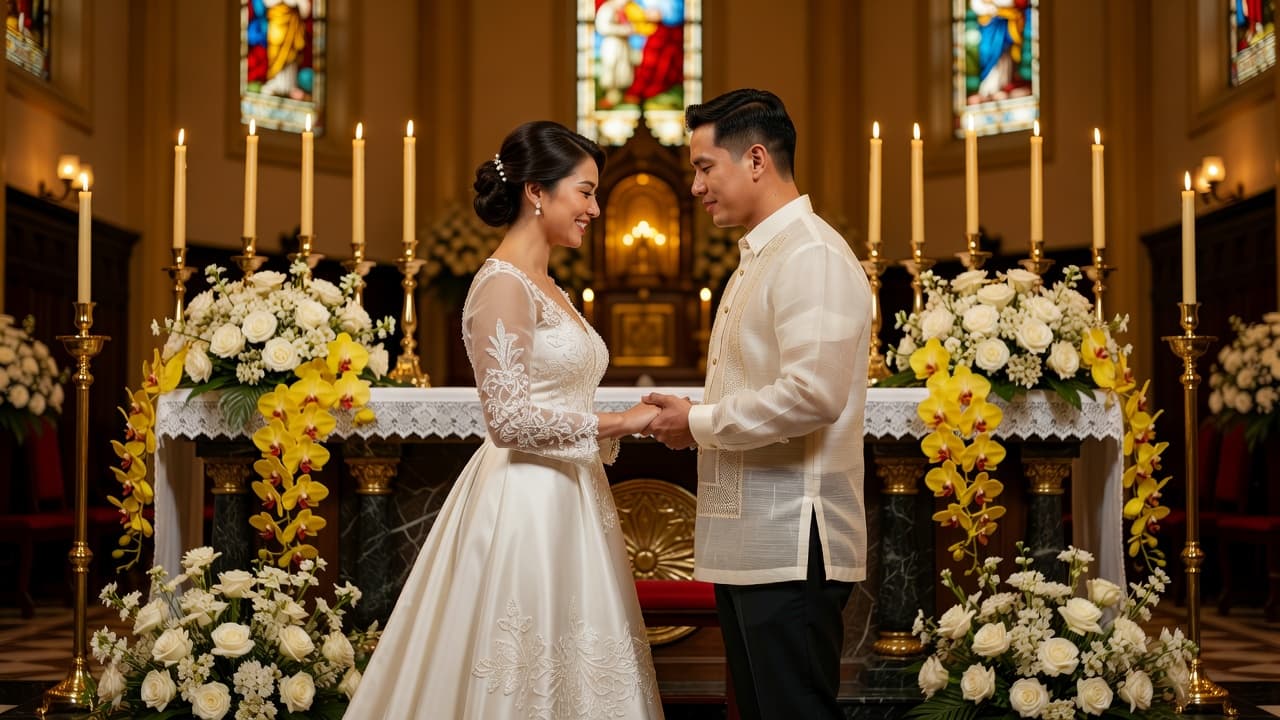
A church wedding requires Pre-Cana, canonical interview, strict documentation, and follows the Catholic rite — including cord, veil, and arrhae (coins) rituals. A garden wedding offers more flexibility but needs an officiant willing to perform ceremonies outside church grounds (some priests won't), plus tenting, power, and a solid rain plan.
Month 10: Build Your Dream Team
- Hire a coordinator. On-the-day coordination: ₱15,000–₱35,000. Full planning: ₱50,000–₱100,000+. For Filipino weddings — with family dynamics and last-minute guest additions — a coordinator who understands the culture is worth every peso.
- Book your photographer. ₱15,000–₱150,000+. Review full galleries, not just highlights. Ask about church ceremony experience — lighting in old stone churches is challenging.
- Book your videographer. Same-day edits (SDE) are hugely popular. ₱20,000–₱120,000. Book photo and video as a team if possible.
- Start vendor research. Caterers, HMUA, florists, and musicians can wait, but start collecting portfolios now.
Month 9: Choose Your Entourage — Ninongs, Ninangs, and the Whole Barangay
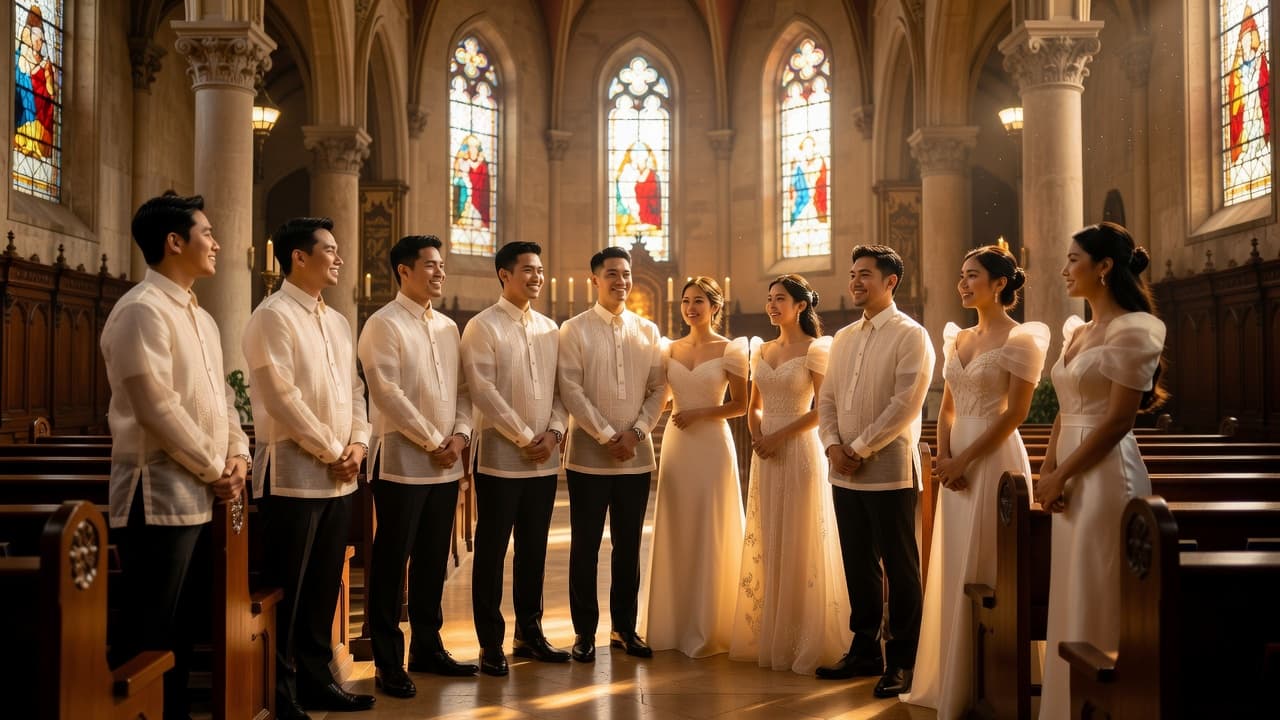
Selecting principal sponsors is one of the most delicate parts of Filipino wedding planning. These aren't just ceremonial roles — they're relationships that carry weight, and many ninongs and ninangs contribute financially.
- Choose your principal sponsors. Catholic weddings require at least one pair, but Filipino weddings often have 4–10 pairs. Choose people you genuinely respect — not just wealthy relatives. Mix family, godparents from your baptism, mentors, and close friends.
- Ask them properly. Don't just text. Visit or call. Some couples bring a small pabaon when making the request.
- Select secondary sponsors. For the cord, veil, and arrhae — close friends or cousins who'll be reliable on the day.
- Build your entourage. Bridesmaids, groomsmen, flower girls, ring bearer, Bible bearer, coin bearer — a typical Filipino entourage is 15–25 people.
- Factor entourage into headcount. Each ninong and ninang brings their spouse (and possibly children). Ten pairs alone adds 20–40 guests.
Month 8: The Wedding Budget — Real Numbers in PHP
Here's a realistic breakdown for a mid-range Filipino wedding with 150 guests.
| Category | Budget Range (₱) | Notes |
|---|---|---|
| Church & Ceremony Fees | ₱10,000–₱25,000 | Church fee, marriage license, officiant, Pre-Cana |
| Reception Venue | ₱50,000–₱150,000 | Garden venue or mid-range hotel |
| Catering (150 pax × ₱800/head) | ₱120,000–₱180,000 | 4–5 course meal; lechon adds ₱8,000–₱15,000 |
| Photography | ₱40,000–₱80,000 | 8–10 hours, prenup shoot, online gallery |
| Videography (with SDE) | ₱50,000–₱90,000 | Same-day edit, full coverage |
| Bride's Attire | ₱20,000–₱60,000 | Custom gown or premium rental |
| Groom's Attire | ₱8,000–₱25,000 | Custom barong or suit; rental from ₱2,000 |
| Hair & Makeup | ₱15,000–₱35,000 | Bride trial + day-of; entourage packages available |
| Flowers & Décor | ₱30,000–₱80,000 | Church flowers, reception styling, bouquet |
| Wedding Rings | ₱20,000–₱80,000 | Ongpin/Manila jewelers offer best value |
| Invitations & Stationery | ₱5,000–₱20,000 | Digital invites via WedPlanner save significantly |
| Entourage Gifts & Souvenirs | ₱10,000–₱25,000 | Ninong/ninang gifts + 150 favors at ₱50–₱150 each |
| Music & Entertainment | ₱15,000–₱40,000 | String quartet, acoustic duo, or DJ |
| Wedding Coordinator | ₱25,000–₱60,000 | Partial or on-the-day coordination |
| Contingency (10%) | ₱40,000–₱85,000 | Tips, emergency fund — do not skip |
| Total Estimated Range | ₱458,000–₱955,000 | Depends on priorities and location |
Province vs. Metro Manila: The same wedding in Pampanga, Iloilo, or Cagayan de Oro costs 20–40% less. Track every peso with the WedPlanner budget tool — built for PHP with multiple-contributor support.
Month 7: Book Your Caterer and Start Tasting
Food is the heart of any Filipino celebration. The best caterers fill up 8–12 months ahead.
- Shortlist 3–5 caterers. Ask about Filipino menu options — lechon, kare-kare, lumpiang shanghai. Some venues have exclusive caterers.
- Schedule food tastings. Bring your parents — they'll have opinions, and in Filipino culture, those opinions matter.
- Decide on service style. Buffet is most common. Family-style (large platters per table) feels the most salo-salo and authentically Filipino.
- Don't forget the lechon. A whole lechon runs ₱8,000–₱15,000. Book separately or confirm your caterer provides it.
- Plan for dietary restrictions. Vegetarian, halal, allergies — confirm your caterer can accommodate without a full extra menu.
Month 6: Attire, Rings, and the Prenup Shoot
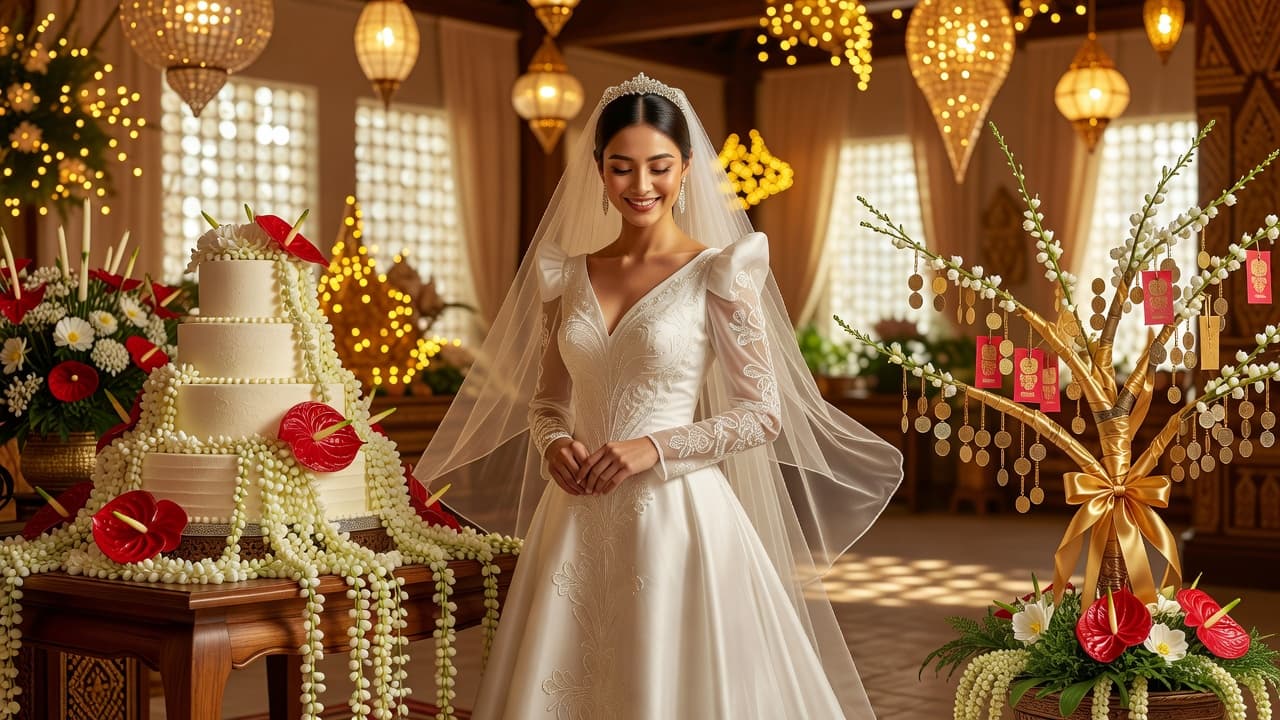
- Start your gown search. Custom-made needs 4–6 months. Divisoria RTW gowns: ₱5,000–₱15,000. Designer: ₱30,000–₱150,000.
- Choose the groom's attire. Barong Tagalog is classic — elegant, breathable, deeply Filipino. Custom: ₱5,000–₱15,000. RTW from Kultura: ₱2,500–₱8,000.
- Buy your wedding rings. Ongpin Street, Binondo offers competitive prices. Simple gold bands: ₱10,000–₱20,000/pair. Diamond-set: ₱30,000–₱200,000+.
- Schedule your prenup shoot. A beloved Filipino wedding planning tradition. Choose a meaningful location. Budget ₱5,000–₱25,000 plus travel and HMUA.
- Book your HMUA. Schedule your trial for month 4 or 5. The "fresh mestiza" look is popular.
Month 5: Invitations, Wedding Website, and RSVP System
In the Philippines, where RSVP culture is… relaxed, you need a system that works with Filipino communication habits.
- Set up your wedding website. A WedPlanner wedding website gives you a custom URL, RSVP forms, event details, and a gallery — all in one place.
- Design your invitations. Digital invites are increasingly accepted — cheaper, faster, easier to track. Physical invites: ₱5,000–₱20,000. Send save-the-dates now.
- Set up RSVP tracking. Include fields for dietary restrictions, plus-one details, and song requests. Plan to follow up 2–3 times — it's not rudeness, it's culture.
- Draft entourage attire guidelines. Clear direction on color, style, and sourcing. Budget ₱2,000–₱5,000/person if you're covering costs.
Month 4: Legal Requirements, Pre-Cana, and Marriage License
This is the paperwork month. Missing one document can delay your wedding.
- Attend Pre-Cana. Required for Catholic weddings — a full-day or weekend seminar on marriage preparation. Book early; slots fill up.
- Apply for your marriage license. Requirements: valid IDs, PSA birth certificates, CENOMAR, Pre-Cana certificate, application form. Valid 120 days with a 10-day waiting period. Apply 2–3 months before the wedding.
- Gather church documents. Baptismal and confirmation certificates must be newly issued (within 6 months) with "For Marriage Purposes" annotation. Provincial parish requests can take 3–6 weeks.
- Complete the canonical interview. Standard procedure — your priest confirms you're entering marriage freely.
- Confirm your officiant. For garden weddings, verify your priest will officiate outside church grounds.
Month 3: Finalize the Program, Music, and Reception Flow
- Draft your reception program. Typical flow: couple's entrance, dinner, cake cutting, wine toast, money dance, bouquet toss, garter toss, games. Work with your coordinator and emcee.
- Plan the money dance. Guests pin cash on the couple — a beloved Filipino tradition. Choose an upbeat song, designate someone to collect cash, plan for 10–15 minutes.
- Book musicians/DJ. String quartet for ceremony: ₱10,000–₱25,000. DJ or band for reception: ₱15,000–₱40,000.
- Send formal invitations. Set RSVP deadline 4–6 weeks before the wedding.
- Draft your seating plan. Filipino seating politics: ninongs and ninangs near the couple, families together, and yes — the "singles table" is real.
Month 2: Details, Details, Details
- Finalize your vows. Personal vows: aim for 1–2 minutes each — heartfelt, not a speech.
- Buy ceremonial items. Arrhae (13 coins), cord, and veil — essential for Catholic weddings. Sets from ₱500–₱3,000. Heirloom pieces add meaning.
- Prepare ninong and ninang gifts. Budget ₱500–₱2,000 per sponsor. Personalized items, food baskets, or practical gifts.
- Order souvenirs. ₱50–₱150 per guest. Popular: edible treats (polvoron, pastillas), fans, mini succulents. Order extras.
- Schedule final gown fitting. Bring shoes and undergarments. Practice walking, sitting, and dancing.
- Confirm all vendors. Call every supplier. Get everything in writing.
Month 1: The Final Countdown
This is when the wedding checklist Philippines couples follow gets intense — but if you've been following this timeline, you're in good shape.
- Chase RSVPs. A friendly "Hi Tita! Just checking if you'll make it — we need final headcount by [date]. Salamat po!" works better than formal reminders. Expect to follow up 2–3 times.
- Finalize the seating plan. Lock table assignments. Assign someone to handle last-minute changes on the day.
- Create your day-of timeline. Minute-by-minute schedule shared with all vendors and key entourage members.
- Pack your emergency kit. Safety pins, double-sided tape, blotting paper, pain relievers, phone charger, extra makeup, comfortable flats, sewing kit.
- Confirm final headcount with caterer. Add 5–10 buffer meals — cheaper than running out of food.
- Practice your ceremony. Walk through the processional, cord/veil/coin rituals. Secondary sponsors need to know their cues.
Week Of: Breathe, Delegate, and Trust the Process
- Delegate everything. Give your coordinator vendor contacts. Assign a point person for issues — you should not field calls on your wedding day.
- Get your beauty rest. Sleep, hydrate, avoid new skincare products.
- Prepare tip envelopes. Label and entrust to your coordinator for distribution.
- Pack for the honeymoon. Do it now, not the morning of.
- Write letters to each other. A quiet moment before the beautiful chaos begins.
Day Of: This Is It
You've done the work. The pamamanhikan, the budget negotiations, the church documents, the guest list battles, the food tastings, the fittings, the RSVP chasing — all of it leads here. Eat breakfast. Drink water. When you walk down that aisle — whether a centuries-old stone church or a garden under string lights — know that you've planned a wedding that's authentically, beautifully Filipino. Kasal na kasal na. This is your day.
Frequently Asked Questions
How much does a typical Filipino wedding cost in 2026?
A modest wedding (50–80 guests) can be done for ₱100,000–₱250,000. A mid-range wedding (100–200 guests) typically runs ₱300,000–₱800,000. Large celebrations (200+ guests) easily cross ₱1,000,000. Province weddings cost 20–40% less than Metro Manila weddings. The biggest cost drivers are guest count, venue, and catering — control those three and you control your budget.
What's the difference between a church wedding and a garden wedding in the Philippines?
Church weddings follow the Catholic rite with specific requirements: Pre-Cana seminar, canonical interview, baptismal/confirmation certificates, and marriage license. The ceremony includes the cord, veil, and arrhae rituals. Garden weddings offer more flexibility in timing and décor but require an officiant willing to perform the ceremony outside church grounds. Some priests won't officiate outside the church, so confirm this early. Garden venues also need tenting, power, and a solid rain contingency plan.
How many ninongs and ninangs should we have?
Catholic weddings require at least one pair (two principal sponsors), but Filipino weddings typically have 4–10 pairs. Choose people you genuinely respect and who will be present in your married life. Remember: each ninong and ninang brings their spouse (and often children), so 10 pairs can add 20–40 guests to your headcount. Balance tradition with budget reality.
Start Planning With WedPlanner PH
This kasal planning guide gives you the roadmap — the right tools make the journey smoother. WedPlanner PH is built for Filipino couples, with a wedding checklist that understands pamamanhikan and Pre-Cana, a budget tracker in PHP, guest management that handles ninongs and ninangs properly, and a wedding website with RSVP built in. Create your free account at dashboard.wedplanner.ph and start your 12-month countdown today. Kaya mo 'yan. Kasal na!