Pamamanhikan 101: First Family Meeting Guide
By WedPlanner Team
Learn everything about pamamanhikan, the traditional Filipino pre-wedding family meeting. This step-by-step guide covers what to bring, who should attend, bilingual talking points, and modern virtual options for long-distance families.
Pamamanhikan 101: What to Say, Bring, and Expect at Your First Family Meeting
Quick Answer: A pamamanhikan is the traditional Filipino formal meeting where a suitor and his family visit the bride's parents to ask for her hand in marriage. Bring thoughtful gifts, practice respectful greetings, and remember that sincerity matters more than perfection.
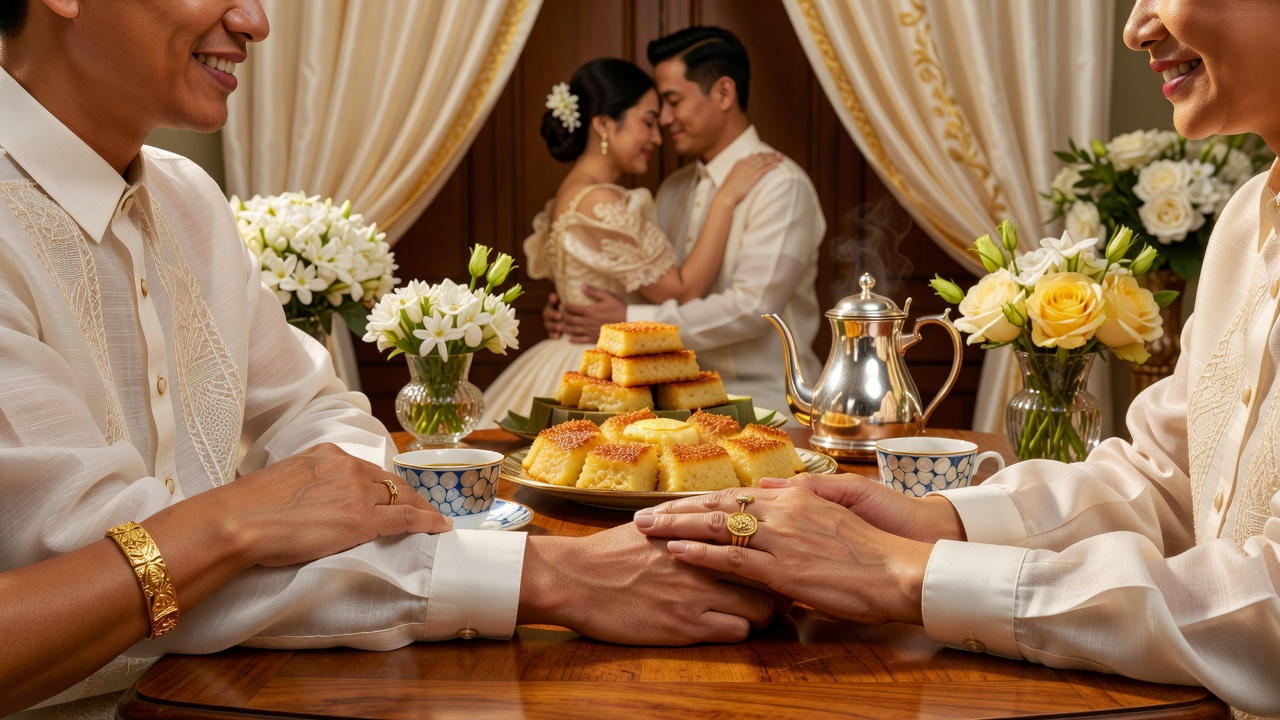
Introduction
Your palms are sweating. You've rehearsed your Tagalog phrases for the third time. And somewhere between "Po" and "Opo," you realize — this is actually happening.
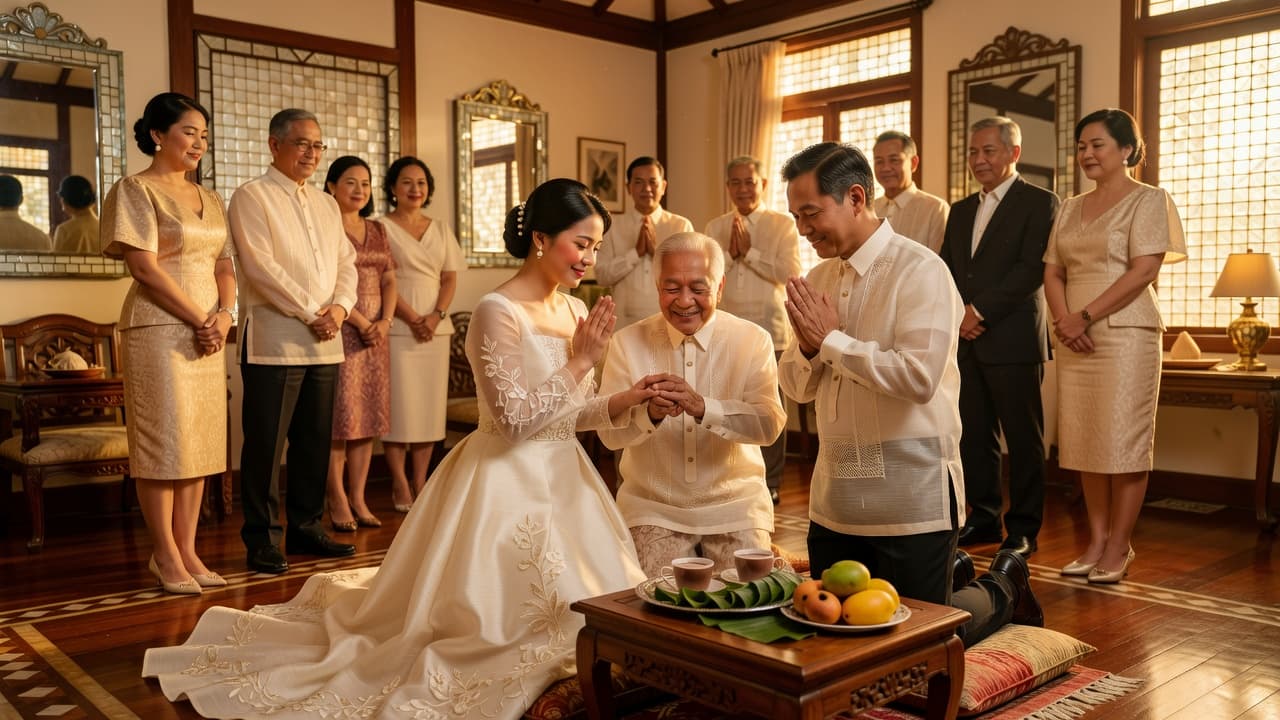
The pamamanhikan, sometimes called the "pamamanhikan tradition," is one of the most meaningful milestones in Filipino courtship and wedding preparation. It's the formal meeting where the groom's family visits the bride's family to formally ask for her hand in marriage. Think of it as a cross between a family reunion, a business negotiation, and the most important dinner of your life.
If you're feeling nervous, that's completely normal. This guide was written for you — the couple who wants to honor Filipino wedding traditions while keeping things authentic and manageable. We'll walk through everything: what to prepare, who should be there, what to say (in Tagalog and English), and how to handle modern twists like virtual family meetings.
By the end, you'll walk into that living room — or log into that video call — with confidence.
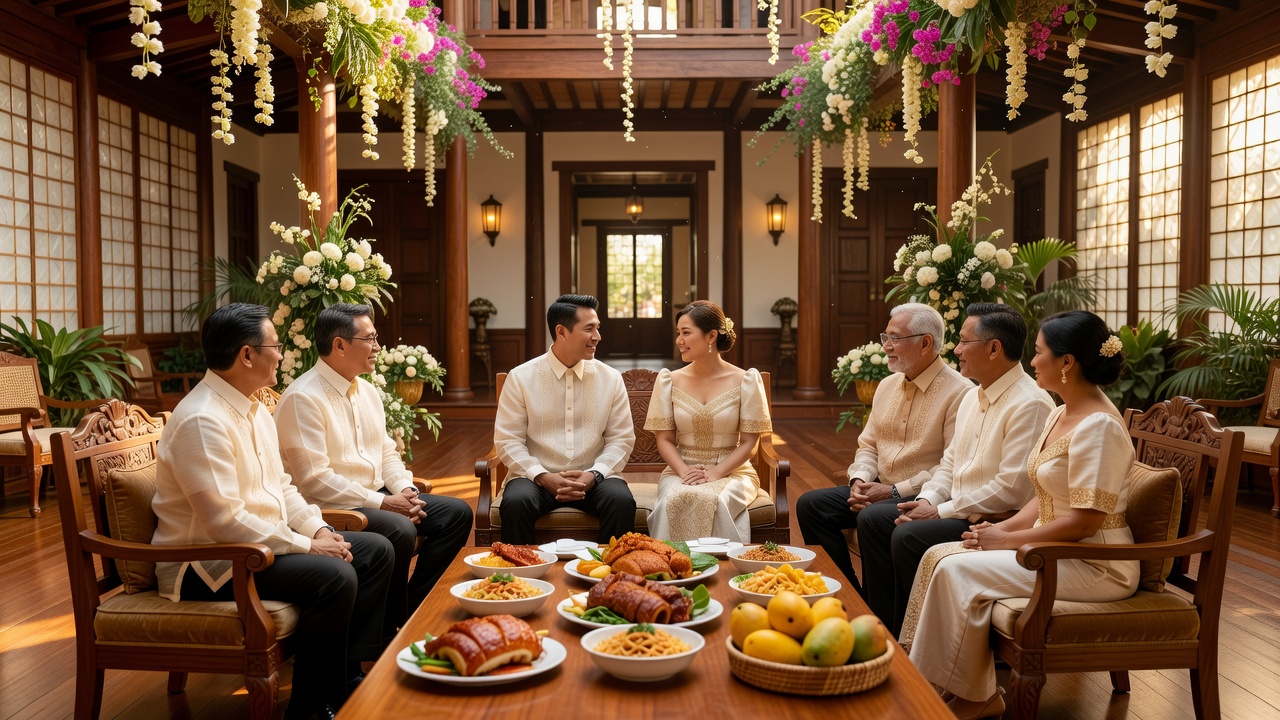
What Is a Pamamanhikan, Really?
At its core, pamamanhikan is a gesture of respect. It comes from the root word "panhik" (to climb or go up), symbolizing the groom's family "ascending" to the bride's home to show deference and sincerity. This isn't just a Filipino wedding custom — it's a declaration that both families are entering a formal relationship.
Historically, the groom's family would travel to the bride's barangay or province, often bringing food and gifts as a gesture of goodwill. Today, while many couples live in Metro Manila or abroad, the spirit remains the same: respect, family unity, and public commitment.
Regional variations worth knowing:
- Ilocano tradition (Ilocos Region): Often includes "panagpudno" — a more solemn, prayer-focused version with elders from both sides.
- Visayan tradition (Cebu, Bohol, Leyte): Frequently features a "pamanhikan" with musical serenade (harana) before the formal meeting.
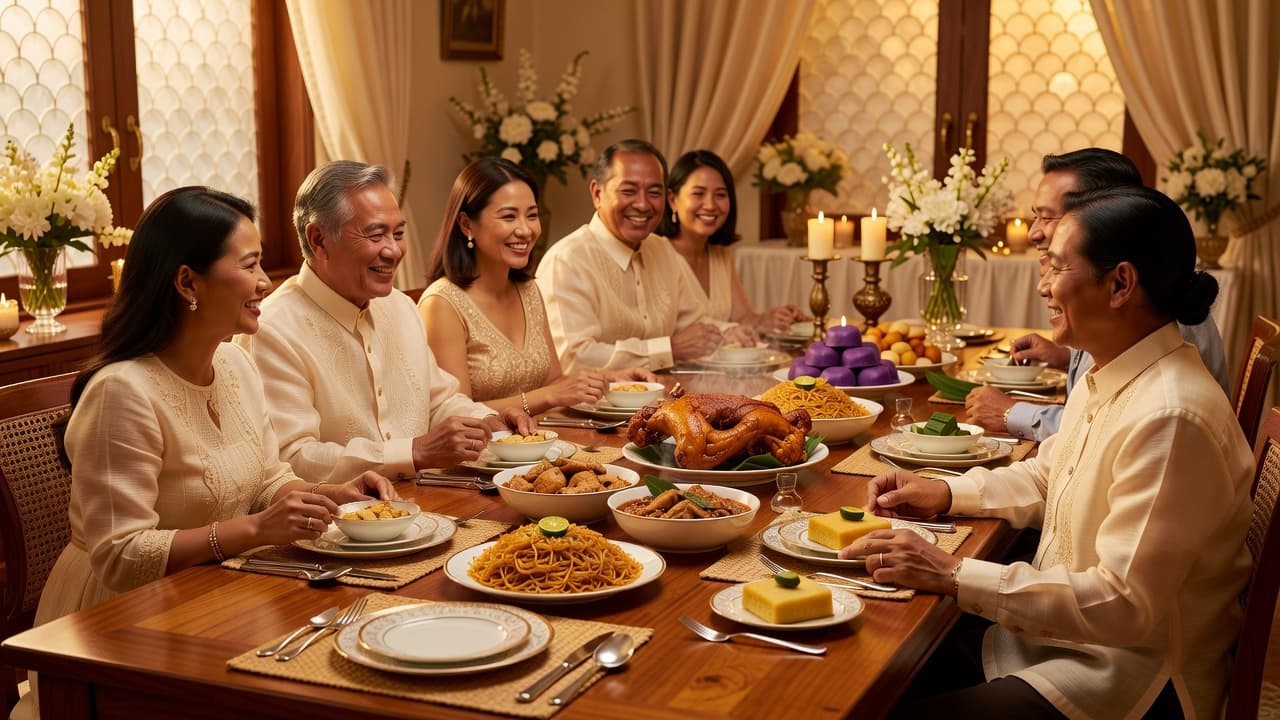
- Bicolano tradition: May include "tambour" — a shared feast where both families contribute dishes, emphasizing equality.
- Modern urban (Manila, QC): Often simplified to a restaurant dinner or home gathering with relaxed etiquette.
These variations aren't rules — they're context. Your family's specific blend of tradition and practicality is what makes your pamamanhikan uniquely yours.
Step-by-Step Preparation: What to Bring and How to Prepare
Walking in unprepared is the fastest way to amplify anxiety. Here's a practical checklist that balances tradition with modern reality.
The Essential Gift List (Pasalubong and Offerings)
Gift-giving is non-negotiable in Filipino courtship traditions. It shows gratitude and establishes goodwill before a single word is spoken.
| Item | Purpose | Budget Range |
|---|---|---|
| Fruits in a basket (apples, grapes, oranges) | Traditional offering; symbolizes abundance | ₱500–₱1,500 |
| Native delicacies (biko, puto, kutsinta) | Cultural connection; shows effort | ₱300–₱800 |
| Wine or sparkling juice | Celebration; modern addition | ₱500–₱2,000 |
| Flower bouquet for the bride's mother | Respect for the matriarch | ₱500–₱1,500 |
| Small token for the father (cigar, liquor, or personalized item) | Respect for the patriarch | ₱500–₱2,000 |
| Assorted pastries or cake | Shared dessert; ice-breaker | ₱400–₱1,000 |
Pro tip from real couples: If you're flying in from abroad, customs-friendly gifts like imported chocolates, specialty coffee, or quality tea sets are excellent alternatives. Just wrap them nicely.
Documents and Practical Items
While not strictly traditional, having these ready shows maturity and seriousness:
- A rough wedding timeline or proposed date range
- A tentative guest list (if you're at that stage)
- A simple budget outline (not detailed — just ballpark figures)
- Photos of the couple together (especially if families haven't met)
- A small notebook for notes and contact exchanges
Don't overdo the paperwork. The goal is to show you've thought ahead, not to present a corporate proposal.
Personal Preparation
Here's what to do in the week leading up:
- Coordinate with both families — Confirm date, time, location, and dietary restrictions.
- Decide on dress code — Business casual is the safe default; some families prefer formal barong or Filipiniana.
- Assign a spokesperson — Usually the groom's father or an elder uncle speaks on behalf of the groom's family.
- Prepare your budget — Gifts, food, and possible venue costs add up quickly.
- Practice your lines — We'll cover sample scripts in the next section.
- Plan an exit strategy — Agree on a subtle signal with your partner if things run long or tensions rise.
One couple we spoke with set a 3-hour limit with both families beforehand. "It forced everyone to be present and purposeful," they said. "No one drifted into gossip or political debates."
Who Should Be Present? A Guide to Family Hierarchy
The people in the room shape the tone and outcome of the pamamanhikan. Here's how to think about attendance strategically.
The Core Group (Non-Negotiable)
These people should absolutely be present:
- Groom's parents: They are the primary representatives of the suitor's family.
- Bride's parents: The hosts and decision-makers on the receiving end.
- The couple: Obviously — but note that in very traditional setups, the groom and bride may sit separately or even in different rooms until the formal "asking."
The Extended Circle (Highly Recommended)
Adding these family members enriches the gathering:
- Grandparents: Their presence signals continuity and respect for lineage.
- Aunts and uncles (especially the eldest): Often serve as cultural referees and emotional anchors.
- Siblings: Bring energy and represent the next generation.
Ninongs and Ninangs (Godparents) — Optional but Powerful
In some Filipino families, especially those with deep Catholic roots, inviting ninongs and ninangs to the pamamanhikan adds spiritual and social weight. These godparents are seen as second parents and moral guides.
When to include them:
- If they're already involved in wedding planning (paying for elements, serving as witnesses)
- If either family insists on their presence for cultural reasons
- If the couple has a particularly close relationship with them
When it's okay to skip them:
- For very private, intimate gatherings
- If logistics are difficult (they live abroad, health issues, etc.)
- If both families agree to a modern, streamlined approach
What About Long-Distance Relatives?
This is where modern adaptations shine — more on that in a dedicated section below. For now, know that physical presence is ideal but not mandatory. A thoughtful video greeting or written message read aloud can substitute beautifully.
Bilingual Talking Points: Sample Scripts in Tagalog and English
Language anxiety is real — especially if one partner is more fluent in English and the other in Tagalog. Here's a bilingual toolkit that covers the key moments.
Opening Greeting (Pagbati)
Tagalog:
"Magandang gabi po sa inyong lahat. Maraming salamat po sa pagtanggap sa amin ngayong gabi. Panginoon, salamat po sa pagkakataong ito..."
English:
"Good evening to everyone. Thank you so much for welcoming us tonight. We are deeply grateful for this moment and for the warmth of your home."
When to use it: Right after entering and settling. The groom's father or spokesperson typically delivers this.
The Formal Request (Ang Formal na Kahilingan)
Tagalog:
"Kami po ay naririto ngayon upang humingi ng inyong pahintulot at basbas para sa aming anak na si [Groom's Name] at sa inyong anak na si [Bride's Name]. Mahal na mahal po niya si [Bride's Name], at kami po ay lubos na nagmamalasakit sa kanilang kinabukasan. Sana po ay pagbigyan ninyo ang aming kahilingan."
English:
"We are here this evening to ask for your blessing and permission for our son [Groom's Name] and your daughter [Bride's Name]. He loves her deeply, and we care profoundly about their future together. We humbly ask for your consent."
Pro tip: Practice this part until it flows naturally. Stumbling is fine — sincerity matters more than eloquence.
The Bride's Family Response (Tugon ng Pamilya ng Bride)
Tagalog:
"Maraming salamat sa inyong pagdating at sa inyong mga regalo. Si [Bride's Name] ay aming minamahal na anak, at kami po ay nagpapasalamat na mayroon siyang taong magmamahal at mag-aalaga sa kanya. Tanggap po namin ang inyong kahilingan."
English:
"Thank you for coming and for your generous gifts. [Bride's Name] is our beloved daughter, and we are grateful she has found someone who will love and care for her. We accept your request with open hearts."
Casual Conversation Starters (Pampalamig)
Tagalog:
- "Paano po kayo nagkakilala ni [Bride's Name]?" (How did you meet [Bride's Name]?)
- "Ano pong trabaho ninyo, Tito/Tita?" (What do you do for work, Uncle/Auntie?)
- "Saan po kayo nakatira dati?" (Where did you used to live?)
English:
- "How did you two meet? I'd love to hear the story."
- "What do you do for work? I've heard wonderful things about your career."
- "Where did you grow up? I bet there are some great stories."
Closing Gratitude (Pagpapasalamat sa Pagtatapos)
Tagalog:
"Maraming salamat po muli sa inyong pagtanggap. Sana po ay magpatuloy ang ating magandang ugnayan. God bless po sa ating lahat."
English:
"Thank you again for welcoming us so warmly. We look forward to building a beautiful relationship together. God bless us all."
Avoid These Phrases
Some lines, while well-meaning, can come off wrong:
- ❌ "We're here to pick up your daughter" — sounds transactional, not relational.
- ❌ "We just want to get the wedding planning over with" — disrespects the moment.
- ❌ "Our son can provide for her better than anyone" — competitive and crass.
- ❌ "She's already pregnant, right?" — invasive and inappropriate (even as a joke).
Modern Twists: Virtual and Hybrid Pamamanhikan
Not every family can gather around a single dining table. With OFW parents, international students, and pandemic-shaped habits, the virtual pamamanhikan is now a legitimate — and meaningful — option.
When to Consider a Virtual or Hybrid Setup
A virtual or hybrid approach works well when:
- One or both sets of parents live abroad (common for Filipino families with OFW members)
- Health concerns prevent travel (elderly relatives, immunocompromised family members)
- Budget constraints make a physical gathering impractical
- Time zones are manageable for a video call
Virtual Pamamanhikan Best Practices
- Use a reliable platform — Zoom, Google Meet, or Microsoft Teams. Test connections 30 minutes before.
- Designate a tech coordinator — One person manages muting, screen sharing, and troubleshooting.
- Send gifts in advance — Ship traditional offerings (fruits, pastries) to the bride's family home so they can display them during the call.
- Coordinate timing across time zones — Use World Time Buddy to find a window that works for everyone.
- Record the call — With permission, of course. This becomes a cherished family keepsake.
- Have a printed script ready — Screen sharing can be awkward; instead, have the spokesperson read from a printed copy visible to the camera.
Hybrid Setup (Some In-Person, Some Virtual)
This is increasingly common and actually quite elegant:
- Physical hub: Usually the bride's family home, with the couple and local relatives present.
- Virtual spokes: Groom's parents or elder relatives joining via large-screen TV or laptop propped at the table.
- Shared meal: Coordinate food delivery to virtual participants so everyone eats "together."
One couple in Dubai had the groom's parents in Manila on a 65-inch TV at the head of the table. "It felt like they were really there," the bride recalled. "My mom even set a plate and utensils for the screen."
Tech Checklist for Virtual Events
- Stable internet (minimum 10 Mbps upload for the host)
- Good lighting facing the participants (not backlighting)
- External microphone or quiet room for clear audio
- Backup phone hotspot in case WiFi fails
- Printed run-of-show shared with all participants beforehand
Common Mistakes and How to Avoid Them
Even with the best intentions, things can go sideways. Here are the most frequent pitfalls:
| Mistake | Why It Hurts | How to Fix It |
|---|---|---|
| Arriving late | Disrespects the host family | Arrive 15 minutes early, never on time |
| Forgetting gifts | Signals unpreparedness or disrespect | Prepare gifts 3 days ahead; double-check before leaving |
| Dominating the conversation | Makes the bride's family feel excluded | Follow the elders' lead; speak when invited |
| Discussing money too early | Creates tension before rapport is built | Let the bride's family bring up finances first |
| Getting too casual too fast | Can offend conservative relatives | Err on the side of formality; relax as the host does |
| Ignoring the helpers | Disrespects household staff or younger relatives | Greet everyone warmly, including household helpers |
| Drinking too much | Loss of composure reflects poorly on the groom | Limit alcohol; stop at one glass |
Key Takeaways
- A pamamanhikan is fundamentally about respect and family unity, not performance or perfection.
- Gift-giving is expected — prepare a basket with fruits, pastries, flowers for the mother, and a token for the father.
- Practice your bilingual scripts — but remember that sincerity outweighs fluency every time.
- The core attendees are both sets of parents plus the couple — extend to grandparents, aunts, uncles, and ninongs/ninangs as appropriate.
- Virtual and hybrid setups are valid — plan tech carefully and send gifts in advance when meeting remotely.
- Arrive early, dress appropriately, and let the elders lead the conversation.
- Avoid discussing money, politics, or controversial topics until rapport is firmly established.
- Most families just want to see that you love their daughter and that you're serious about building a future together.
Frequently Asked Questions
What exactly happens during a pamamanhikan?
A pamamanhikan is a formal Filipino family meeting where the groom's parents visit the bride's family to ask for her hand in marriage. It typically involves gift-giving, a shared meal, prayers, and a formal request spoken by an elder representative.
Who pays for the pamamanhikan?
Traditionally, the groom's family covers expenses related to gifts and sometimes the meal. The bride's family hosts in their home. Modern couples often split costs or the couple pays entirely, especially if both families are financially comfortable.
Can we skip the pamamanhikan and just announce our engagement?
Technically yes, but skipping it may disappoint traditional parents or elders. Many couples compromise with a simplified version — a restaurant dinner with just immediate family. The gesture matters more than the scale.
What if our families have never met before?
This is increasingly common, especially for couples from different provinces or countries. Prepare photos, share stories beforehand, and keep the first meeting structured with talking points. The pamamanhikan itself becomes the formal introduction.
Is a virtual pamamanhikan considered disrespectful?
Not at all — provided you communicate clearly, send gifts in advance, and treat the call with the same reverence as an in-person gathering. Many OFW families successfully conduct meaningful virtual pamamanhikans every year.
What should I wear to a pamamanhikan?
Dress one level above the stated dress code. If uncertain, business casual is safe for men (polo or barong), and a modest dress or blouse with slacks for women. Avoid overly casual clothing like shorts, flip-flops, or revealing outfits.
How long does a pamamanhikan usually last?
Traditionally, 2 to 4 hours. The formal request and response happen within the first hour; the rest is socializing and meal-sharing. Setting a soft time limit with both families beforehand helps keep energy positive.
What if the bride's parents say no?
This is rare but not impossible. If parents express hesitation, respond with humility and ask for guidance on what would make them comfortable. Time, patience, and continued respectful engagement often turn initial resistance into support.
Do we need a priest or religious leader present?
Only if both families are deeply religious and specifically request it. Most modern pamamanhikans are family-only affairs. However, a family prayer led by the eldest is common and beautiful.
Can same-sex couples have a pamamanhikan?
Absolutely. While the tradition has heteronormative roots, its core values — respect, family blessing, and commitment — apply universally. Many LGBTQ+ Filipino couples adapt the format beautifully, sometimes with both sets of parents taking turns as "asking" and "receiving" families.
Conclusion
The pamamanhikan isn't a test you pass or fail. It's a doorway — one that leads from "my family" and "your family" into "our family." Whether you're gathering around a dining table in Quezon City or logging into a Zoom call from opposite sides of the world, what matters most is the sincerity of your intention.
Prepare thoughtfully. Practice your lines. But above all, show up as your genuine selves. The families you're joining already love you — they just want to see that you love each other, too.
If you're planning a Filipino wedding and need help coordinating vendors, timelines, and traditions, explore our complete Filipino wedding planning checklist. And for couples navigating long-distance arrangements, our virtual wedding planning guide covers everything from video-call ceremonies to hybrid guest lists.
Mabuhay ang bagong kasal — long before the wedding day, your journey begins here.