What to Wear to a Filipino Wedding: Dress Codes Explained for Guests
By WedPlanner Team
Your complete guide to wedding etiquette Philippines: dress codes, color rules, and what ninang should wear to a Filipino wedding.
What to Wear to a Filipino Wedding: Dress Codes Explained for Guests
Understanding wedding etiquette Philippines means knowing what to wear — and your outfit says more than you think. Kung ikaw ay first-time guest sa kasal, the dress code question is usually the first thing on your mind. Whether you're attending a grand cathedral wedding in Manila or a garden ceremony in Tagaytay, what you wear shows respect for the couple, their families, and centuries of Filipino tradition.
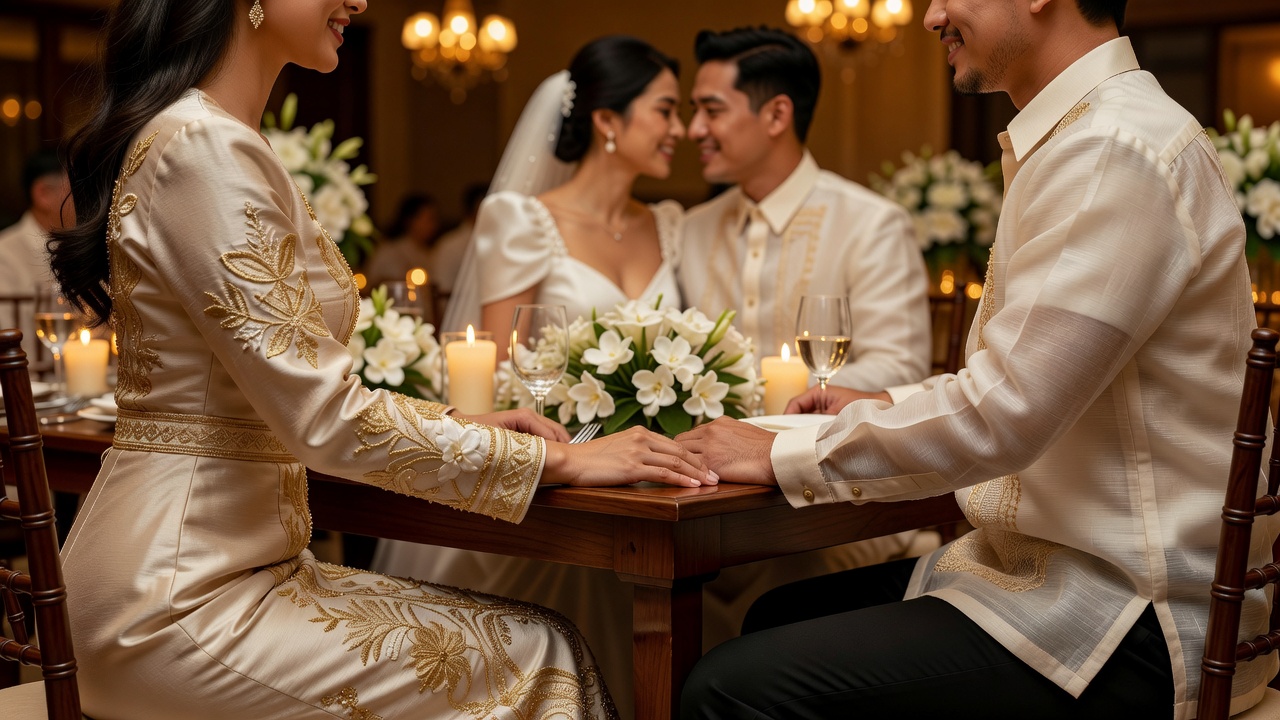
Filipino weddings are deeply cultural affairs. They're a salo-salo of two families, sometimes two hundred guests, and a whole lot of tradition packed into one day. So before you panic about your outfit, here's your complete dress code decoder.
Why Filipino Wedding Dress Codes Matter
Filipino weddings are big. We're talking 150–300 guests, ninongs and ninangs at the presidential table, and a reception that runs until midnight. The way you dress isn't just about looking good in photos — it's about galang (respect). Showing up underdressed to a Filipino wedding is like bringing fast food to a lechon spread.
Wedding etiquette in the Philippines borrows from both Western conventions and deeply rooted Filipino customs. Most invitations specify a dress code, but even when they don't, there are unspoken rules every guest should know.
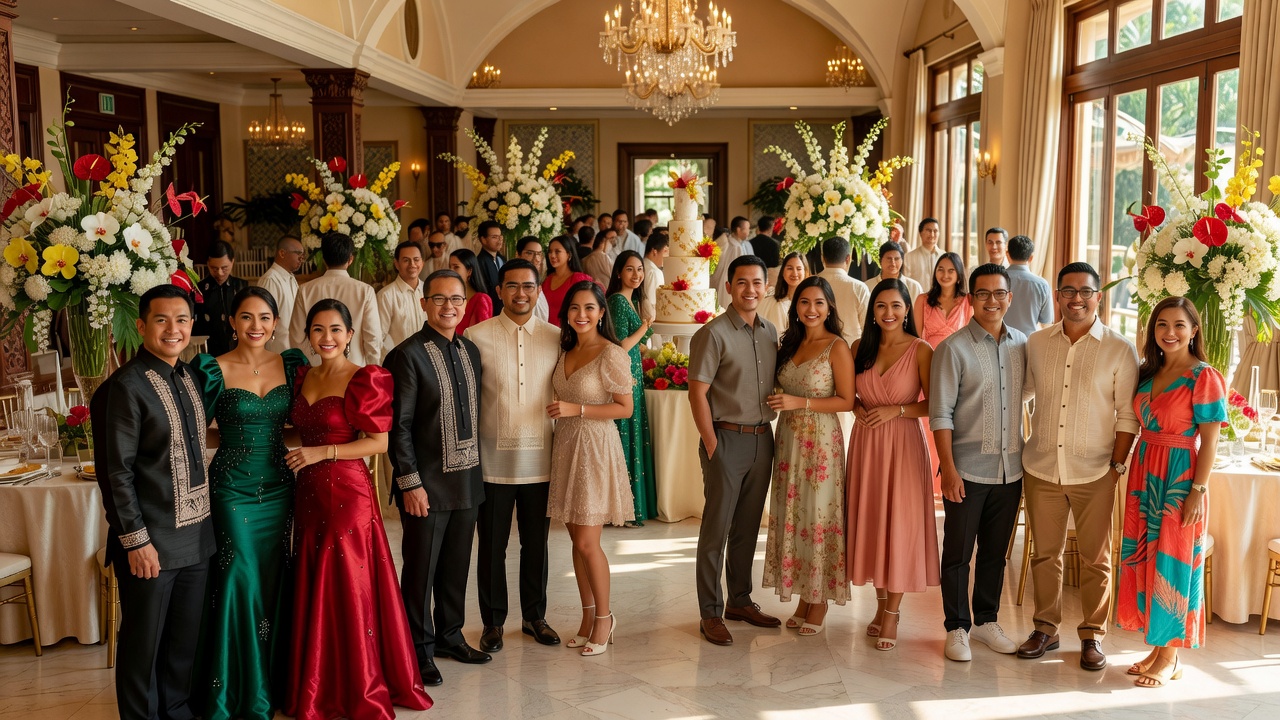
The Four Main Dress Codes at Filipino Weddings
1. Formal (Black-Tie or White-Tie)
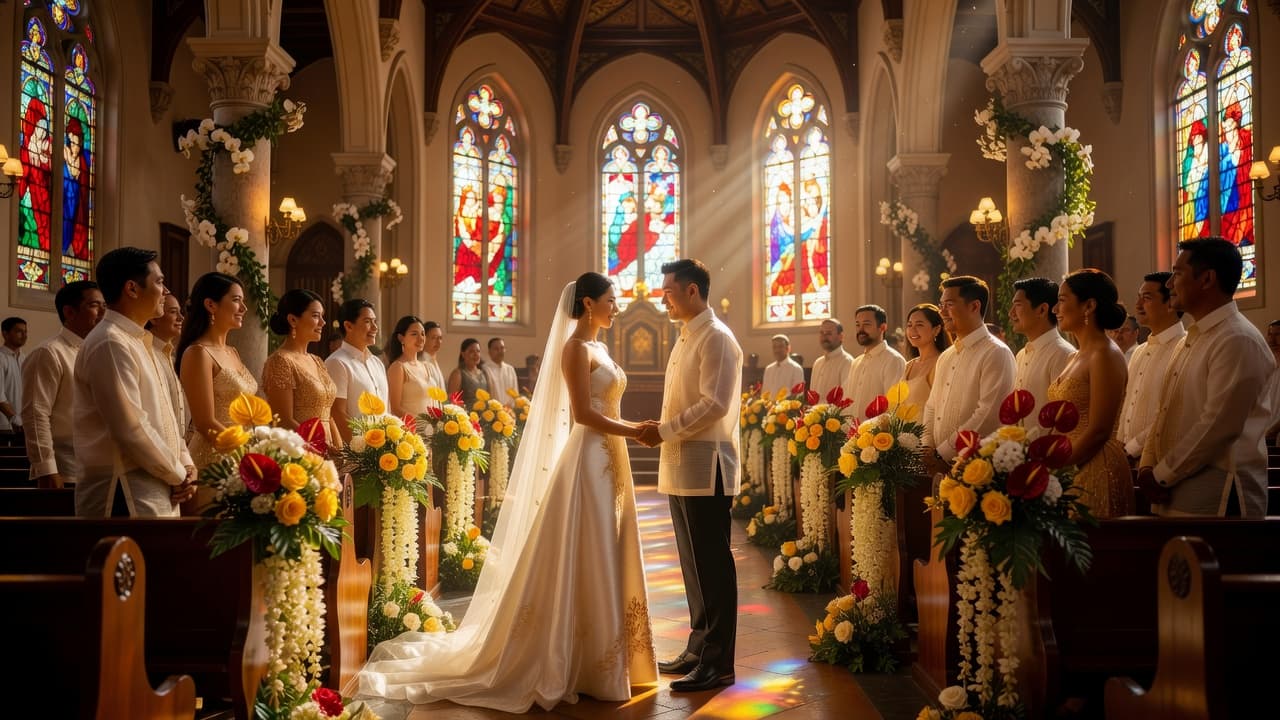
When the invitation says "formal" or "black-tie," it means business. Think Manila Cathedral or a five-star hotel ballroom.
For women: A floor-length evening gown or sophisticated midi dress. Darker jewel tones — navy, emerald, burgundy — are elegant choices. Avoid anything too revealing; Filipino weddings are family events, and mga lola will notice.
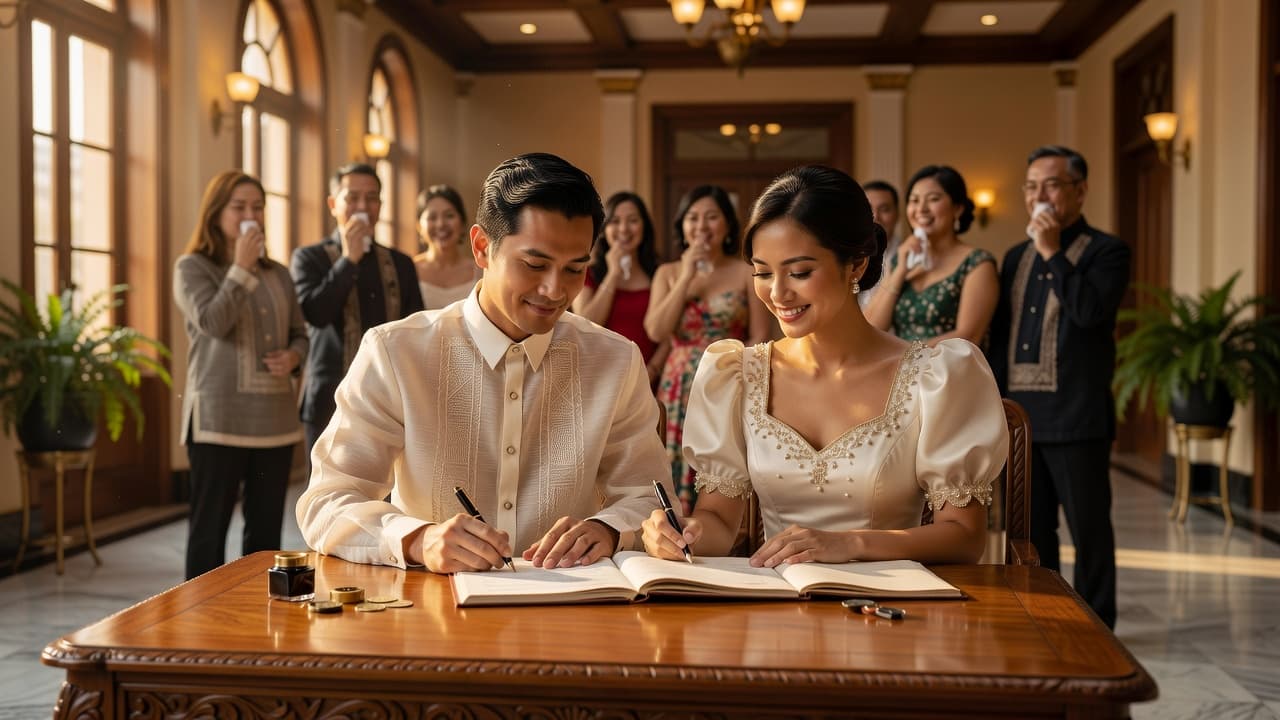
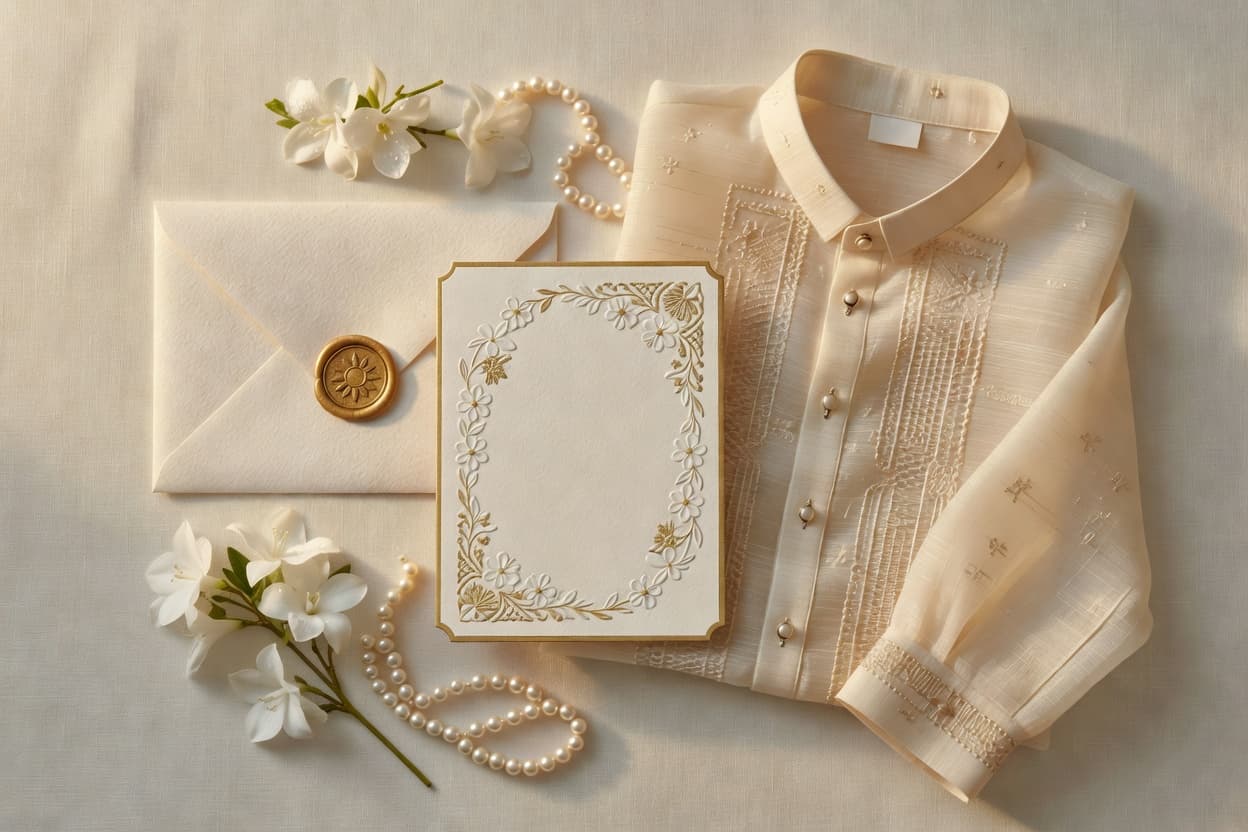
For men: A well-tailored tuxedo or dark suit with a tie. Better yet, wear a barong Tagalog in piña or jusi — our national dress and the gold standard for formal Filipino weddings. Pair it with black slacks and dress shoes.
Filipiniana option: Women can wear a modern terno with butterfly sleeves. It's a showstopper — elegant, culturally proud, and guaranteed to get compliments from every tita in the room.
2. Semi-Formal (Cocktail)
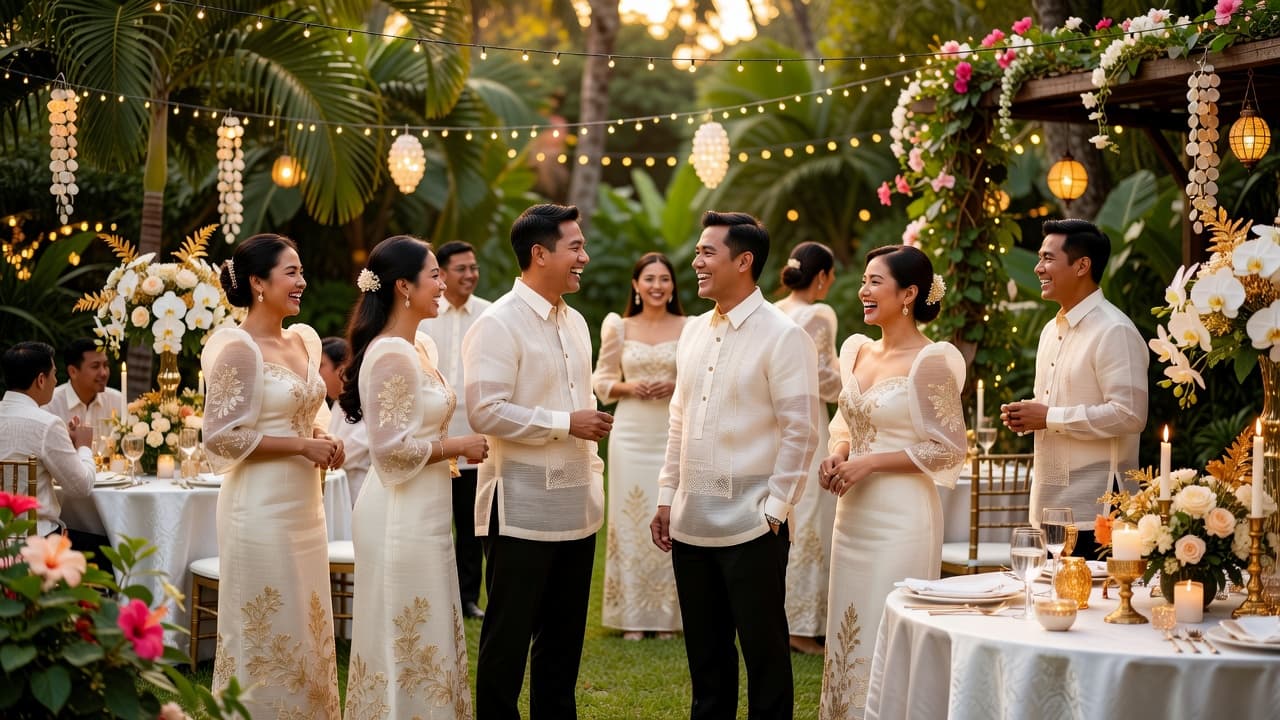
Semi-formal is the most common dress code at Filipino weddings today. Perfect for garden weddings, hotel receptions, and afternoon ceremonies.
For women: A cocktail dress, dressy jumpsuit, or midi-length dress in almost any color (with exceptions below). Heels or dressy flats work. The key is looking put-together without overshadowing the bride.
For men: A suit without a tie, or a barong in lighter fabric like organza or linen-blend. A short-sleeved barong is acceptable for daytime outdoor weddings where the Philippine heat is a factor.
Tip: When in doubt, ask. "Ano po ang dress code?" is a question every Filipino wedding planner expects.
3. Filipiniana (Traditional Filipino Attire)
Some weddings specify "Filipiniana" — the couple wants guests to embrace Filipino heritage through traditional clothing. Common at church weddings and cultural celebrations.
For women: The baro't saya is the traditional ensemble — blouse (baro), skirt (saya), pañuelo (shoulder kerchief), and tapis (overskirt). Modern iterations include the traje de mestiza (Maria Clara gown) with butterfly sleeves, or the terno — a unified gown. Many Filipino designers now create modern Filipiniana that blends traditional elements with contemporary silhouettes.
For men: A barong Tagalog is essential. Fabric determines formality:
- Piña — finest and most formal, woven from pineapple fibers. Sheer, delicate, premium.
- Jusi — silk-piña blend. Elegant but more affordable. A great middle-ground.
- Organza or ramie — modern, budget-friendly. Perfect for semi-formal Filipiniana.
- Polyester blends — most affordable. Fine for casual Filipiniana but lacks breathability and sheen.
Ang barong ay hindi lang pormal na damit — the barong is more than formal wear. It's a piece of Filipino identity, worn by presidents, grooms, and guests alike.
4. Barong (Barong-Only Dress Code)
When the invitation says "barong," men wear a barong Tagalog and women dress in formal or semi-formal attire. It's a slightly relaxed Filipiniana code — the couple wants that Filipino aesthetic without requiring full traditional ensembles.
For men, a short-sleeved barong in linen or cotton-blend with dark slacks works. For women, a cocktail dress or modern Filipiniana-inspired piece is beautiful.
Wedding Color Rules: What to Wear and What to Avoid
Color etiquette at Filipino weddings follows a mix of Western tradition and Filipino cultural beliefs.
Colors to Avoid
White and ivory: Reserved for the bride. Showing up in white is a major wedding etiquette Philippines faux pas. Even off-white or cream can raise eyebrows.
Red: In traditional Filipino culture, red can be associated with passion or scandal at weddings. Modern weddings are more relaxed, but conservative mga matatanda (elders) may still disapprove. If you love red, opt for deep burgundy instead.
Black: Historically associated with mourning. Modern Filipino weddings — especially formal evening ones — have embraced black as elegant. A black cocktail dress or suit is generally fine for evening receptions. Use judgment based on the family's conservatism.
Colors That Are Always Safe
- Pastels — blush, lavender, mint, baby blue. Soft and universally appropriate.
- Jewel tones — emerald, sapphire, amethyst. Rich and photogenic.
- Earthy tones — terracotta, olive, mustard. Grounded and elegant for garden weddings.
- Navy and charcoal — safe alternatives to black.
One more thing: Avoid wearing the wedding's motif color. If the theme is "dusty rose," skip that shade — you don't want to look like part of the bridal party.
What Should a Ninang Wear?
Being asked to be a ninang (godmother or principal sponsor) is one of the highest honors in a Filipino wedding. Ninangs aren't just guests — they're ceremonial figures, seated at the presidential table, mentioned in the program, and photographed extensively. Kung ikaw ay ninang, your outfit needs to reflect the significance of your role.
The Ninang Dress Code
Ninangs typically wear formal Filipiniana — a terno, traje de mestiza, or modern Filipiniana gown. Here's what to consider:
Fabric and formality: A terno in piña-jusi with hand embroidery (calado) is the traditional gold standard. For a contemporary look, a modern Filipiniana dress with butterfly sleeves in organza or mikado silk is stunning.
Color: Ninangs often coordinate with the wedding's motif. The coordinator will usually communicate the preferred palette. If no guidance is given, choose rich, elegant tones — deep gold, royal blue, emerald, or burgundy. Always avoid white and colors matching the bridal party.
Accessories: Statement earrings and a small abaniko (fan) — both practical for Philippine weather and a lovely traditional touch. Keep jewelry elegant but not overpowering; you're a sponsor, not the bride.
The Role Beyond the Outfit
Being a ninang isn't just about what you wear. In Filipino wedding tradition, ninangs serve as witnesses to the marriage, participate in the candle, veil, and cord ceremonies, and act as spiritual guides. Ang ninang ay parang second mother — a ninang is like a second mother, and dressing the part shows you understand the honor.
For more on sponsor responsibilities — from the candle ceremony to the arrhae (thirteen coins) — see our guide on Filipino wedding roles and traditions.
Quick Checklist: What to Wear to a Filipino Wedding
- Read the invitation — the dress code is your first clue
- When in doubt, ask — Filipino couples welcome the question
- Never wear white or ivory — that's the bride's color
- Consider the venue — cathedrals need more formality than gardens
- Embrace the barong — our national dress, always appropriate
- If you're a ninang, go Filipiniana — a terno or modern Filipiniana gown
- Check the motif — don't accidentally match the bridal party
- Dress for the weather — choose breathable fabrics
Final Thoughts
Filipino weddings celebrate love, family, and culture. When you put thought into your outfit — whether it's a barong, a terno, or a well-chosen cocktail dress — you're showing respect for the couple and the traditions that make Filipino weddings so meaningful. Wedding etiquette Philippines isn't about rigid rules; it's about galang, malasakit, and showing up as your best self for someone's most important day.
For more on Filipino wedding customs — from invitation etiquette to traditions that make every ceremony unforgettable — WedPlanner has you covered. Planning your own? Our wedding planning checklist keeps you on track from pamamanhikan to the last dance.
Frequently Asked Questions
Can I wear a short dress to a Filipino wedding?
Yes, for semi-formal or cocktail dress codes. Knee-length dresses work for most Filipino weddings, especially daytime and garden ceremonies. For formal or black-tie weddings, opt for a floor-length gown or midi. When in doubt, go longer — Filipino weddings lean conservative.
Is it okay to wear black to a Filipino wedding?
Modern Filipino weddings increasingly accept black, especially for evening receptions and formal dress codes. However, traditional families may still associate it with mourning. Navy or charcoal are safe alternatives that look equally elegant.
Do I have to wear a barong if the invitation says Filipiniana?
If the dress code specifies Filipiniana, a barong Tagalog (for men) or Filipiniana-inspired outfit (for women) is strongly encouraged. It's a cultural dress code. Many couples are flexible — a modern Filipiniana piece may suffice. When unsure, ask the couple or coordinator.
What color should a ninang wear to a Filipino wedding?
Ninangs typically coordinate with the wedding's color motif. If no specific guidance is given, choose rich, elegant colors like deep gold, royal blue, emerald, or burgundy. Always avoid white and colors matching the bridal party's motif.