How to Plan a Filipino Wedding in 2026: A Complete Month-by-Month Timeline
By WedPlanner Team
Your 2026 wedding checklist Philippines guide — a month-by-month timeline from pamamanhikan to the big day, with PHP costs, GCash tips, and digital RSVP tools.
So you're planning a kasal in 2026 — congratulations! Whether you just got engaged over the holidays or you've been dreaming about this since your college bestie tied the knot, you're in the right place. This is your wedding checklist Philippines guide, built for real Filipino couples juggling real budgets, real family expectations, and real 2026 timelines.
Let's be honest: planning a Filipino wedding isn't just about picking napkin colors. It's about navigating pamamanhikan, coordinating with ninongs and ninangs, booking a church and reception that don't require teleportation, and making sure your 150-guest list doesn't quietly balloon to 300. It's a lot — but with a clear month-by-month timeline, it's absolutely doable.
Here's your complete 2026 kasal planning guide, from 12 months out to the wedding day itself.
12 Months Out: Set the Foundation
This is your "dream big but plan smart" phase. You've set the date (or at least the year), and now it's time to lay the groundwork.
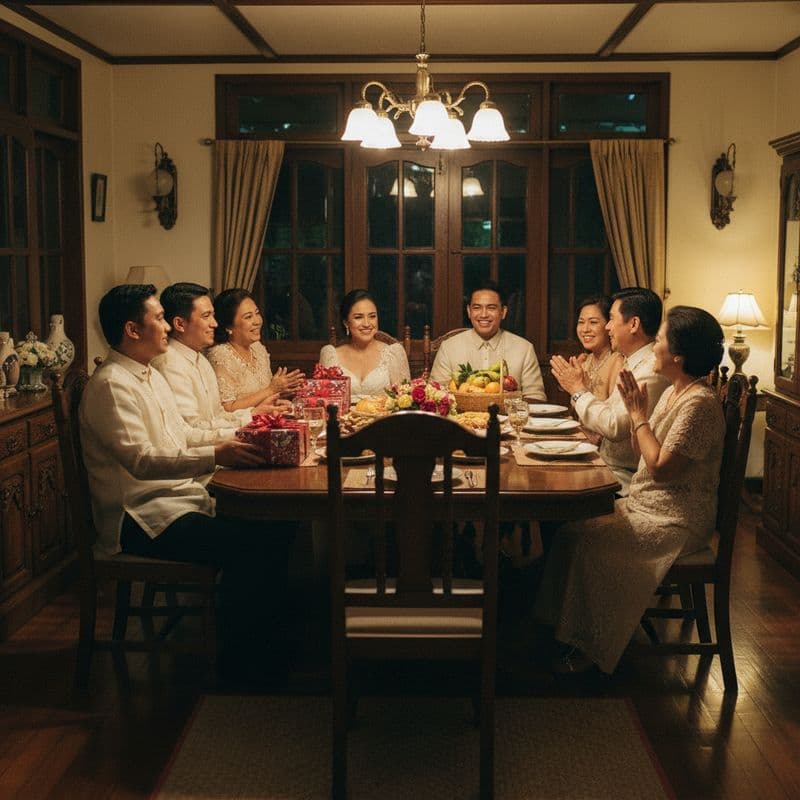
- Have the pamamanhikan conversation. If your families haven't formally met yet, plan the pamamanhikan — the traditional Filipino tradition where the groom's family visits the bride's home to ask for her hand. It's respectful, it's meaningful, and it sets the tone for how both families will work together. Read up on Filipino wedding traditions you need to know so you can honor the practice properly.
- Set your wedding budget. Be real about what you can afford. A typical Filipino wedding in 2026 ranges from ₱150,000 for an intimate gathering to ₱800,000+ for a full-blown celebration with all the bells and whistles. Use a budget checklist to allocate percentages across venue, catering, attire, photo/video, and more. For a detailed breakdown of current PHP wedding costs, check our 2026 Filipino wedding cost guide.
- Choose your wedding date strategically. January, February, and December are peak wedding months in the Philippines — venues book fast and charge accordingly. June to September is typhoon season (rain risk but cheaper rates). Consider a lucky vs. practical date approach — your lola might have opinions, but so does your wallet.
- Draft your initial guest list. Start with immediate family, extended family, ninongs and ninang, close friends, and work colleagues. Accept now that this list will grow. Filipino weddings are community events — your mom will want to invite her entire office.
- Set up your wedding website. A wedding website with online RSVP is essential for 2026 couples, especially if you have guests coming from abroad or balikbayan relatives. It's your central hub for event details, dress code, travel info, and RSVP tracking.
Kasal barkada tip: Don't let the initial excitement trick you into booking things you haven't budgeted for. Sleep on every major decision.
10–11 Months Out: Book the Big Three
Your venue, church, and caterer are the foundation of the wedding day — and in the Philippines, they book months (sometimes a year) in advance.
- Reserve your church and reception venue. For a church wedding Philippines couples dream of, popular churches like San Agustin (Manila), Santo Niño (Cebu), or Our Lady of Lourdes (Tagaytay) are booked 8–12 months ahead. If you're planning a destination wedding Philippines style, consider Tagaytay, Boracay, Cebu, or Davao — but factor in guest travel and accommodation. Our 2026 best wedding venues guide breaks down options by region and budget.
- Book your caterer. Catering in Metro Manila runs ₱650–₱1,200 per head for mid-range, and ₱1,500+ for premium. In Cebu and Davao, expect ₱450–₱900 per head. Book early — the best caterers are locked in 8–10 months before the wedding, especially for peak months (January, February, December).
- Hire a wedding coordinator (at least an on-the-day coordinator). A good coordinator saves you from day-of chaos, family drama, and vendor no-shows. On-the-day coordination ranges from ₱15,000–₱35,000; full-service planning starts at ₱60,000+.
- Finalize your entourage. List your principal sponsors (ninong and ninang), secondary sponsors (cord, veil, candle, arrhae bearers), bridesmaids, groomsmen, and bearers. This is also the time to start thinking about how to formally invite your ninongs and ninangs — because in Filipino wedding etiquette, this is a big deal.
Kasal barkada tip: For Tagaytay weddings, book a venue with a backup indoor space — the weather changes every 20 minutes up there.
8–9 Months Out: Lock In Your Suppliers
This is your vendor booking window. The best Filipino wedding vendors get snapped up fast, especially for peak dates.
- Book your photographer and videographer. Full-day coverage in Manila ranges from ₱40,000–₱120,000 depending on experience and package. In provincial cities, ₱25,000–₱60,000 is more common. Look for someone whose editing style matches your vision — and always ask to see a full wedding, not just the highlight reel.
- Reserve your hair and makeup artist (HMUA). Bridal HMUA packages in 2026 run ₱8,000–₱25,000 for the bride, plus ₱3,000–₱8,000 per additional person (moms, entourage). Book 6–8 months out, especially if your wedding falls in peak season.
- Book your florist and decorator. Church and reception flowers range from ₱15,000 for simple arrangements to ₱80,000+ for full floral installations. Local flowers (sampaguita, roses, mums) are more budget-friendly than imported varieties.
- Start gown and barong shopping. Custom gowns take 4–6 months. A bespoke wedding gown in 2026 starts at ₱35,000 and can go up to ₱150,000+. Barong Tagalog for the groom ranges from ₱5,000 (ready-to-wear) to ₱30,000 (piña silk, custom embroidered). Give your entourage members their color swatches and style guidelines now so they have time to have their attire made.
- Choose your wedding rings. Start browsing for rings early, especially if you want custom designs. Wedding bands in 2026 range from ₱8,000 for simple gold bands to ₱50,000+ for platinum or diamond-set rings.
Kasal barkada tip: Always ask for a contract with delivery timelines, payment terms, and a force majeure clause. Read our guide on finding trusted Philippine wedding suppliers before signing.
6–7 Months Out: Legal, Religious, and Logistics

Time to handle the paperwork and church requirements — the unglamorous but essential stuff.
- Complete your pre-Cana seminar. Most Catholic churches require a pre-Cana (marriage preparation) seminar before your wedding date. Some parishes offer it in a single Saturday; others span a full weekend. Secure your seminar certificate — you'll need it for the marriage license.
- Apply for your marriage license. Head to your local Civil Registrar with your birth certificate, CENOMAR (Certificate of No Marriage Record), valid IDs, and pre-Cana certificate. The license is released after a 10-day waiting period. Don't leave this until the last minute — processing can take 2–3 weeks.
- Finalize your guest list. By now you should have a solid number. Aim for a final count within 10% of your target — each extra guest means more catering, chairs, souvenirs, and table space. Use your online RSVP wedding tool to track responses.
- Send save-the-dates. For Filipino weddings (especially with many overseas guests), send save-the-dates 6–8 months ahead. This gives balikbayan relatives time to book flights and accommodation. Your wedding website Philippines page should already be live with travel info and accommodation suggestions.
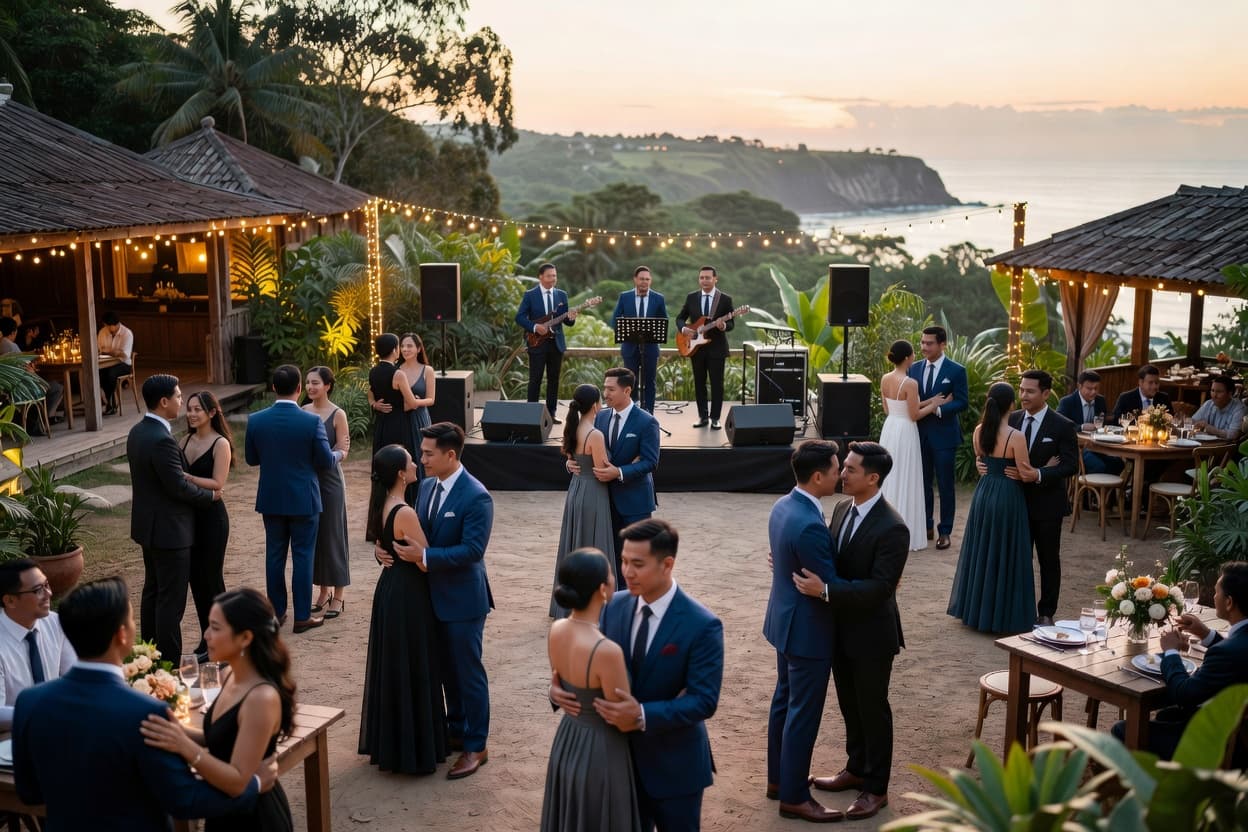
- Book your entertainment. Whether it's a live band (₱15,000–₱50,000), a DJ (₱8,000–₱25,000), or your musically-inclined cousin with a Spotify Premium account, lock this in now. Good bands book 6+ months out.
Kasal barkada tip: For overseas ninongs and ninangs who can't attend, set up a GCash wedding gift registry so they can send blessings digitally — no more lost envelopes.
4–5 Months Out: Invitations, Souvenirs, and Details
This is where the wedding starts to feel real. The big stuff is booked; now it's about the details.
- Order your wedding invitations. Whether you go traditional (printed, with the ninong/ninang names embossed) or digital (via your wedding website), send invitations 3–4 months before the wedding. For Filipino wedding etiquette, include the names of your principal sponsors on the invitation — it's a sign of respect.
- Finalize souvenirs and giveaways. Popular 2026 options: personalized candles, local delicacies (tableya, dried mangoes), mini bottles of locally-made lambanog, or custom items from local artisans. Budget ₱50–₱150 per guest.
- Plan your ceremony details. Work with your church or officiant on the ceremony program — readings, songs, offertory, and the traditional elements like the cord and veil, arrhae (13 coins), and unity candle. If you're including Filipino wedding traditions like the money dance or the releasing of doves, coordinate with your coordinator and church.
- Schedule your prenup shoot. If you haven't done it yet, book your prenup session now. Many photographers include this in their wedding package. Choose a location that's meaningful to you — Intramuros, La Mesa Eco Park, Tagaytay, or even your old college campus.
- Order your lechon. Yes, this needs to be planned months ahead. A whole lechon in 2026 costs ₱6,500–₱8,500 depending on province and supplier. Some caterers include it; others require you to source separately. Book early, especially for peak dates.
Kasal barkada tip: For souvenirs, support local — small businesses on Shopee, Instagram, or your local palengke offer unique items at a fraction of mall prices.
2–3 Months Out: Finalize and Confirm
The countdown is getting real. This is your "nail it down" phase.
- Final fitting for gown and barong. Schedule your final fitting 2–3 months out to allow time for alterations. Make sure your entourage has their attire sorted too — no one wants a bridesmaid scrambling for a dress two weeks before the wedding.
- Confirm all vendors. Reconfirm every booking — venue, church, caterer, photographer, HMUA, florist, entertainer, lechon supplier, and coordinator. Get everything in writing. A simple "Hi, confirming our booking for [date] at [time]" message can save you from day-of surprises.
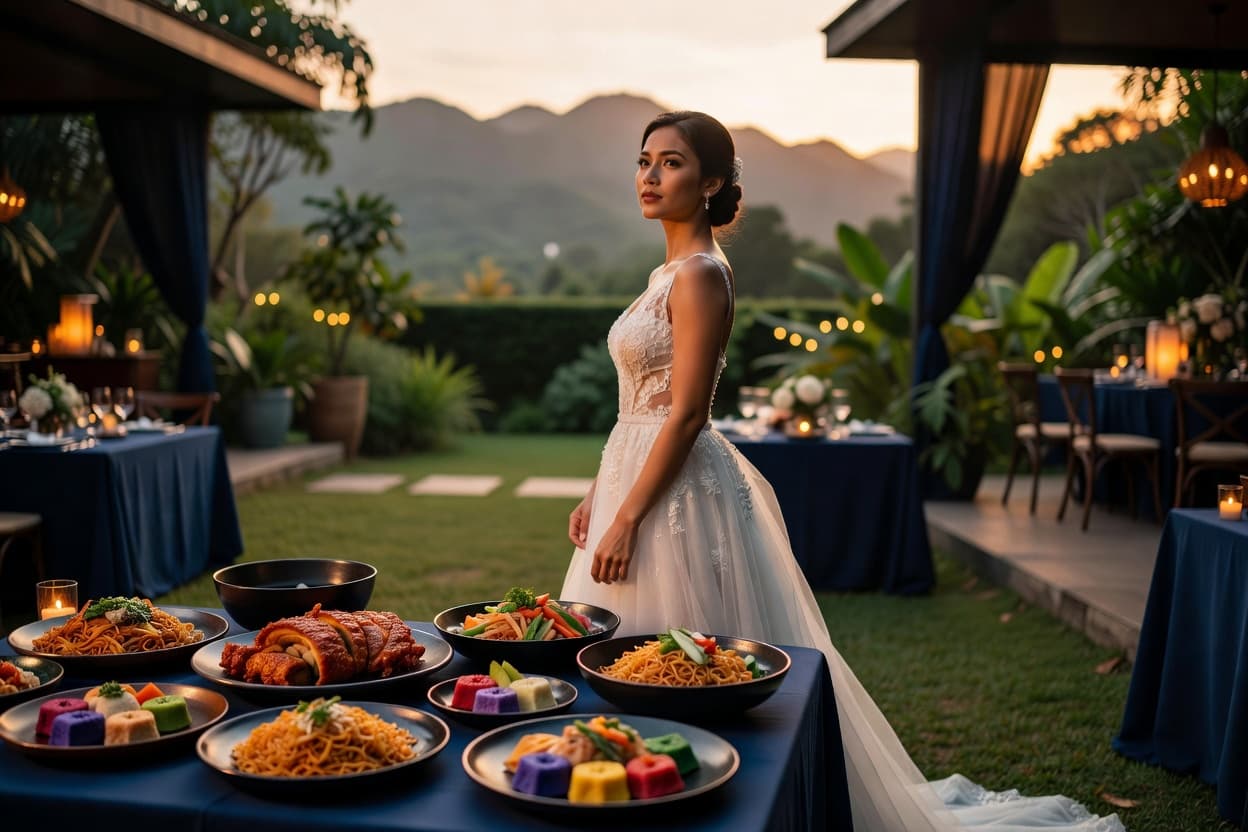
- Finalize your menu. Work with your caterer on the final menu. Consider dietary restrictions (vegetarian options, no pork for Muslim guests, etc.). Don't forget the dessert table — Filipino weddings love the dessert spread (leche flan, ube cake, buko pandan, and mini pastries).
- Create your wedding day timeline. From hair and makeup start time to the last dance, map out every minute. Share this with your coordinator, photographer, HMUA, and key entourage members. A clear timeline keeps everyone on track.
- Send out your online RSVP. If you haven't already, push your RSVP link to all guests. Follow up with anyone who hasn't responded. A wedding checklist tool can help you track who's confirmed and who needs a gentle follow-up.
Kasal barkada tip: Filipino guests are notorious for "text later" — a polite RSVP reminder isn't pushy, it's practical.
1 Month Out: Final Countdown
Almost there. Deep breaths.
- Final headcount to caterer. Give your caterer the final guest count. Most caterers allow a 5% buffer, but going over means extra charges per head. This is also your last chance to adjust for plus-ones and last-minute ninong additions.
- Finalize seating arrangement. Create your seating chart. For Filipino weddings with large entourages, reserve the front rows for principal sponsors, immediate family, and the entourage. Use a seating chart tool to drag, drop, and visualize your layout.
- Prepare your wedding party gifts. Gifts for ninongs and ninangs, bridesmaids, groomsmen, parents, and your coordinator don't have to be expensive — but they should be thoughtful. A handwritten note goes a long way.
- Confirm transportation. If you have guests staying in a hotel, arrange a shuttle or at least share Grab/rental car contacts. For destination weddings, confirm airport pick-ups and hotel block bookings.
- Brief your entourage. Hold a quick get-together (or a Zoom call for overseas entourage members) to walk through the ceremony flow, processional order, and responsibilities. Everyone should know where to be and when.
- Pack your wedding emergency kit. Safety pins, double-sided tape, stain remover, paracetol, tissues, breath mints, a phone charger, and snacks. Your maid of honor should carry this.
Kasal barkada tip: Set up a GCash or Maya account for wedding gifts. Many 2026 couples include a QR code on their reception table — convenient for guests and no more unlabelled envelopes.

The Week Of: Breathe and Trust the Process
This is it. The kasal is happening this week.
- Monday–Wednesday: Final venue walk-through with your coordinator. Confirm all deliveries (flowers, lechon, cake, sound system). Pick up your gown and barong. Get a manicure and pedicure.
- Thursday: Rehearse the ceremony with your entourage at the church (or venue). Practice the processional, recessional, cord and veil placement, and arrhae exchange. This is also a good time for your despedida de soltera — a small, intimate send-off party.
- Friday: Rest. Hydrate. Sleep early. Resist the urge to micromanage — trust your coordinator and the timeline you built.
- Saturday (Wedding Day): Wake up early. Eat breakfast (you'll need the energy). Have your HMUA arrive 4–5 hours before the ceremony for hair and makeup. Take a moment with your partner before the chaos begins — this is your day, and it goes fast.
Wedding Day Essentials Checklist
- Marriage license and certificate
- Rings
- Arrhae (13 coins), cord, and veil
- Bible and rosary (if required by church)
- Wedding vows (printed, not just on your phone)
- Payment envelopes for vendors (in cash, labeled)
- GCash/Maya QR code for the gift table
- Phone, charger, and power bank
Shorter Timeline? Don't Panic
Not everyone has 12 months. If you're planning a kasal in 6 months or less, here's how to compress without cutting corners:
- 6 months: Combine the 12-month and 10-month phases. Book venue, church, caterer, and photographer immediately — don't wait.
- 4 months: Skip save-the-dates and go straight to invitations. Choose a ready-to-wear gown or rent one. Book an on-the-day coordinator.
- 2 months or less: Go intimate. 30–50 guests, a restaurant reception, a simple church ceremony. Use your wedding website for digital invitations and online RSVP. Focus on what matters — the vows, the family, the celebration.
A shorter timeline doesn't mean a lesser wedding. Some of the most beautiful kasal celebrations happen on tight schedules — it just means fewer second-guessing sessions and more decisive choices.
Ready to Start?
Planning a Filipino wedding in 2026 is about balancing tradition with practicality — honoring the pamamanhikan and the cord and veil ceremony while also using GCash for your gift registry and an online RSVP for your guest list. It's a big job, but you don't have to do it alone.
Set up your free wedding website with online RSVP on WedPlanner, build your wedding checklist, and start tracking your wedding budget — all in one place, built for Filipino couples.
Your kasal is going to be beautiful. Let's plan it together.