Wedding Reception Program Philippines: Traditional + Modern 2026
By WedPlanner Team
Planning your kasal? This wedding reception program Philippines guide covers the traditional flow — 18 roses, money dance, speeches — plus modern 2026 twists and a block-by-block timeline with PHP costs.
Planning your wedding reception program Philippines style starts with understanding the flow that Filipino families expect — and then deciding which parts to keep, shorten, or reinvent for 2026. Filipino wedding planning is deeply rooted in tradition, but today's couples are blending the old with the new in ways that feel authentic and fresh. From the 18 roses ceremony to the money dance to the inevitable extension hours, here's your complete guide to the traditional Filipino reception program — with modern twists and a practical minute-by-minute timeline.
The Traditional Filipino Reception Program
Filipino wedding traditions shape every segment of your reception. The program isn't just a schedule — it's a cultural celebration that honors family, involves your ninong and ninang, and gives everyone a moment to participate. Here's the traditional sequence:
Grand Entrance
The entourage enters in pairs — principal sponsors first, then secondary sponsors, then the wedding party, and finally the couple. In Filipino receptions, this is a production: choreographed walks, smoke machines, sometimes a live band intro. The energy sets the tone for the entire night.
Welcome and Invocation
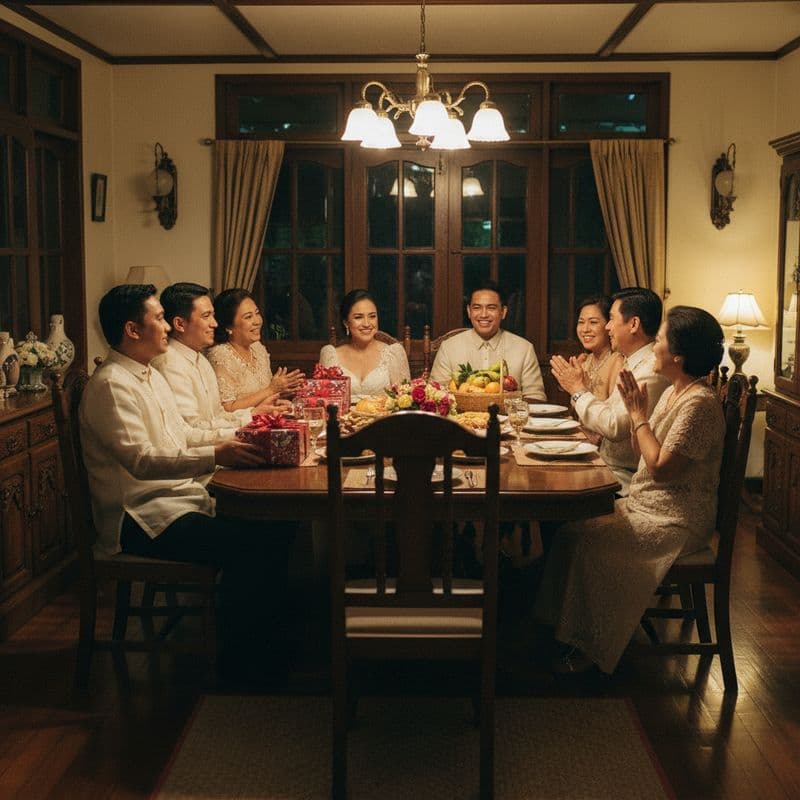
The host welcomes guests and leads a short prayer. Some couples ask their ninong to deliver the invocation — a meaningful way to involve sponsors early. This is also when the host acknowledges balikbayan family who traveled from abroad.
18 Roses and 18 Candles Ceremony
This is uniquely Filipino. The 18 roses ceremony involves 18 men — typically the father, ninong, brothers, and close friends — each presenting a rose to the bride and dancing with her briefly. The first rose comes from her father; the last from the groom. It symbolizes the bride being surrounded by love and protection from the men in her life. The 18 candles ceremony is the parallel for the groom: 18 women each light a candle and share a brief message or wish for the couple. Together, these ceremonies take 20–30 minutes and are among the most emotional moments of the reception. Not every couple does both — some choose only 18 roses, or replace 18 candles with 18 treasures (where 18 women give meaningful gifts instead).
Dinner Service and Lechon Ceremony
Dinner follows the ceremonies. Plated service is standard in Metro Manila hotels; buffet and family-style are common in provincial weddings. If you're having a lechon, the couple makes the first cut during dinner — sometimes with a ceremonial sword or barong-clad entourage around them. Catering costs run ₱450–₱650 per head in Metro Manila.
Speeches and Toasts
Traditional order: welcome remarks from both sets of parents, best man speech, maid of honor speech, and sometimes a message from a principal sponsor. Keep each speech to 3–5 minutes. Filipino receptions run long, and tita will start talking among themselves if speeches drag on.
Cake Cutting and Wine Toast
The couple cuts the cake together, then raises a toast with parents and sponsors. The ninong and ninang often join on stage, glasses raised — a visual symbol of family support.
Dances
Father-daughter dance first, then mother-son dance, then the couple's first dance. In 2026, many couples skip the traditional slow sway and go straight into a choreographed routine — sometimes involving the entire entourage. TikTok-worthy dance numbers are becoming a Filipino reception staple.
Money Dance (Sayaw ng Pera)
The money dance is part tradition, part practical fundraising. Guests pin cash onto the couple's clothes while dancing with them. The band plays upbeat Filipino favorites. Some couples use a money dance basket instead of pinning — more practical for barong and couture gowns.
Bouquet and Garter Toss
Bouquet toss for single women, garter toss for single men. Some modern couples replace the garter toss with alternative games — the shoe game, newlywed trivia, or a dance-off between the singles and the married couples.
Open Dancing and Send-Off
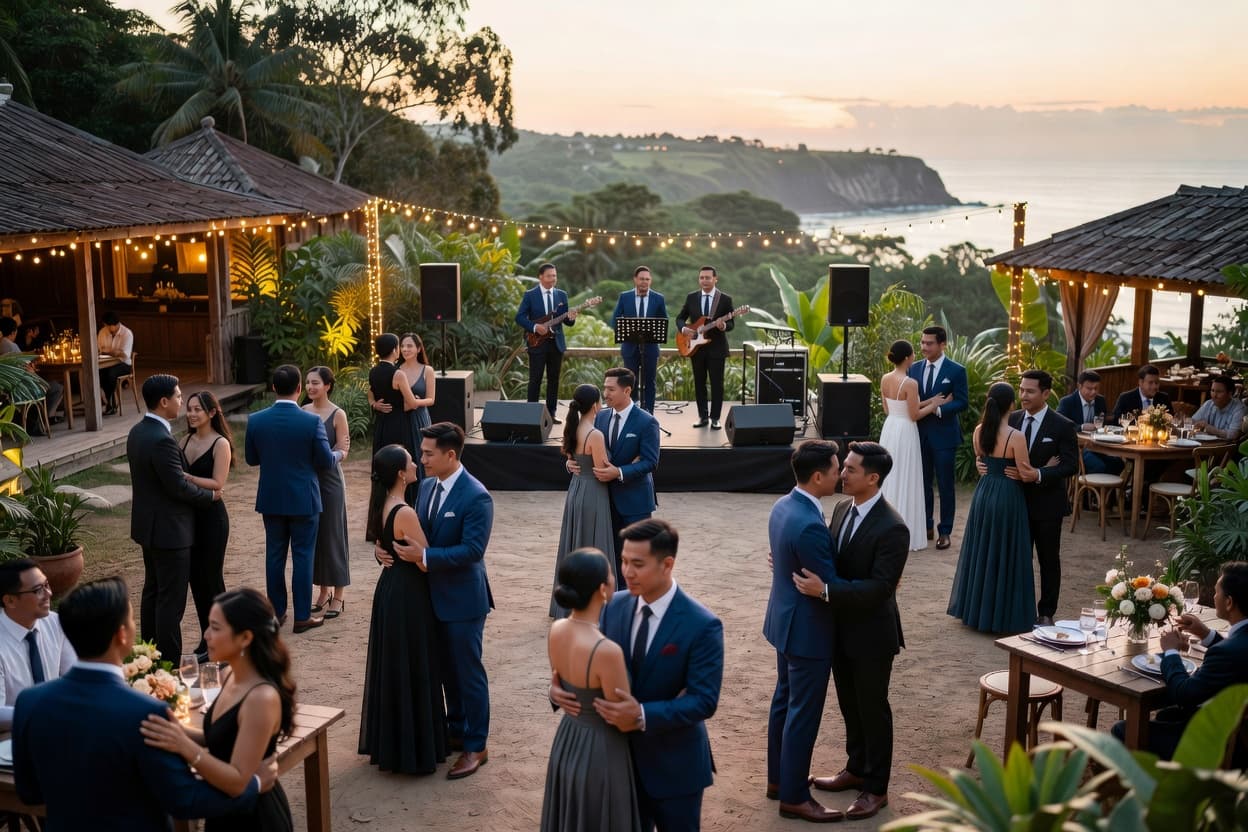
Filipinos love to dance. The open floor is when everyone — tita, tito, cousins, friends — hits the dance floor. This segment almost always runs over. Filipino receptions are famous for extension culture: the party extends past the venue's contracted time, and couples pay extension fees of ₱5,000–₱15,000 per extra hour in Metro Manila hotels.
Wedding Reception Program Philippines: Block-by-Block Timeline

Here's a practical timeline for a standard 5-hour Filipino reception starting at 6:00 PM. Adjust based on your venue contract and ceremony end time.
- 6:00 PM — Grand Entrance: Entourage enters in pairs, couple enters last. 10 minutes.
- 6:10 PM — Welcome and Invocation: Host welcomes guests, short prayer. 5 minutes.
- 6:15 PM — 18 Roses and 18 Candles: Rose ceremony for bride, candle ceremony for groom. 25 minutes.
- 6:40 PM — Dinner Service: Plated or buffet. Lechon ceremony if applicable. 45–60 minutes.
- 7:40 PM — Speeches: Parents, best man, maid of honor, sponsor. 20 minutes max.
- 8:00 PM — Cake Cutting and Wine Toast: Couple cuts cake, toast with parents and sponsors. 10 minutes.
- 8:10 PM — Father-Daughter and Mother-Son Dances: 10 minutes.
- 8:20 PM — First Dance: Choreographed or traditional. 5 minutes.
- 8:25 PM — Money Dance (Sayaw ng Pera): Guests pin cash, dance with couple. 20 minutes.
- 8:45 PM — Bouquet and Garter Toss: 10 minutes.
- 8:55 PM — Dessert and Coffee: Serve dessert while guests relax. 15 minutes.
- 9:10 PM — Open Dancing: DJ or live band. 50+ minutes.
- 10:00 PM — Send-Off: Final thank you, send-off. 10 minutes.
Remember: Filipino receptions routinely run 30–60 minutes over schedule. Build buffer time into your timeline and ask your venue about extension fees — Metro Manila hotels charge ₱5,000–₱15,000 per extra hour. Provincial venues are often more flexible.
Modern Twists for 2026 Receptions
Your kasal planning guide isn't stuck in tradition. Here are the modern trends reshaping Filipino receptions in 2026:
Shortened Programs
Many couples are cutting the program from 5 hours to 3–4 hours. The 18 roses and money dance stay, but bouquet toss and formal dances become optional. The focus shifts to eating, dancing, and celebrating with family.
Interactive Food Stations
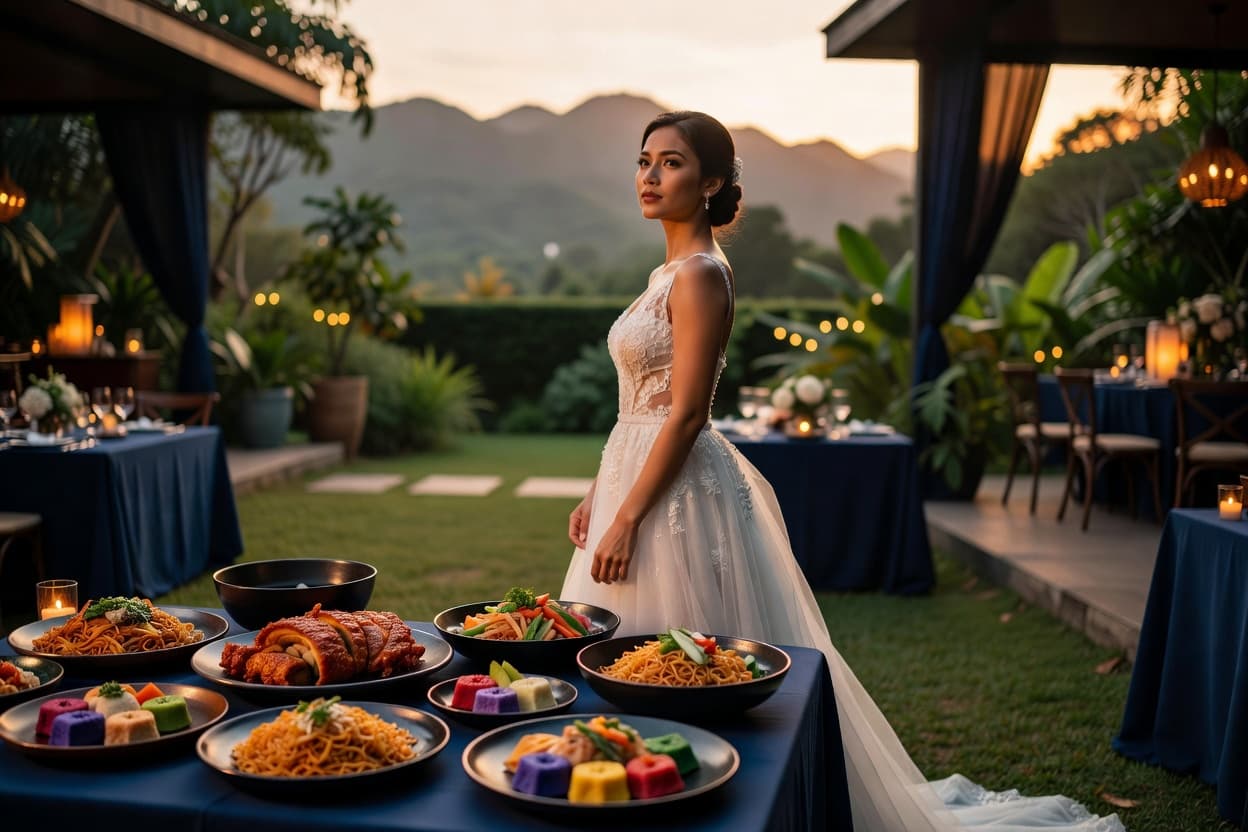
Live stations — pasta, lechon carving, DIY halo-halo bar — cost ₱450–₱650 per head (comparable to plated service) but feel more interactive and Instagram-worthy.
DJ vs Live Band
A live band in Metro Manila costs ₱25,000–₱60,000; a DJ costs ₱10,000–₱25,000. DJs offer flexibility — transitioning from traditional Filipino dance songs to modern hits seamlessly. See our DJ vs live band guide for a deeper comparison.
Social Media and Photo Booths
Custom hashtags, Instagram-worthy photo walls, and photo booth rentals (₱8,000–₱15,000 for 3–4 hours) are standard. Some couples use QR codes for shared photo albums.
GCash Wedding Gift QR Codes
The money dance meets the digital age. Many 2026 couples display a GCash wedding gift QR code at the reception, letting guests send cash digitally — especially useful for younger guests and overseas family who can't pin cash on the dance floor.
Livestream for Overseas Family
A wedding website Philippines platform with livestream capability lets balikbayan relatives watch in real time. Some couples set up a dedicated screen showing live messages from overseas guests. Pair this with an online RSVP wedding system to track who's attending in person vs watching online.
Pre-Recorded Messages for Absent Sponsors
When a ninong or ninang can't attend, couples play pre-recorded video messages during the speech segment — a touching way to include absent sponsors without disrupting the flow.
What It Costs: Reception Program PHP Breakdown
Here's a quick cost reference for Metro Manila (2025/2026 prices):
- Reception venue (5 hours): ₱80,000–₱250,000 depending on hotel tier
- Extension fee per hour: ₱5,000–₱15,000
- Live band (4 hours): ₱25,000–₱60,000
- DJ (4 hours): ₱10,000–₱25,000
- LED dance floor rental: ₱15,000–₱35,000
- Photo booth (3–4 hours): ₱8,000–₱15,000
- Host/MC: ₱5,000–₱15,000 (sometimes included with coordinator)
Provincial weddings cost 20–30% less. Tagaytay and Boracay destination receptions may carry vendor transport premiums.
The Bottom Line
Your Filipino wedding reception program should reflect who you are as a couple — whether that's a full traditional kasal with 18 roses, 18 candles, and every ceremony segment, or a shortened modern celebration with a DJ and GCash QR codes. Plan the timeline carefully, build in buffer for extension culture, and choose the traditions that matter most to your family. For your complete kasal planning guide, use WedPlanner's timeline tool to map every minute of your reception, and our wedding checklist to track program preparations. Create your free WedPlanner account and start building a reception program your guests will actually remember.